Must-see beaches
Crystal-clear waters
for every plan
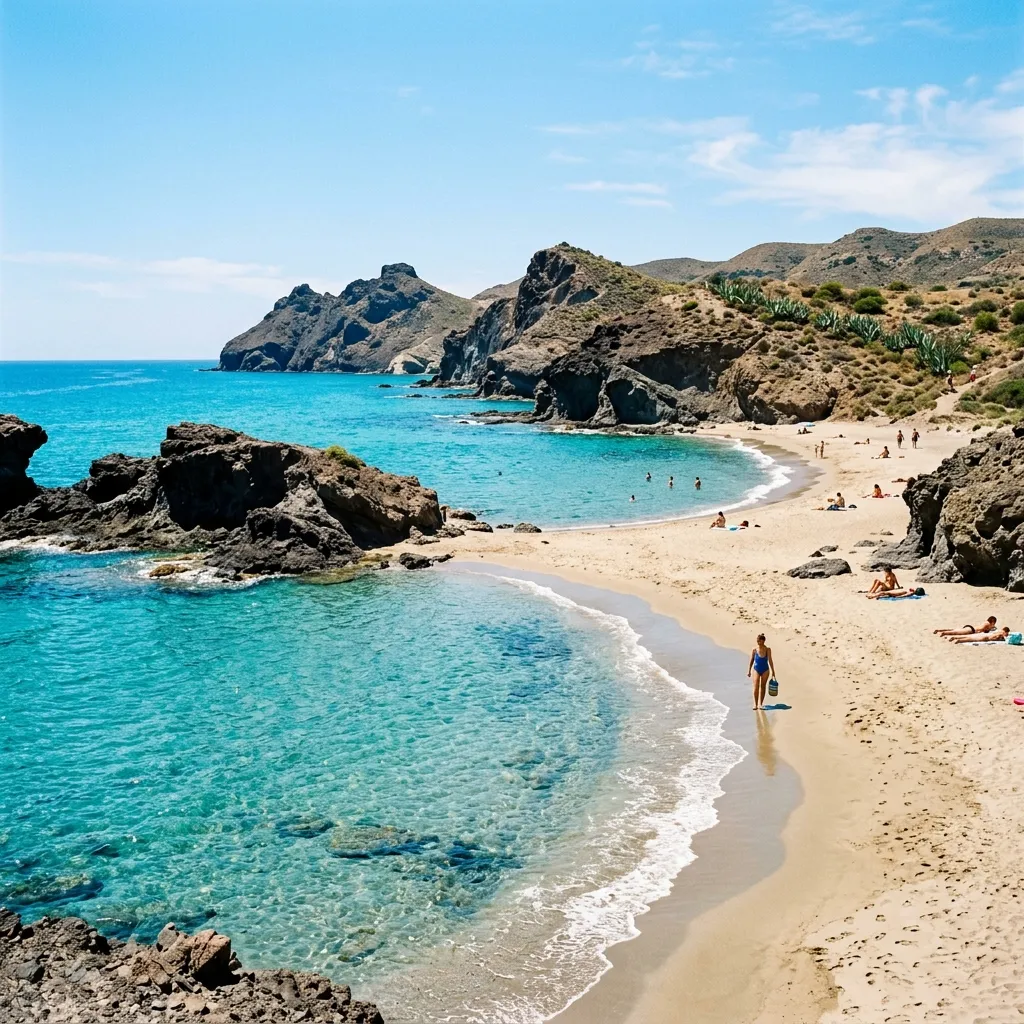
From the unspoilt cove you can only reach on foot to the full-service town beach: choose your sea.
101 places shown
Beaches grouped from least to most windy on today's forecast; within each group the distance order is kept.
Facilities
Shore
Occupancy
Swimming
Naturist
El Bobar Beach
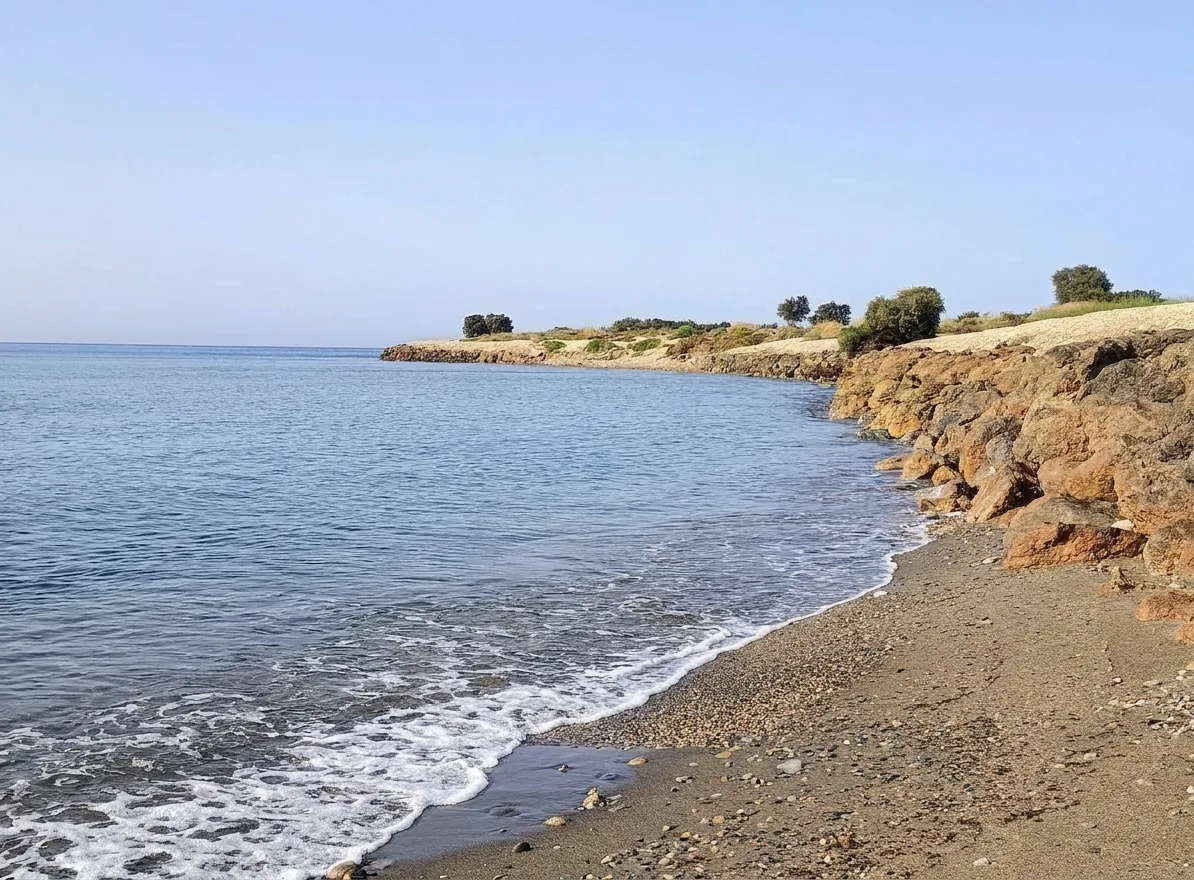
The quiet extension of El Zapillo: 1.3 km of dark sand along the Camino de Ribera, with a bike lane and fitness circuit.
San Miguel Beach
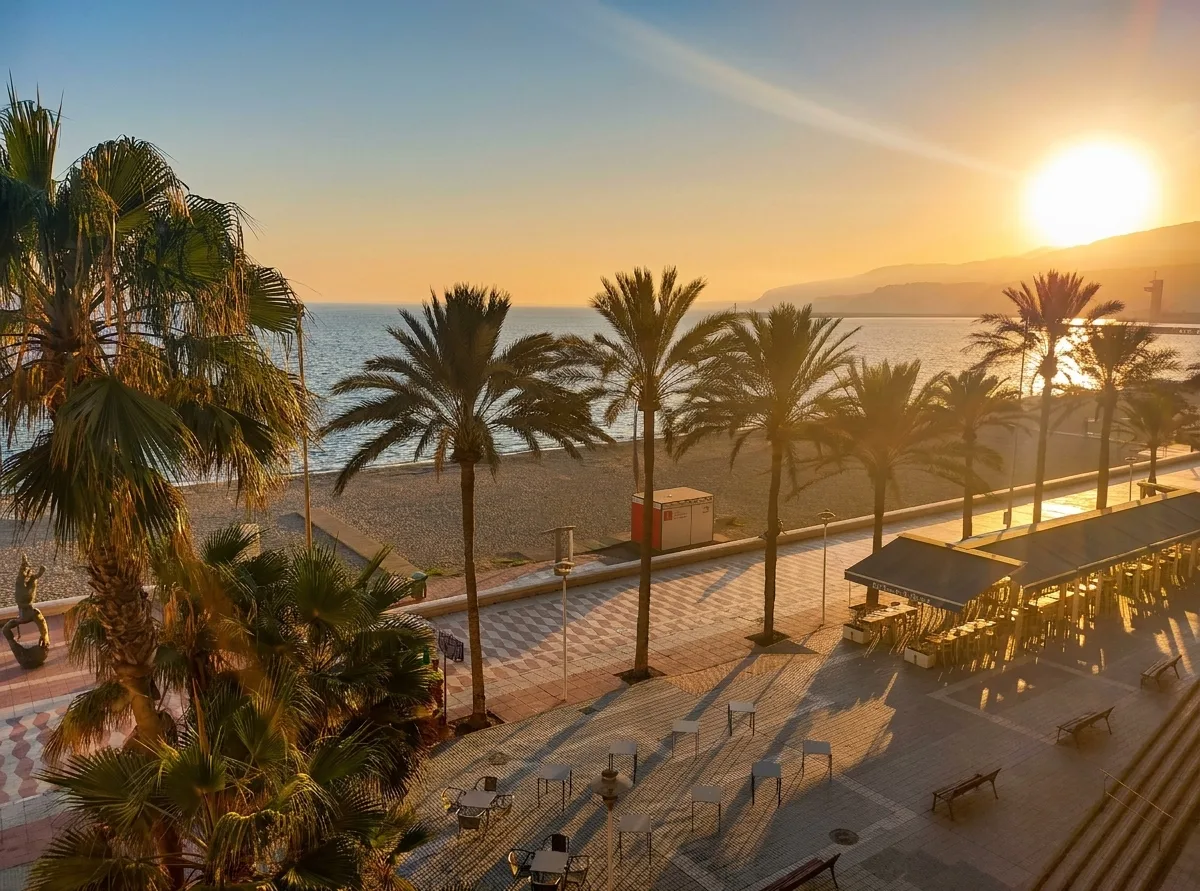
Almería's most central beach, at the foot of the Cable Inglés and the promenade, with the Alcazaba as a backdrop.
El Zapillo Beach
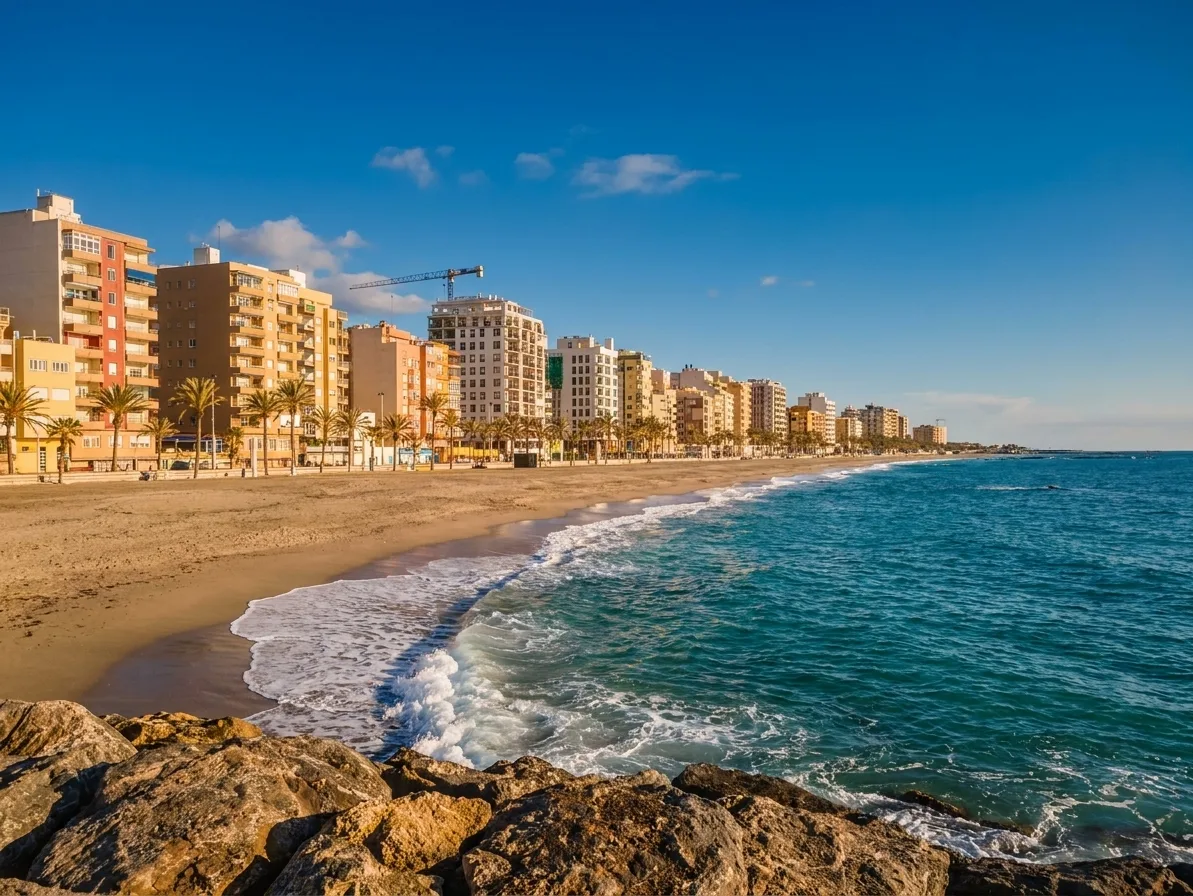
The locals' beach par excellence: nearly three kilometres of sand with a promenade, beach bars and life all year round.
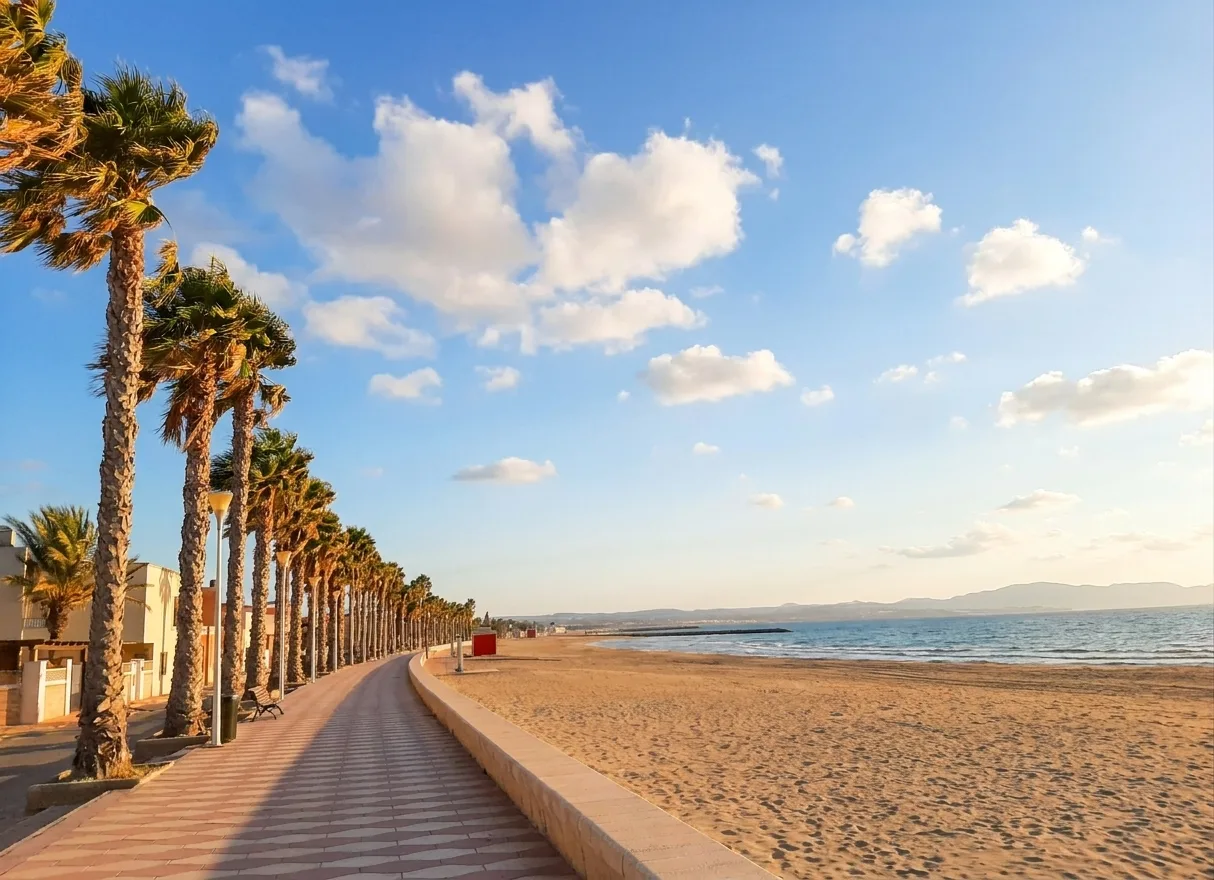
Costacabana Beach
A regenerated 1.2 km beach fronting the residential district, with a well-kept promenade and a neighbourhood feel.
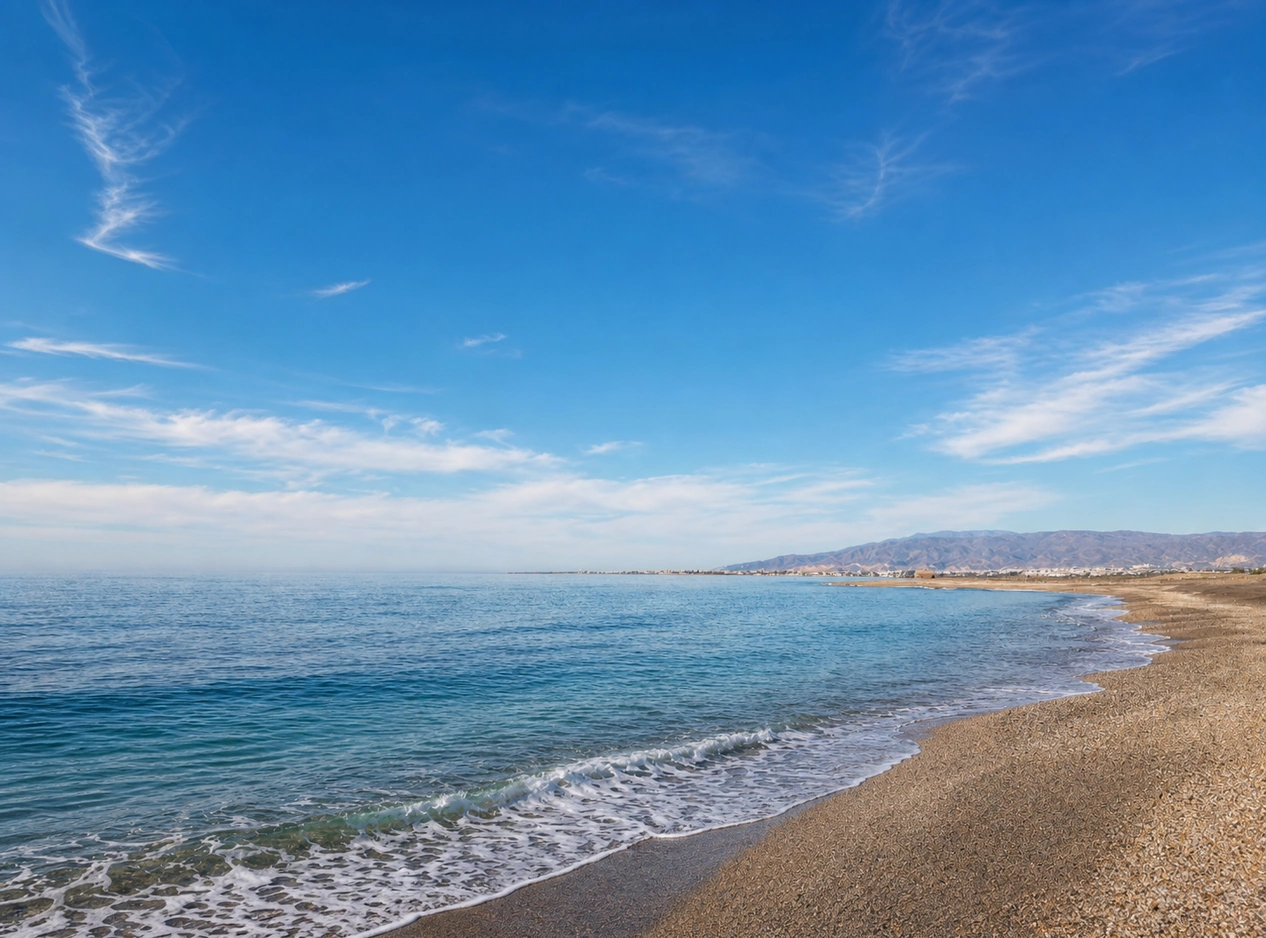
El Perdigal Beach
The gulf's natural corner: an open sandy stretch lined with eucalyptus, building-free, right by the airport.
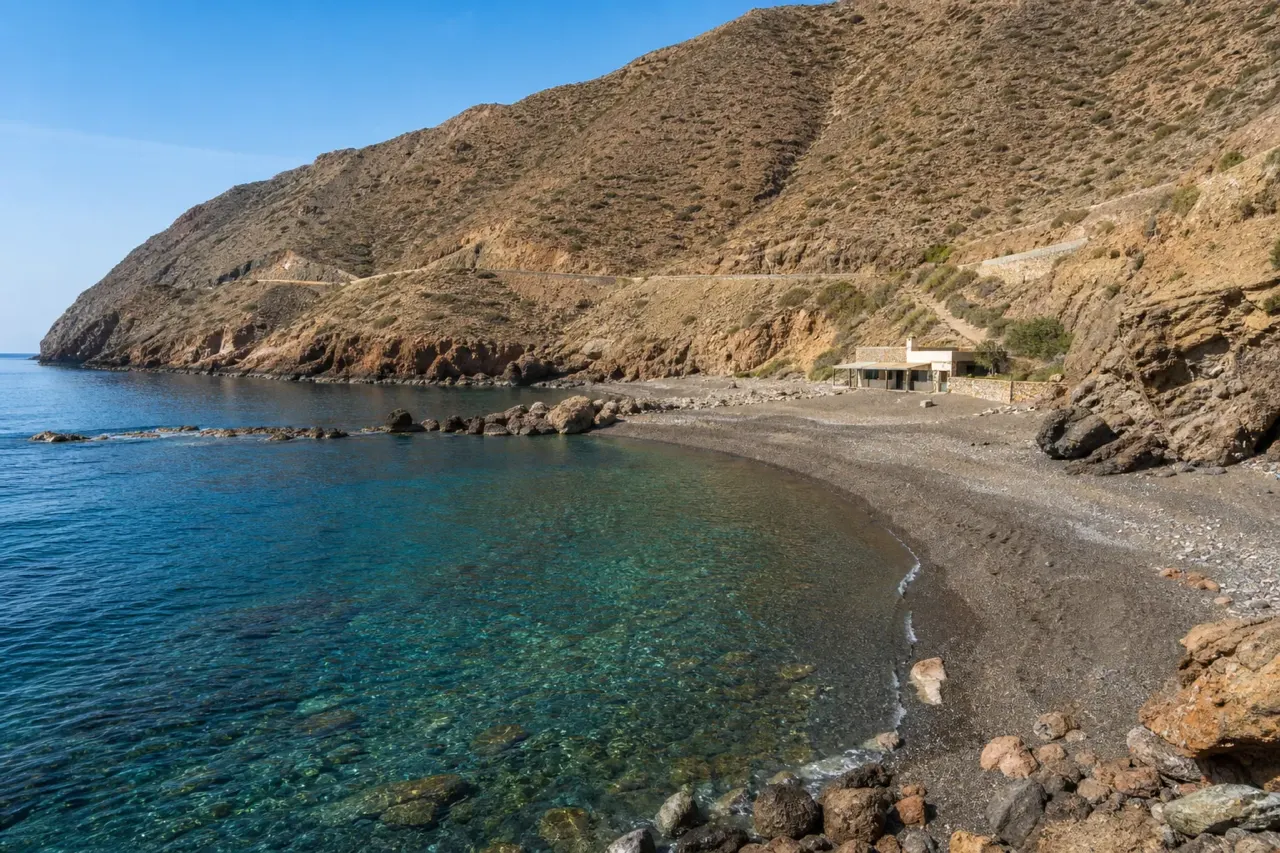
La Garrofa Beach
A small cove squeezed between the Sierra de Gádor foothills and the sea on the Almería–Aguadulce coast road.
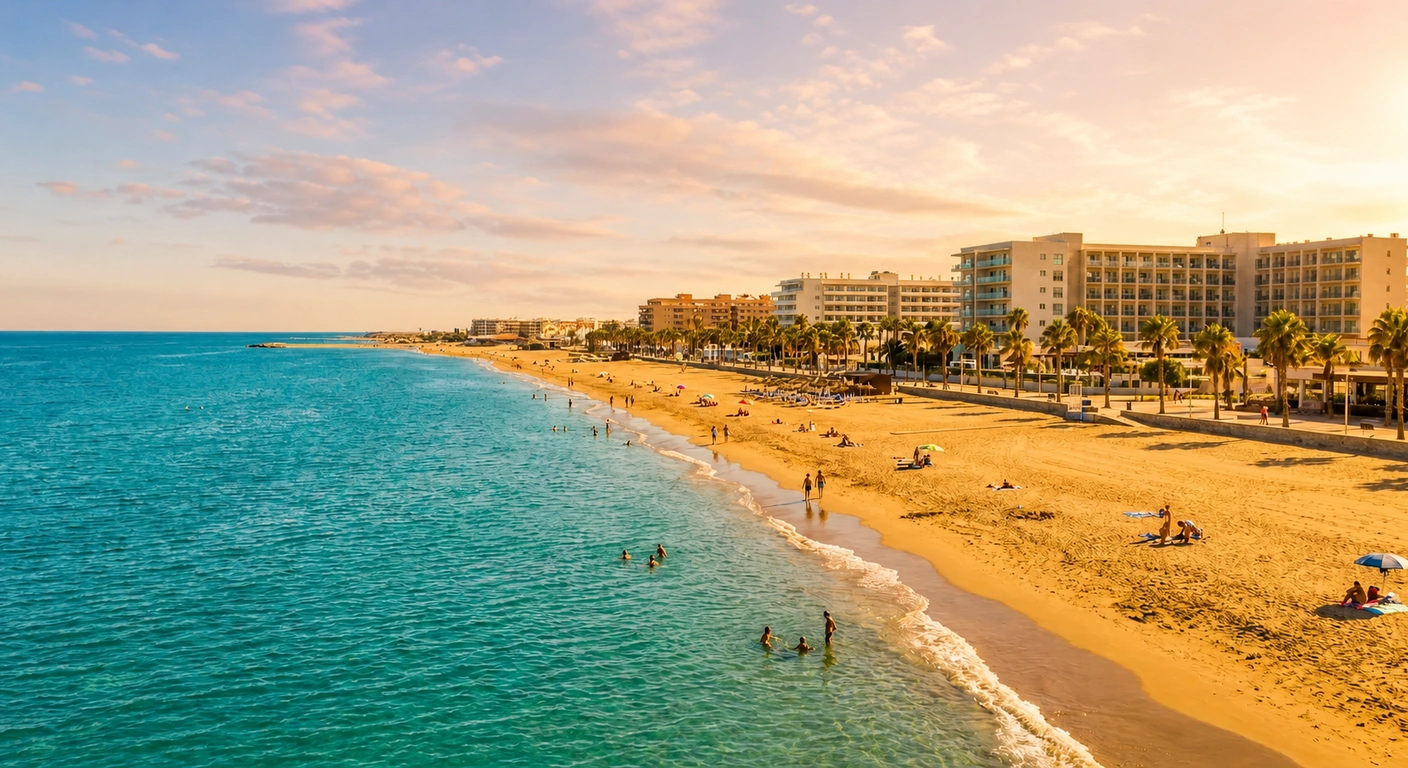
El Toyo Beach
Family-friendly urban beach at El Toyo-Retamar, by the edge of the Cabo de Gata-Níjar Natural Park, with a promenade, Blue Flag and watersports zone.
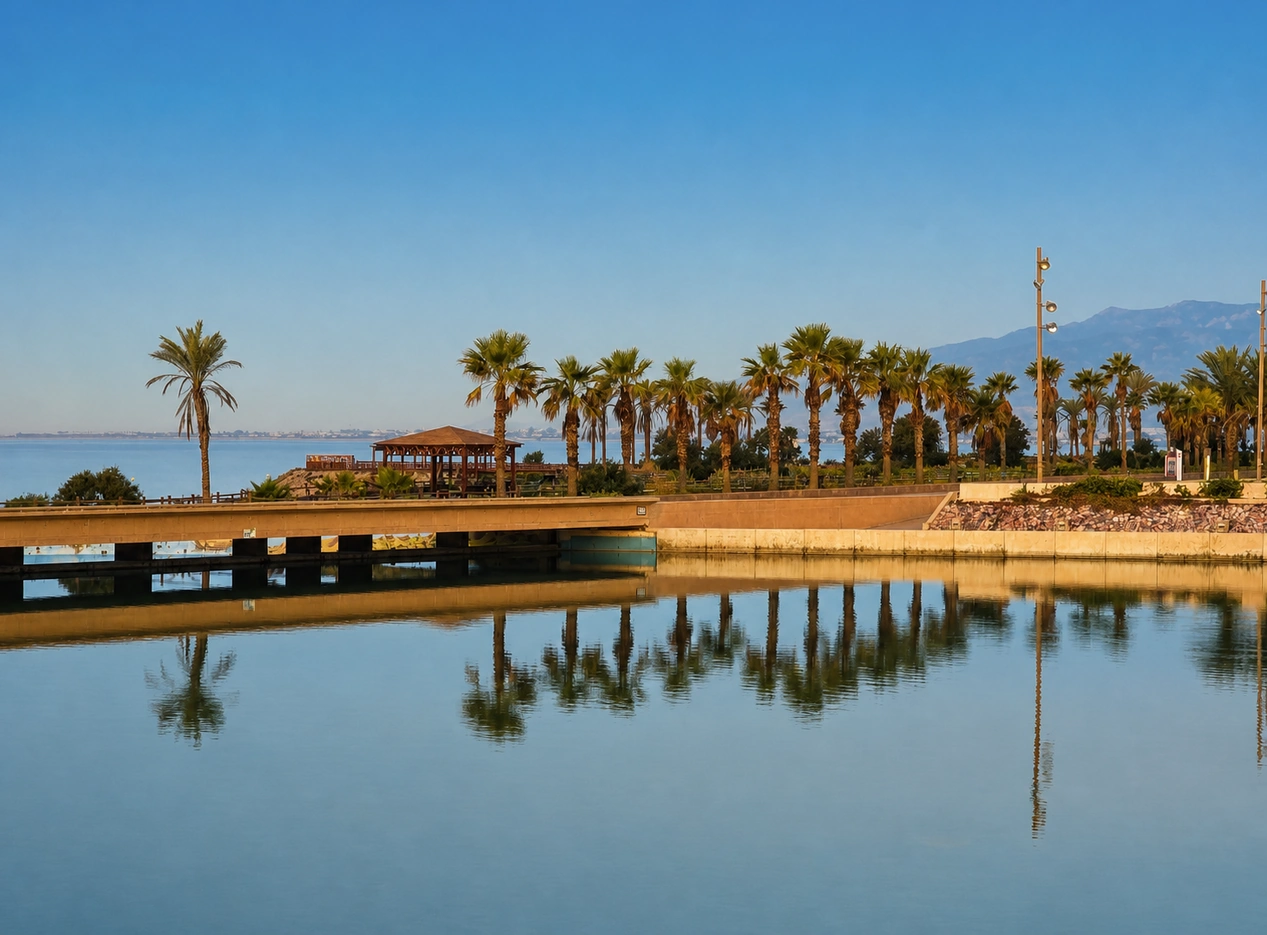
El Retamar Beach
The last urban beach before the Natural Park: 600 metres of coarse sand with a promenade, just before the Rambla del Agua.
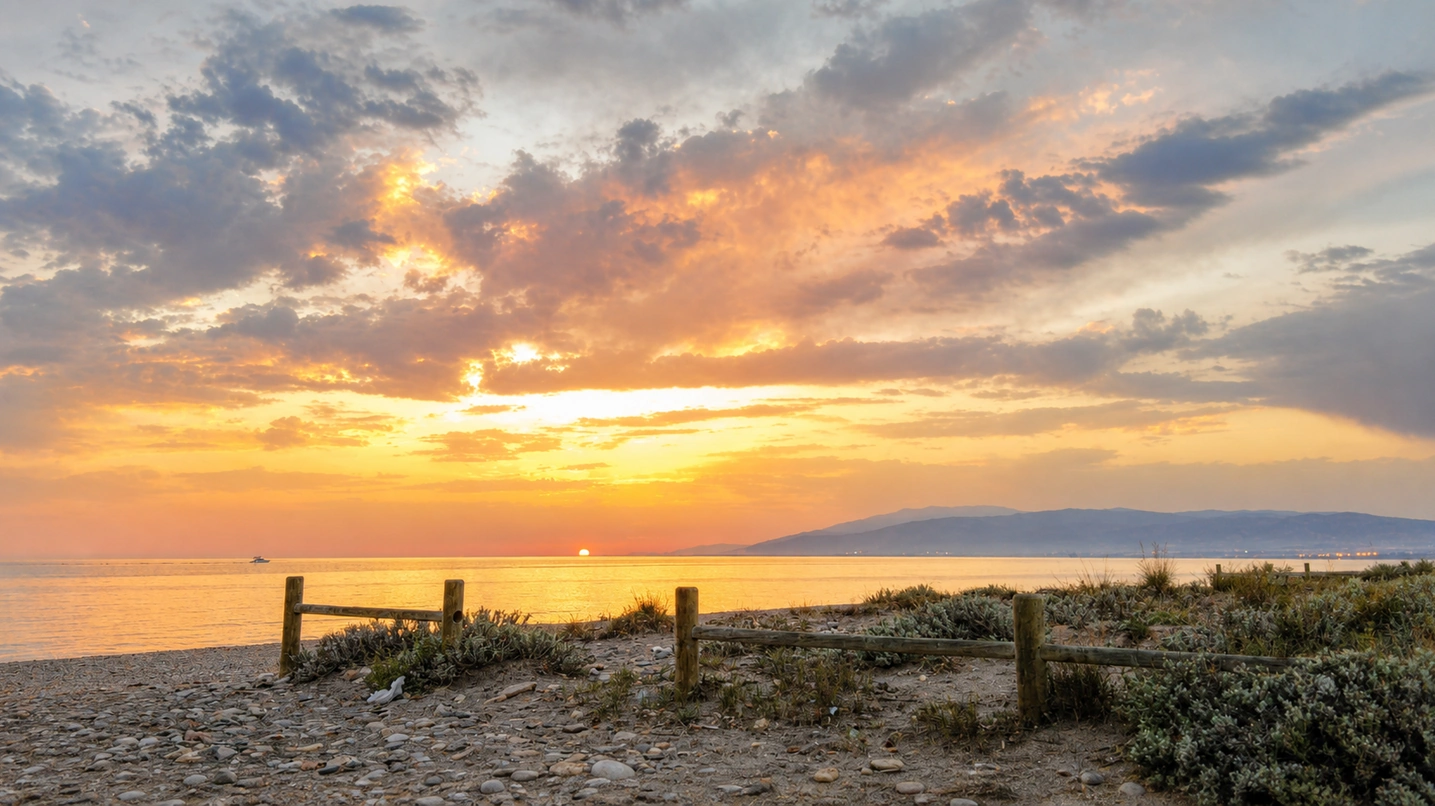
Torregarcía Beach
The Natural Park's first beach: 1.8 km of dark sand by the watchtower and the Virgen del Mar hermitage.
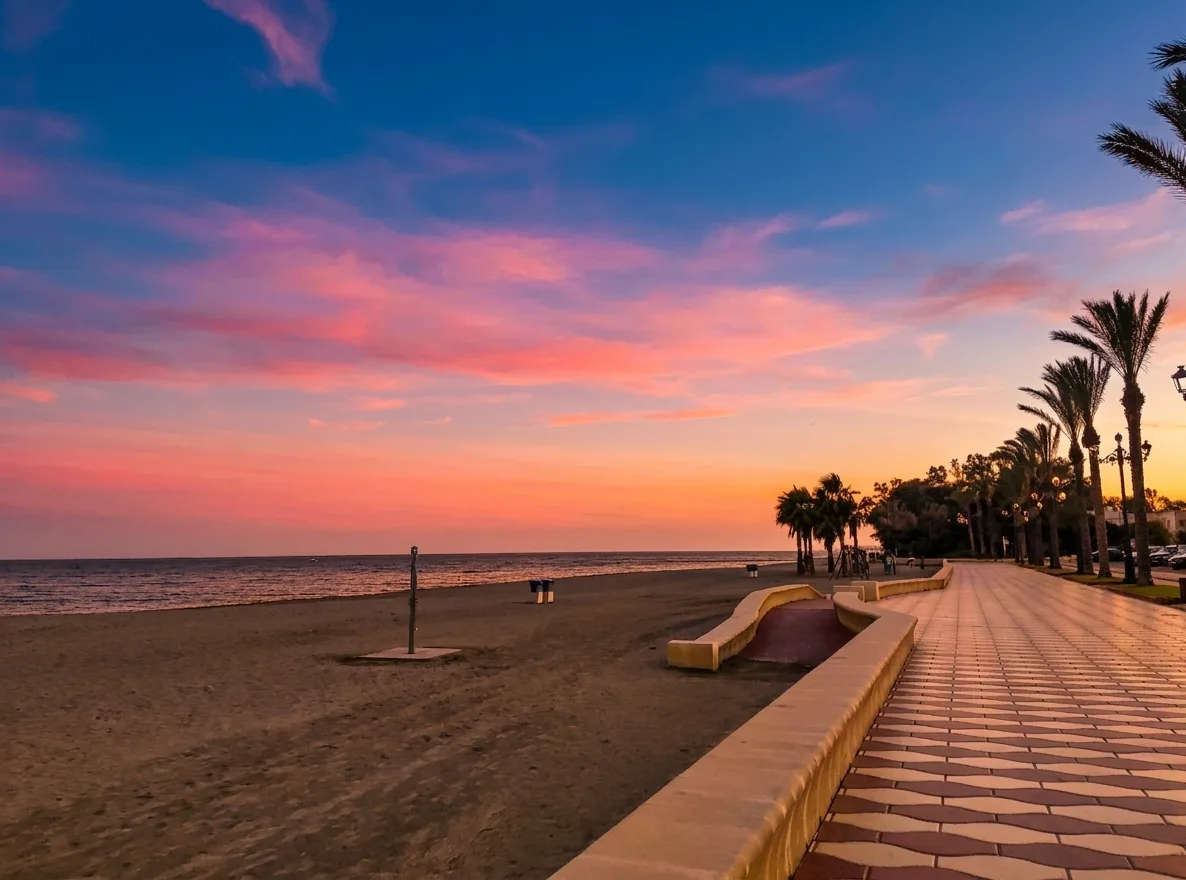
Aguadulce Beach
The closest big urban beach to Alhama: tree-lined promenade, marina and full services, Blue Flag awarded.
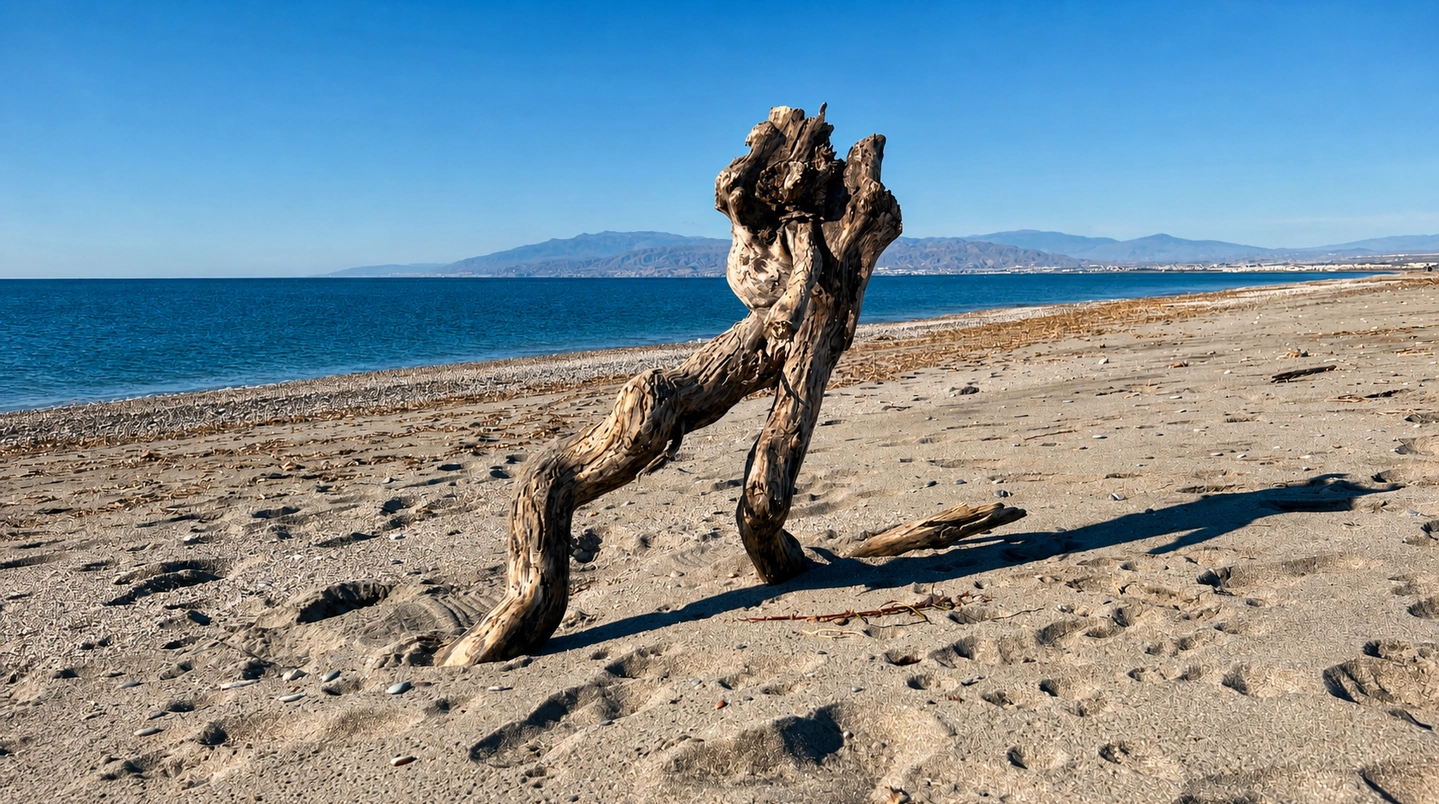
Las Amoladeras Beach
A protected, untamed sandy stretch between Torregarcía and Cabo de Gata, backed by dunes and jujube scrub.
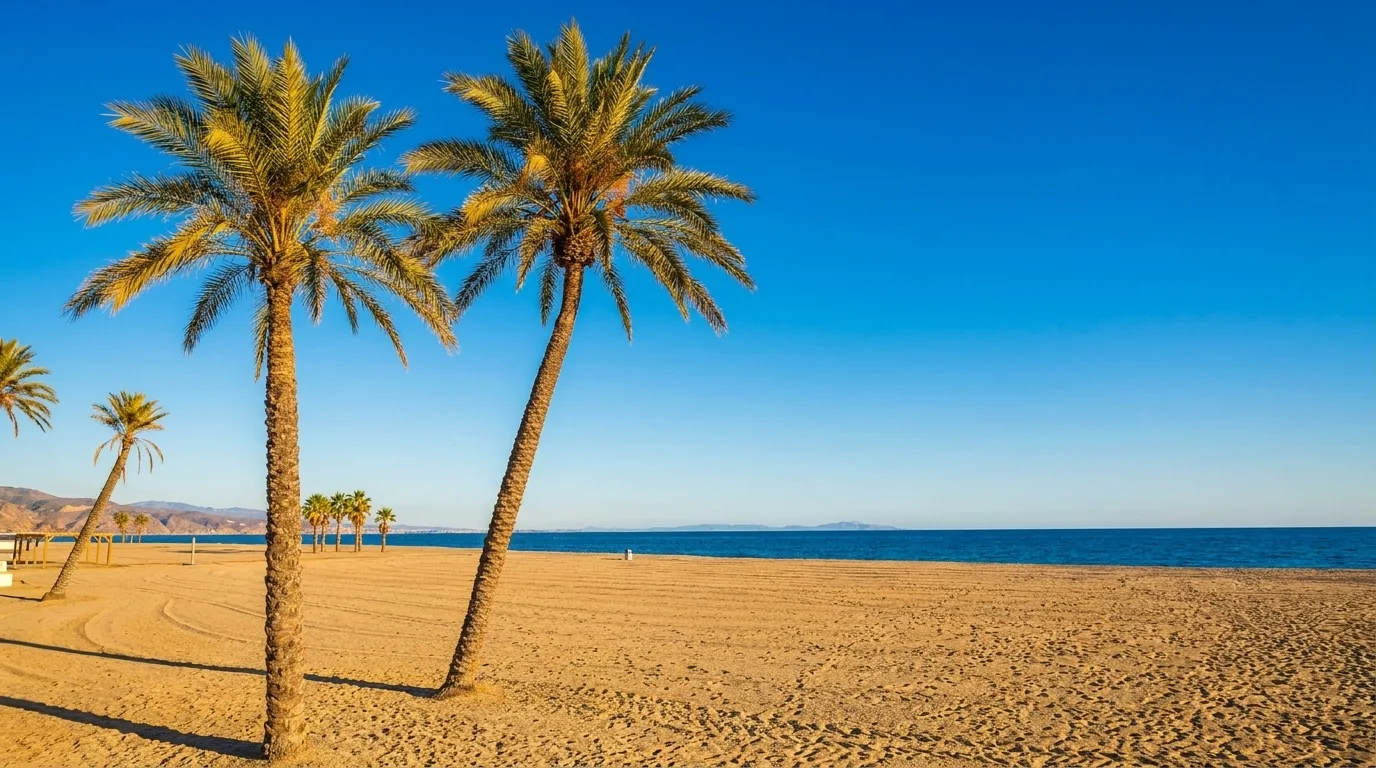
Las Salinas Beach (Roquetas)
Between Aguadulce and Roquetas, a wide and quiet Blue Flag beach, next to the old salt pans that give it its name.
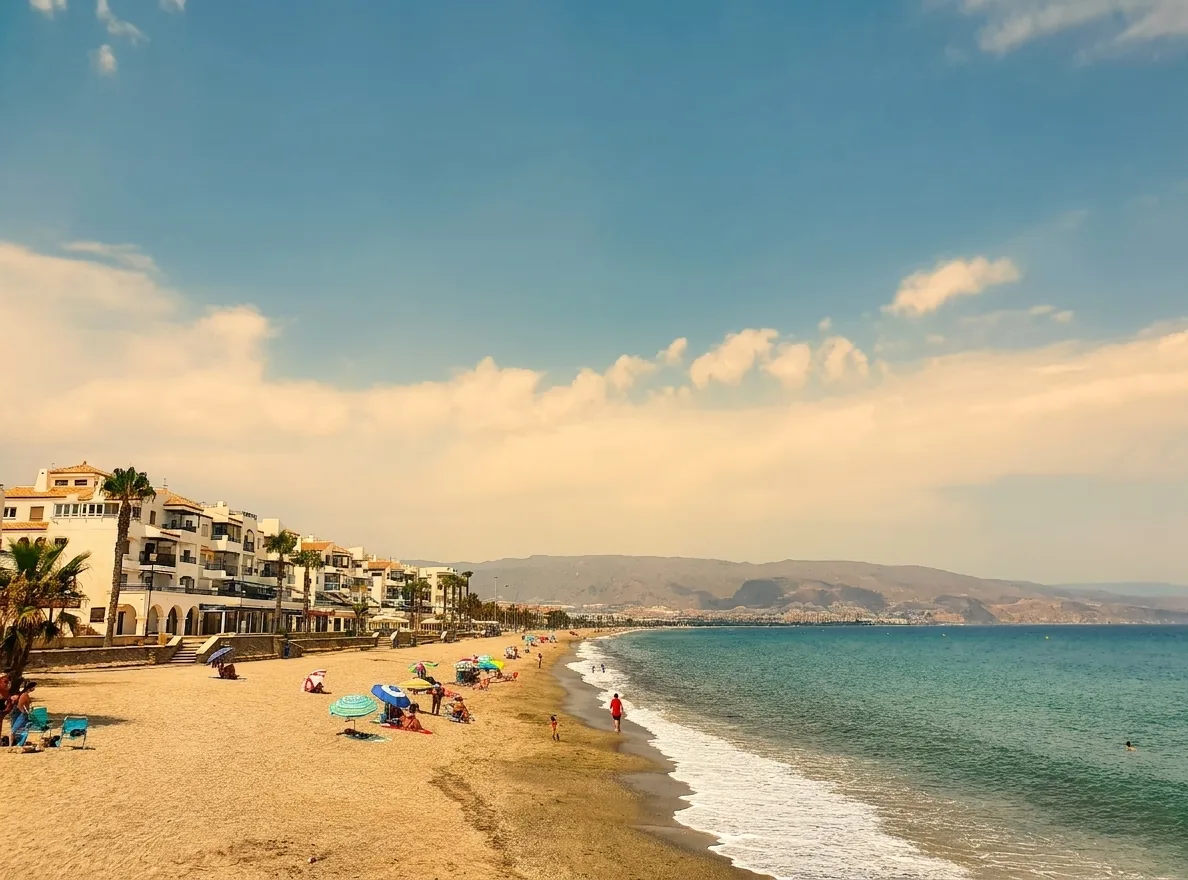
La Romanilla Beach
The beach at the heart of Roquetas: promenade, beach bars and a family feel by Santa Ana castle and the lighthouse.
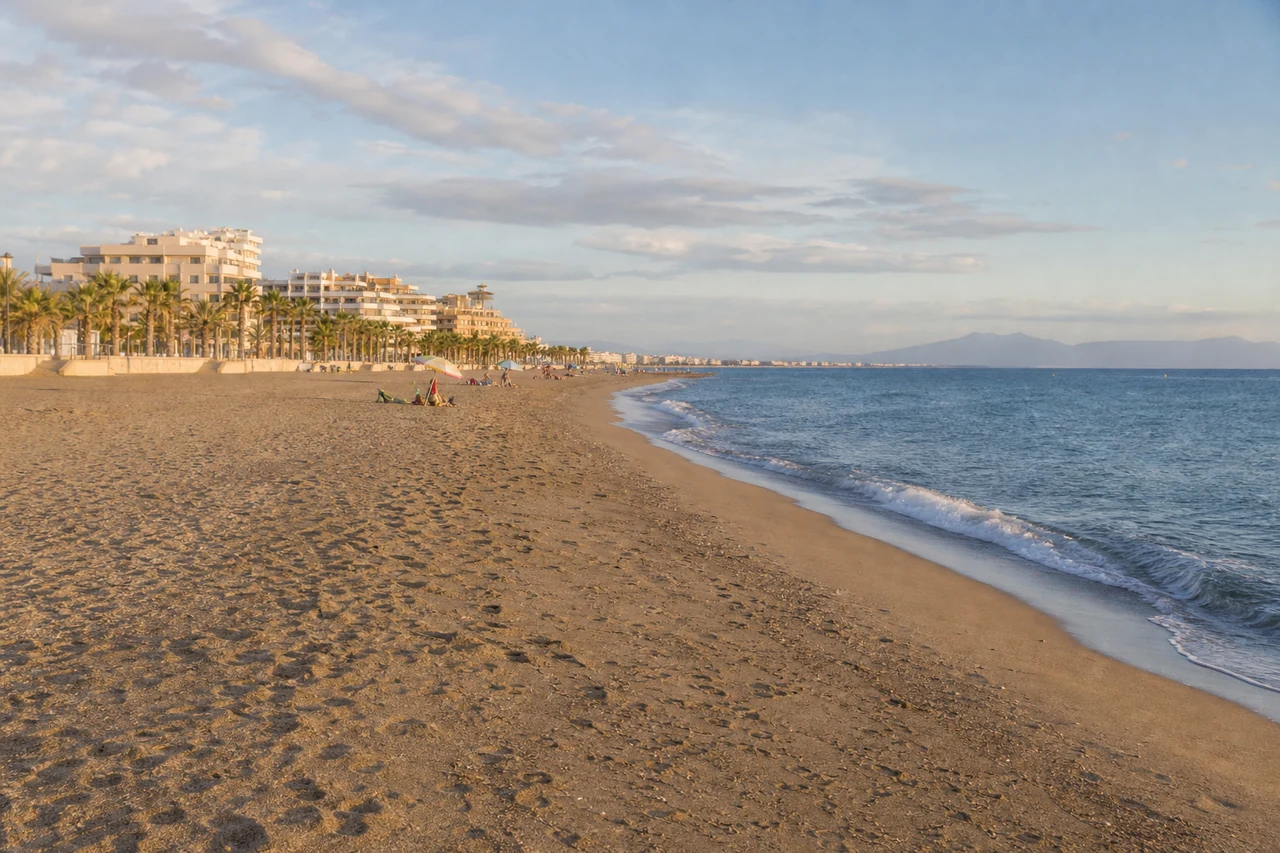
Roquetas Resort Beach
A long urban resort beach in Roquetas de Mar, with a promenade, palms and seasonal facilities.
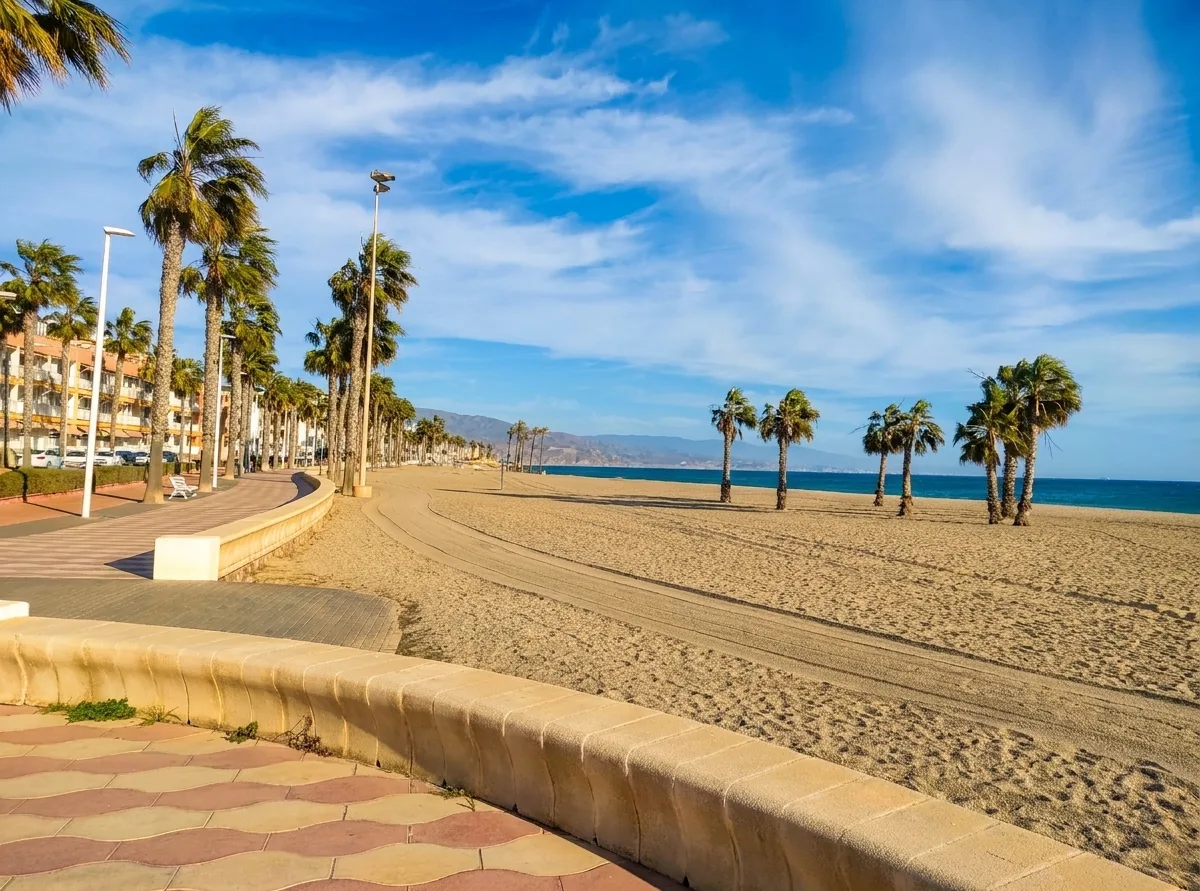
La Bajadilla Beach
South of Roquetas harbour, a comfortable open beach with three shade pergolas and a Blue Flag.
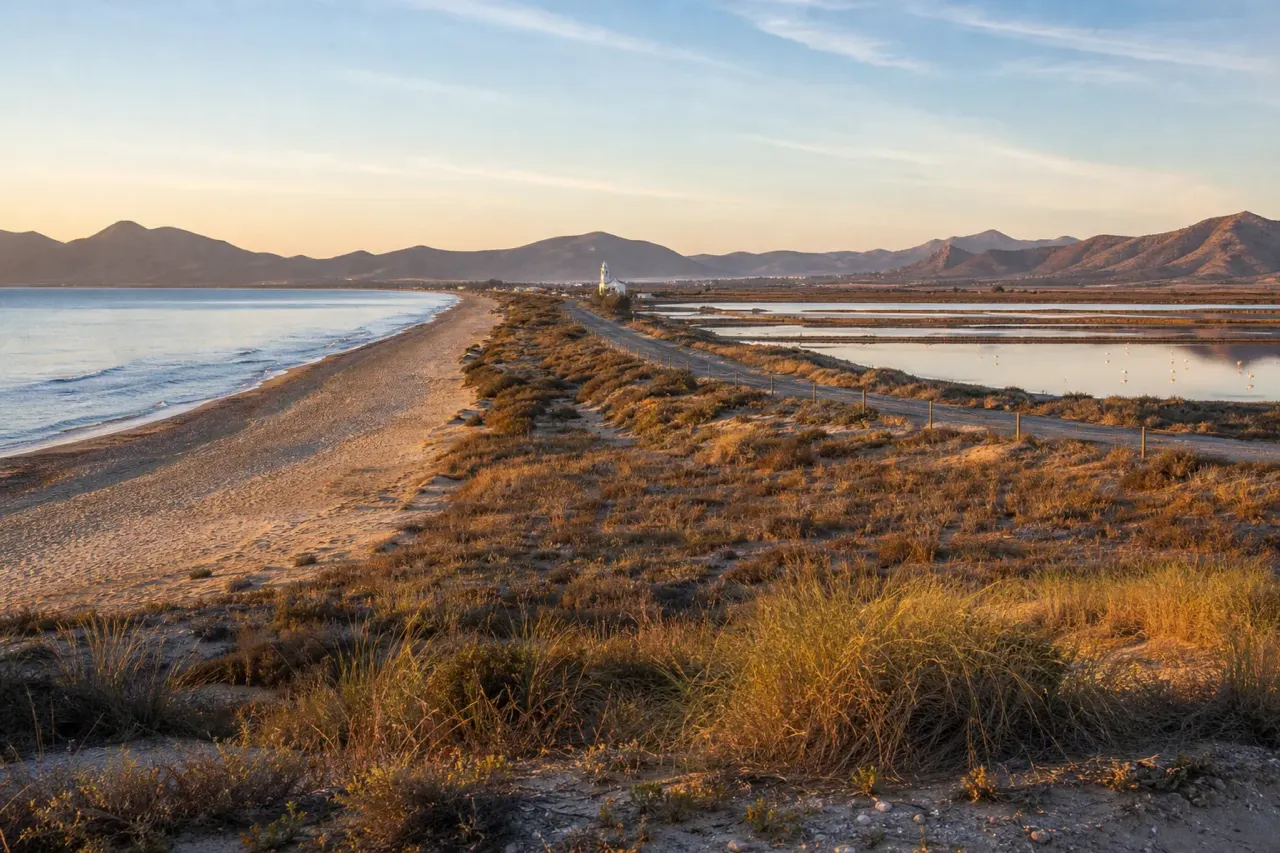
Cabo de Gata Saltworks Beach
Kilometres of open shore between the Mediterranean and salt lagoons, with the saltworks church and waterbirds on the horizon.
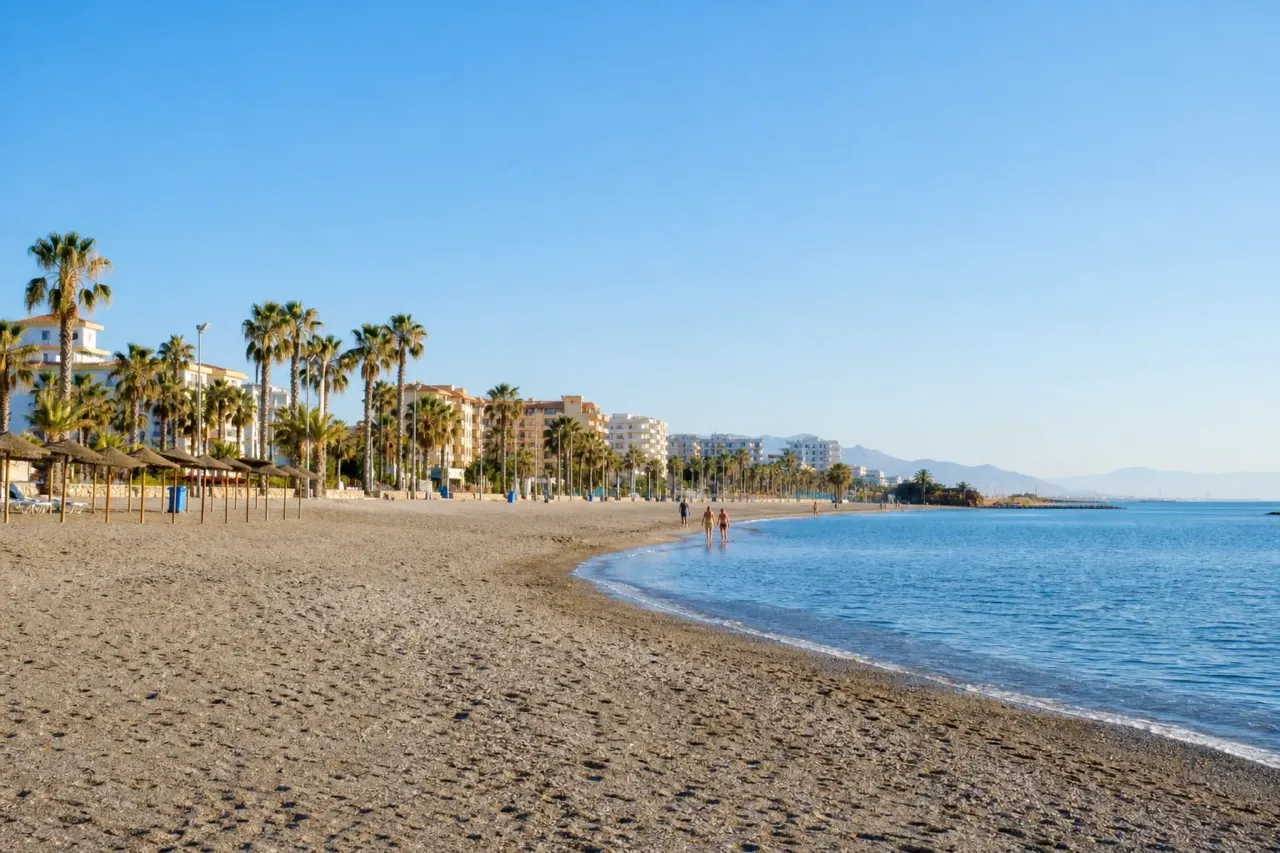
Playa Serena
One of Roquetas de Mar’s broad beaches, with a promenade, facilities and a long sand-and-fine-gravel shoreline.
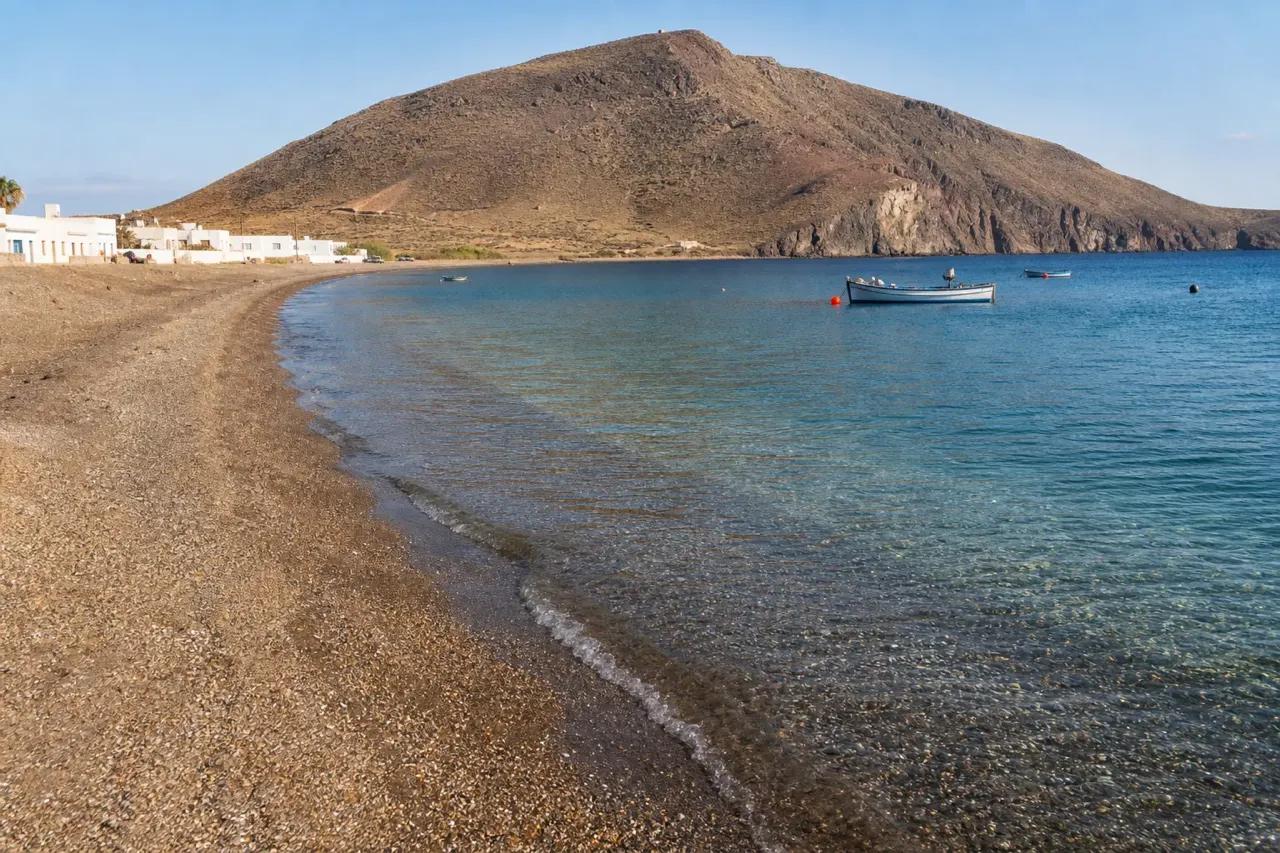
La Fabriquilla Beach
A calm beach beneath the Morrón de Cabo de Gata, beside La Fabriquilla hamlet and the lighthouse road.
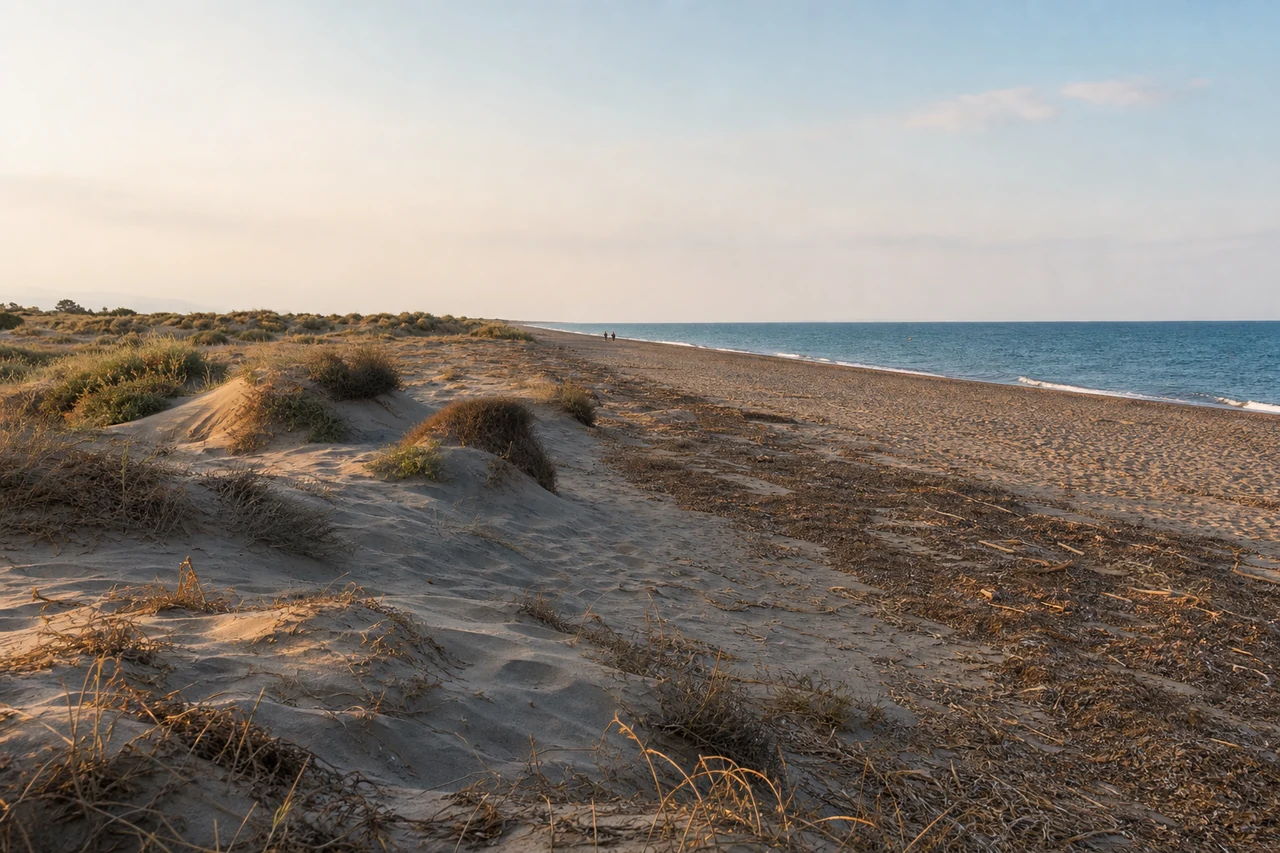
Cerrillos Beach
An extensive protected natural beach in Punta Entinas–Sabinar, with dunes and seagrass deposits between Roquetas and El Ejido.
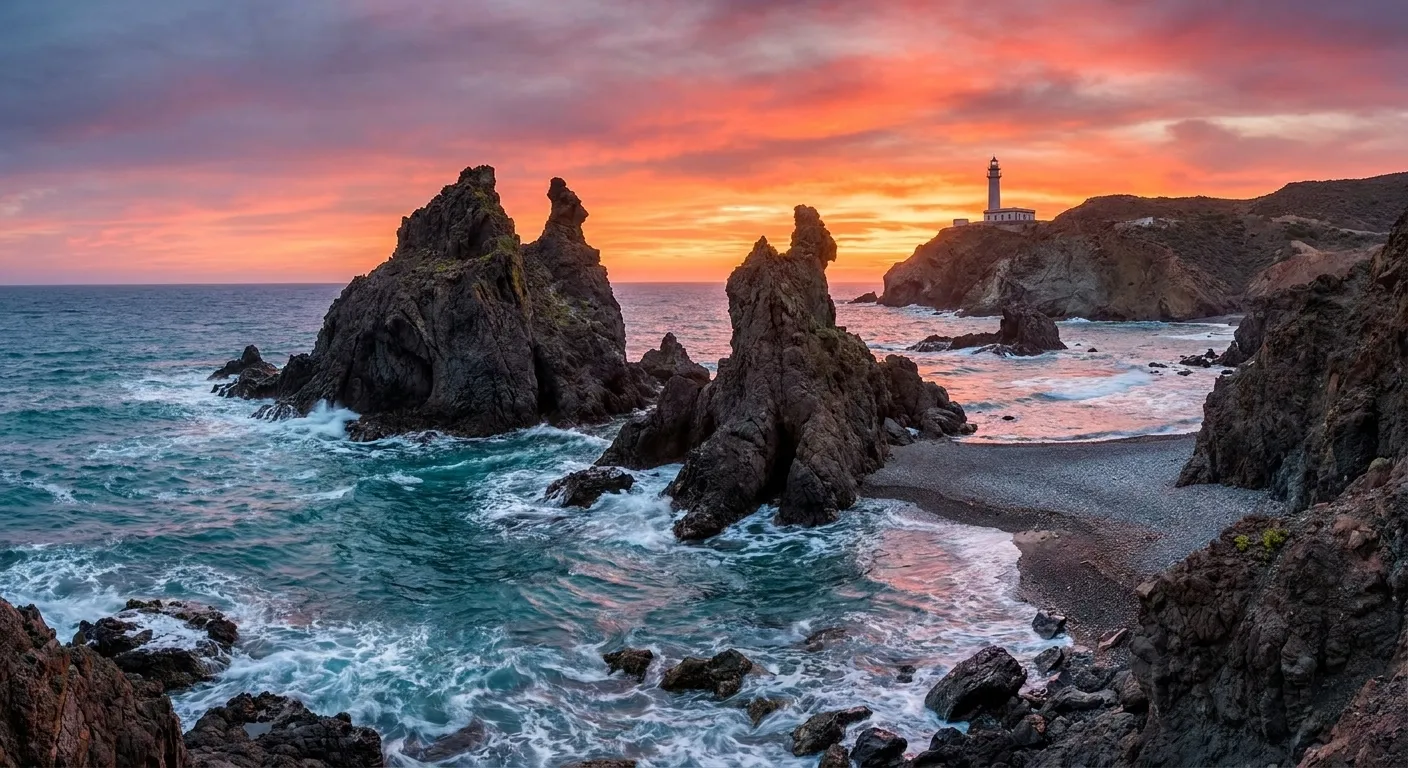
Las Sirenas
At the foot of the Cabo de Gata lighthouse. Not a swimming beach as such, but a reef: needles of volcanic rock, the remains of ancient chimneys, rising from the sea. There is a viewpoint and it is a good spot for snorkelling.
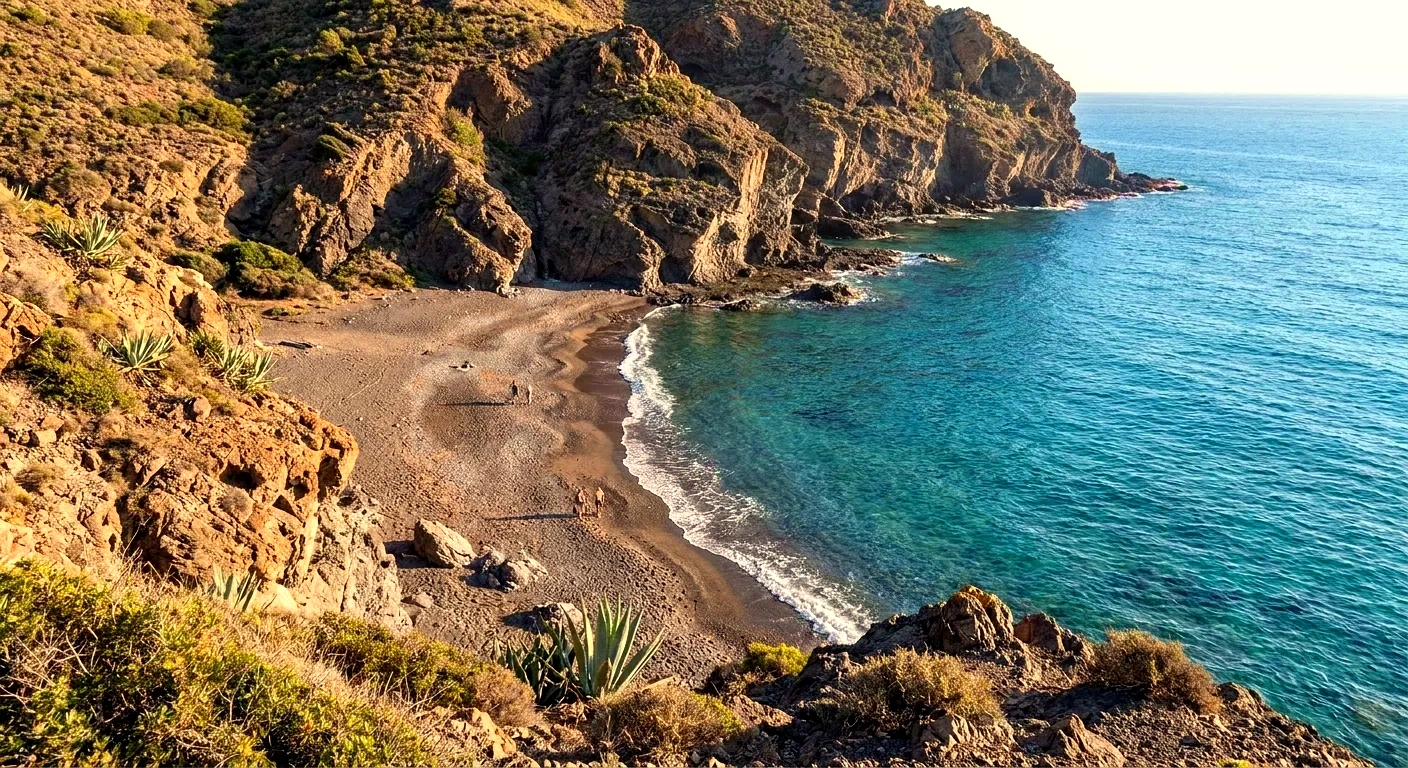
El Corralete Beach
Wild beach beside the Cabo de Gata lighthouse, sand mixed with stones and no services, prized for snorkelling.
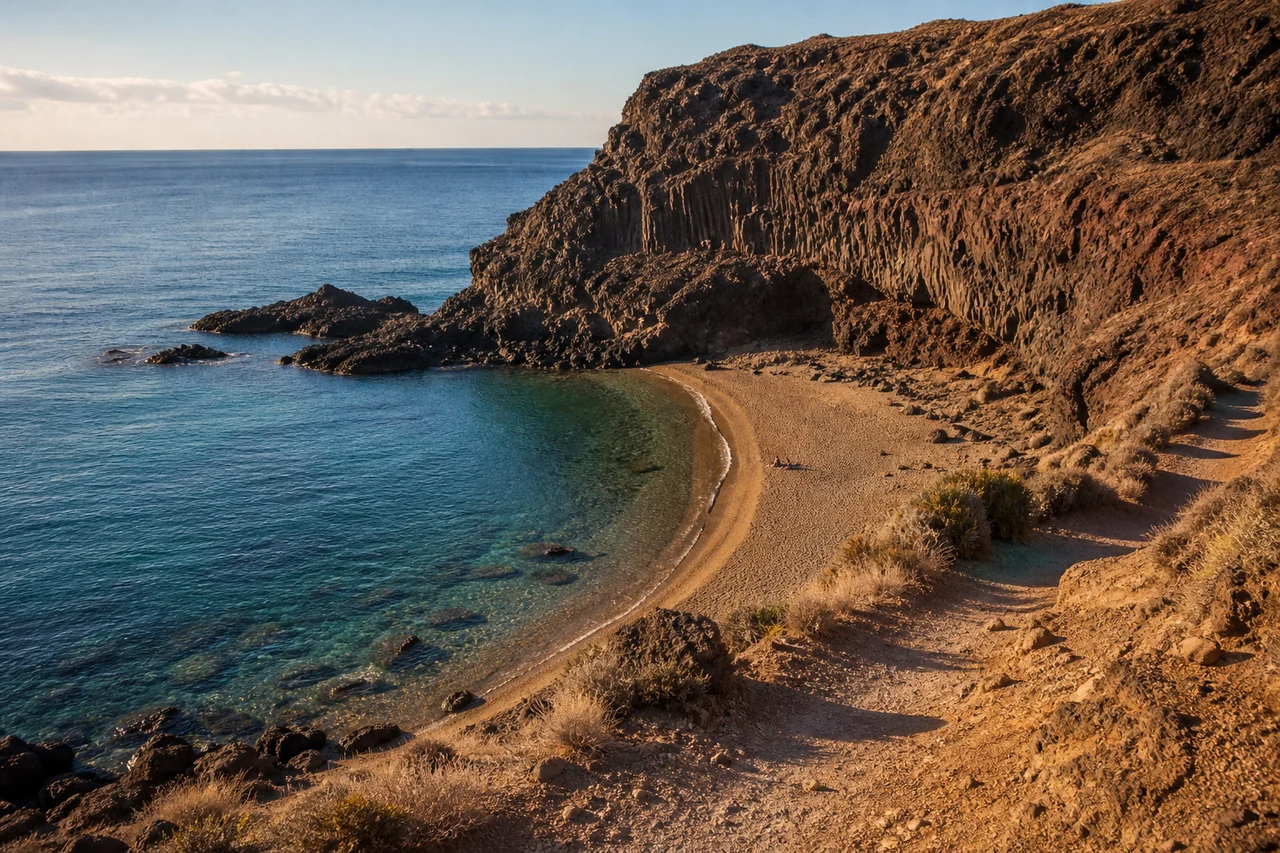
Cala Arena (Cabo de Gata)
A small unspoilt golden-sand cove below Punta Baja, beyond the Cabo de Gata lighthouse, enclosed by volcanic blocks.
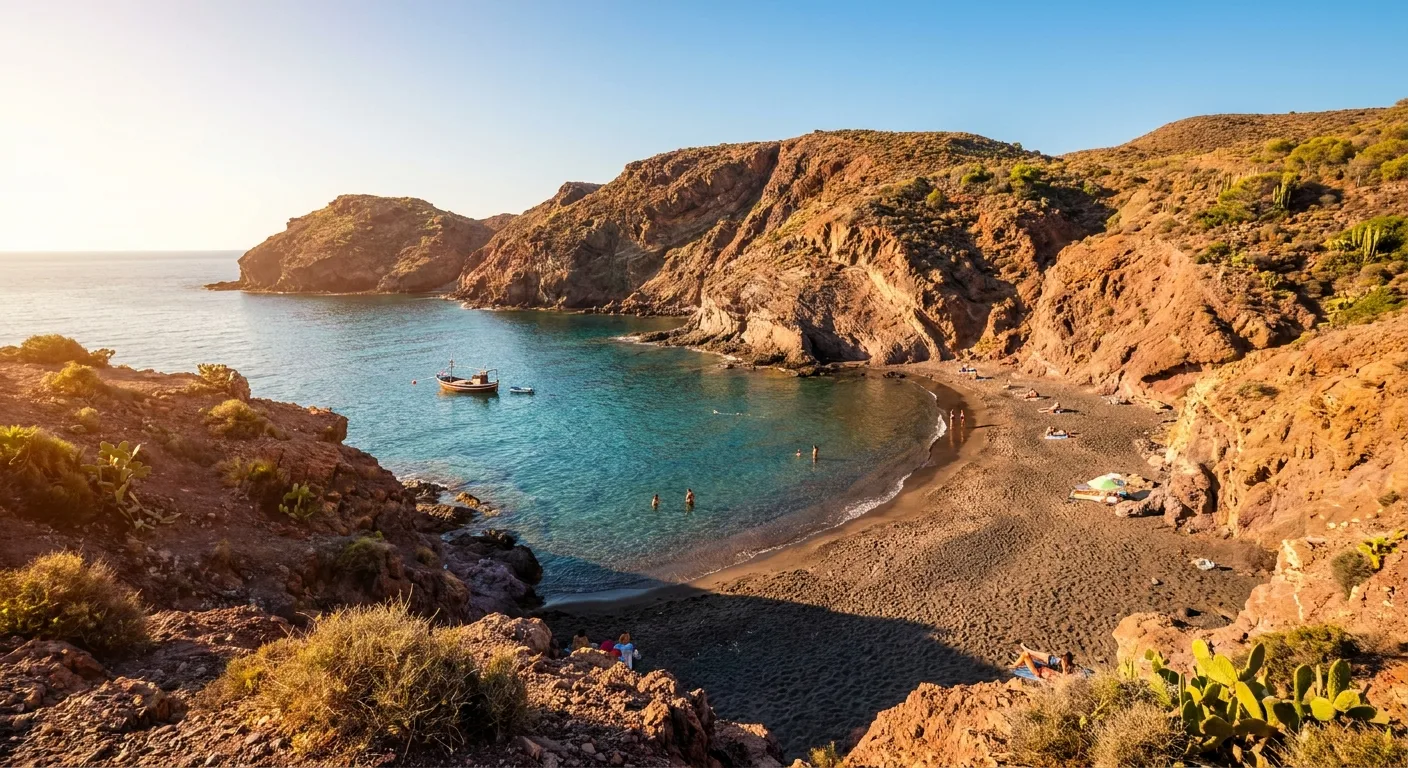
Cala Rajá
Small, isolated wild cove near the Cabo de Gata lighthouse, with clear water and the Dedo de Dios rock formation as its geological landmark.
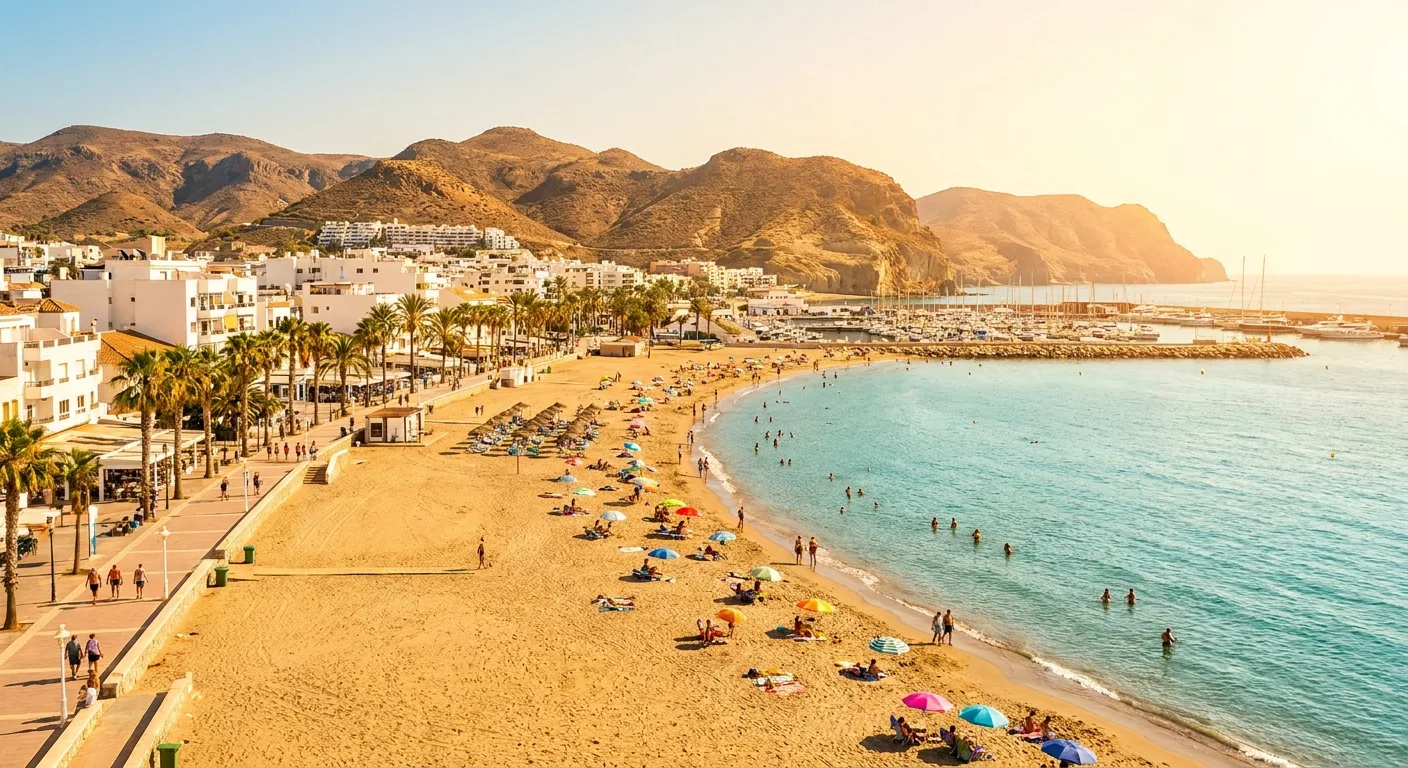
San José Beach
Blue Flag urban beach in the heart of San José village, within the Cabo de Gata-Níjar Natural Park.
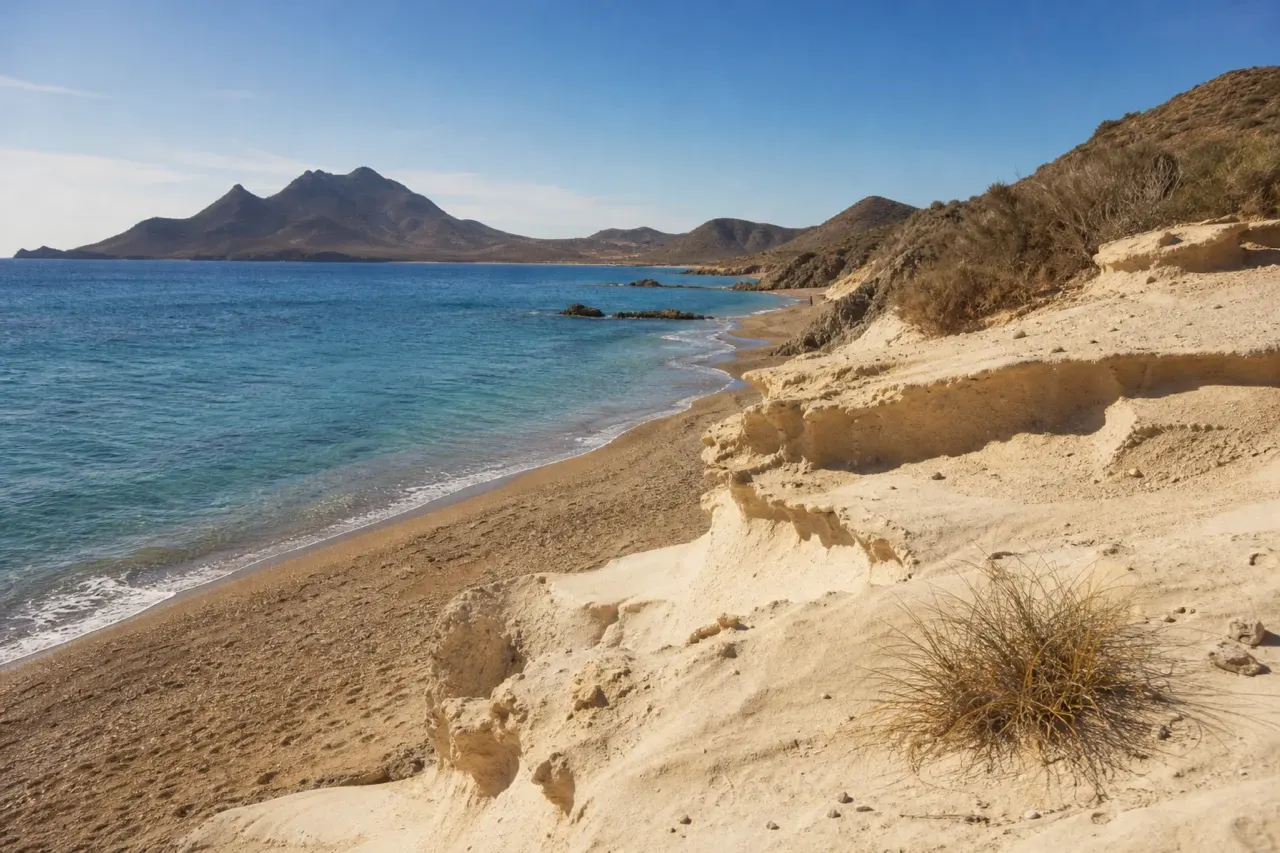
Los Escullos Beach
An open sand-and-gravel shore beside sculpted fossil dunes, with Los Frailes rising on the horizon.
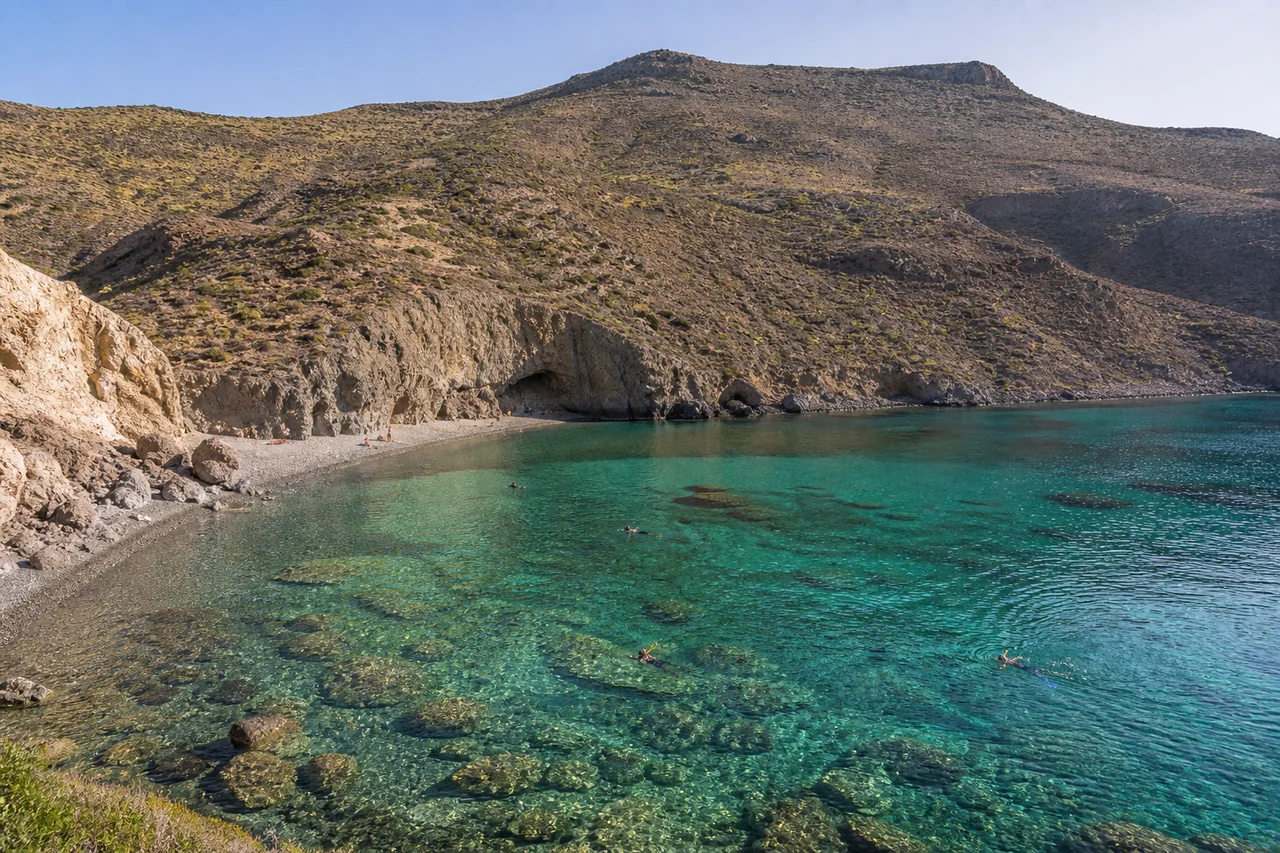
Cala Higuera
A long, narrow gravel-and-pebble cove beside San José, with clear seabeds, volcanic walls and excellent snorkelling spots.
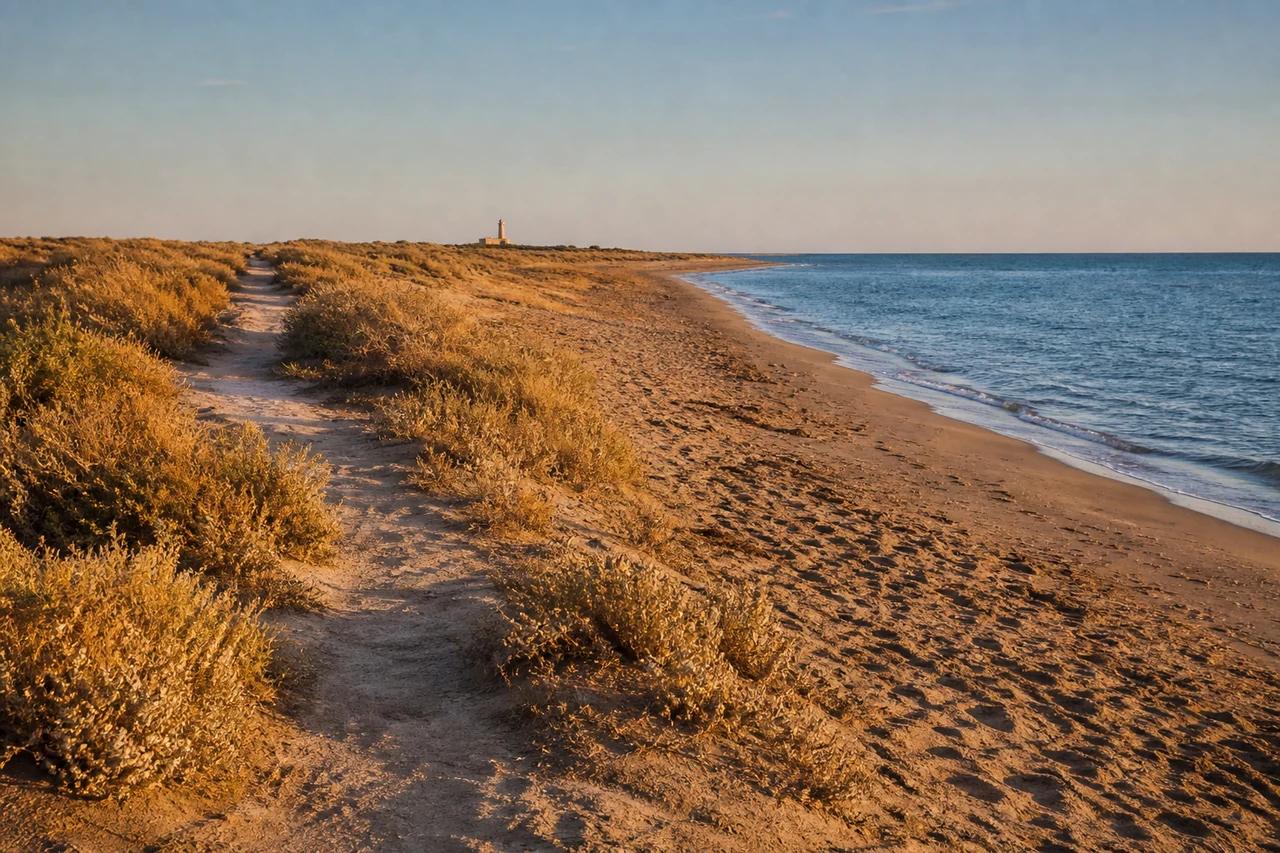
Los Percheles Beach
A wild section of Punta Entinas–Sabinar, with low dunes, sand and an arid coast without facilities.
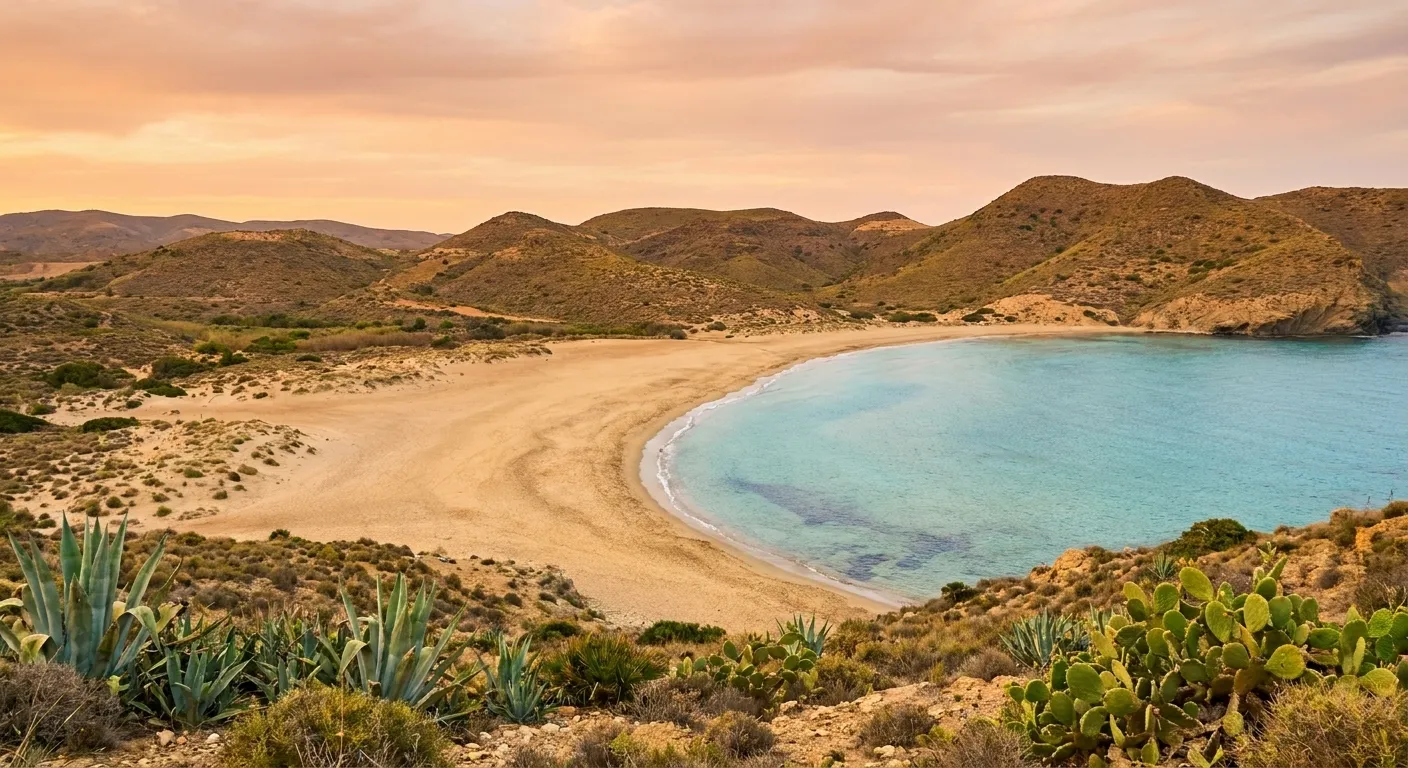
Los Genoveses
A bay of just over a kilometre of golden sand, with dunes and prickly pears and not a single building. Part of "Lawrence of Arabia" was filmed here.
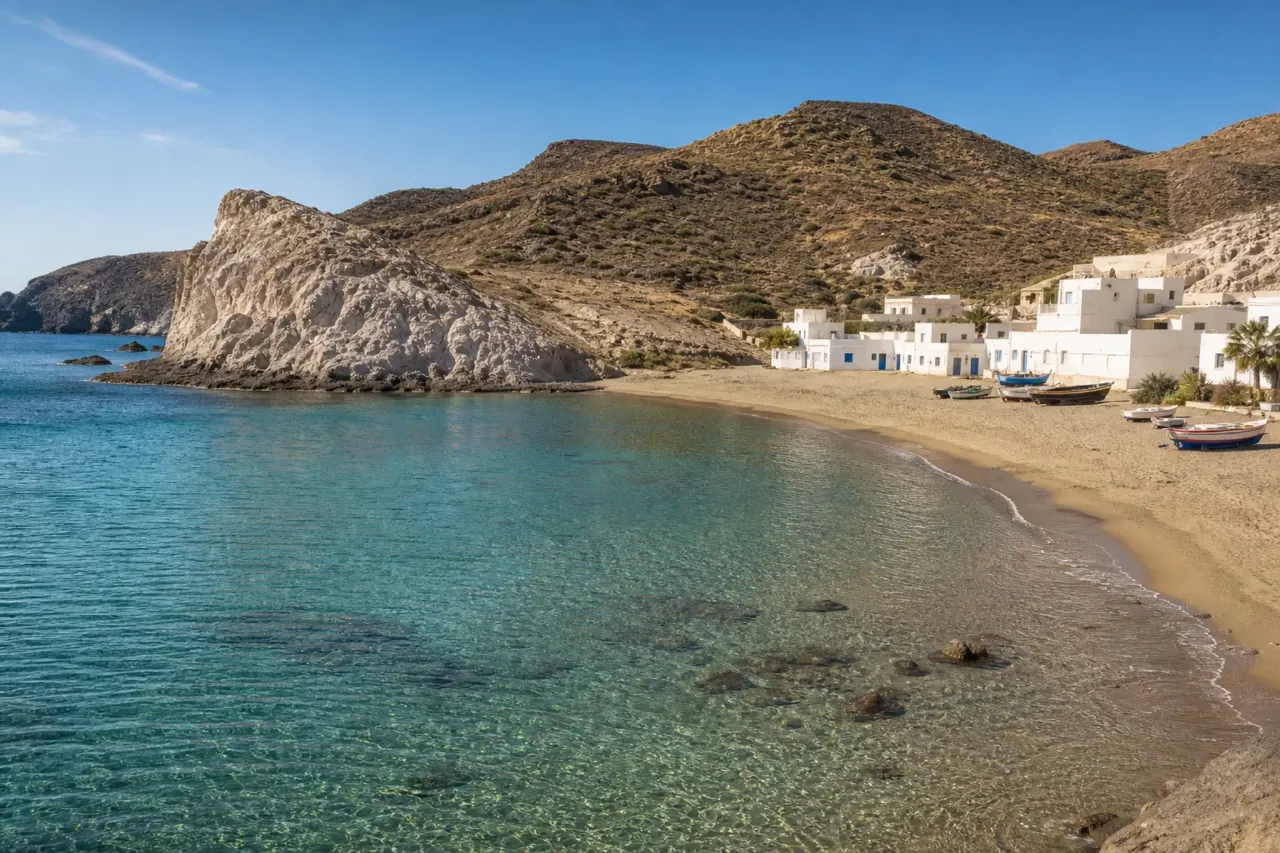
Peñón Blanco Beach
La Isleta del Moro’s small beach, beside the boats of the old fishing hamlet and its large pale volcanic rock.
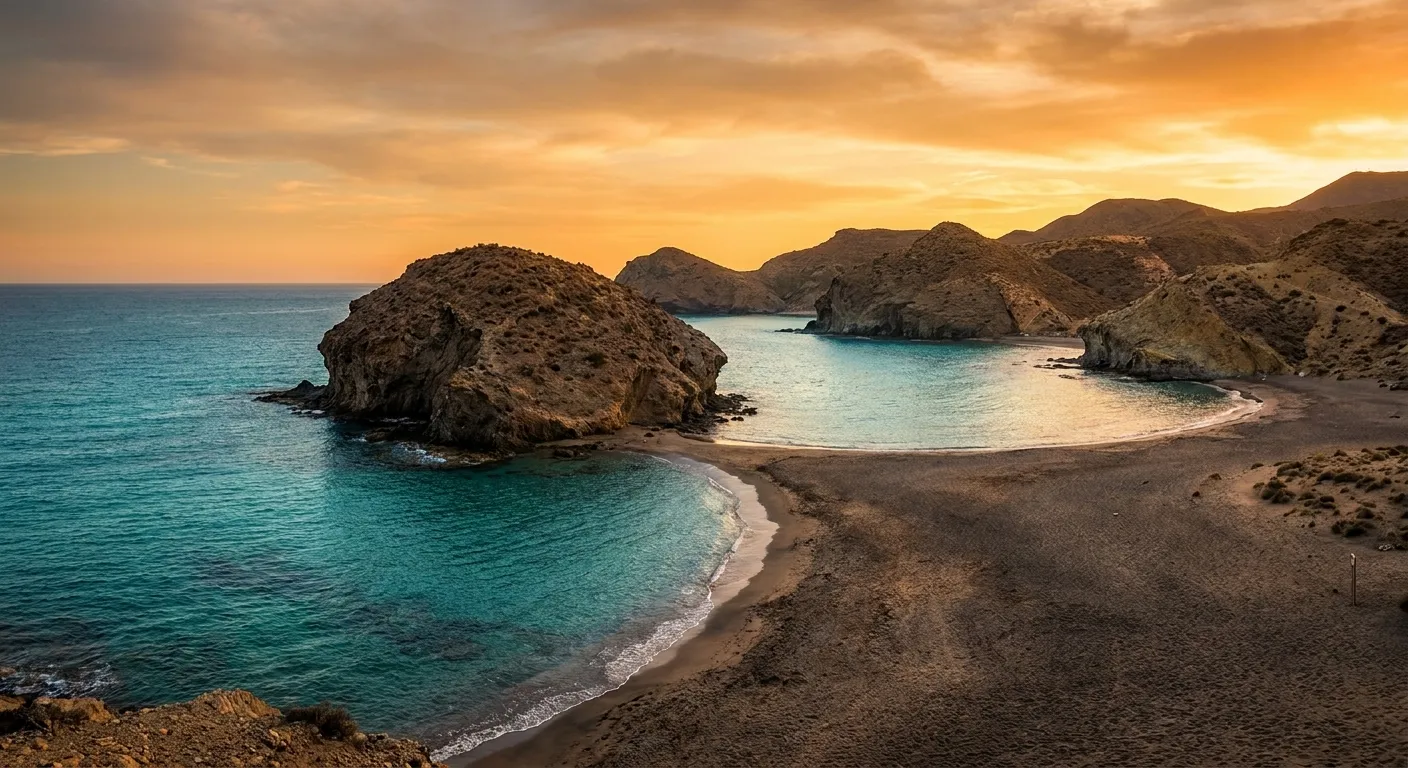
Mónsul
The most photographed beach in the cape. At its centre rises La Peineta, a large eroded lava rock, and behind it stretches a moving dune. Spielberg filmed an Indiana Jones scene here.
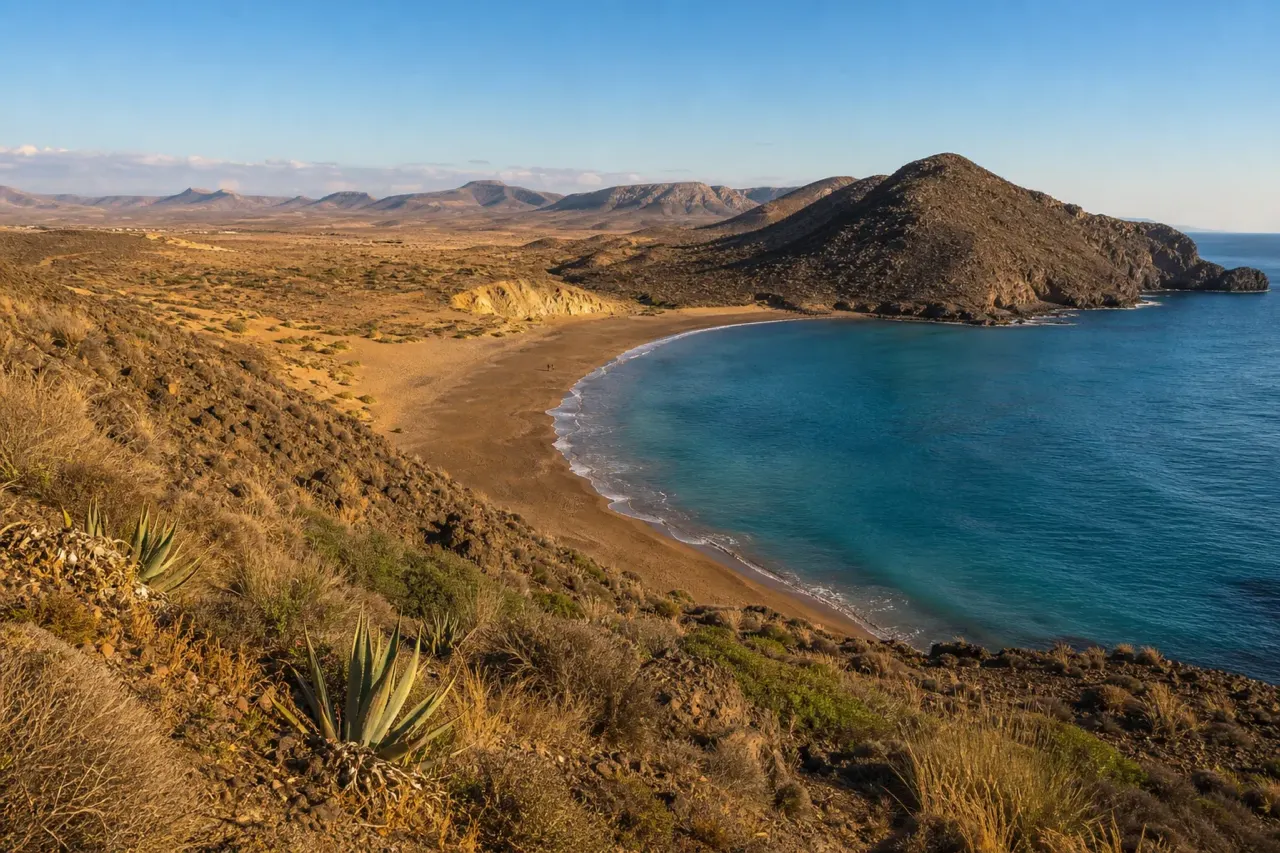
Barronal Beach
A wild dark-sand bay between Genoveses and Mónsul, enclosed by lava formations, low dunes and steppe vegetation.
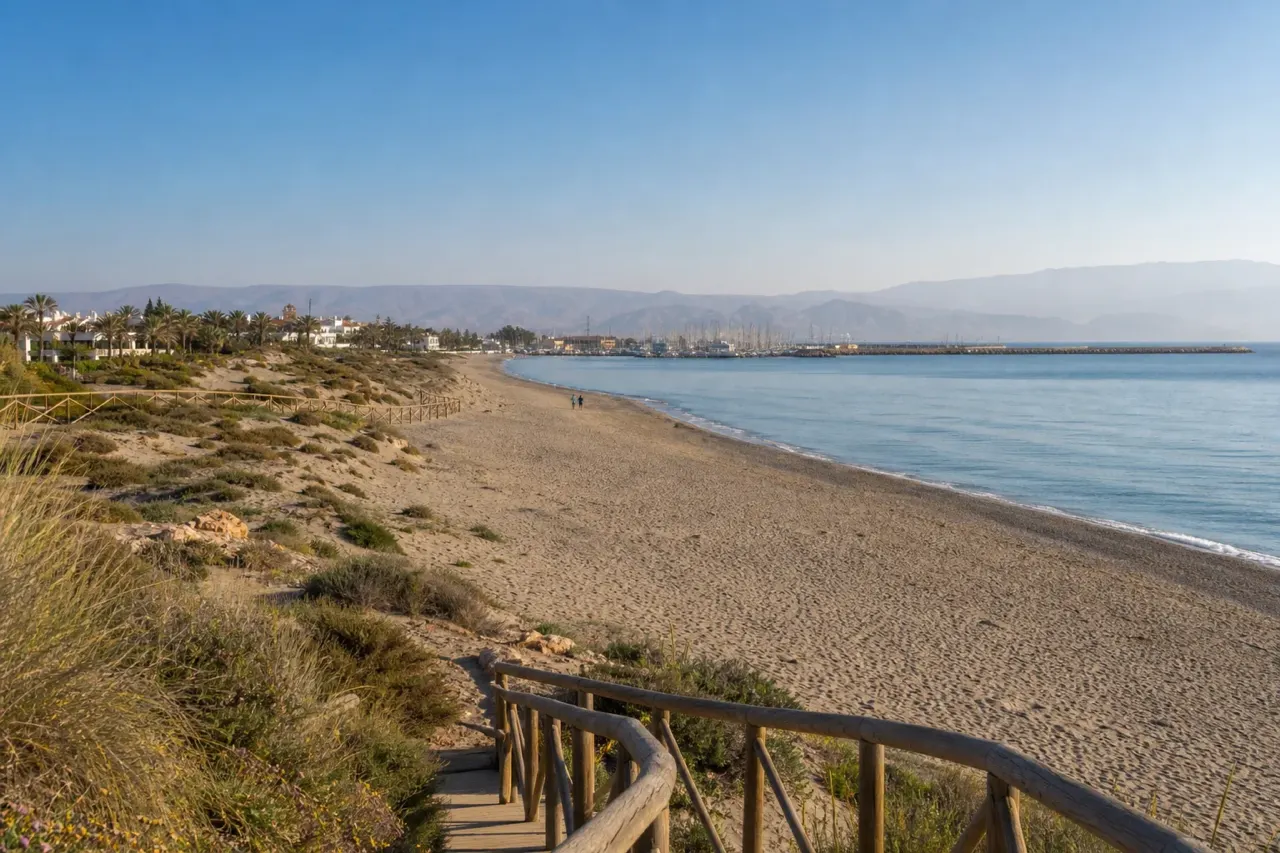
Almerimar Levante Beach
A broad beach beside Almerimar, open to the Mediterranean and backed by low dunes and timber access paths.
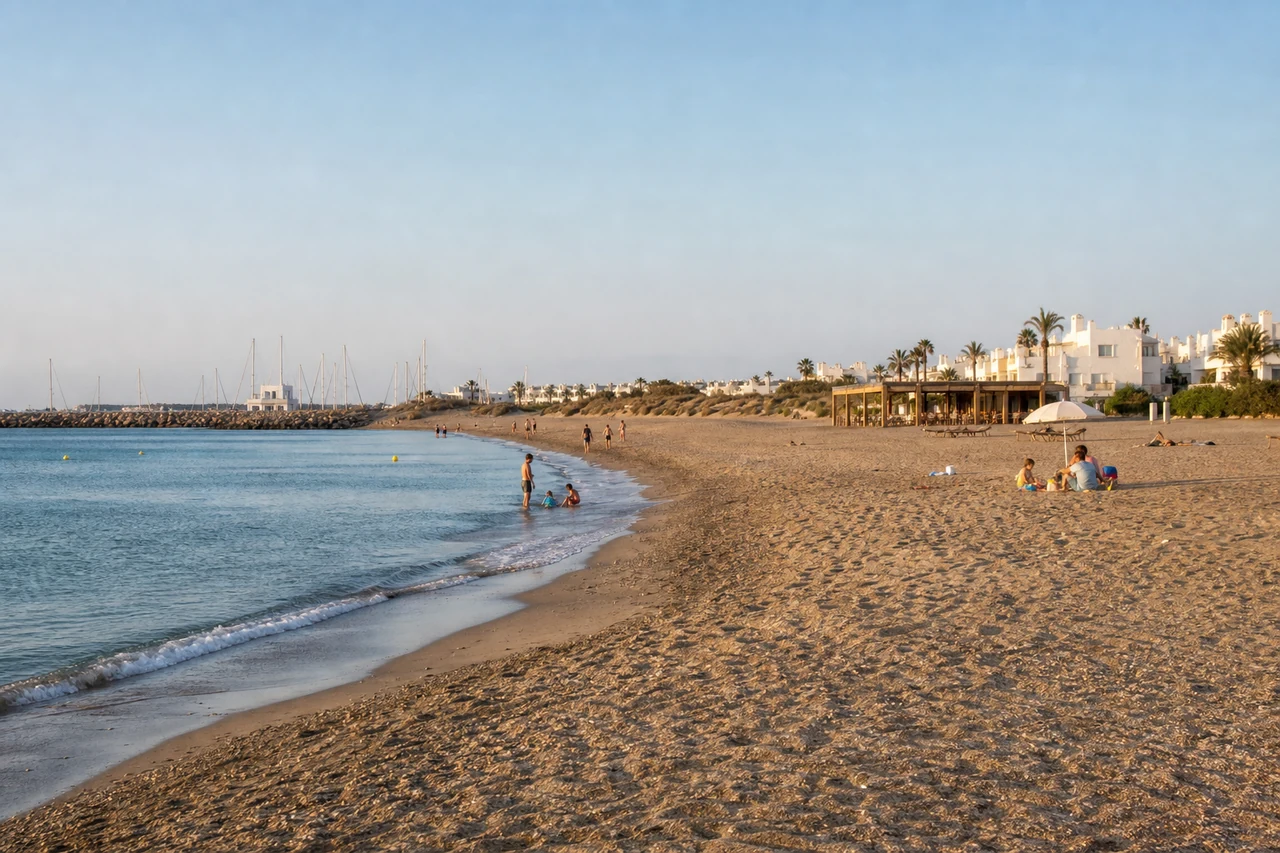
Almerimar Poniente Beach
A long residential beach of coarse sand and generally calm water, between Almerimar marina and the dunes.
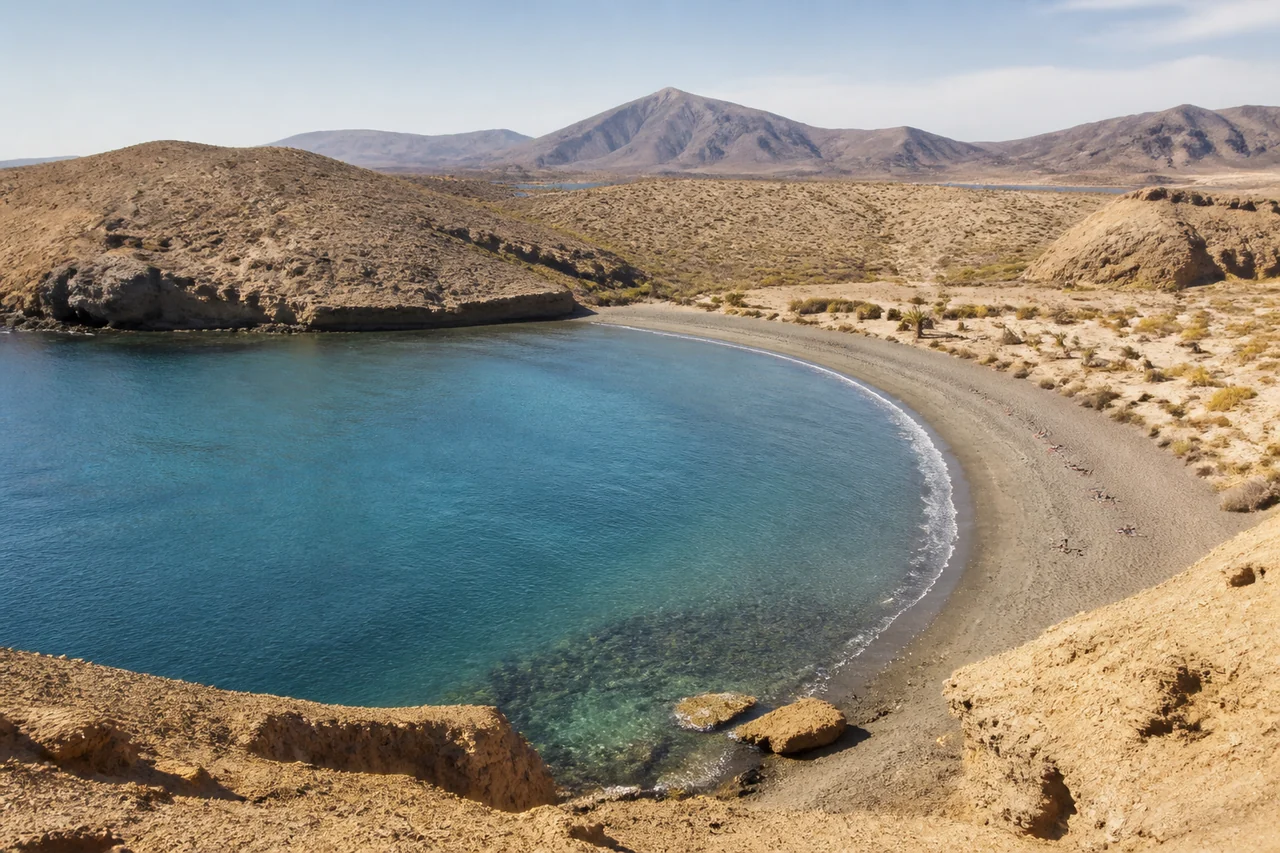
Media Luna Cove
A crescent-shaped cove of fine dark-grey sand, embraced by two volcanic headlands just beyond Mónsul.
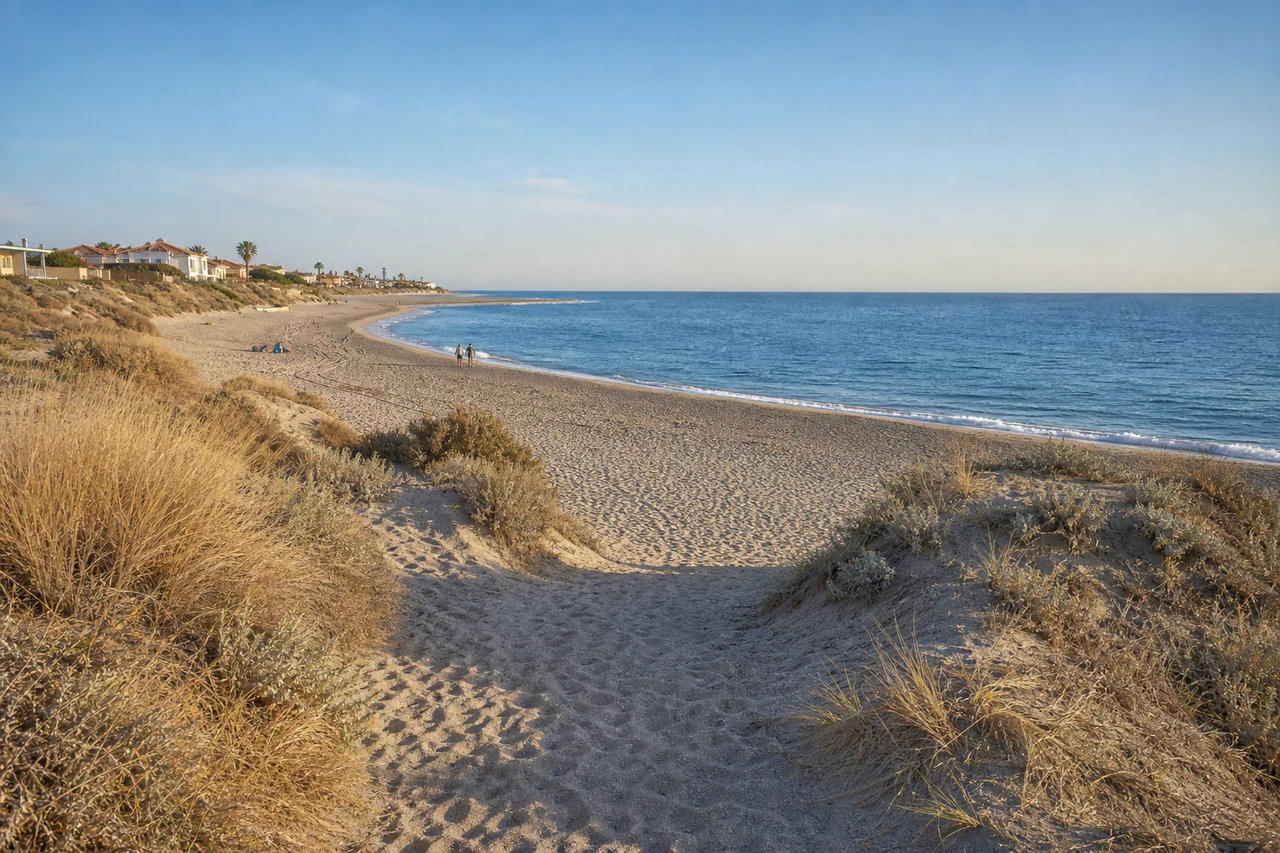
San Miguel Beach (El Ejido)
A semi-urban beach of coarse sand and dunes in El Ejido, with extensive seasonal facilities and accessibility.
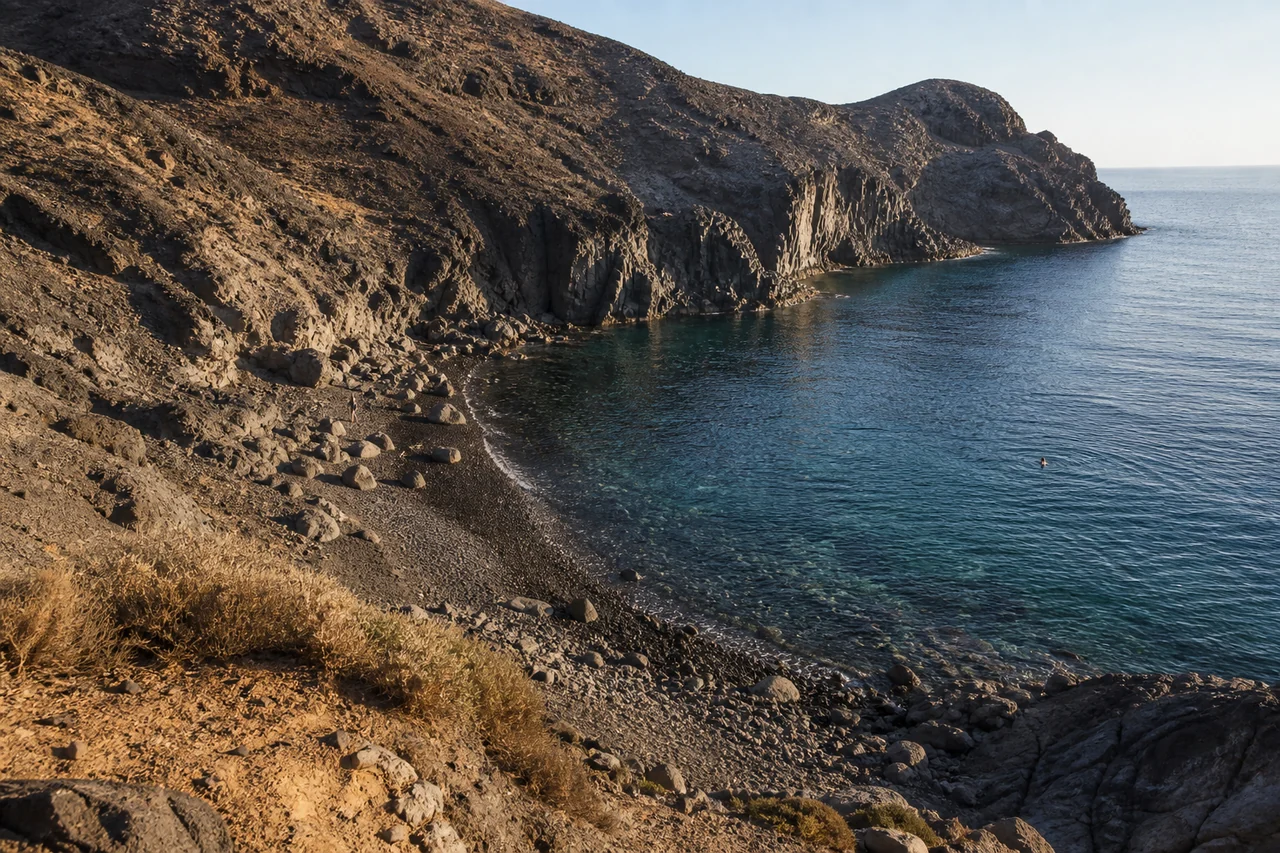
Cala Carbón
A wild gravel, pebble and volcanic-boulder cove west of Mónsul, dominated by the andesite of Punta Redonda.
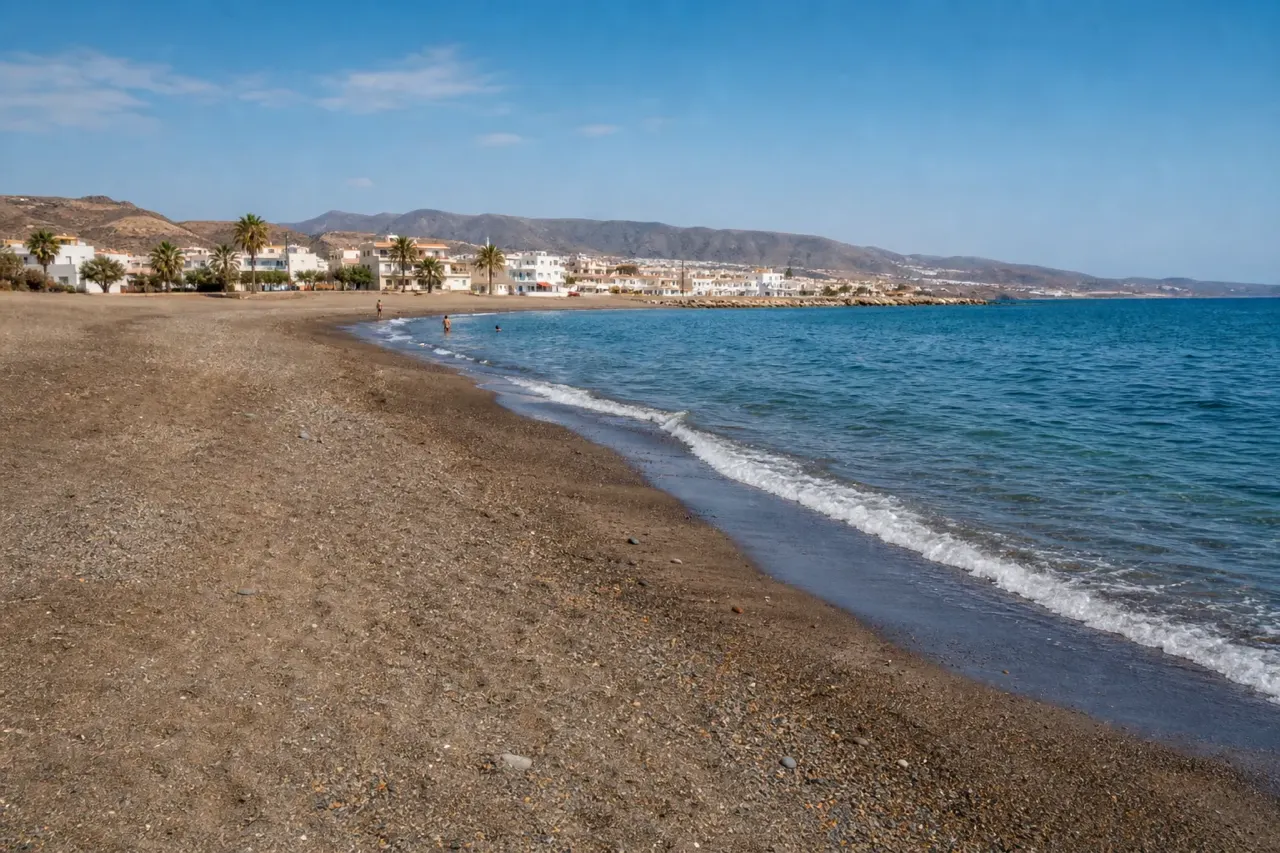
Balanegra Beach
A long western-coast beach facing Balanegra, with dark sand, gravel, an open horizon and a local atmosphere.
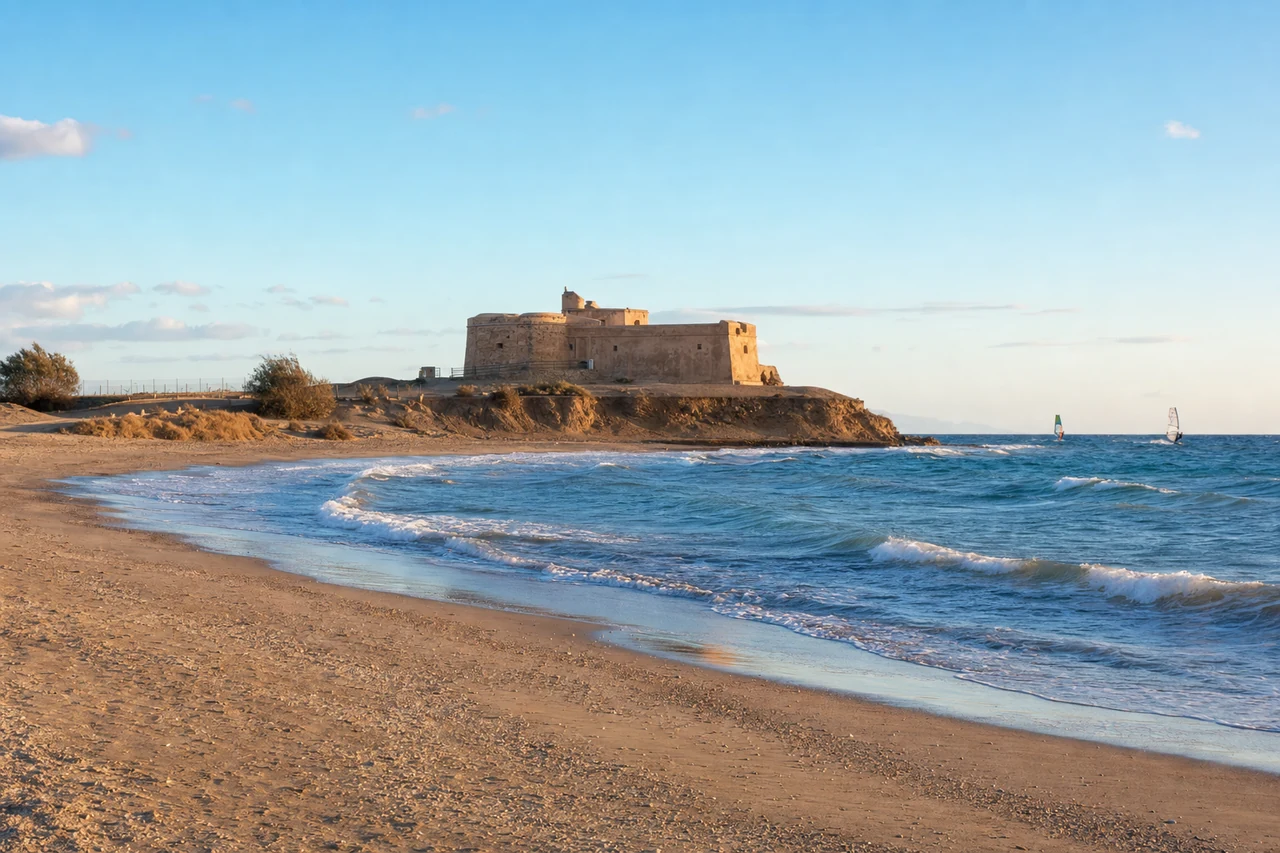
Los Baños–Guardias Viejas Beach
Three kilometres of coarse sand and dunes by Guardias Viejas, with the castle as a landmark and wind sports.
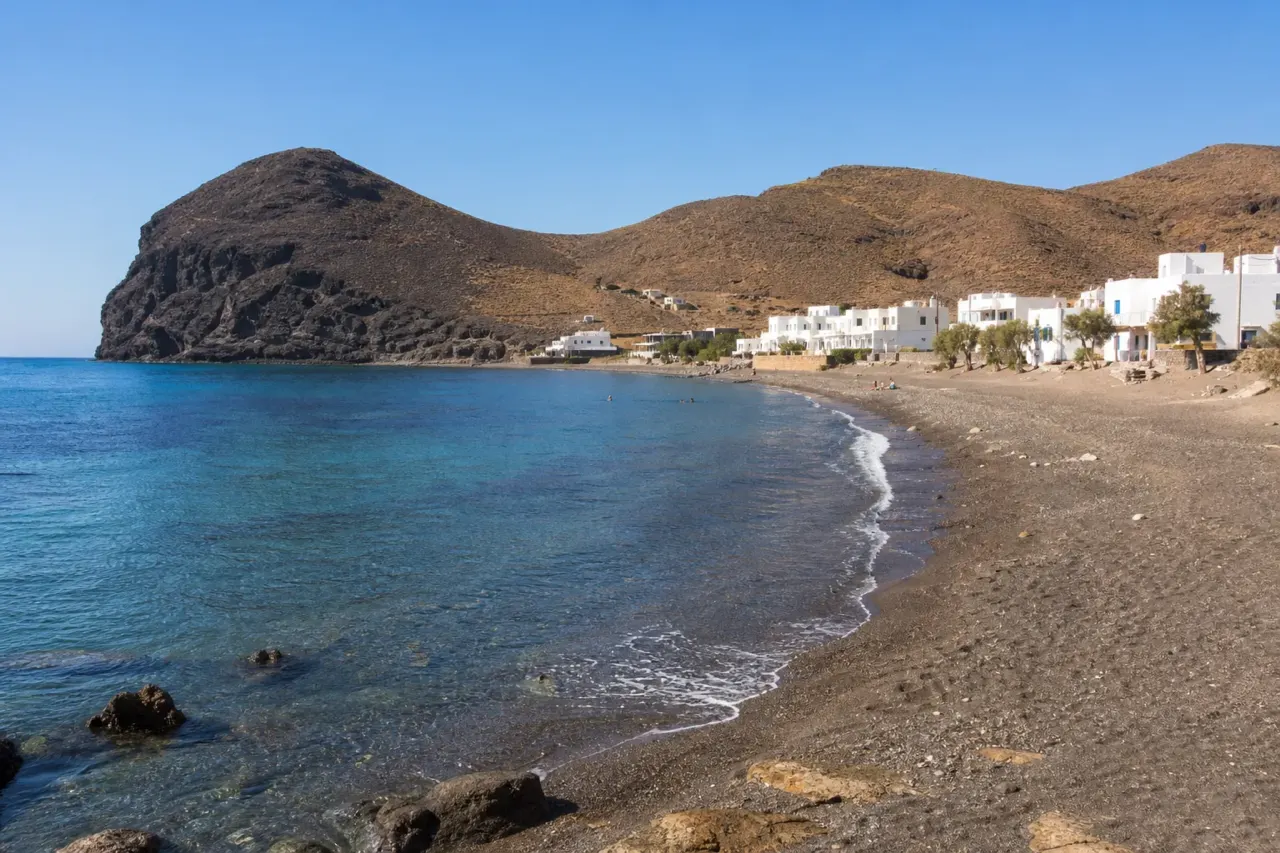
Las Negras Beach
Dark sand, fishing boats and white houses beneath Cerro Negro in one of Cabo de Gata’s most distinctive seaside villages.
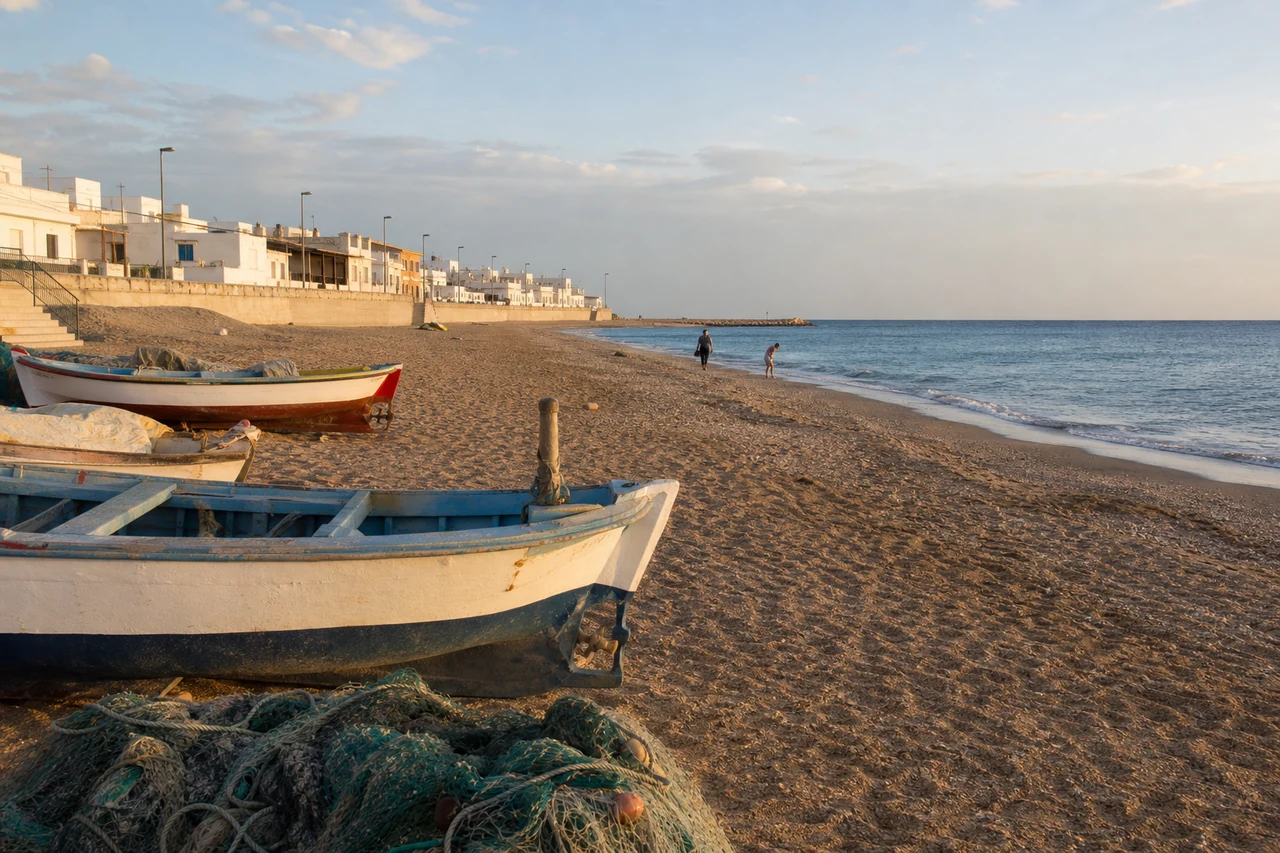
Balerma Beach
A long coarse-sand beach facing the fishing village of Balerma, with a promenade and boats pulled onto the shore.
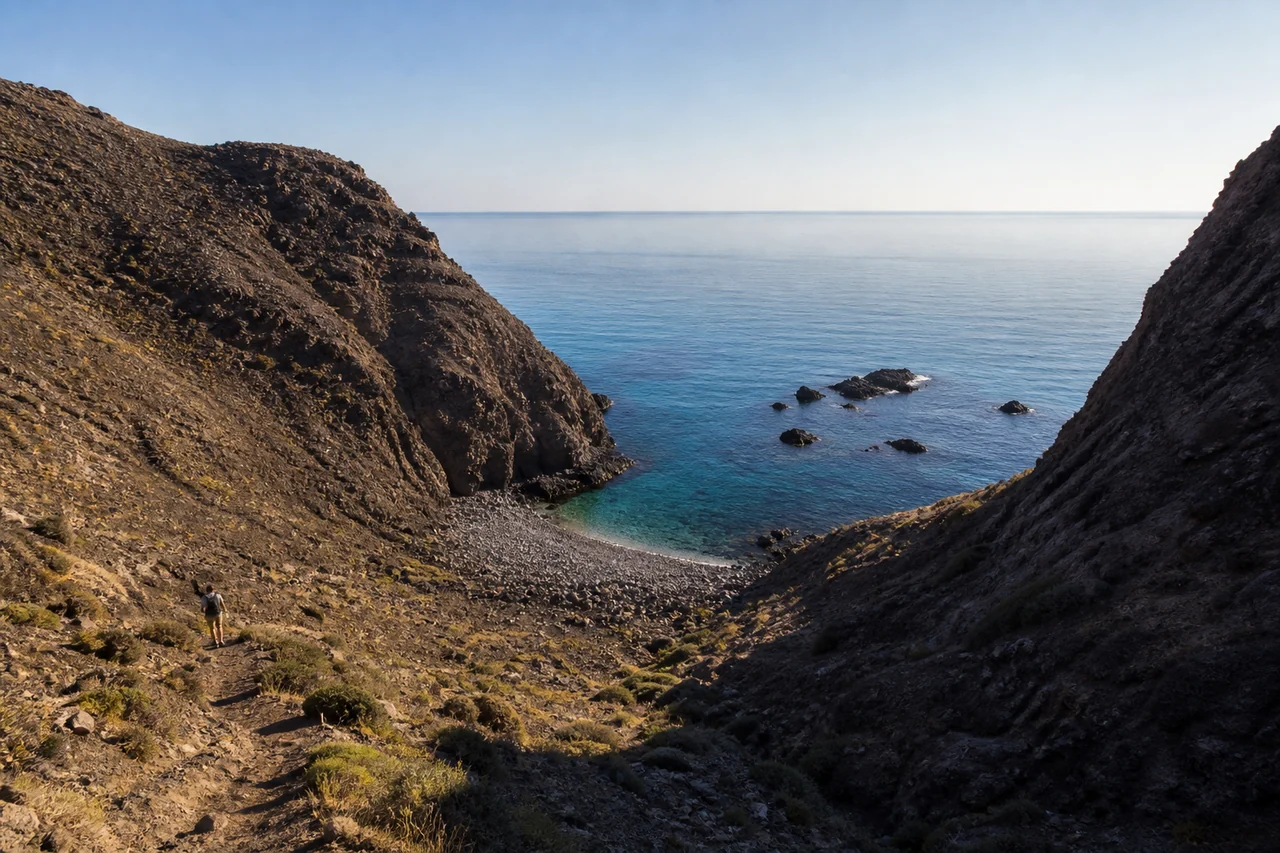
Bergantín Cove
A tiny unspoilt cove of gravel, dark sand and large volcanic pebbles in the isolated Polacra sector.
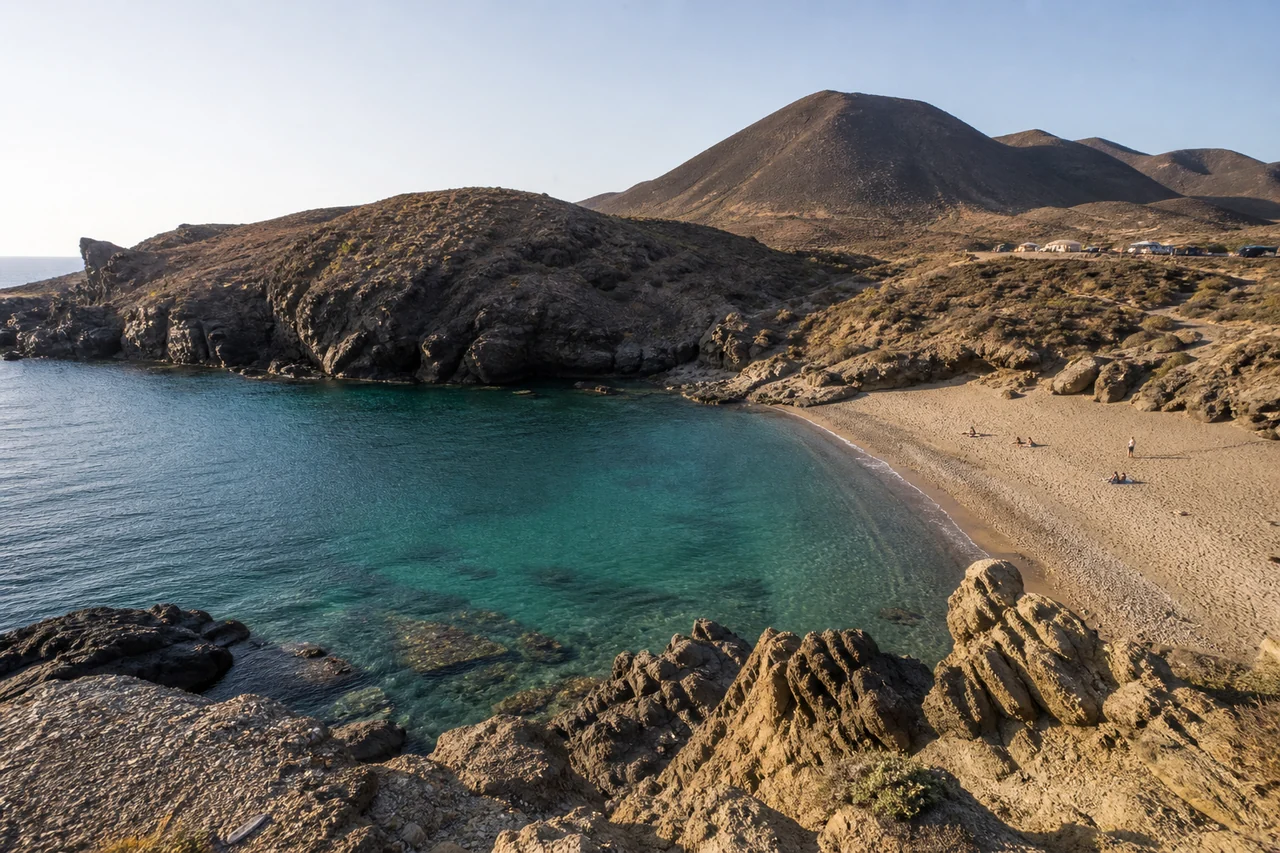
Cuervo Cove
A small cove of fine grey-golden sand with occasional pebbles, tucked between cliffs by Las Negras opposite Cerro Negro.
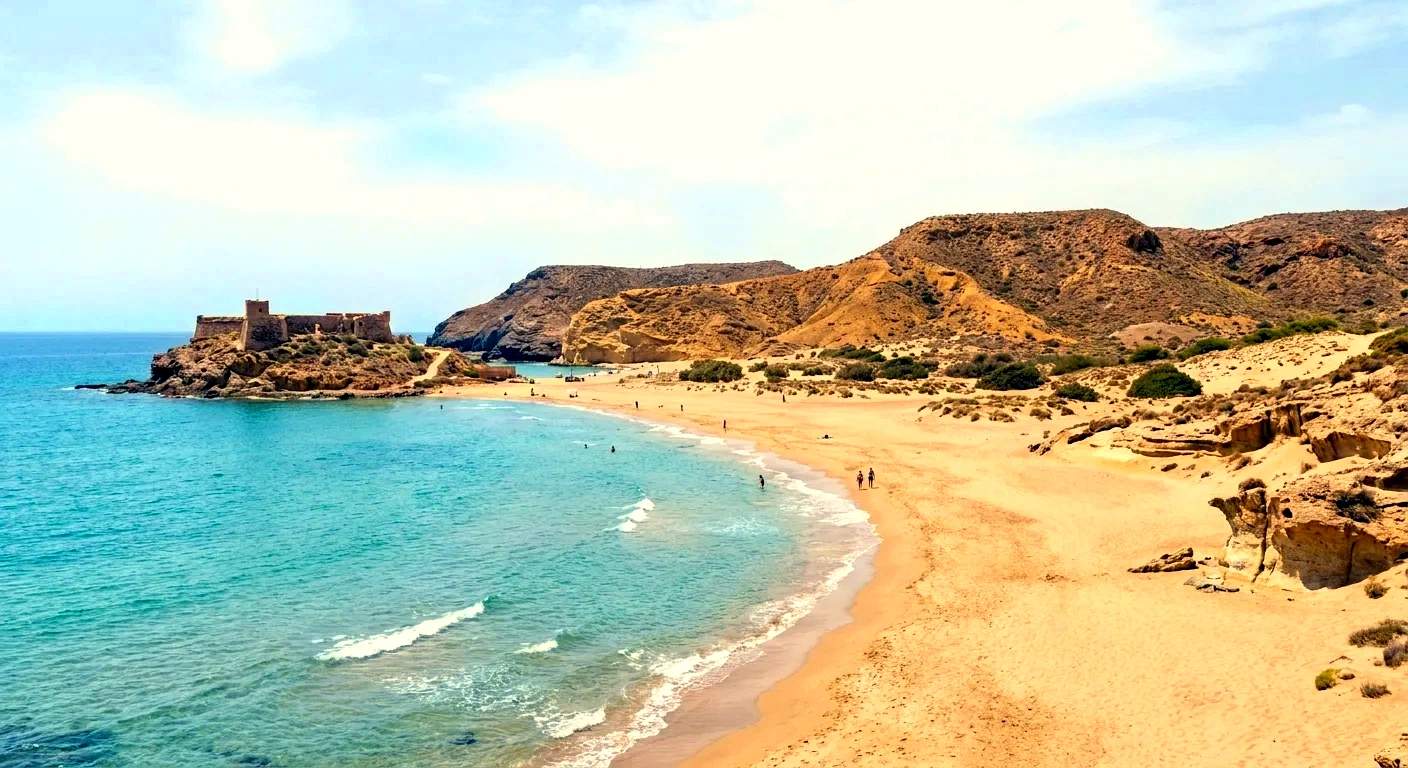
El Playazo de Rodalquilar
Broad golden-sand beach by Rodalquilar, overlooked by the 18th-century San Ramón battery, with rich seabeds for diving.
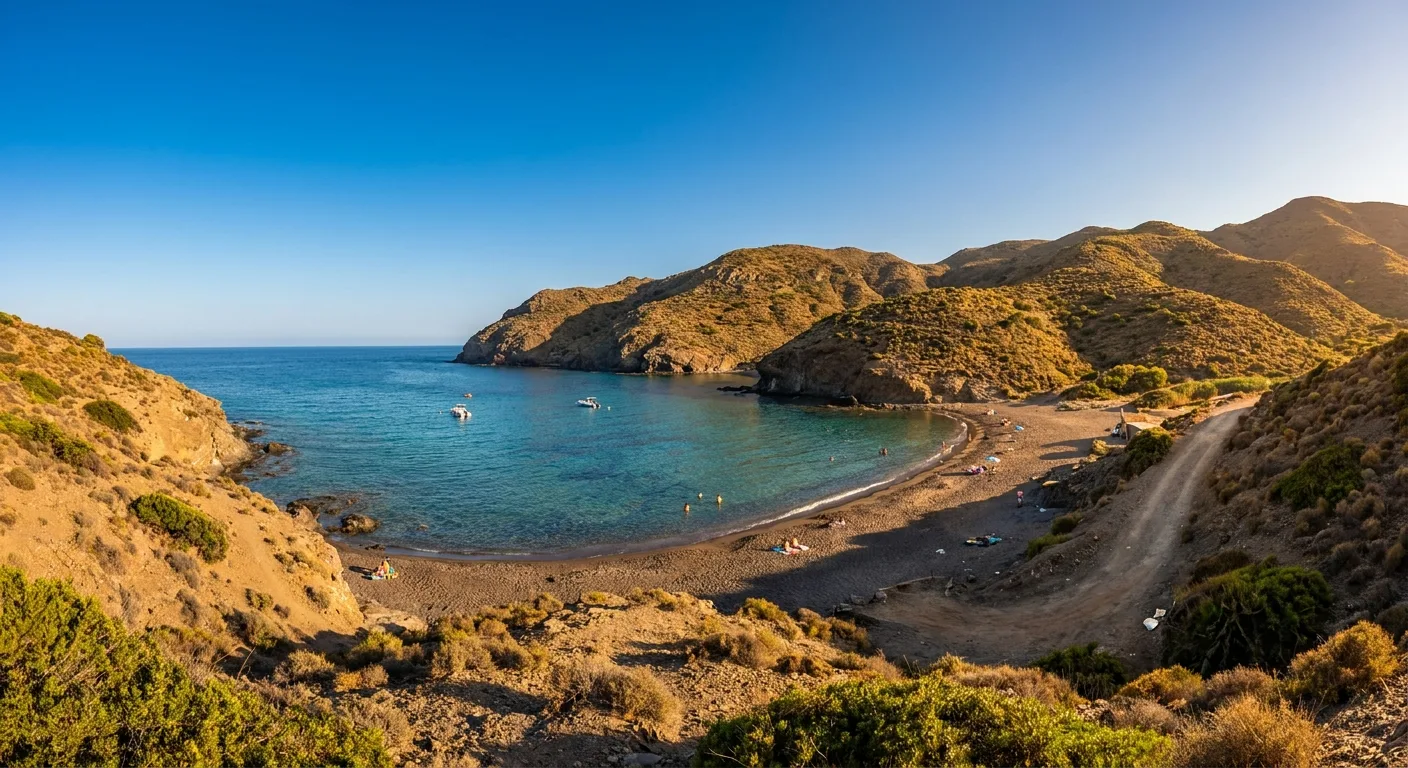
Cala del Plomo
Wild, service-free cove near Agua Amarga, its pebbly shore soon giving way to sand and calm water, with regular naturist use.
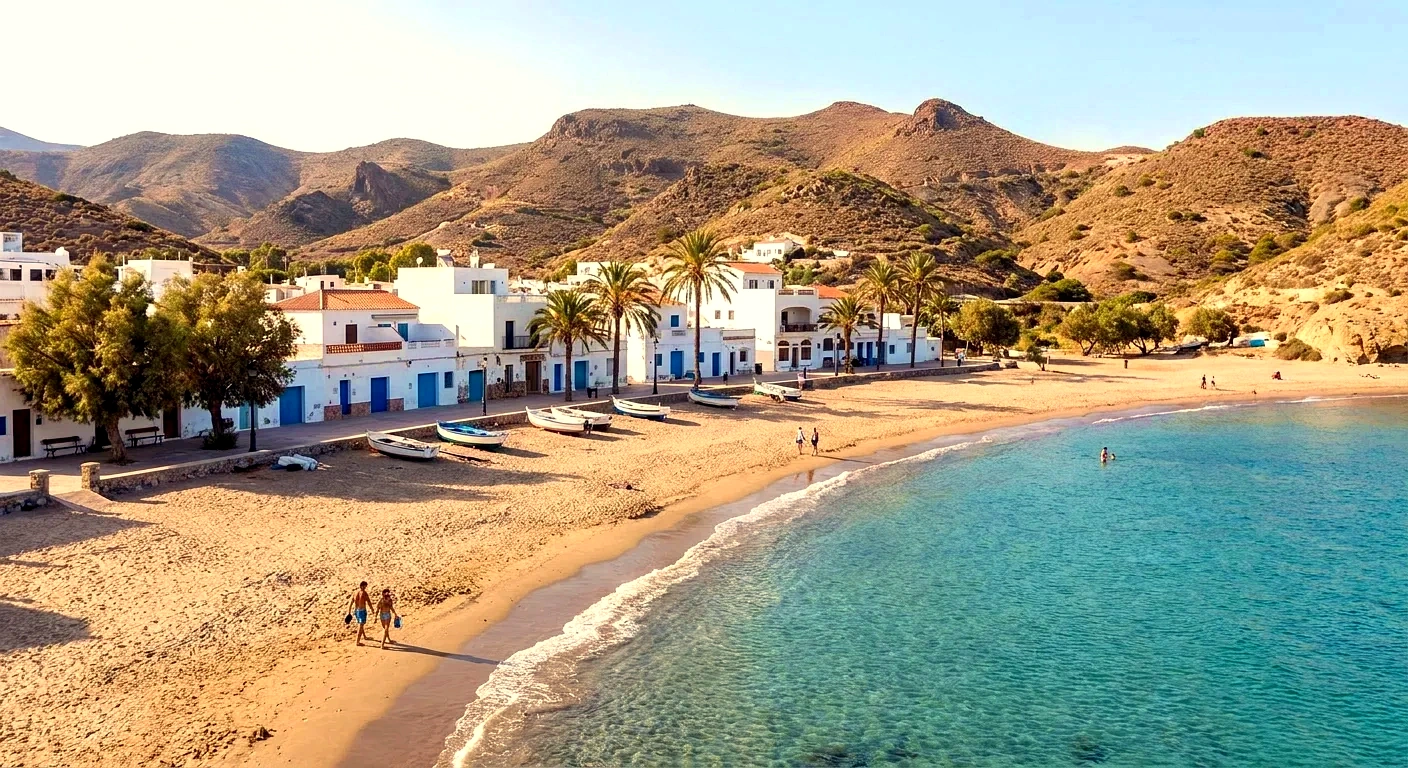
Agua Amarga Beach
Blue Flag urban beach in the fishing hamlet of Agua Amarga, with golden sand and crystal-clear water sheltered between rocky headlands.
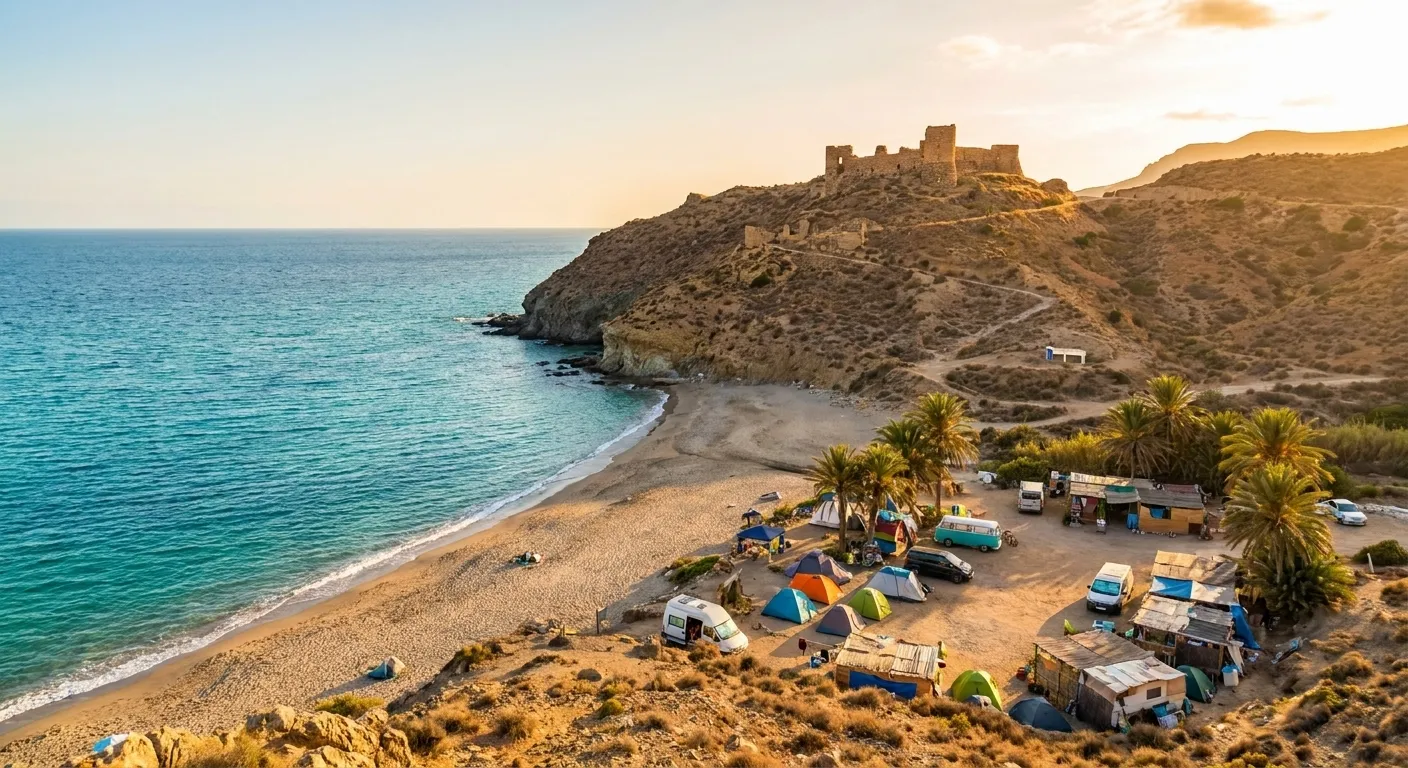
San Pedro
A cove with no road, reached only on foot or by boat from Las Negras. Turquoise water, a ruined watchtower and a small community that lives there all year round.
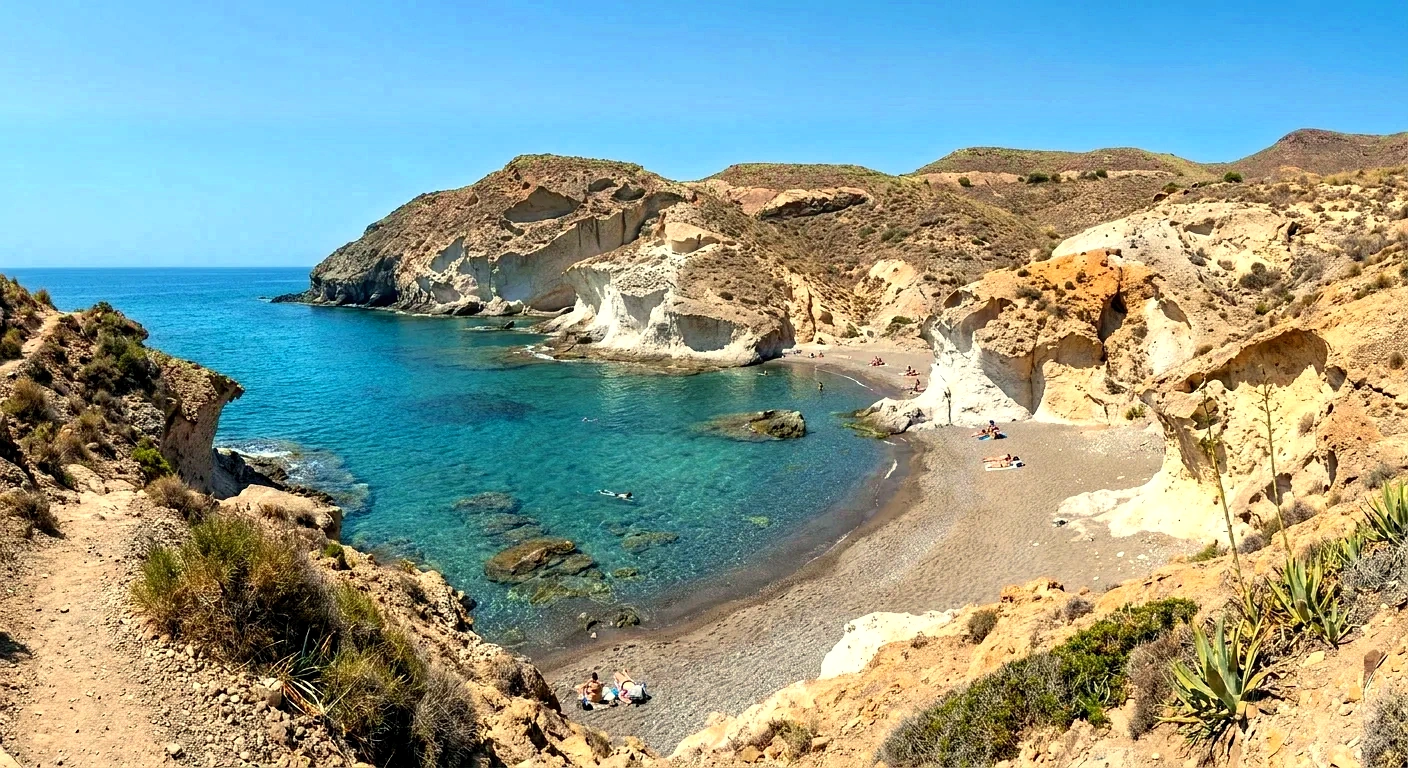
Enmedio
A small cove of golden sand, set among white volcanic tuff rocks and fossilised dunes. Reached on foot from Agua Amarga along a clifftop trail.
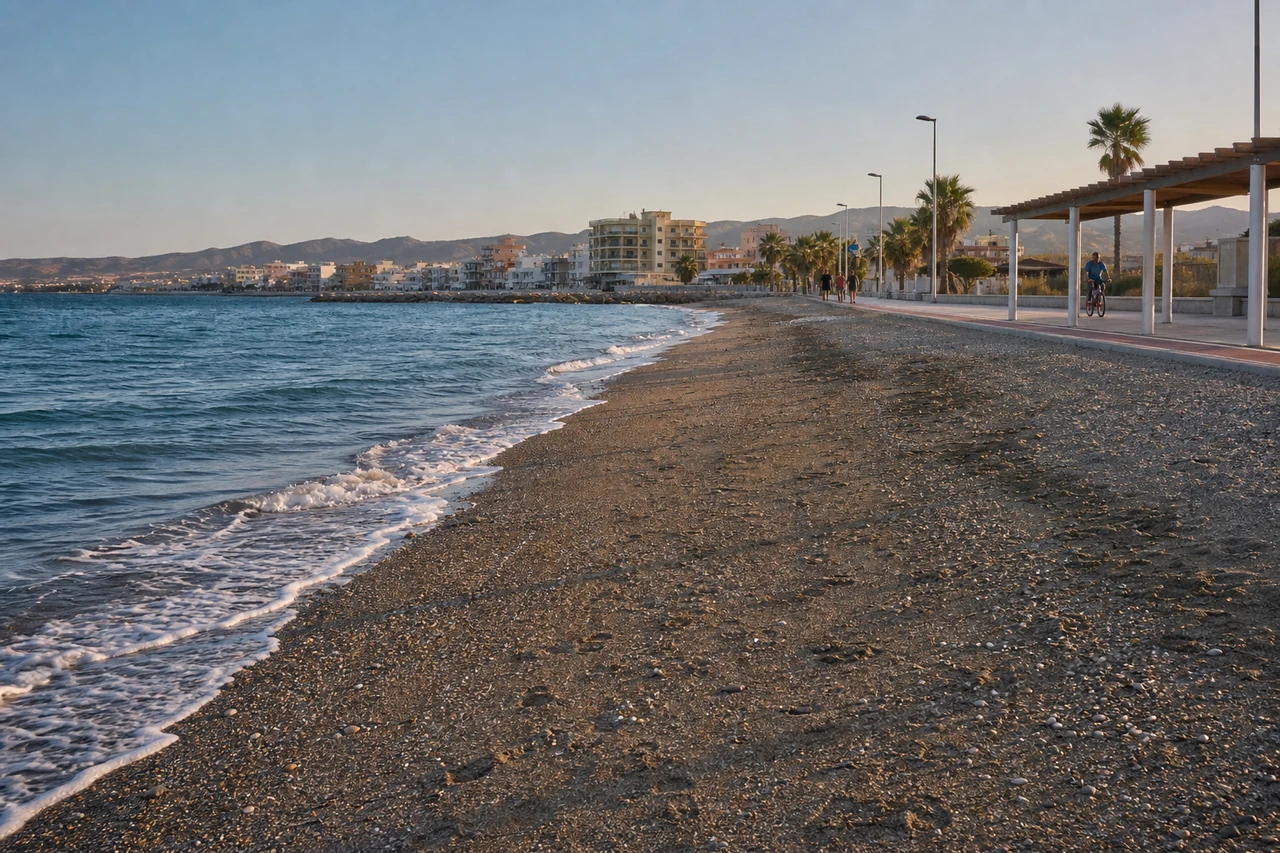
El Censo Beach
A semi-urban dark sand-and-gravel beach in Adra, beside a promenade with a cycle lane and shade.
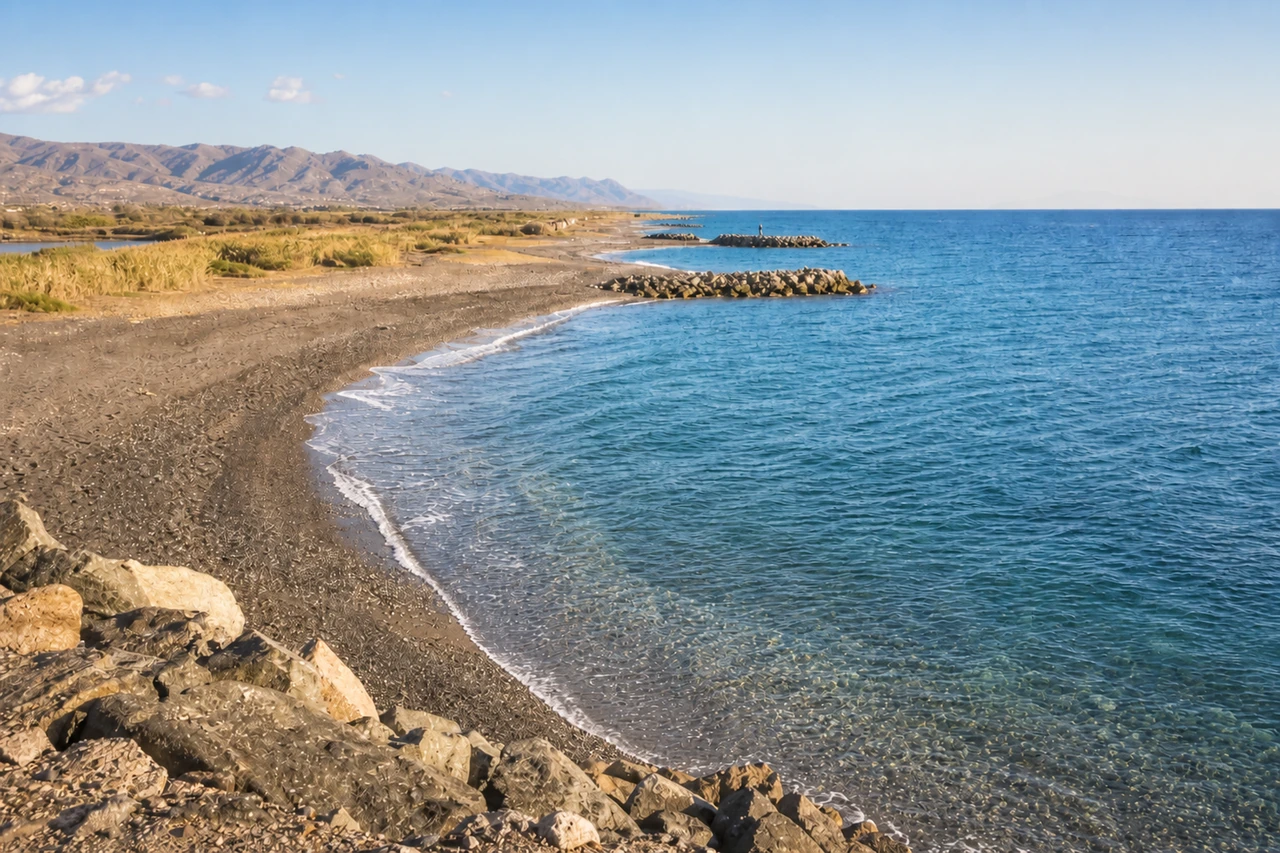
La Habana Beach
Adra’s easternmost beach: four kilometres of gravel, rock and small breakwater coves beside the Albufera wetland.
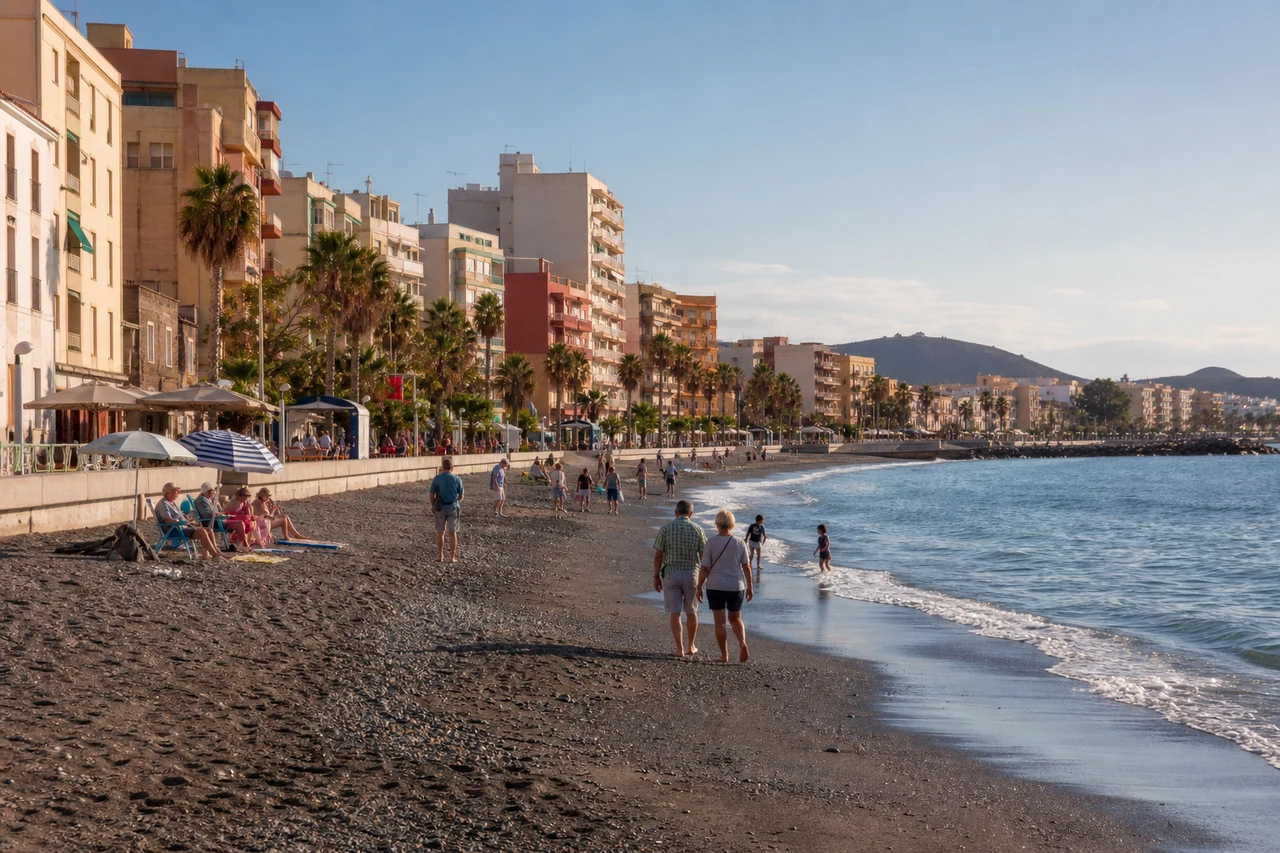
San Nicolás Beach
An urban dark sand-and-gravel beach in central Adra, with a promenade, shops and nearby beach bars.
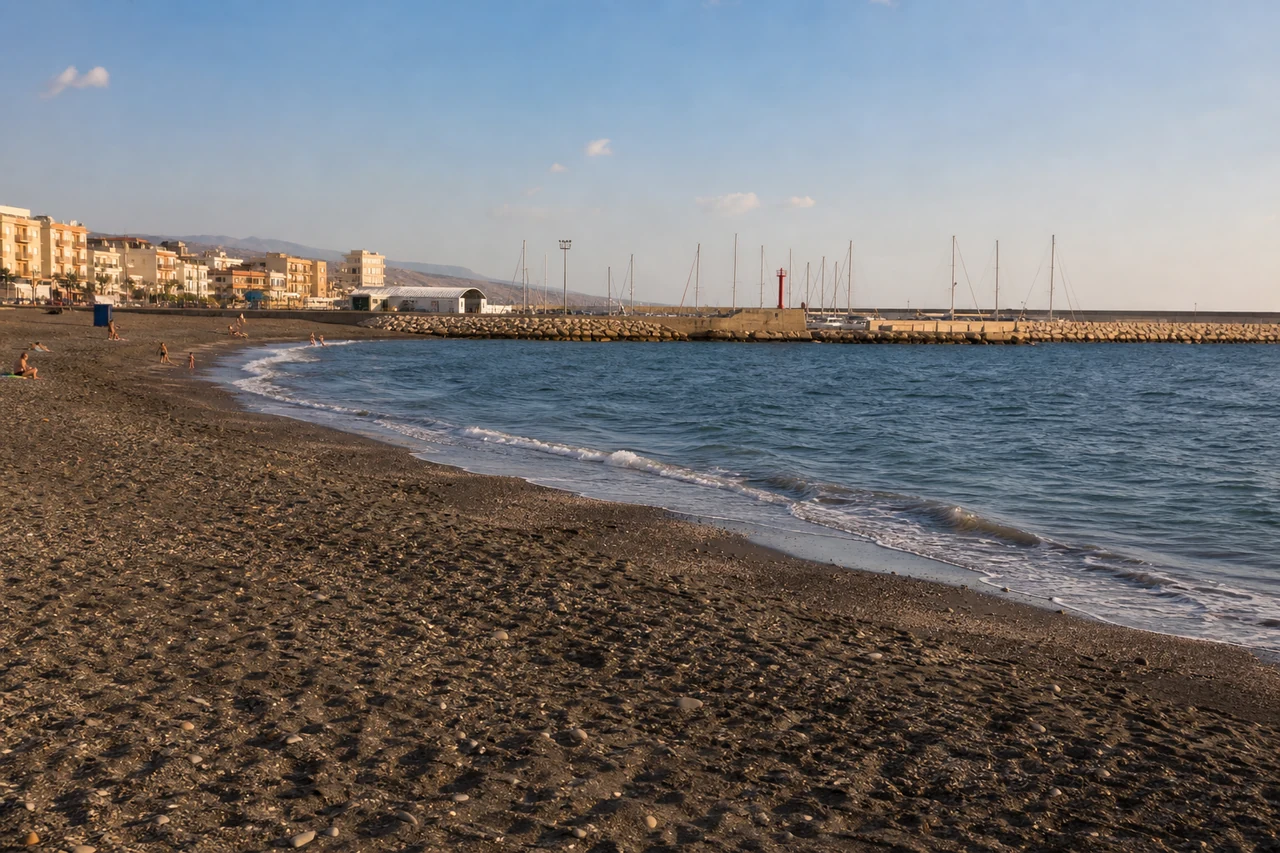
El Carboncillo–Adra Poniente Beach
An urban dark sand-and-gravel beach west of Adra harbour, also known as Playa de Poniente.
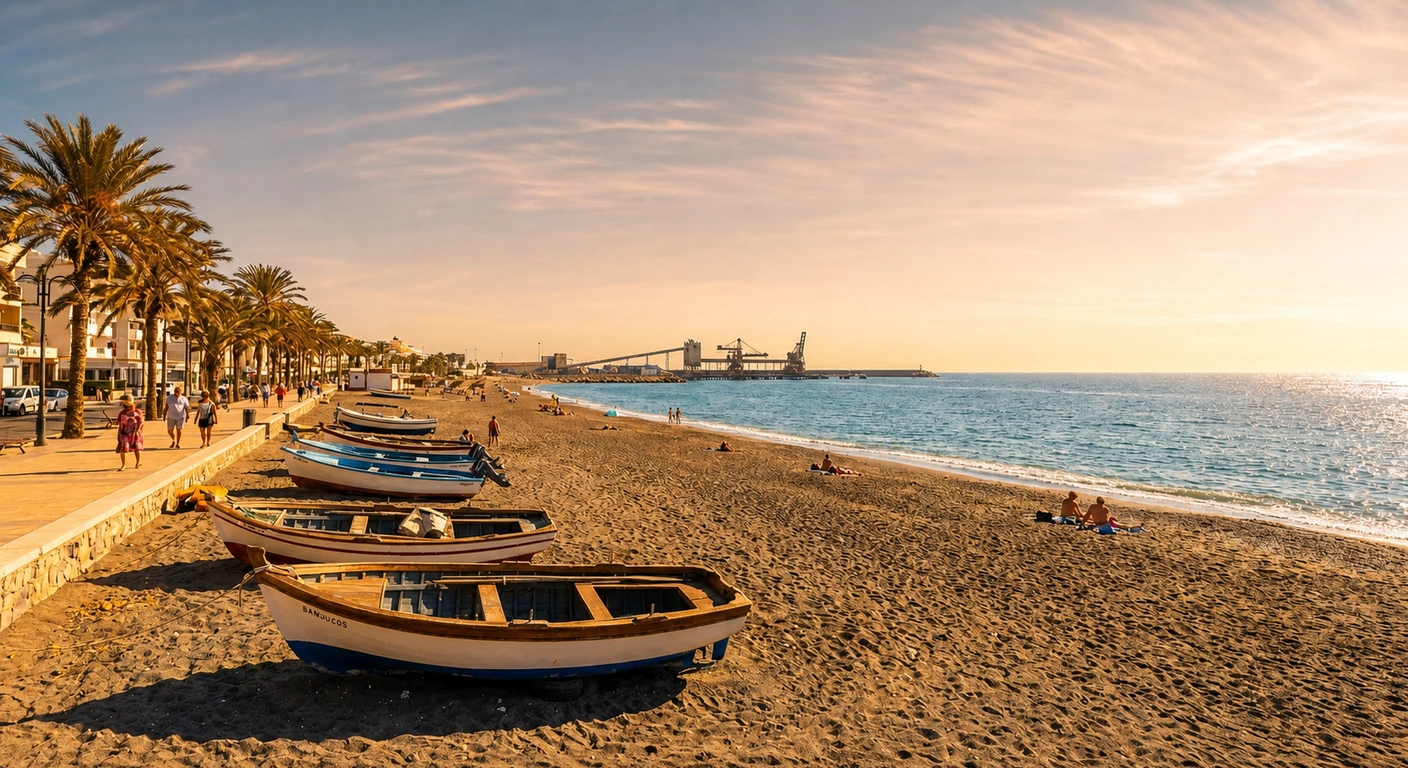
Los Barquicos–Los Cocones Beach
A shallow, accessible urban beach in central Carboneras, with a promenade and the small boats that give it its name.
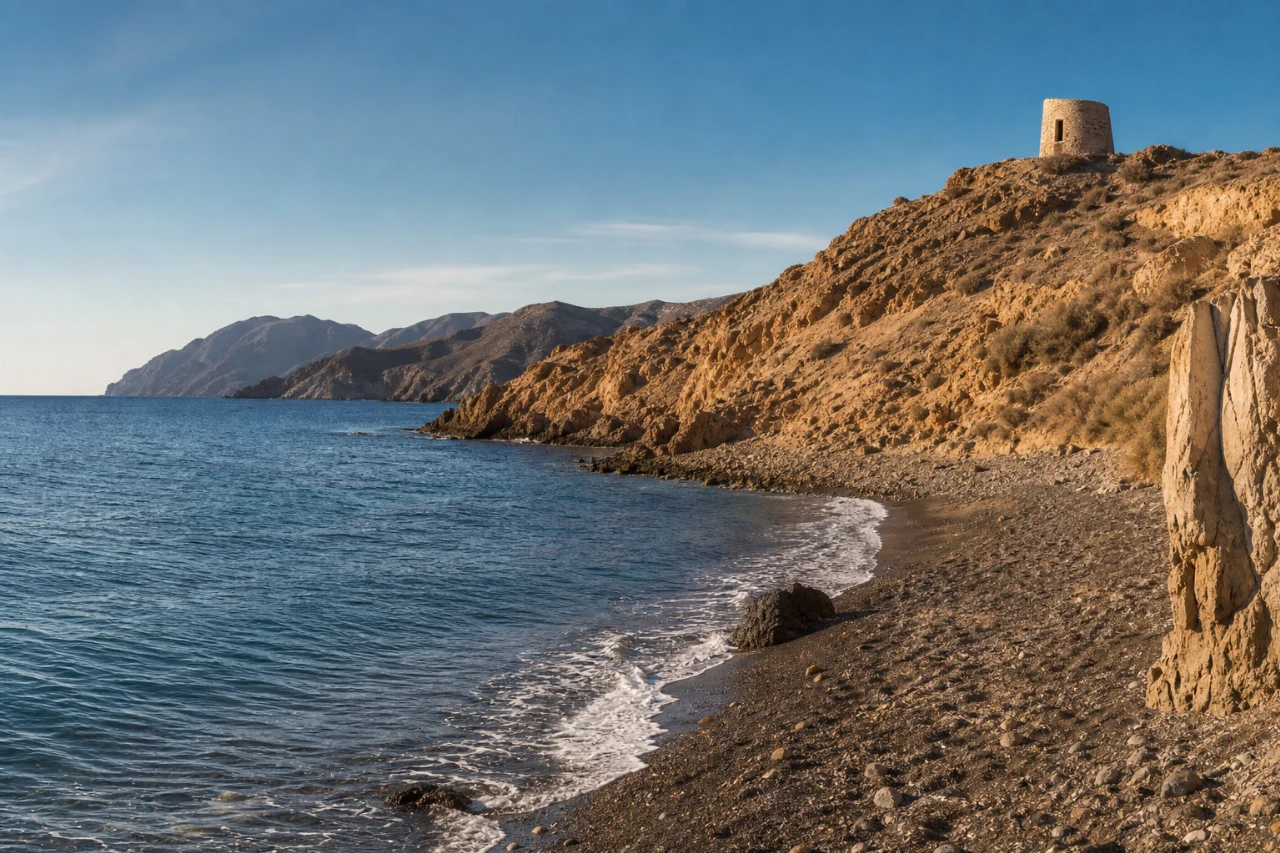
Torre Vieja Beach
A solitary dark-sand beach beside an old tower, set within Carboneras’ industrial coastal landscape.
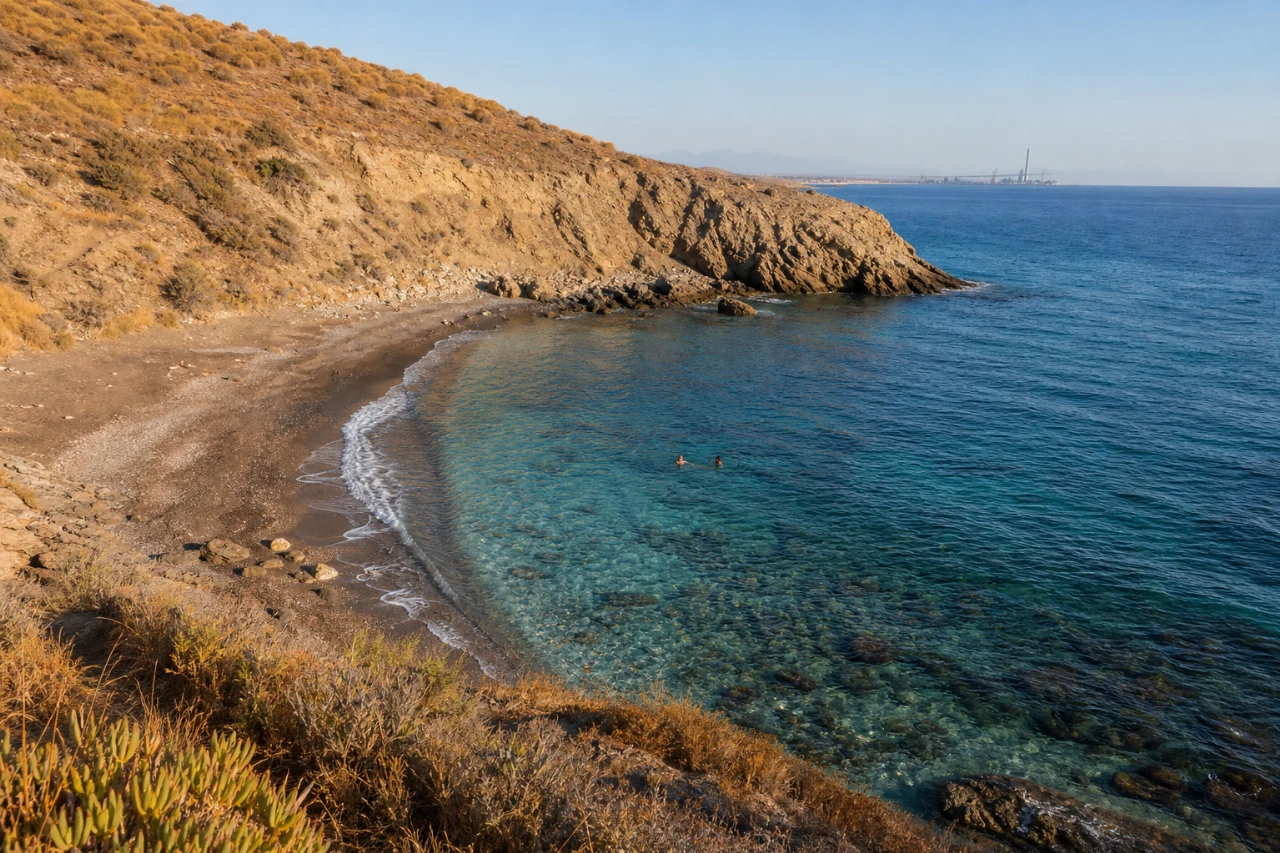
Las Salinicas Beach
A small natural cove of pale gravel and rocks, with clear water and an undeveloped shore.
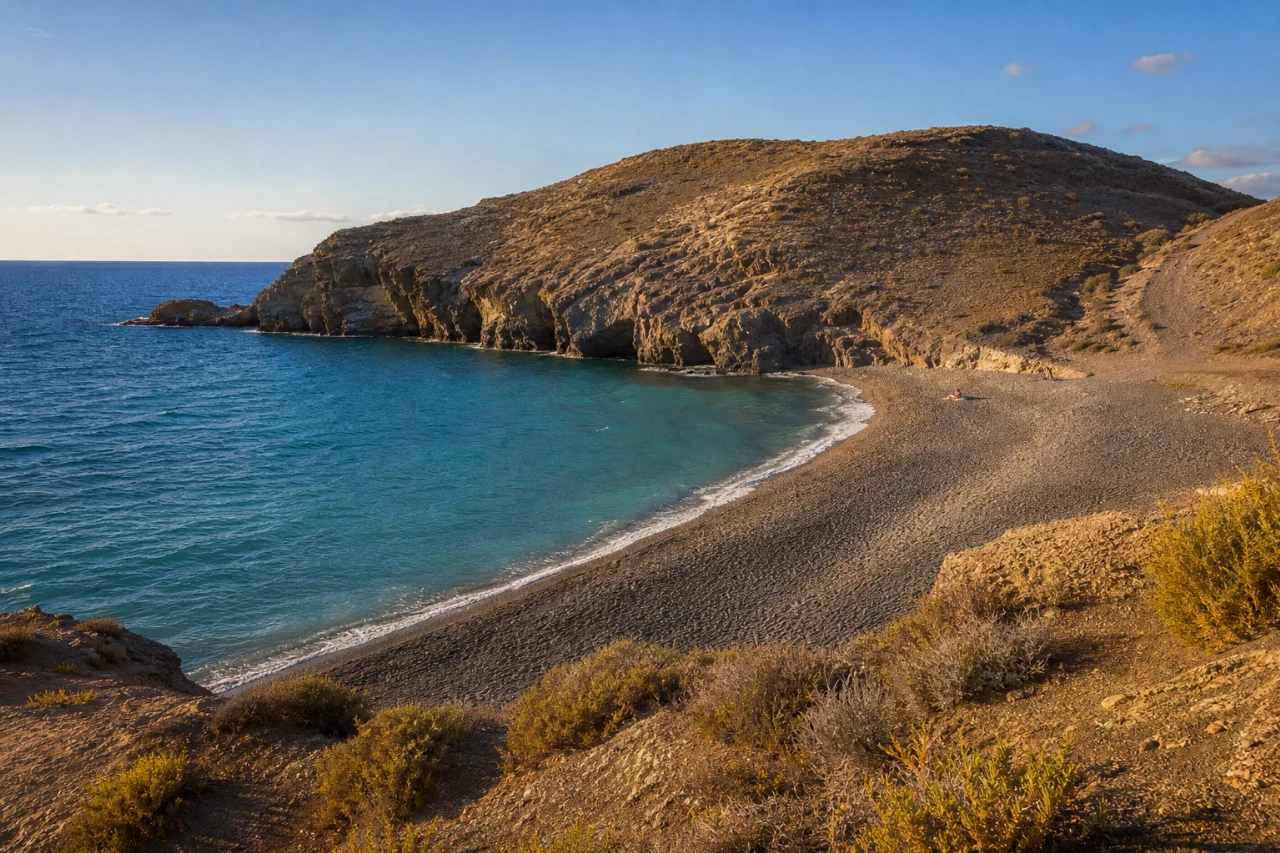
El Corral Beach
A cove of white gravel, volcanic rock and open sea, close to Carboneras yet distinctly natural.
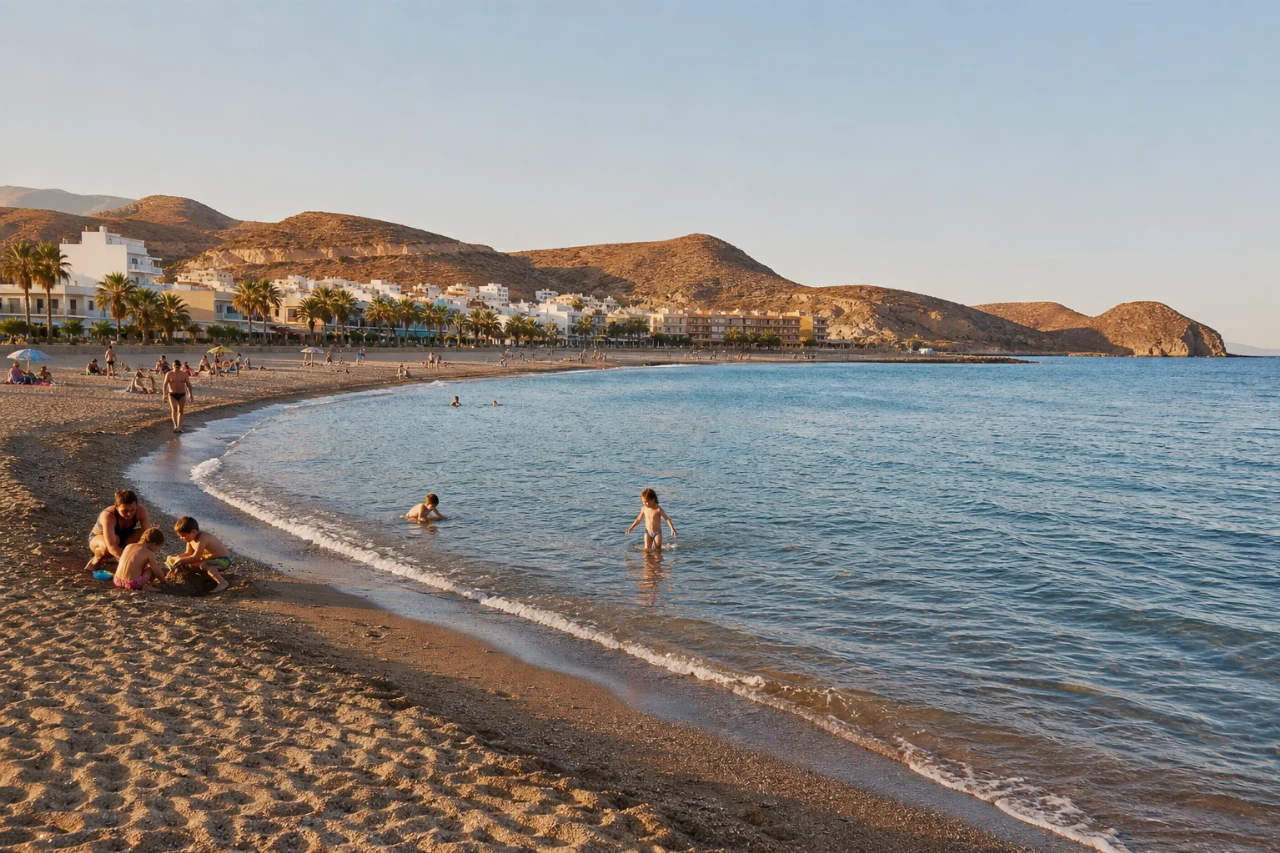
Las Marinicas Beach
A broad family-friendly urban beach in Carboneras, with fine sand, a gentle entry and generally calm water.
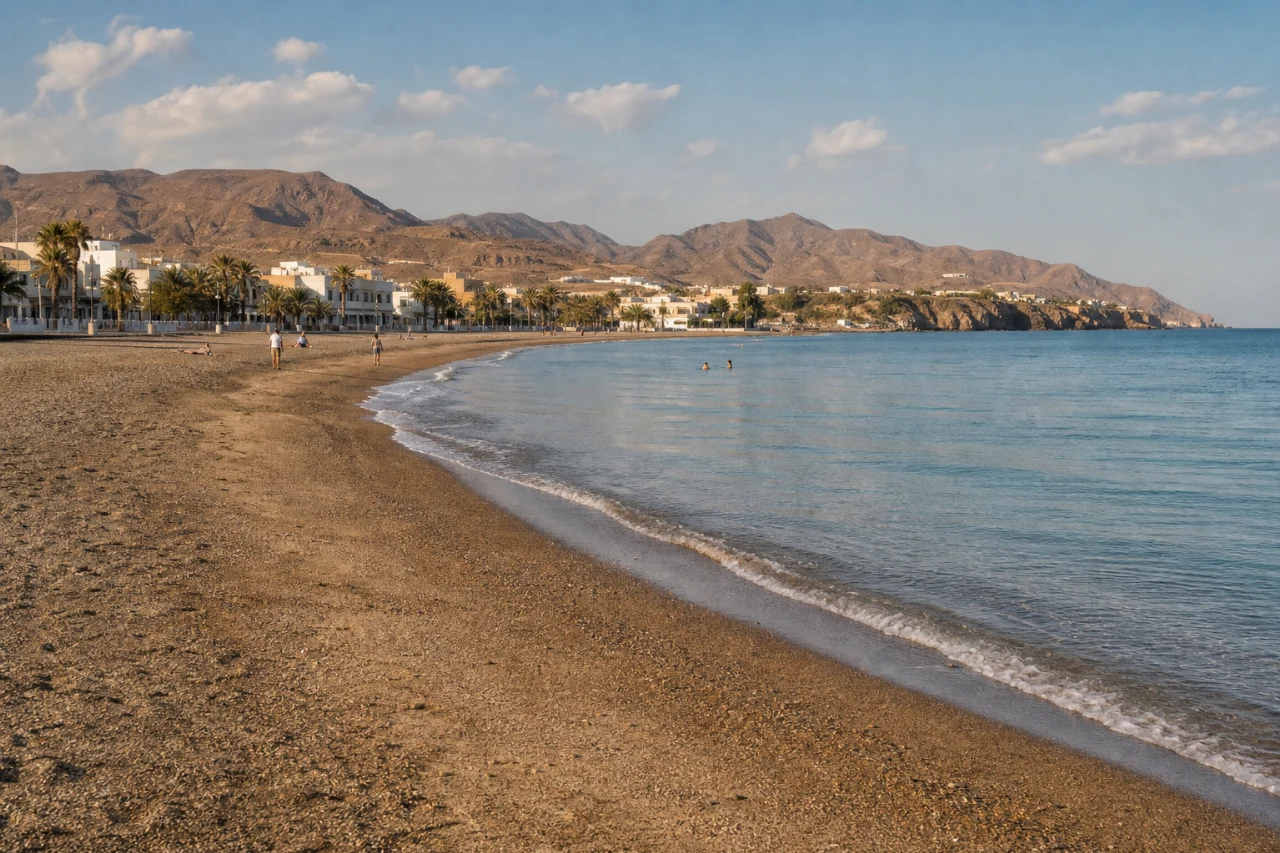
Ancón–El Lancón Beach
A long urban strand in Carboneras, with golden sand and a promenade, also known as El Lancón or Playa de Carboneras.
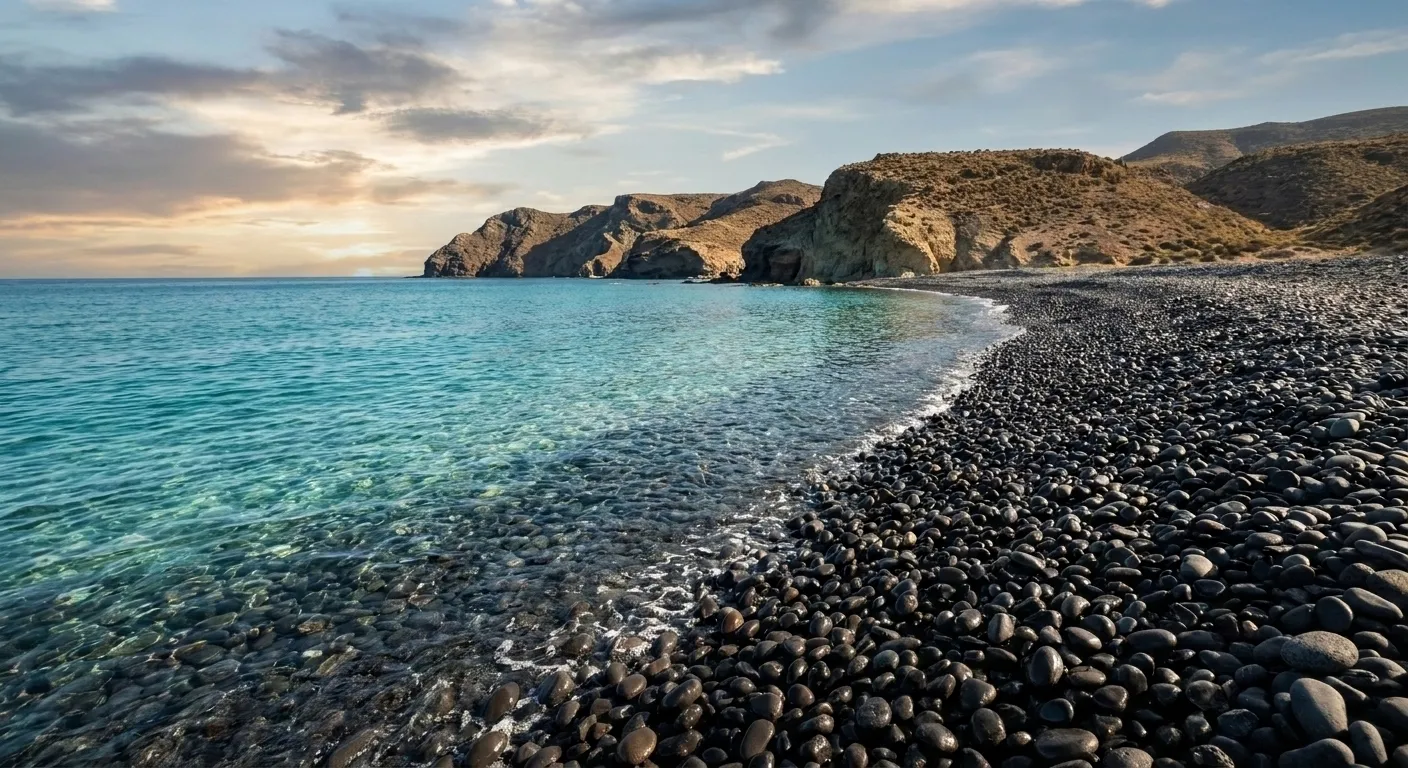
Los Muertos
In Carboneras, in the north of the park. Made of pale pebbles and gravel, which gives the water that transparent turquoise blue. One of the most famous unspoilt beaches in the province.
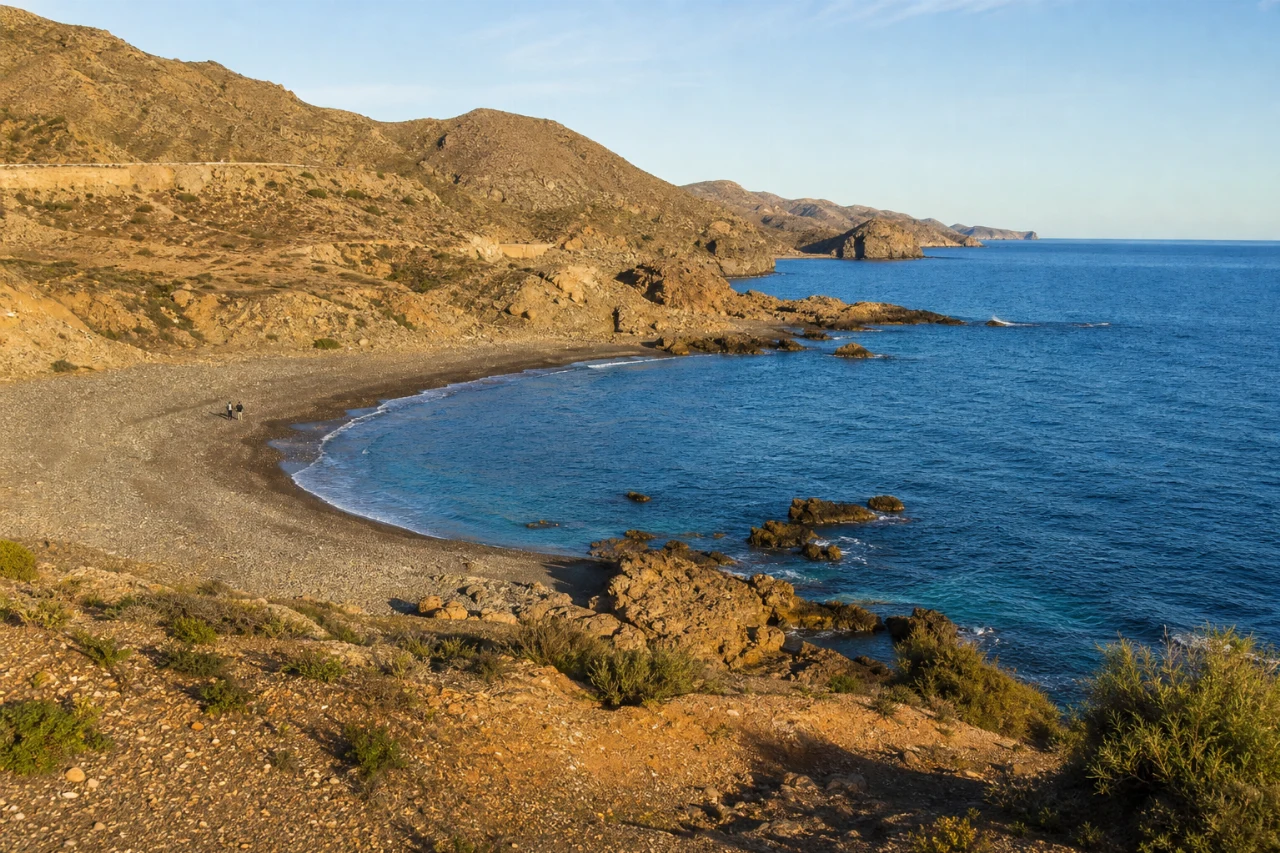
La Galera Beach
A narrow, isolated beach of dark sand, gravel and large shingle, open to swell north of Carboneras.
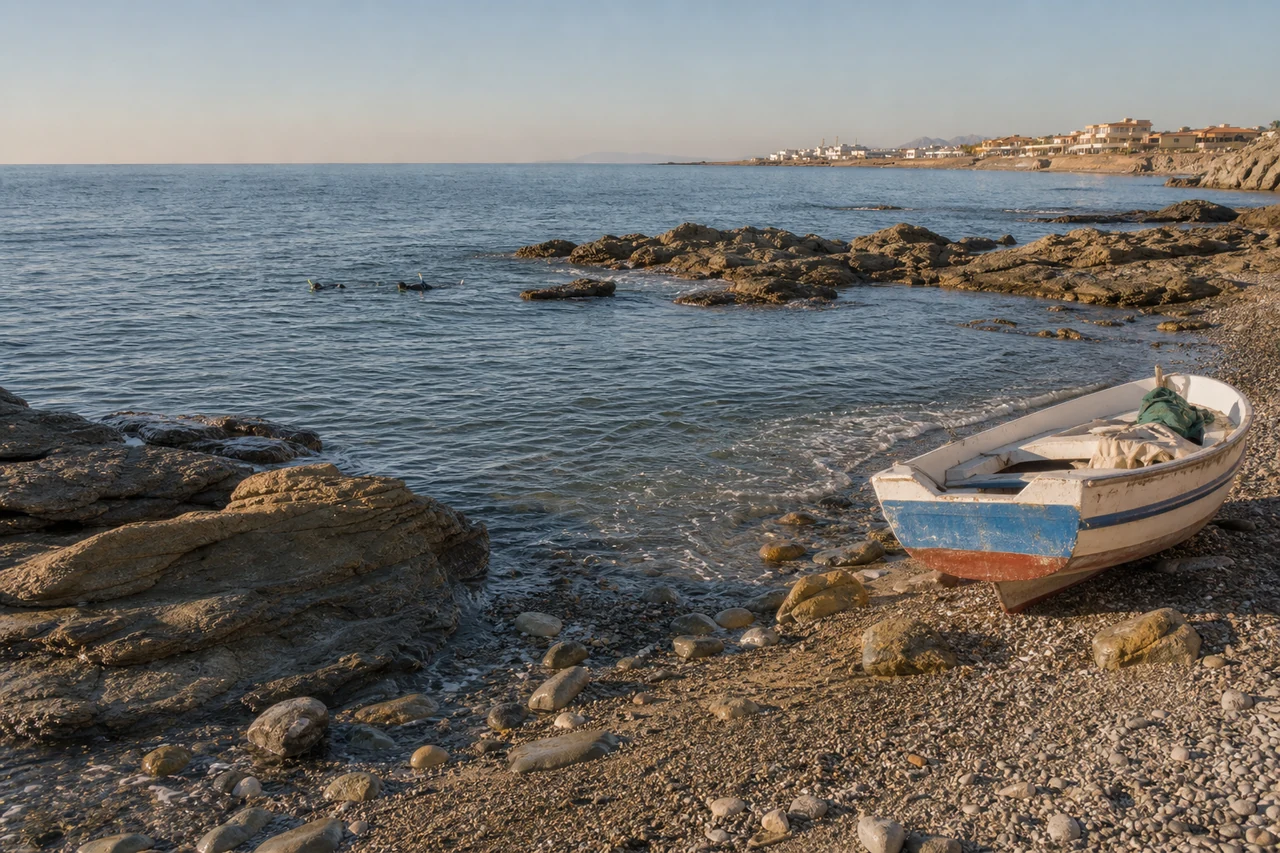
La Caracola Beach
A small semi-urban beach of gravel, sand and rocks west of Adra, used for fishing and diving.
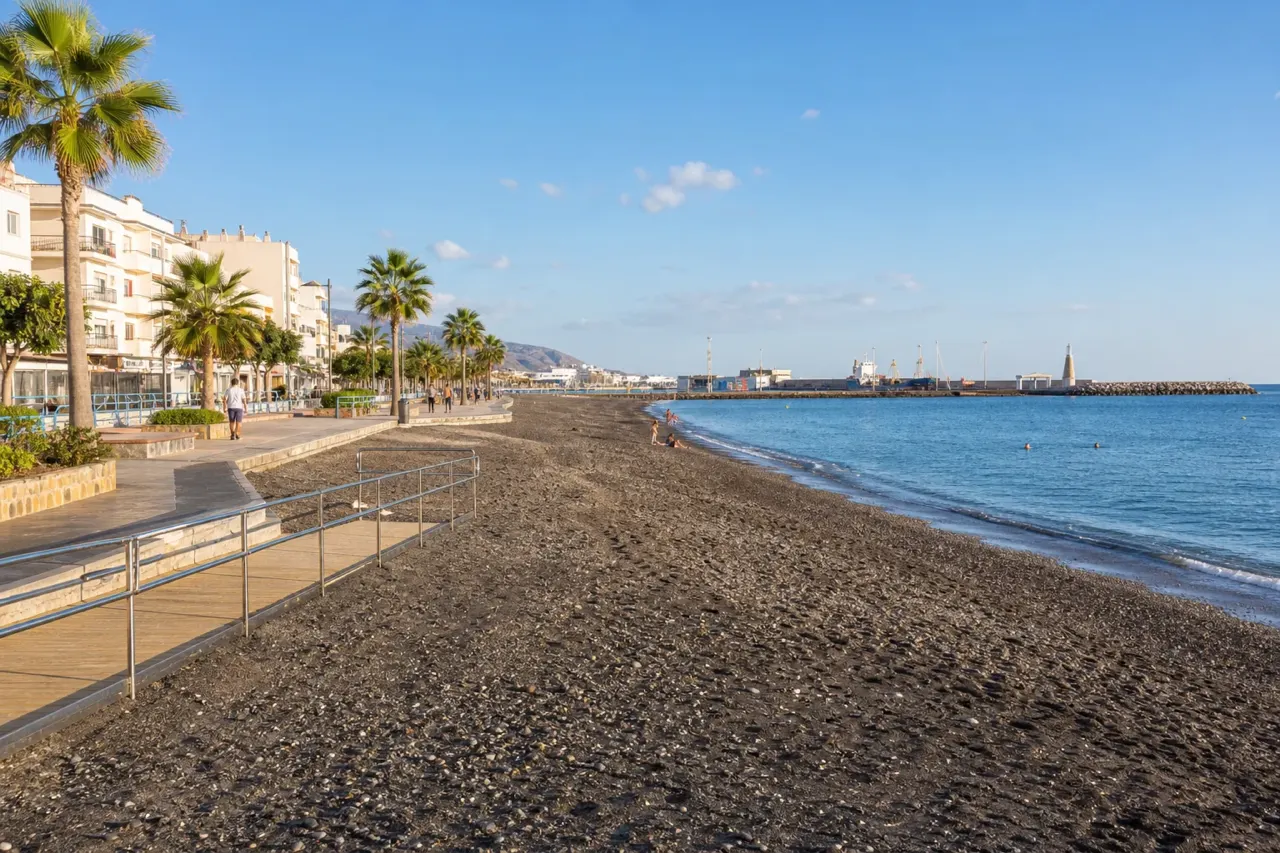
Sirena Loca Beach
Adra’s main urban beach, with a promenade, accessible facilities and dark sand beside the fishing harbour.
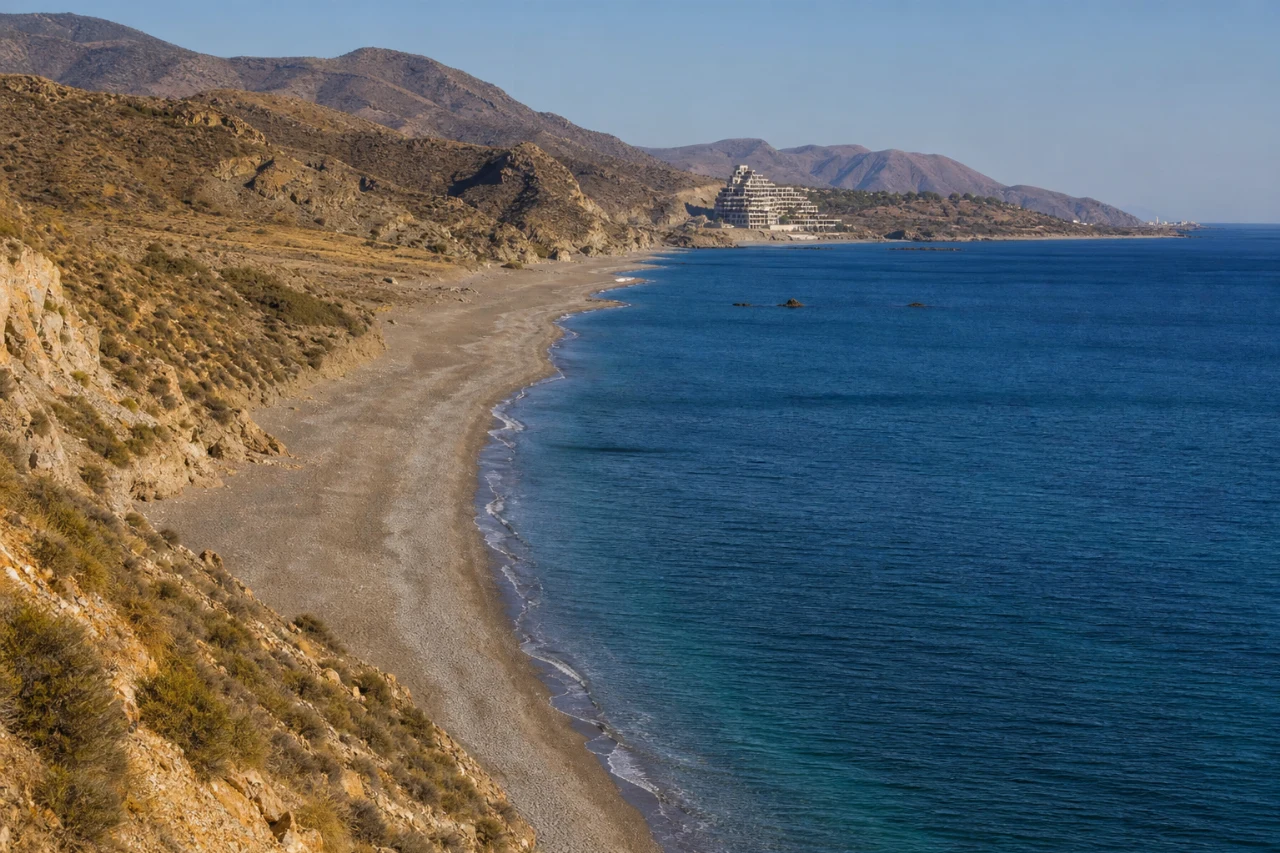
El Algarrobico Beach
A long natural beach of pale sand and fine gravel, known for the unfinished building overlooking this stretch of coast.
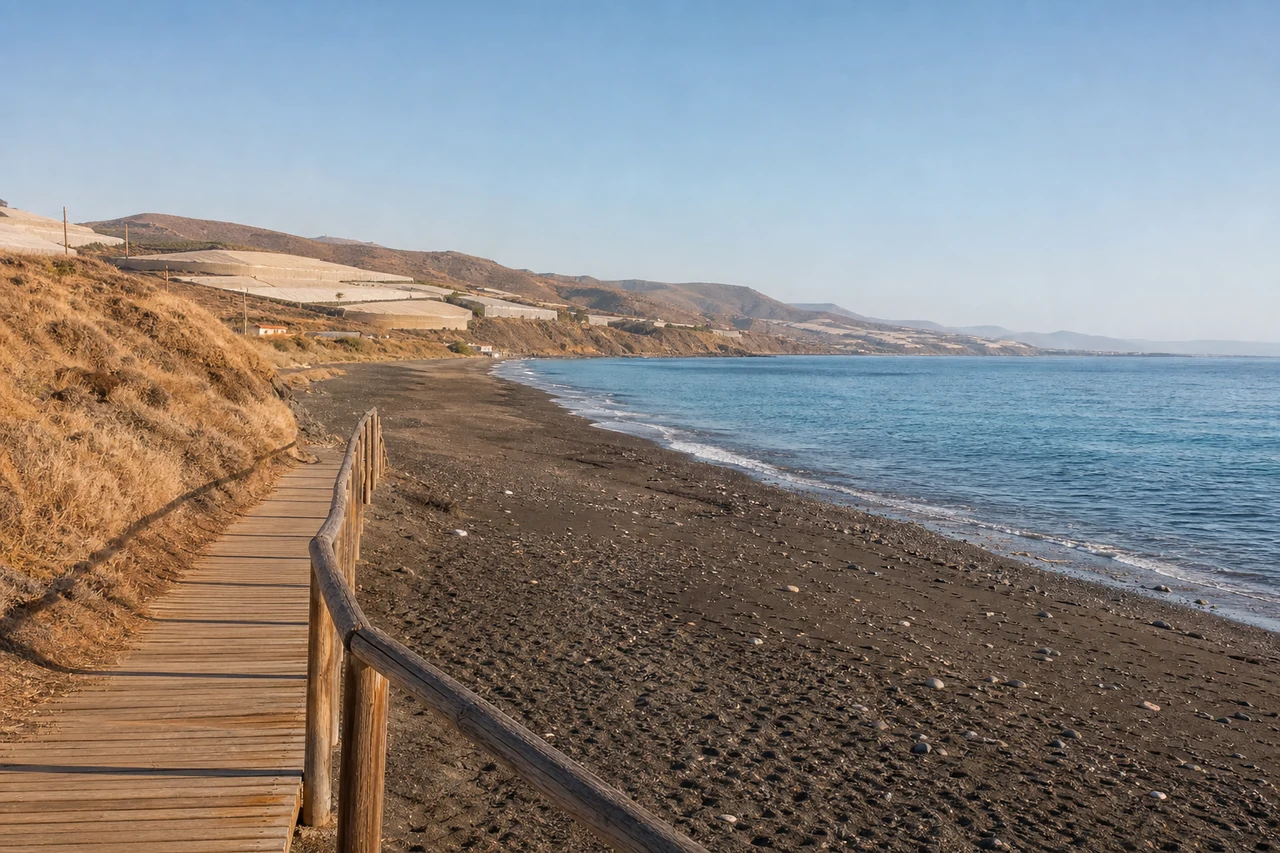
Iguazú Beach
An isolated dark-sand beach with generally calm water on the Albuñol coast.
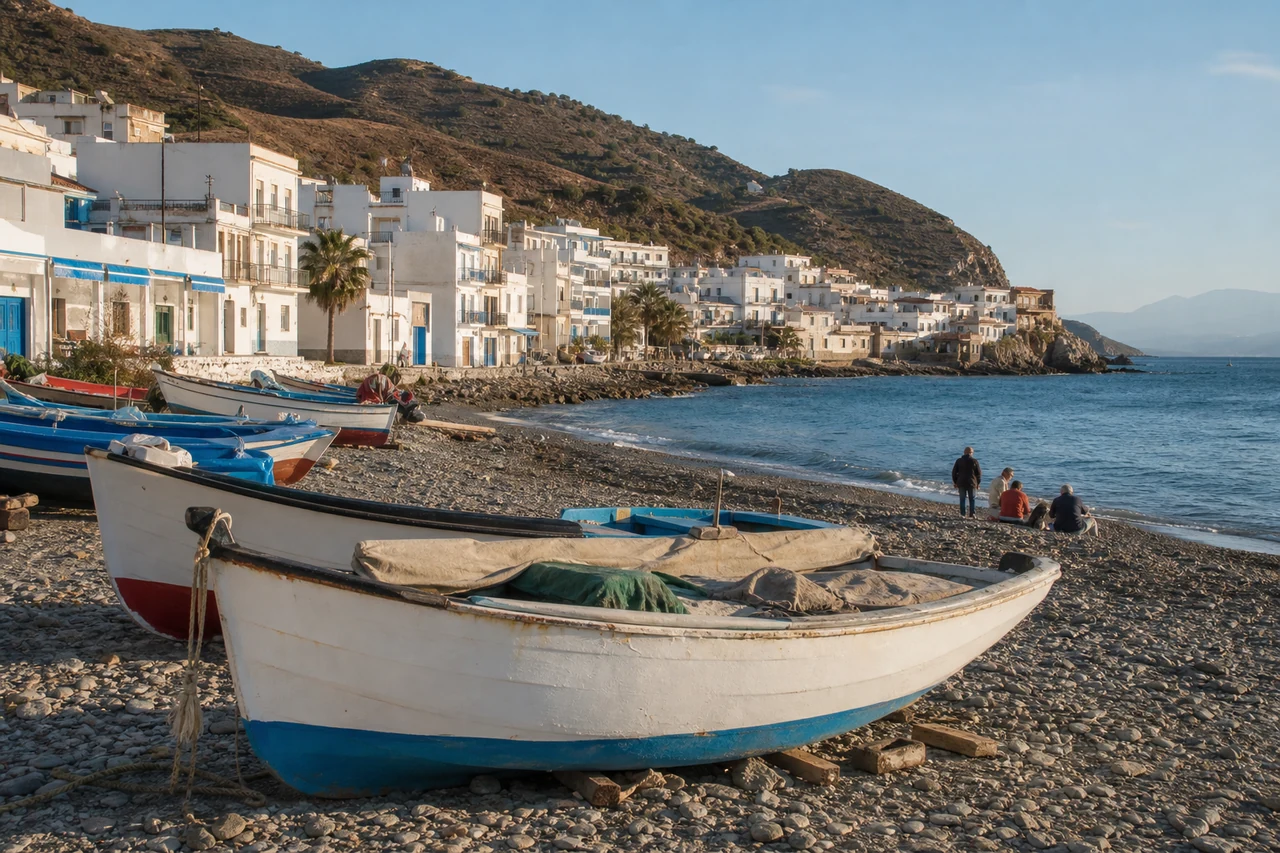
La Rábita Beach
An urban shingle beach facing the white village of La Rábita, with boats and coastal hills behind.
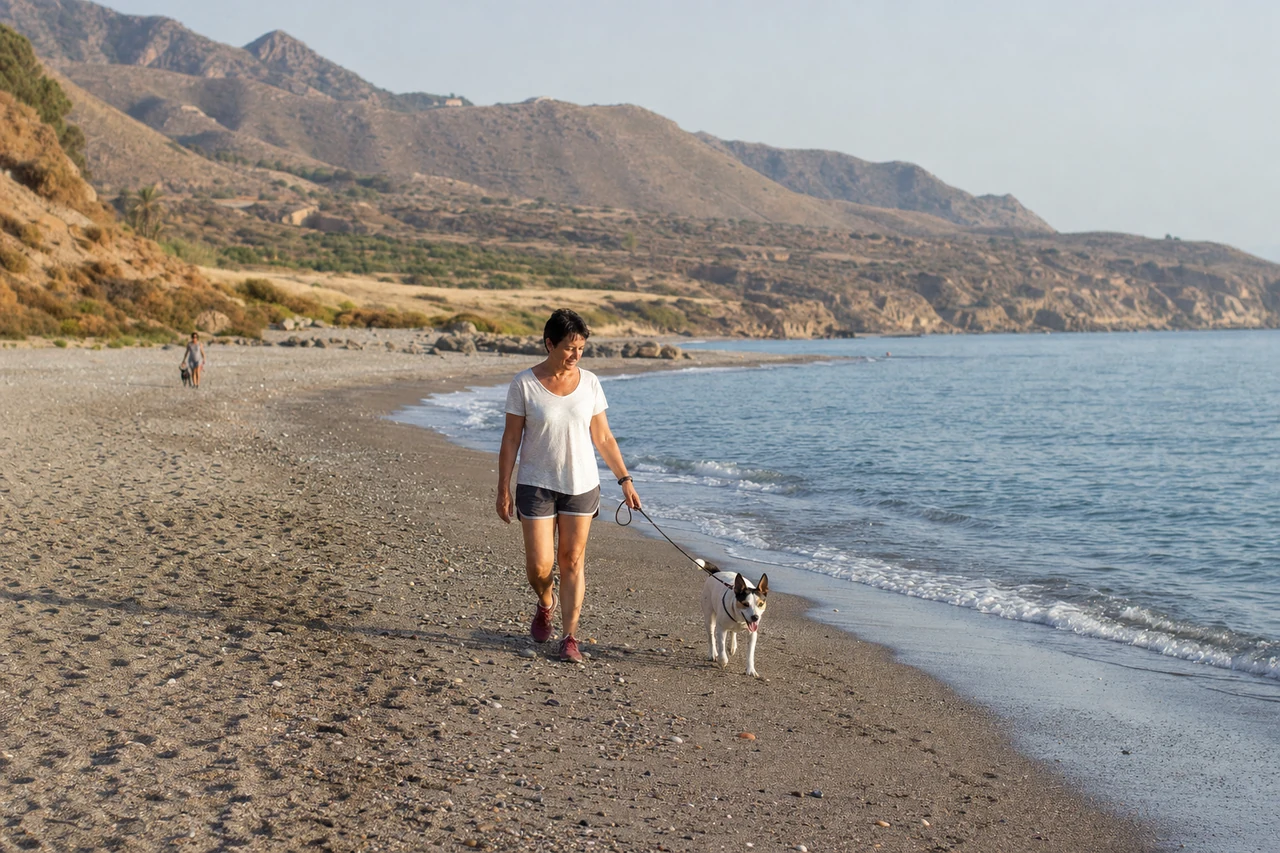
El Perulejo Beach
A natural grey-sand beach whose 115-metre municipal section is Mojácar’s only official dog beach.
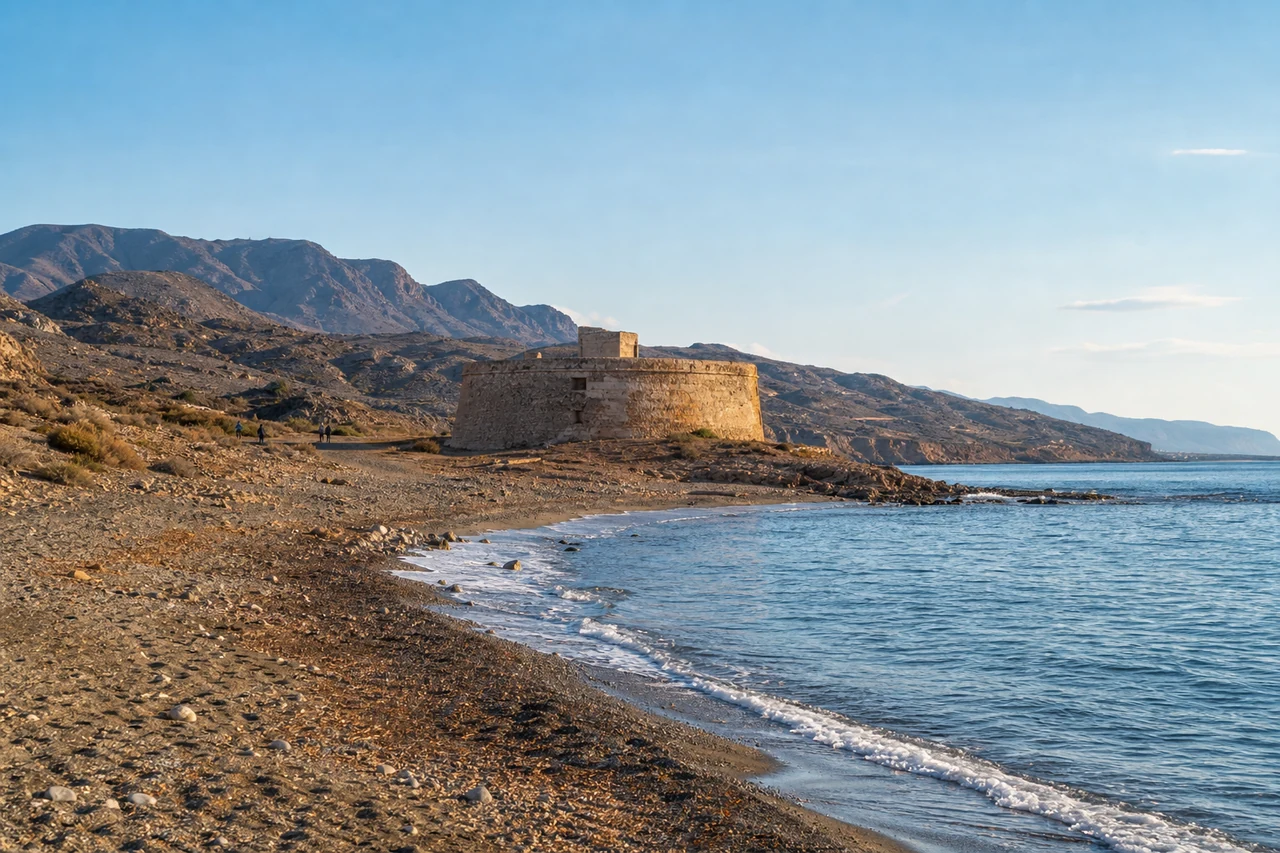
Castillo de Macenas Beach
An isolated beach of dark sand, gravel and rock, overlooked by the 18th-century Macenas castle.
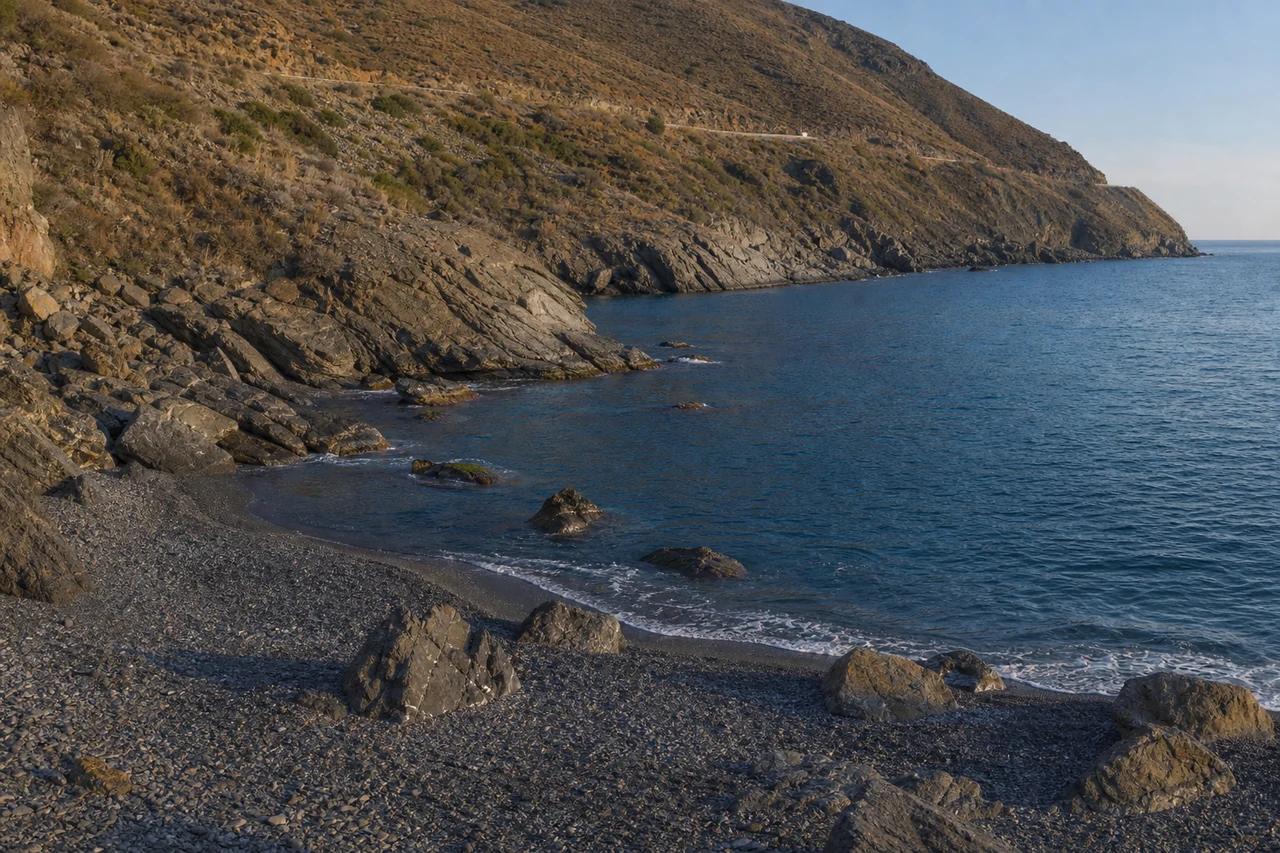
Chilches Cove
A small isolated cove of dark gravel and rocks on Albuñol’s steep coast.
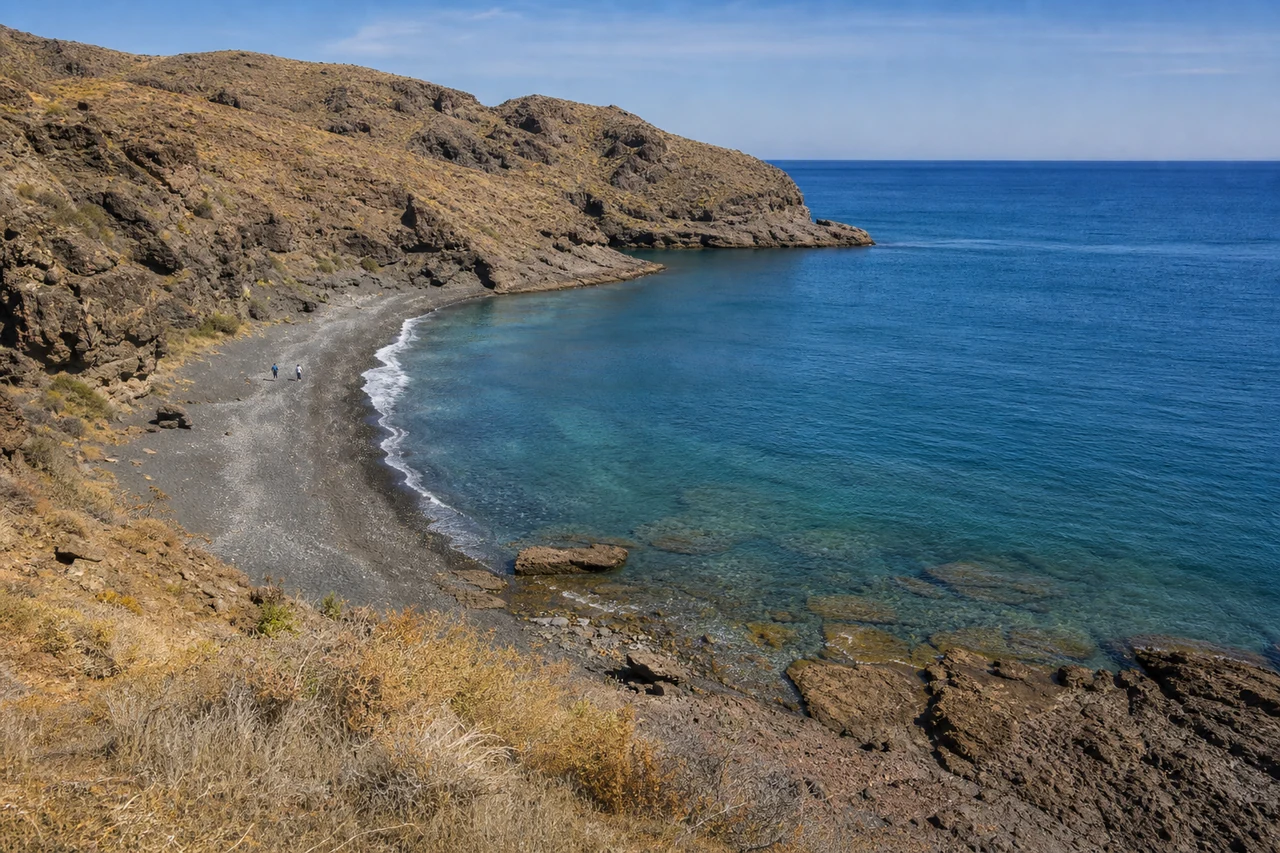
Bordenares Cove
An isolated cove of volcanic rock and grey sand, sheltered by the terrain of southern Mojácar.
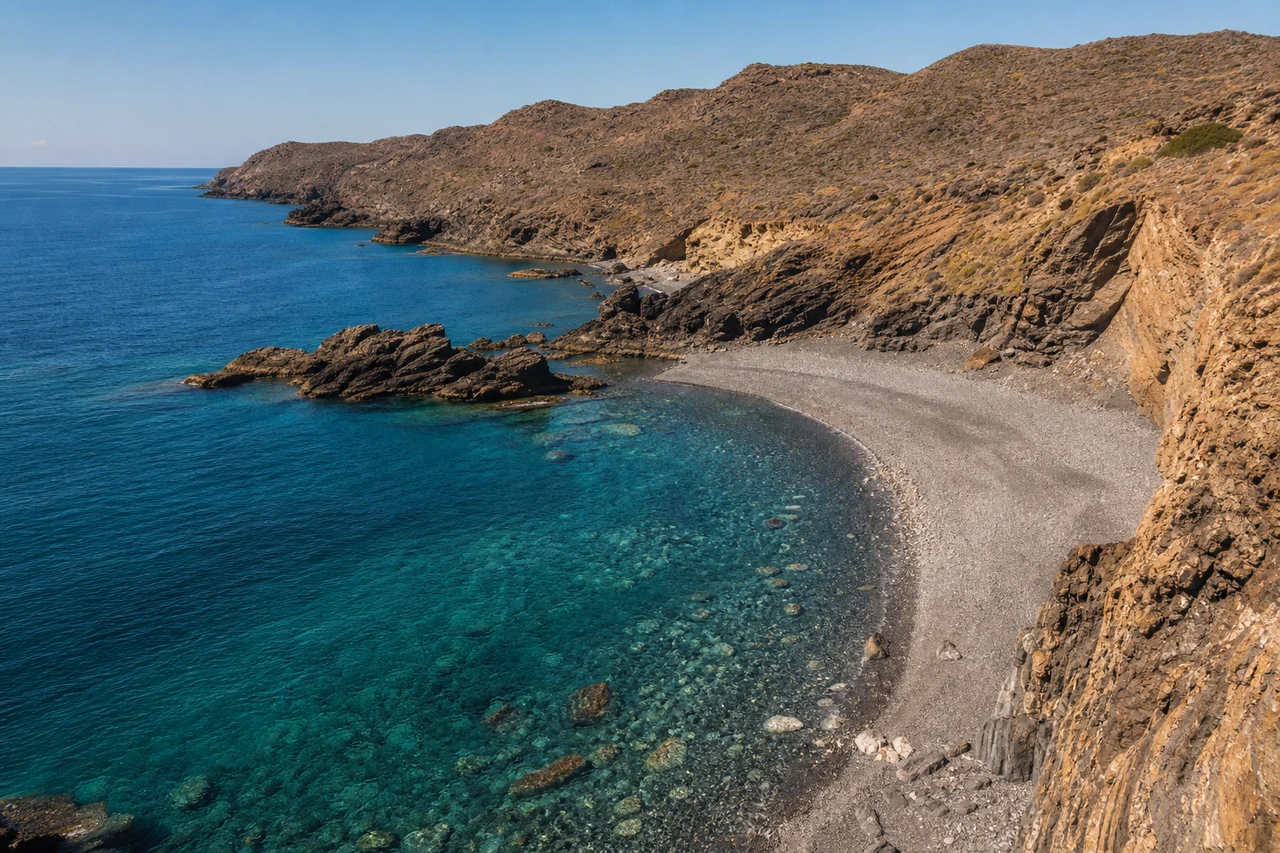
Sombrerico Cove
A volcanic cove of grey sand and rock on the Pirulico coast, isolated and used by naturists.
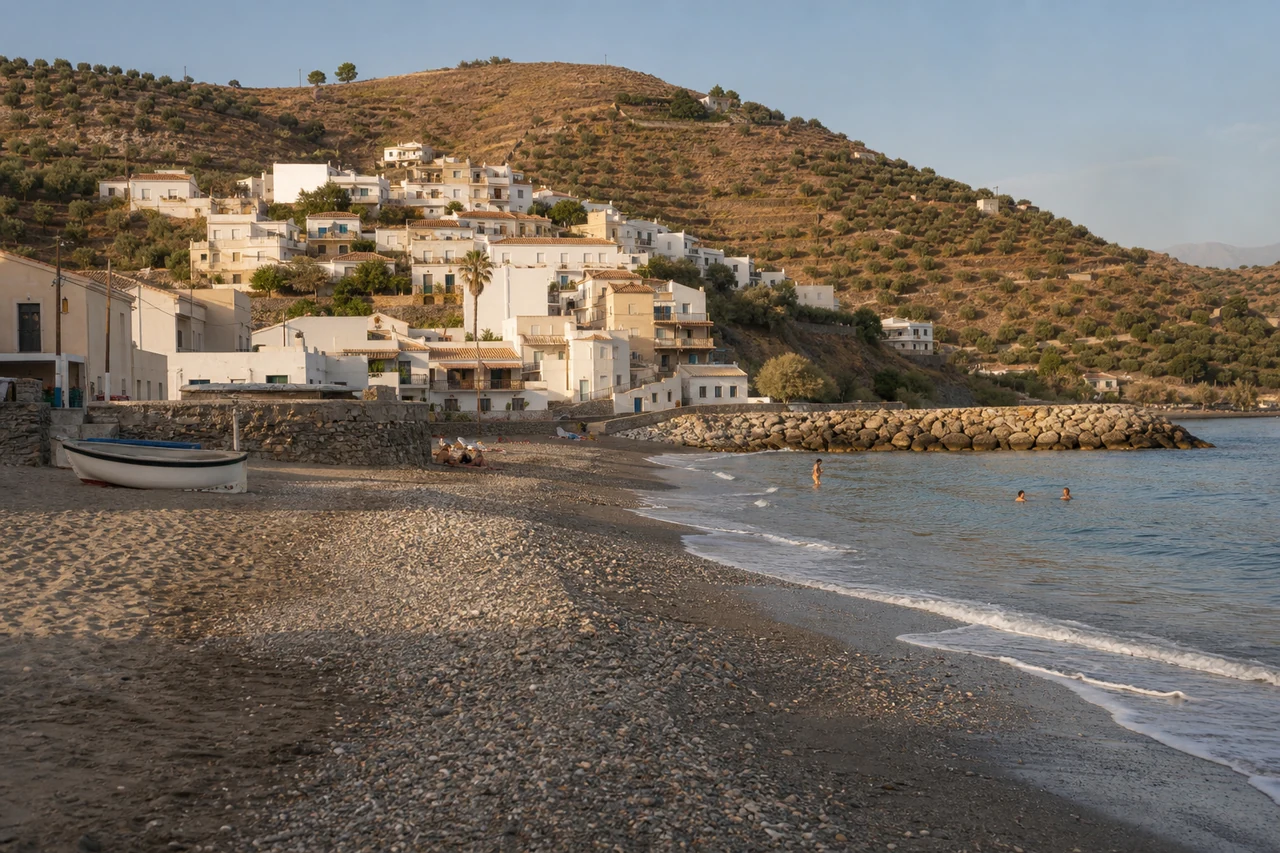
Melicena Beach
An urban sand-and-gravel beach facing the white village of Melicena, protected by groynes.
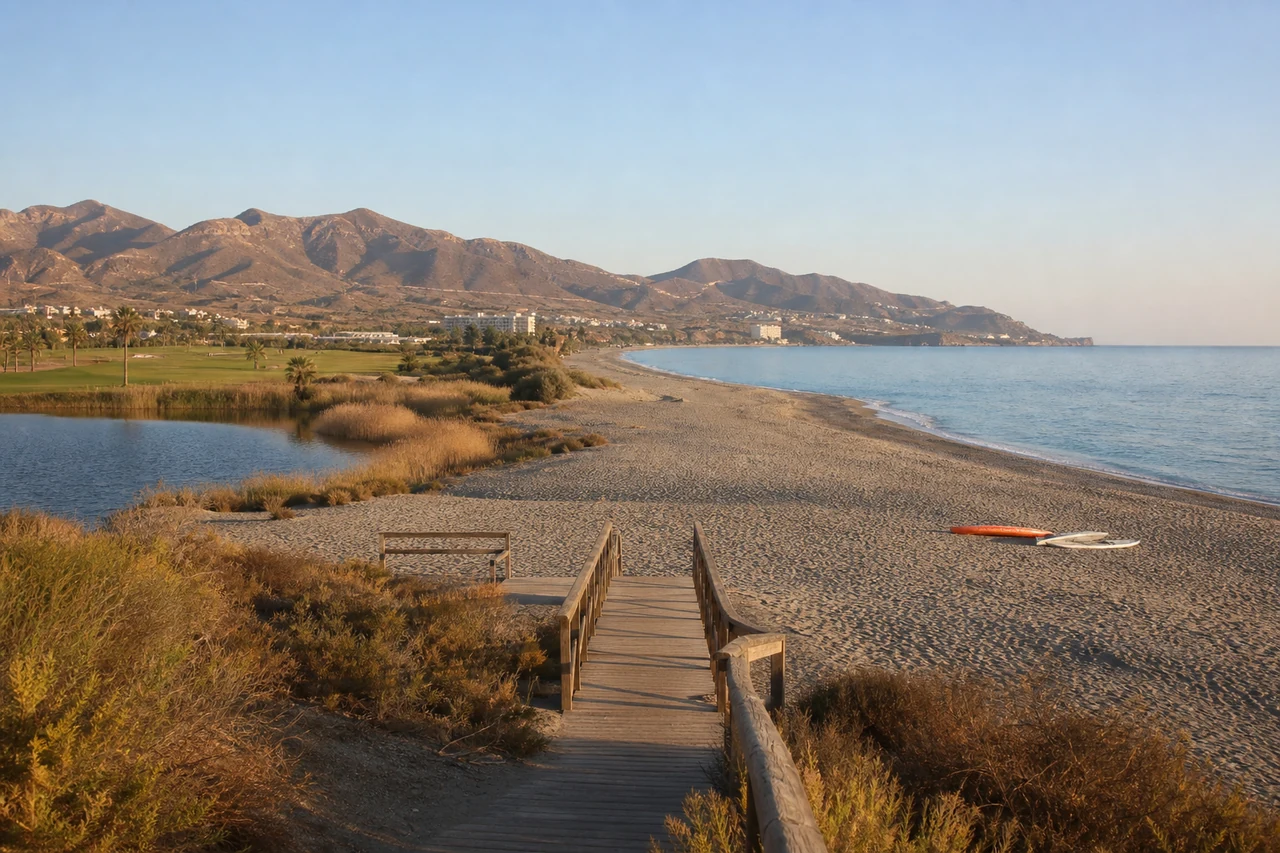
Marina de la Torre Beach
A broad grey-sand beach facing the golf course and near the Río Aguas lagoon at Mojácar’s northern end.
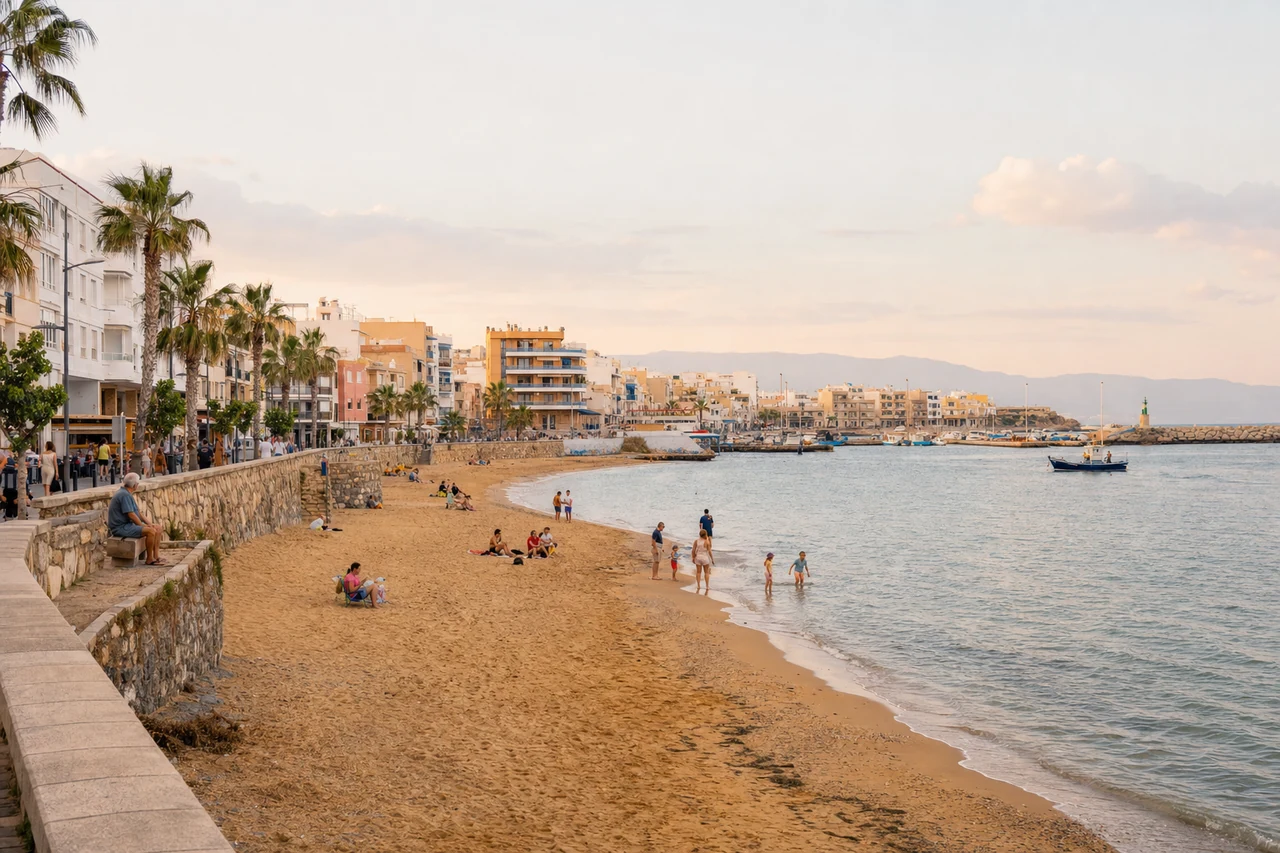
Garrucha–Las Escobetas Beach
A broad urban beach of golden sand and promenade, with water often calmed by Garrucha harbour.
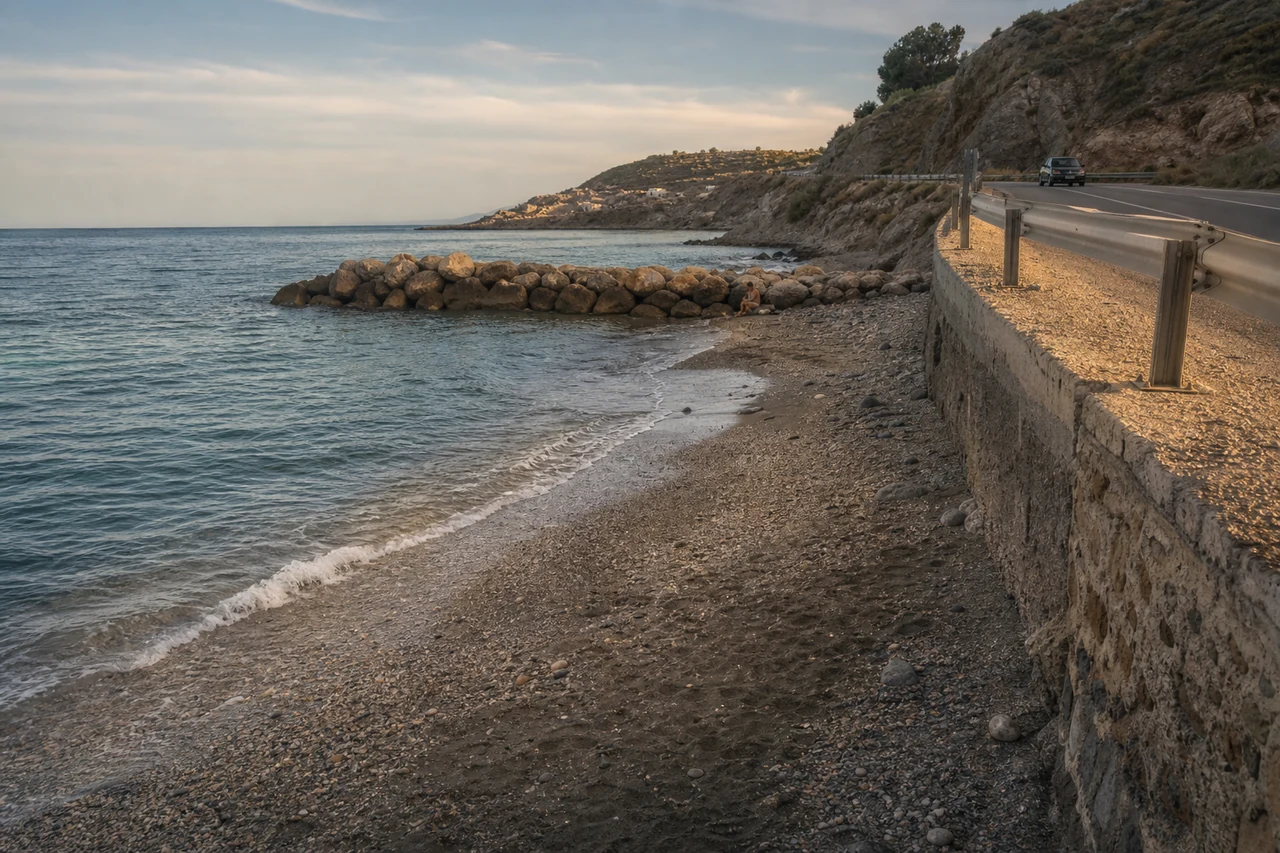
Los Yesos Beach
A tiny strip of sand between the N-340 and the sea, beside a small breakwater and usually quiet.
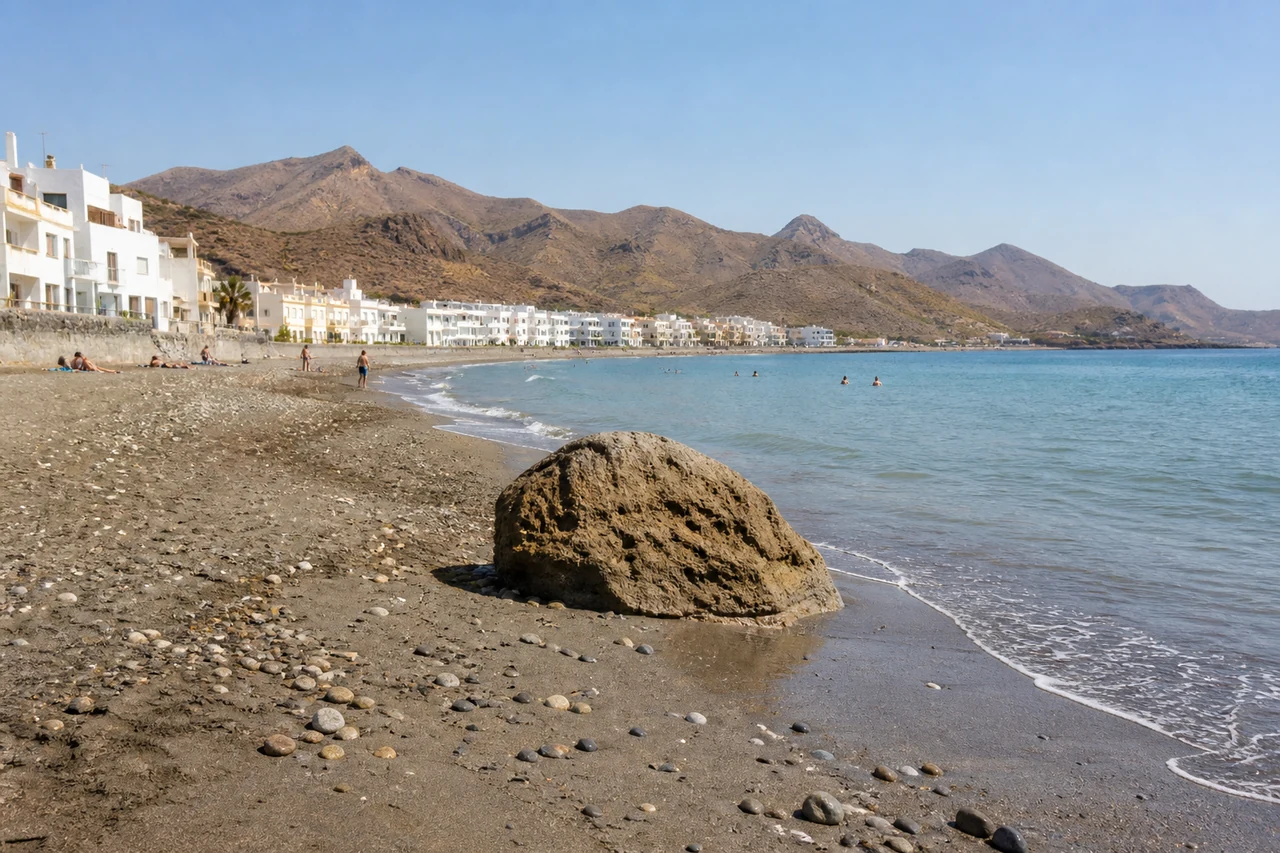
Piedra Villazar Beach
An urban grey-sand beach marked by a large rock near the water and equipped for an accessible beach day.
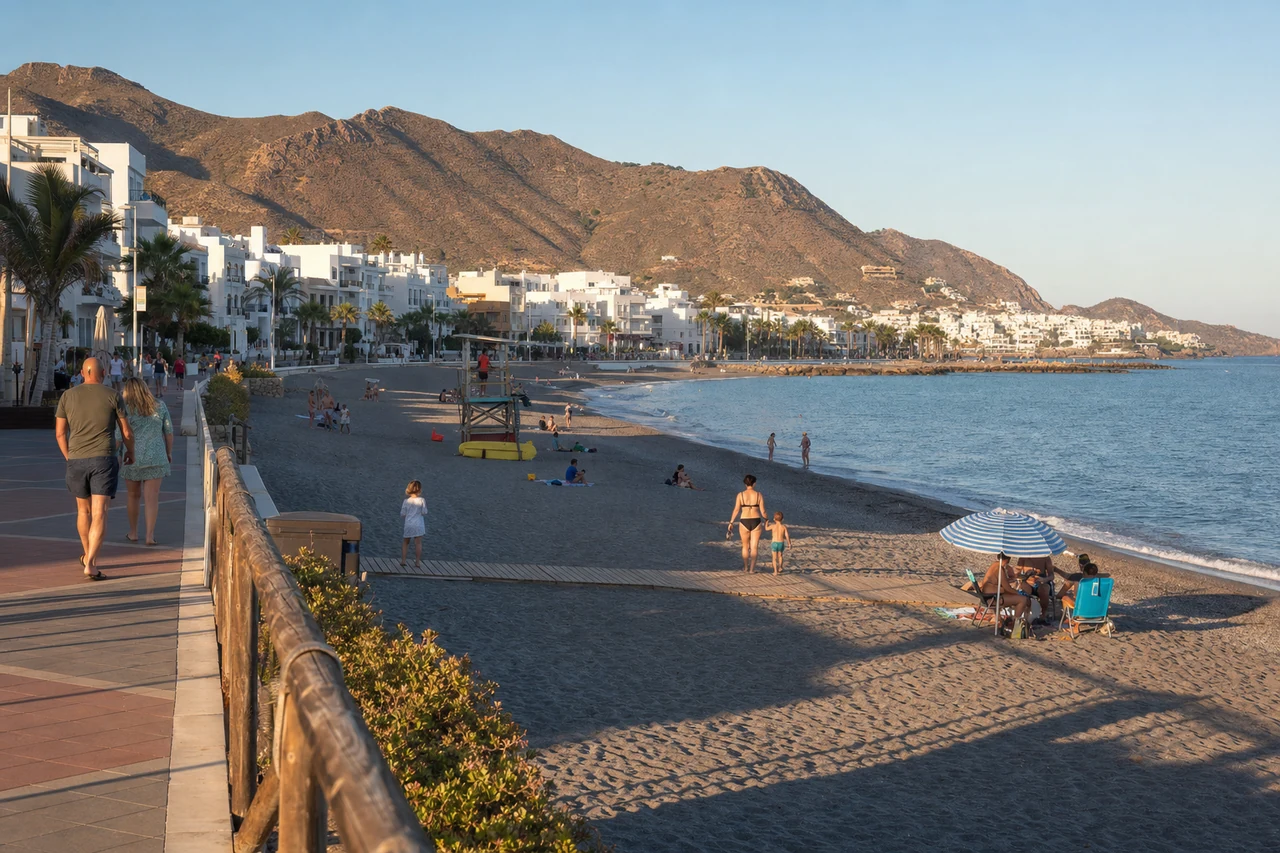
El Descargador Beach
A broad urban grey-sand beach whose name preserves the memory of Mojácar’s former mineral-loading pier.
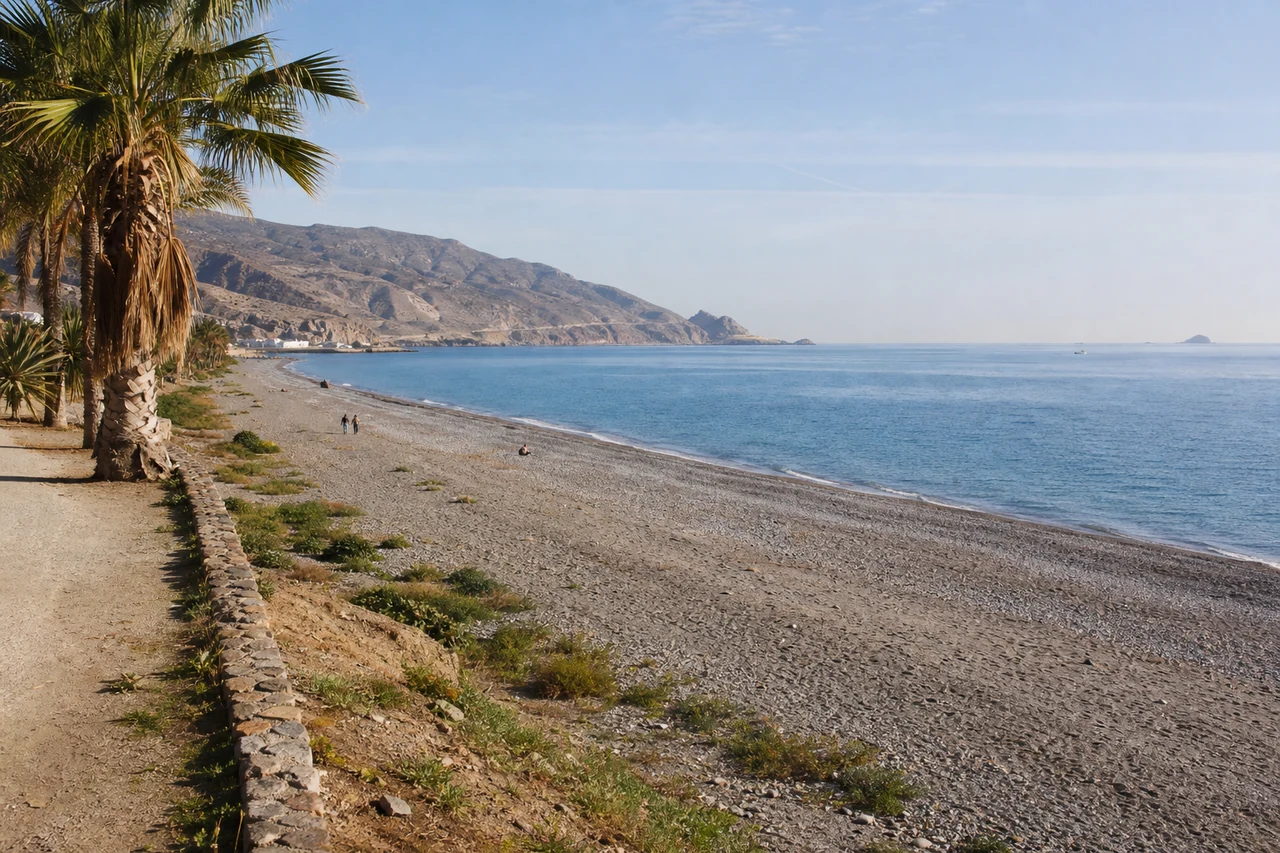
El Palmeral Beach
A sand-and-gravel beach beside the Río Aguas mouth, quieter than central Mojácar.
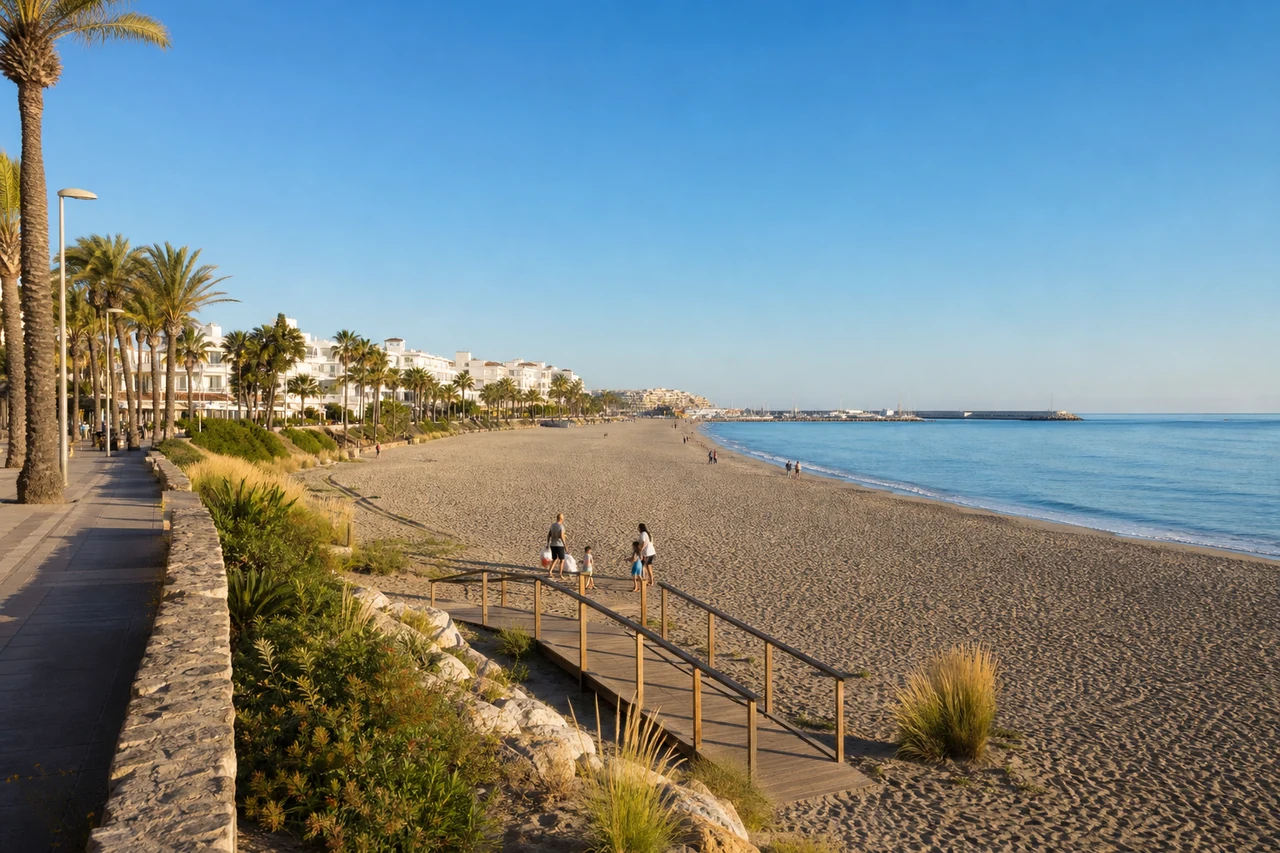
Las Marinas–Bolaga Beach
An urban fine-sand beach beside the Antas river mouth, with a promenade, facilities and accessibility.
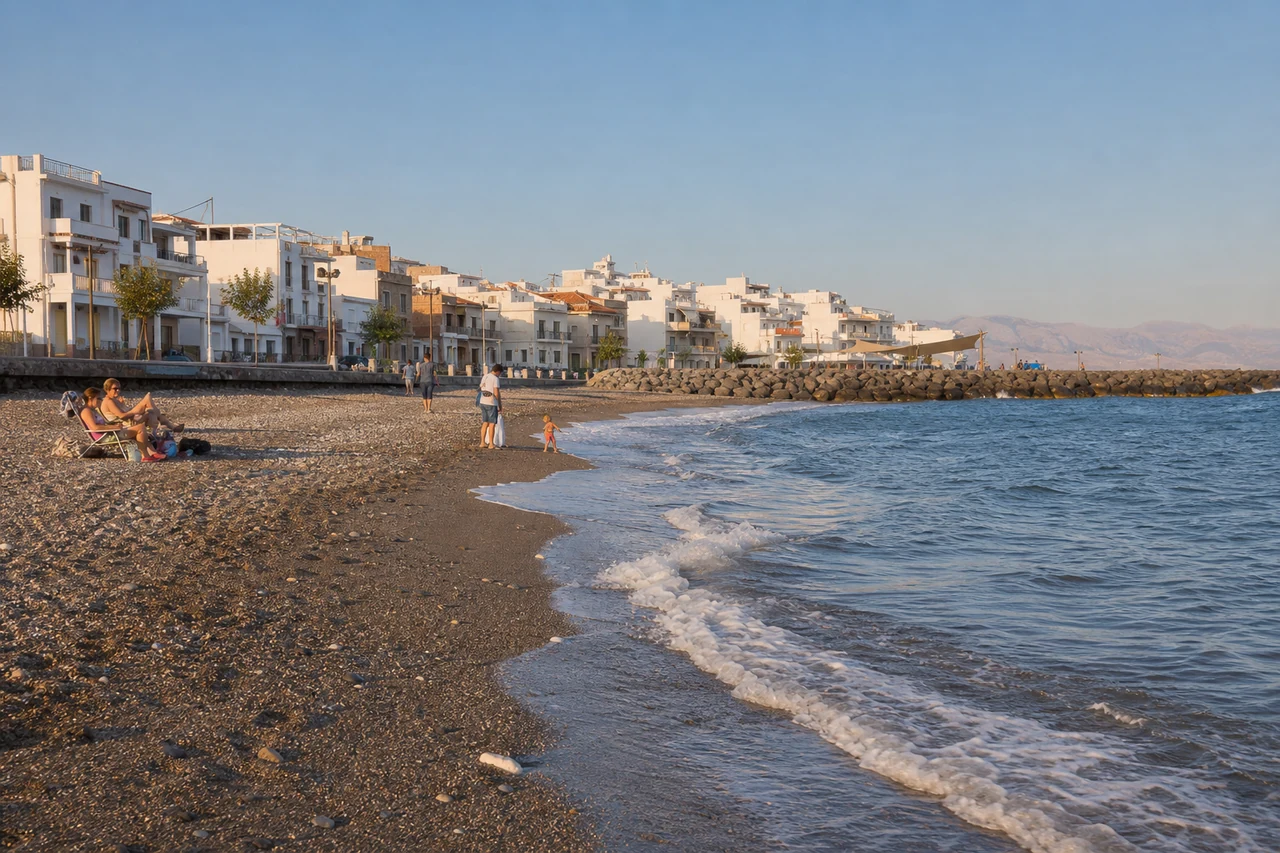
La Mamola Beach
A long urban sand-and-gravel beach with a promenade, groynes and La Mamola village close at hand.
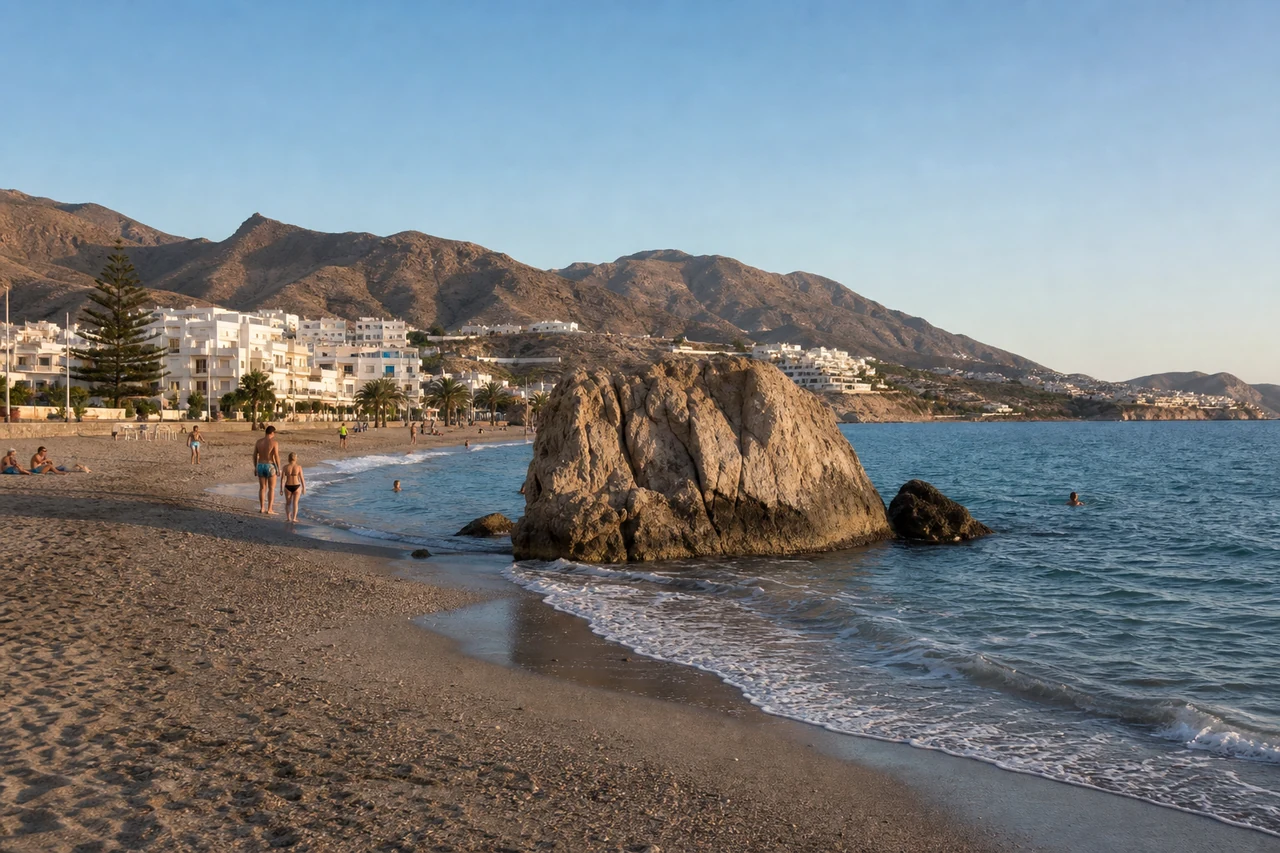
El Cantal Beach
Mojácar’s resort heart: grey sand, a lively promenade and the large Cantal rock as its signature landmark.
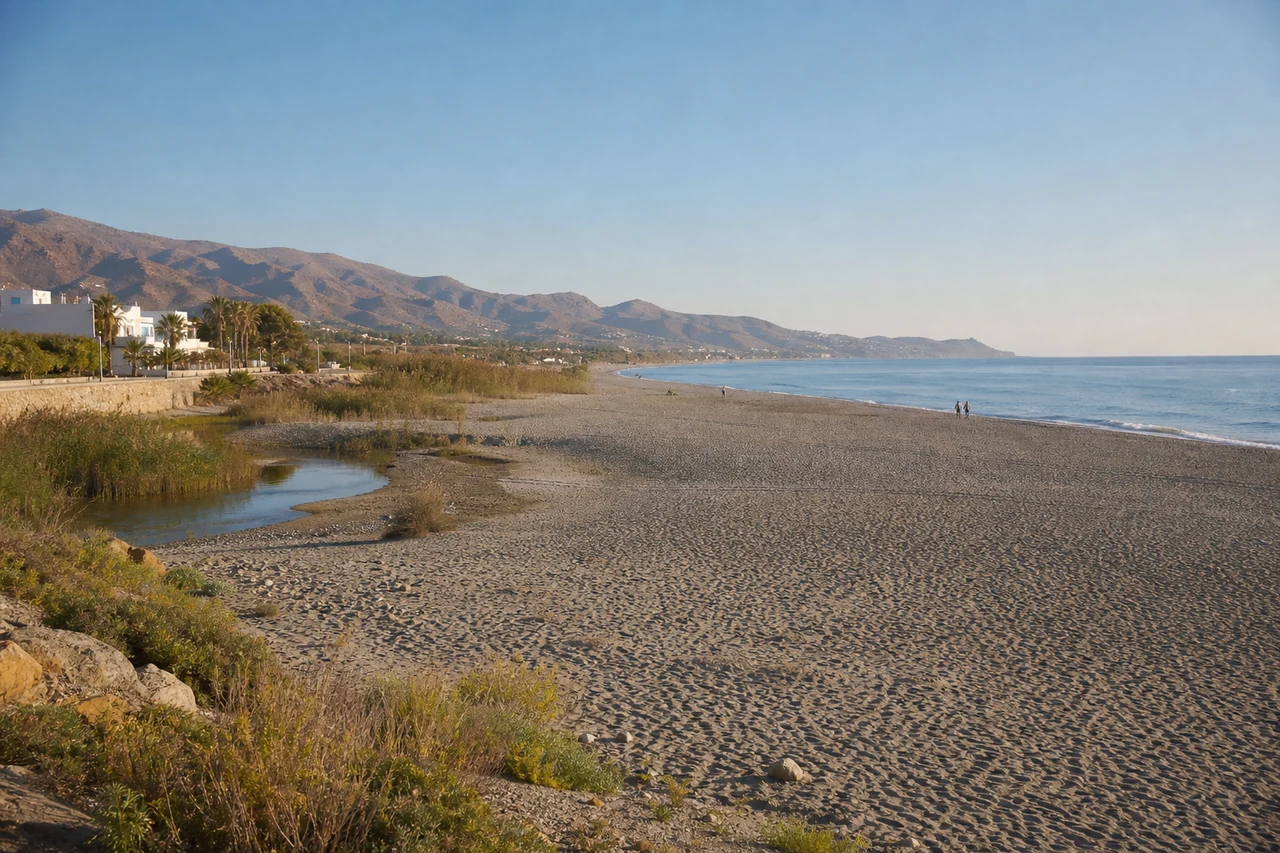
Rumina Beach
A grey-sand beach in the Río Aguas area, with a nearby promenade and restaurants and a calmer pace.
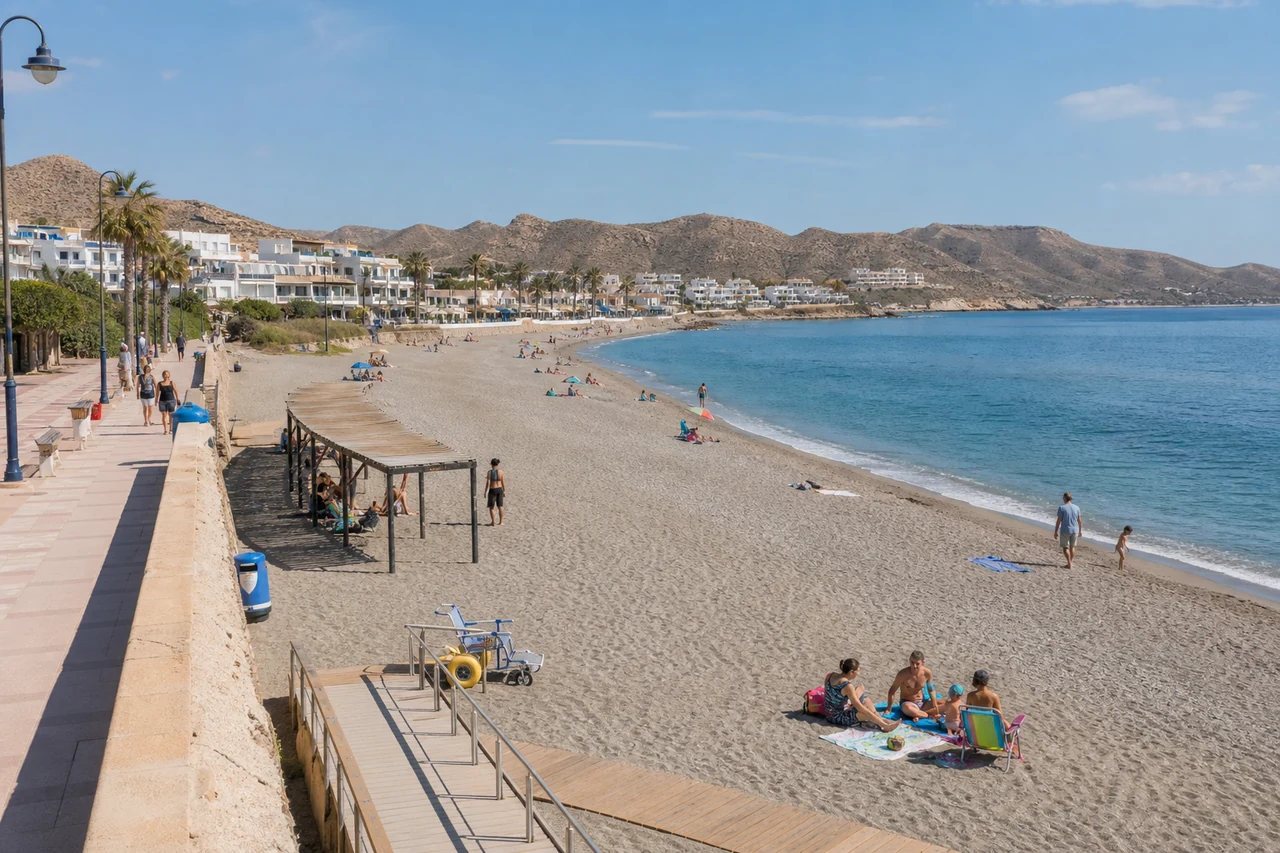
Venta del Bancal–Las Ventanicas Beach
A broad urban beach of fine grey sand and promenade, combining Venta del Bancal and Las Ventanicas in one listing.
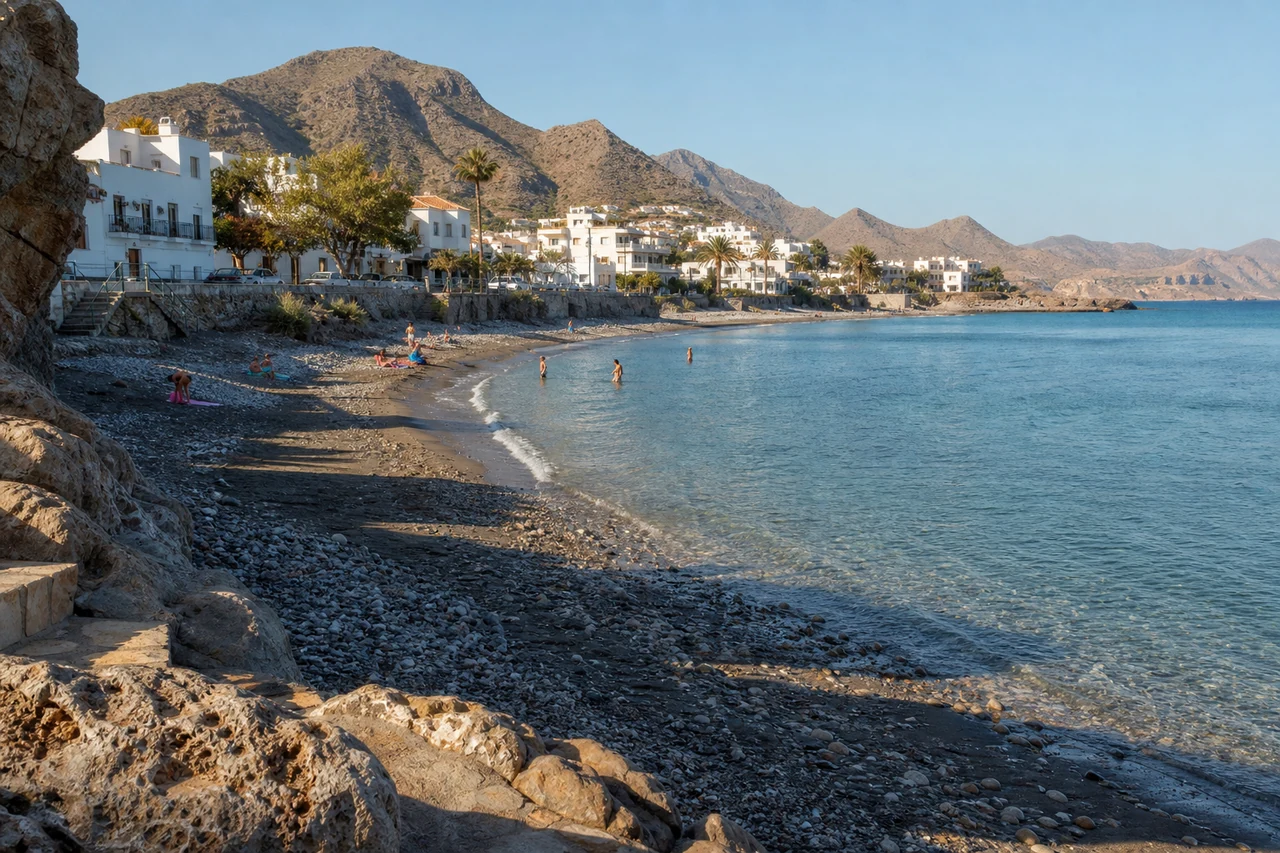
Cueva del Lobo Beach
A family-friendly urban beach of medium sand and rounded pebbles in Mojácar’s resort area.
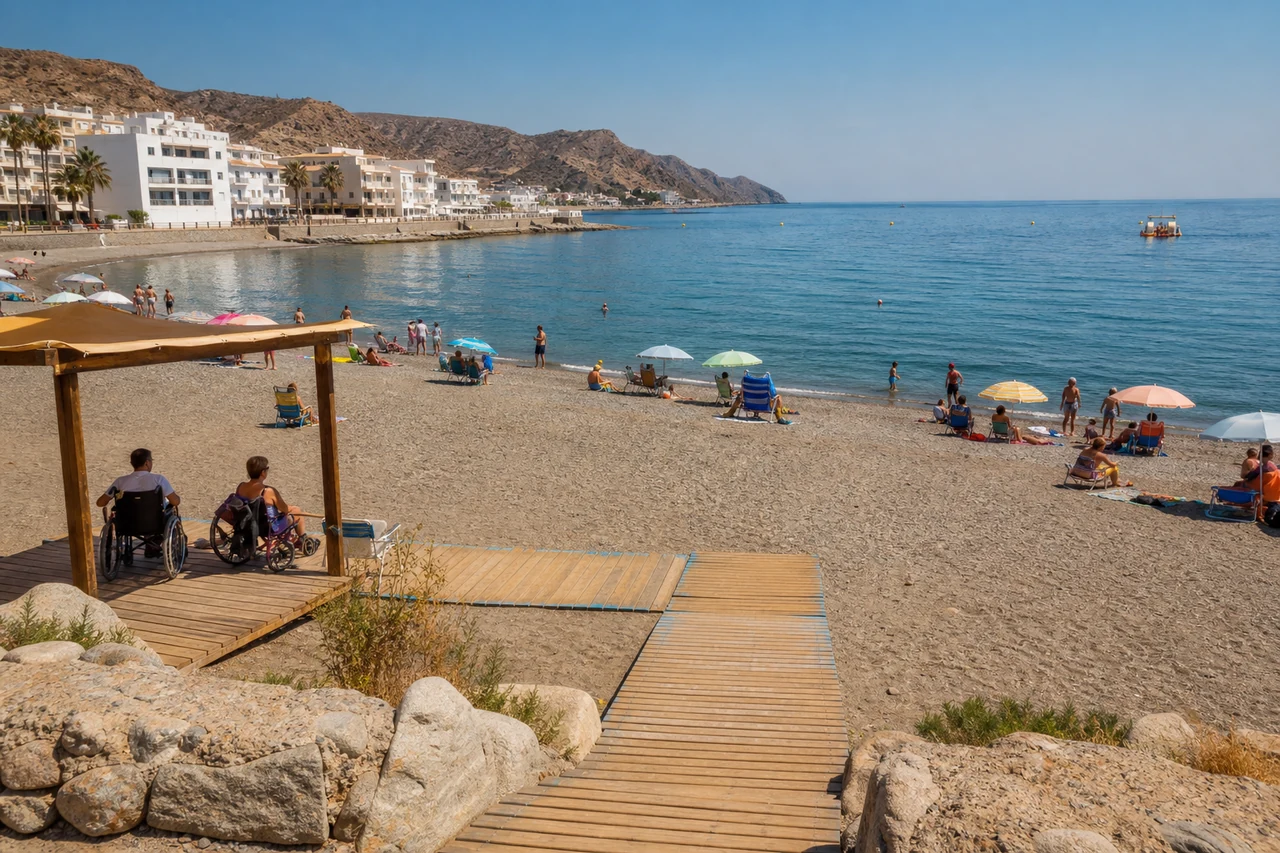
Lance Nuevo Beach
A well-equipped urban beach of sand and small pebbles, distinct from nearby Cueva del Lobo.
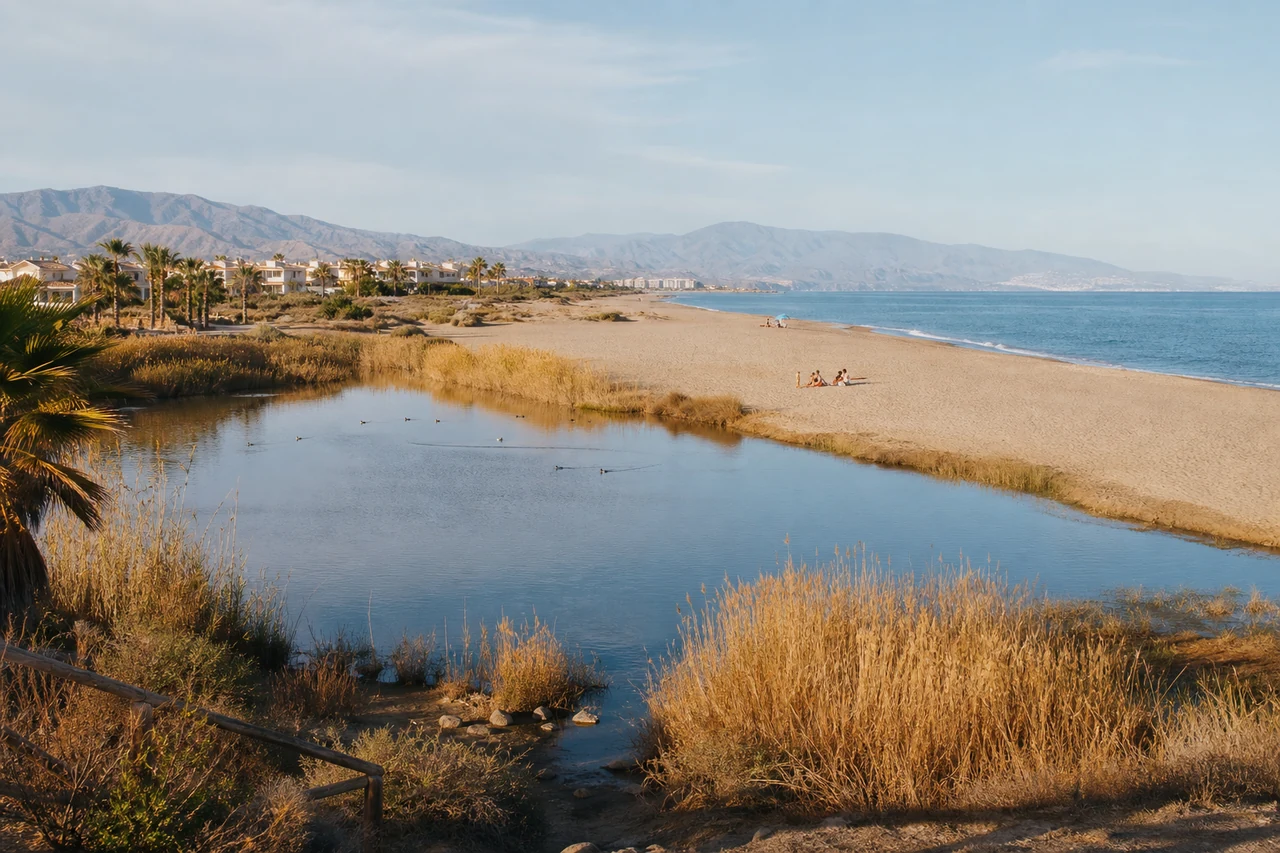
Puerto Rey Beach
A family fine-sand beach around the Antas lagoon, with a promenade and occasional birdlife.
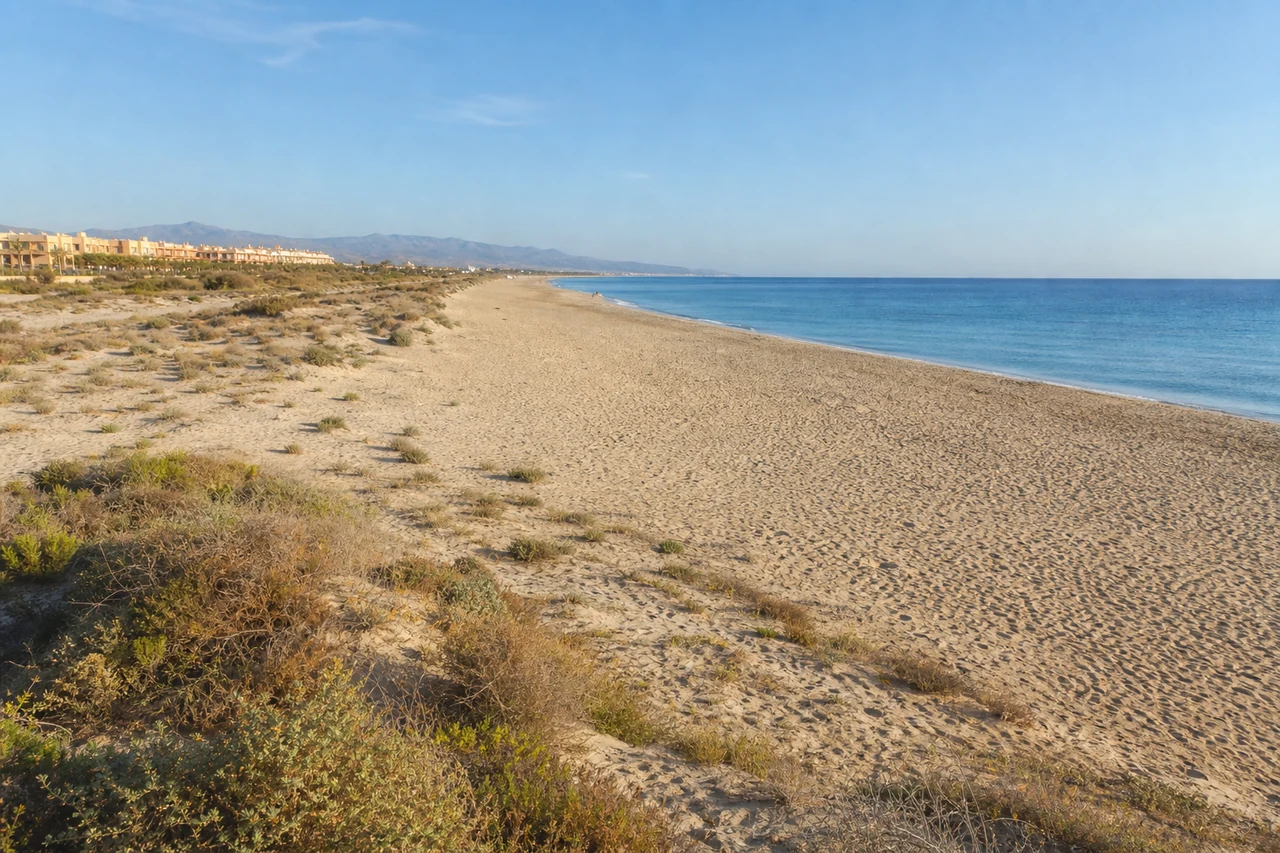
El Playazo de Vera
A broad open golden-sand beach stretching over two kilometres, with facilities and a naturist section at its northern end.
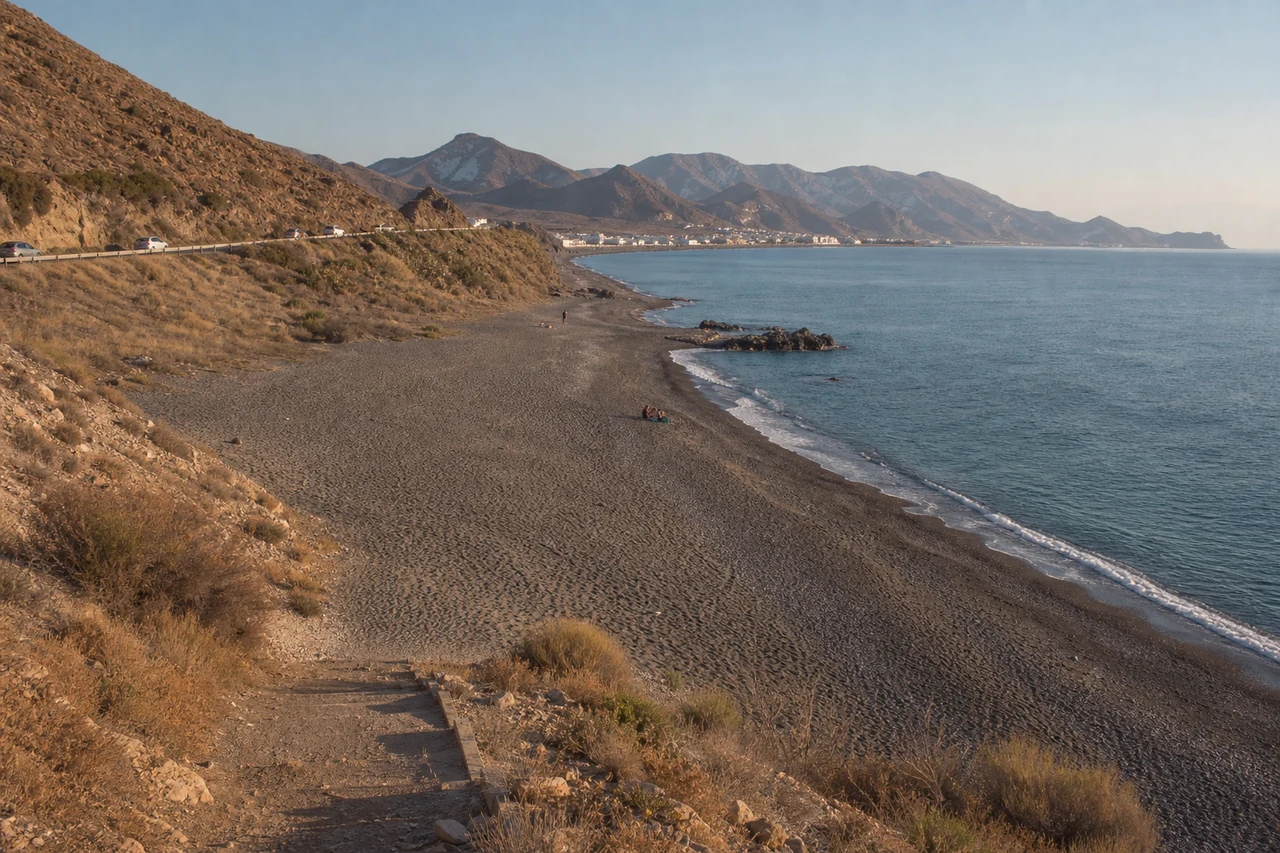
La Mena Beach
A long strip of dark sand and gravel between the coast road and open sea in southern Mojácar.
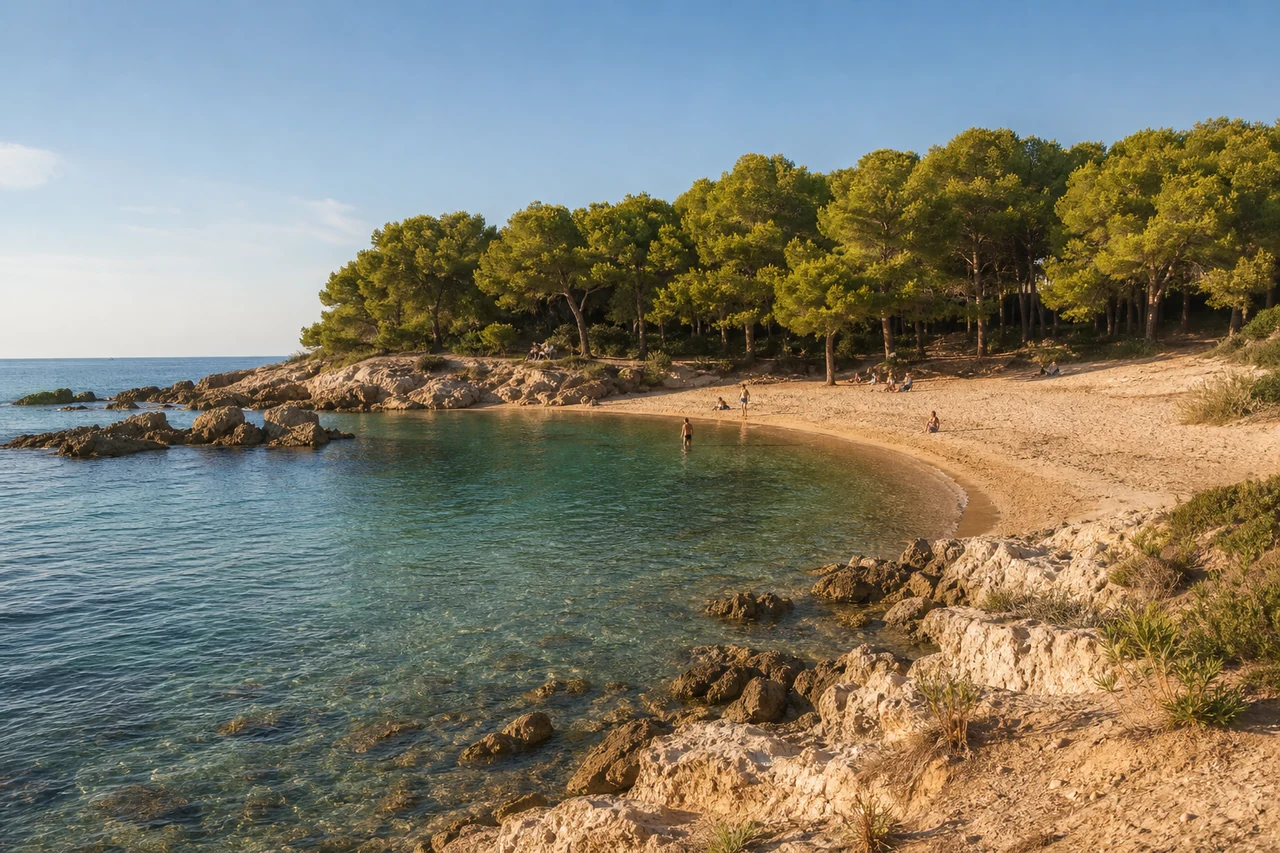
Marqués Cove
A small sandy cove below pine trees, more intimate than nearby El Playazo de Vera.
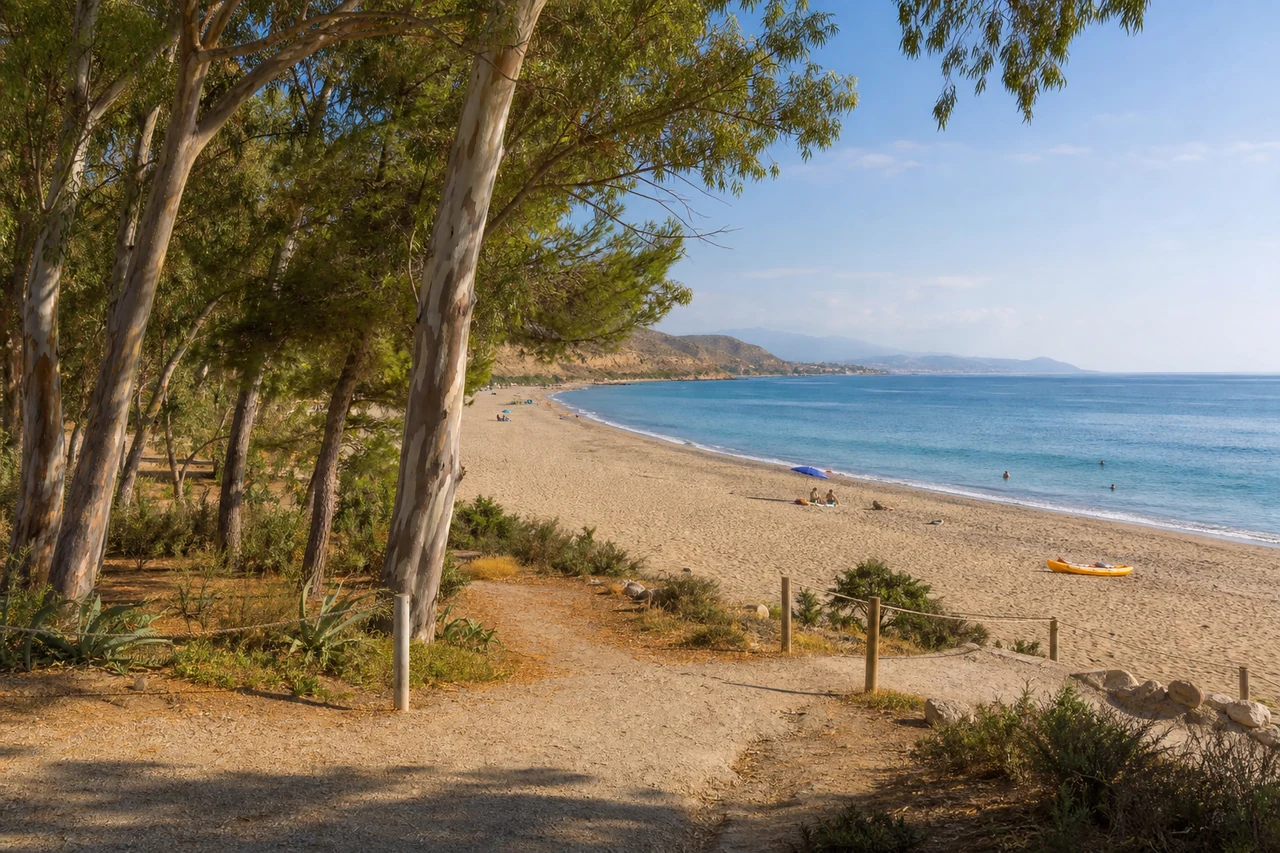
Quitapellejos–Palomares Beach
A broad open beach of fine golden sand, backed by eucalyptus and pine trees on the Palomares coast.
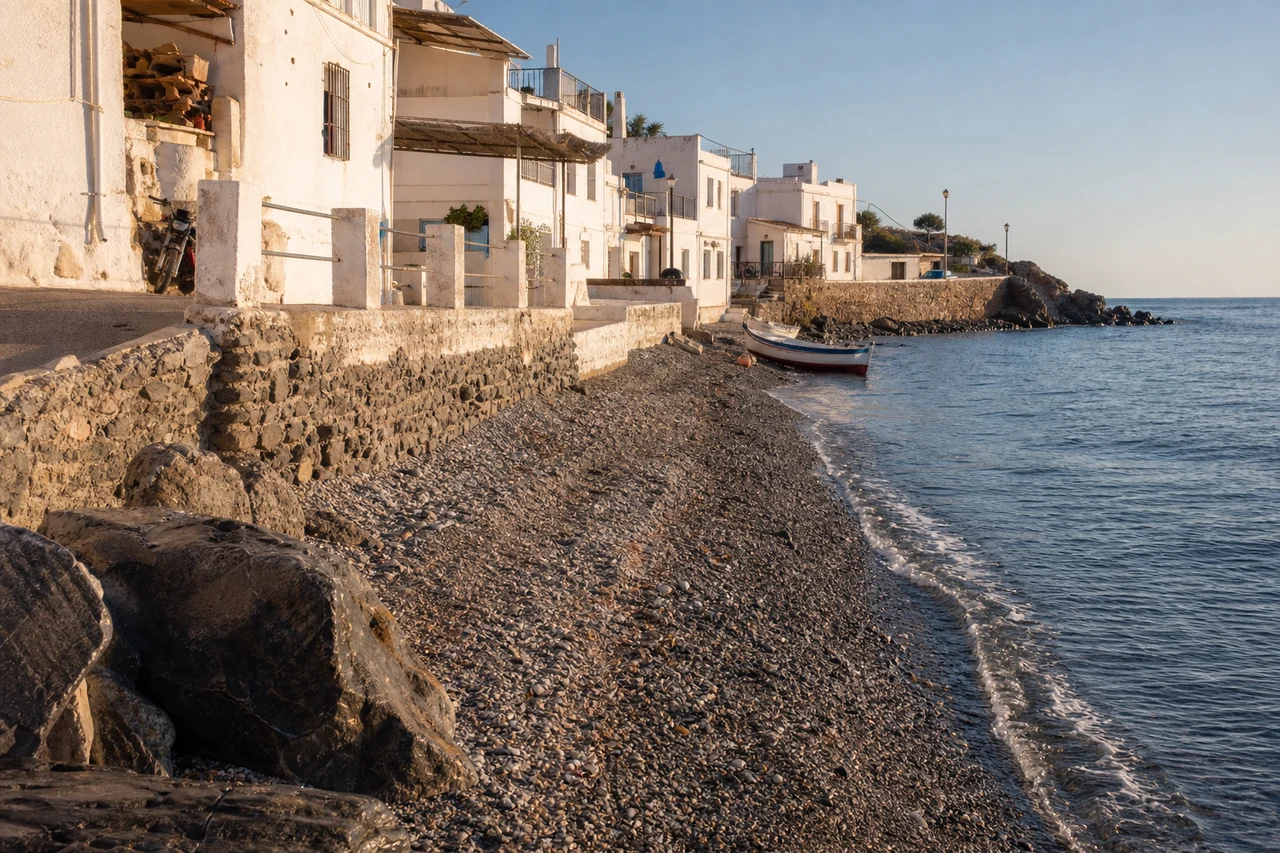
Caserones Beach
A very narrow rock-and-gravel beach facing the small Caserones settlement on the Rubite coast.
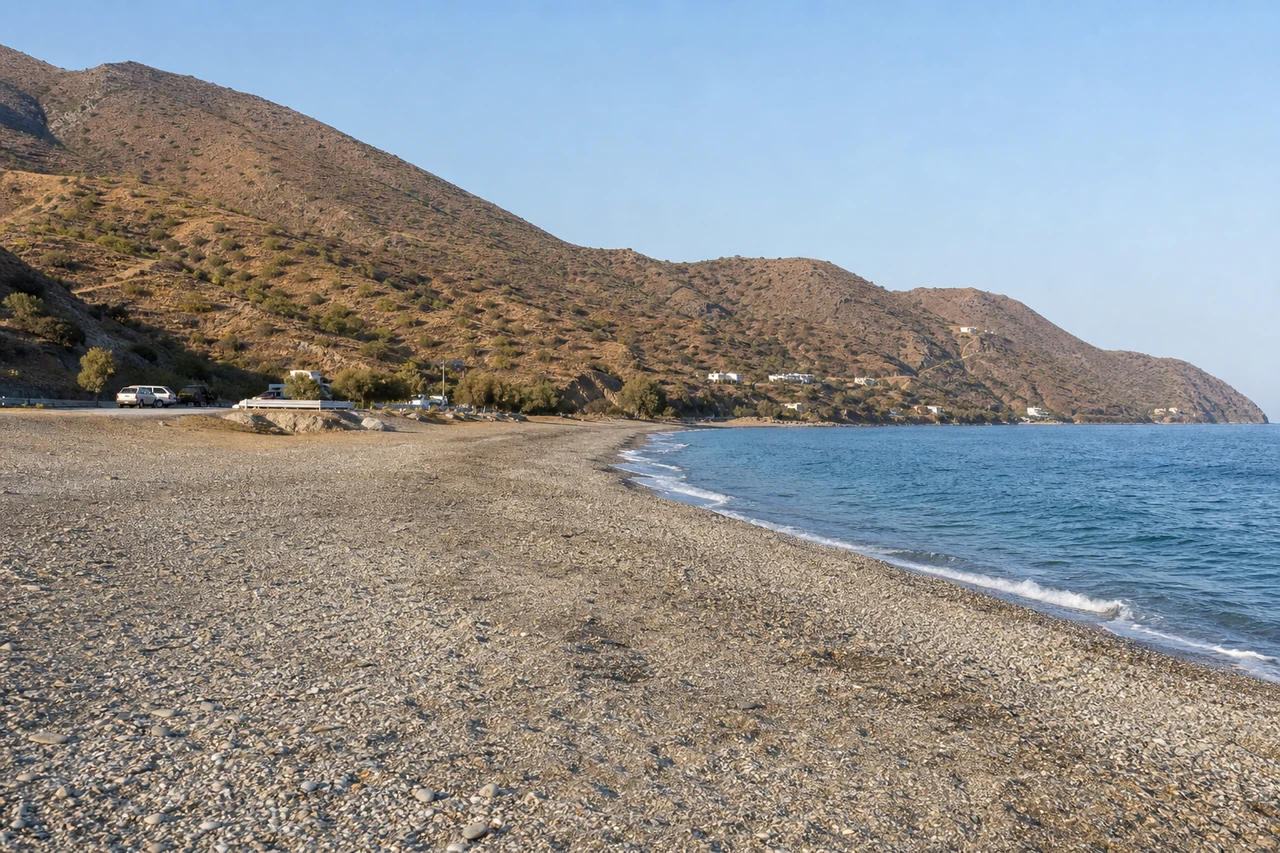
Cambriles Beach
A quiet coarse sand-and-gravel beach shared by Lújar and Gualchos beside the coast road.
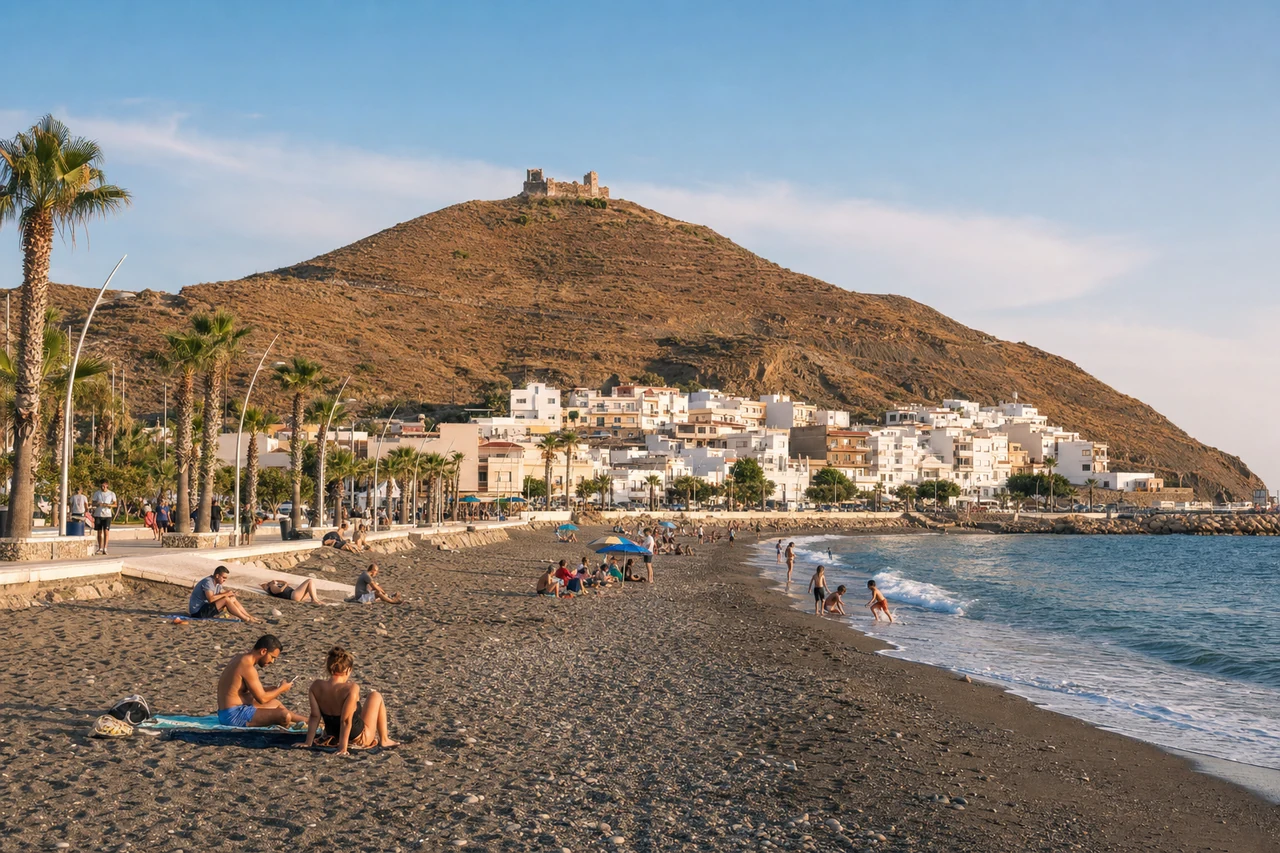
Sotillo–Castell de Ferro Beach
Castell de Ferro’s main urban sand-and-gravel beach, with a busy promenade and castle on the hill.
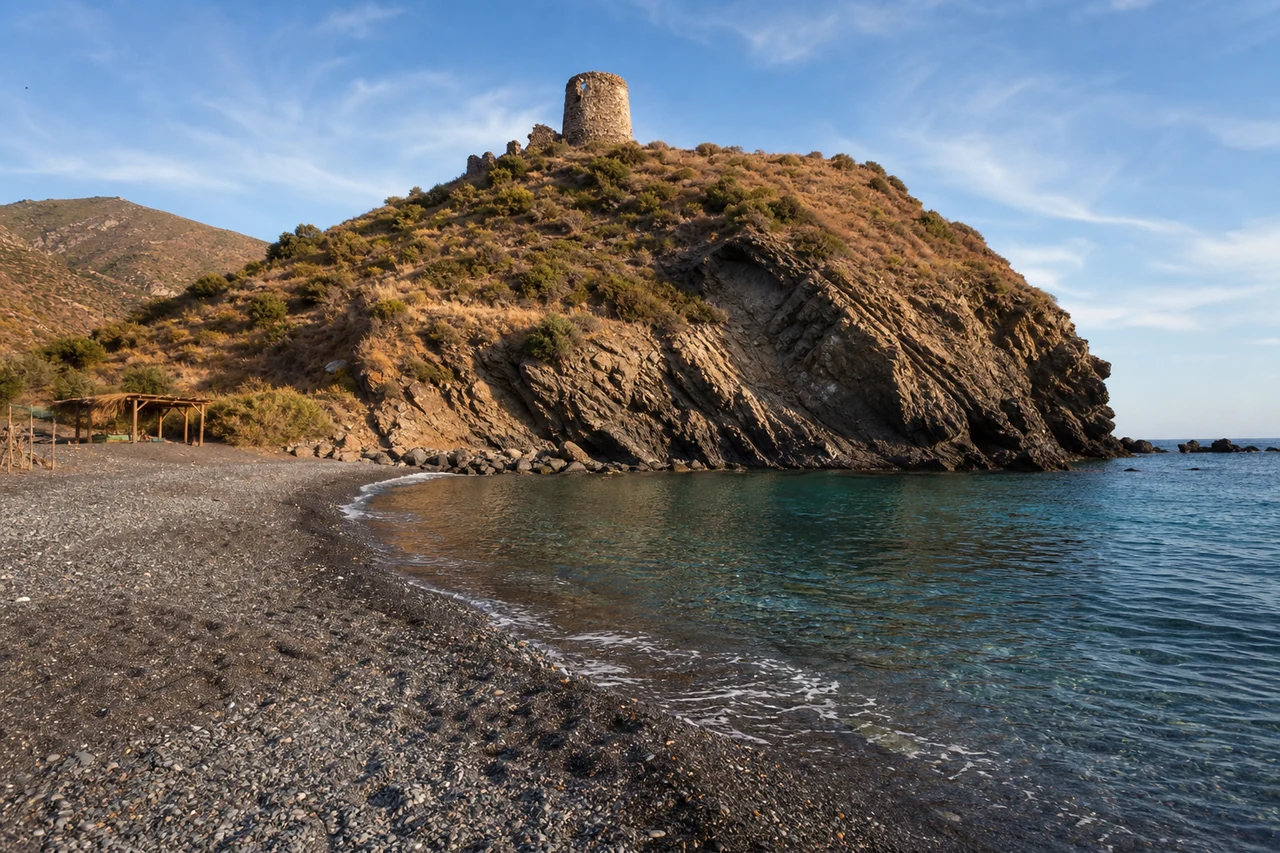
La Rijana Beach
An isolated cove of sand, gravel and clear water below a watchtower on the Gualchos coast.
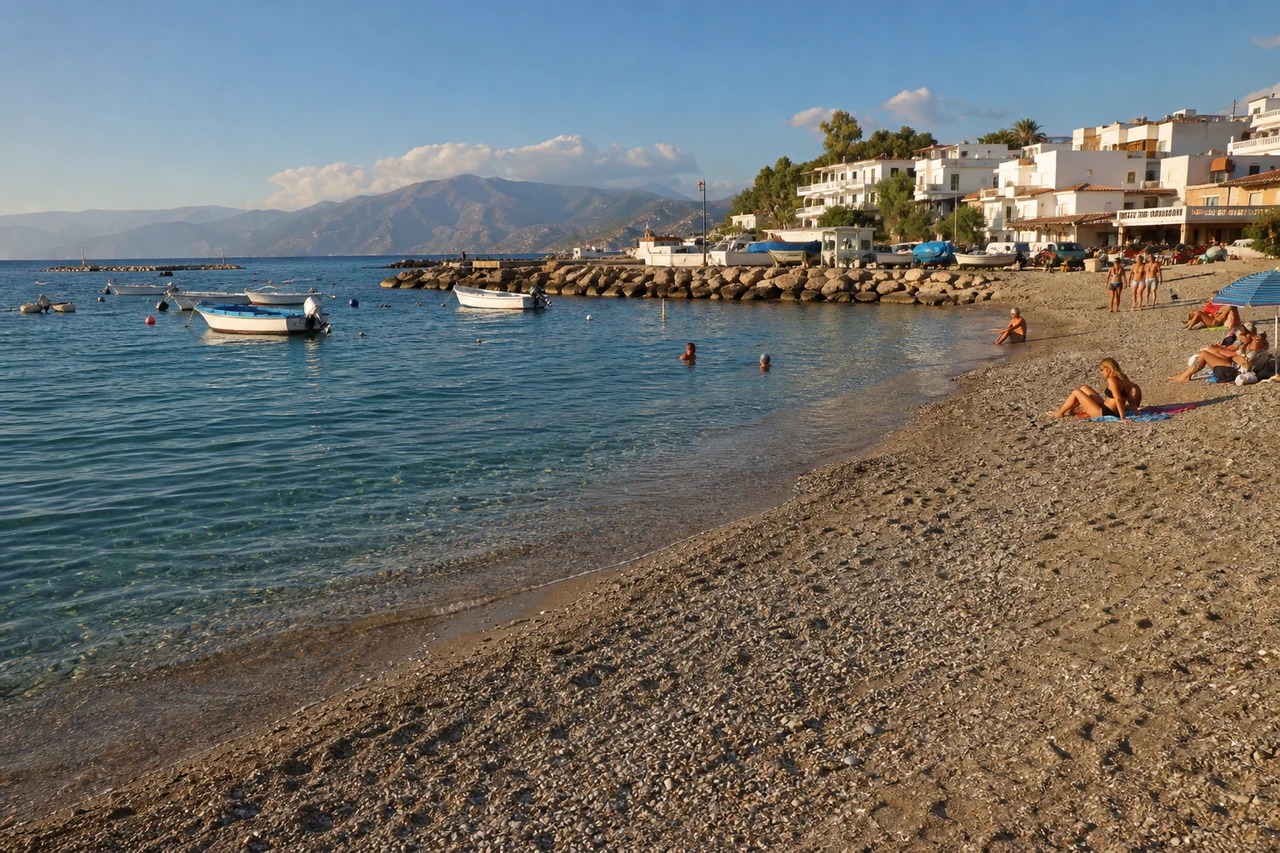
Calahonda Beach
A broad urban coarse-sand beach with boats and a small natural harbour, where the water deepens quickly.
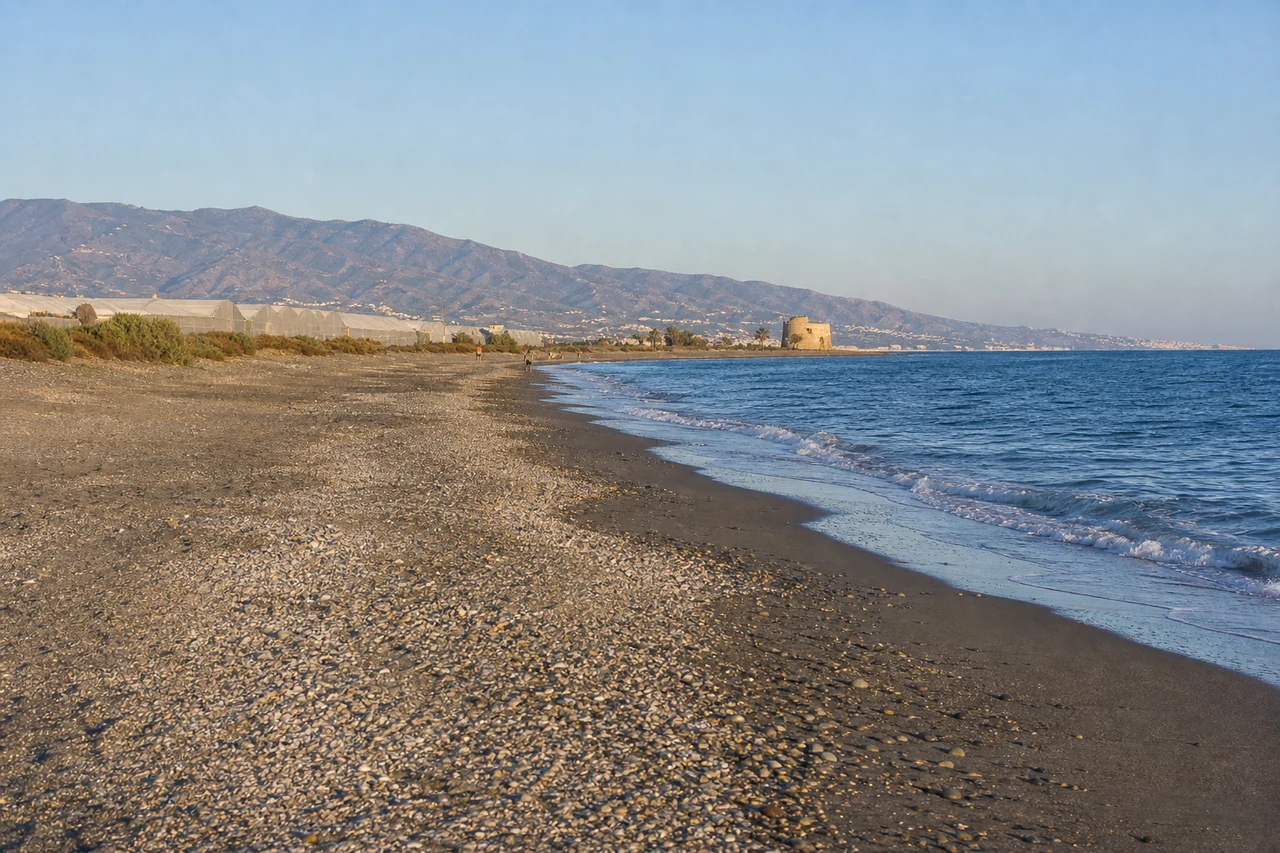
Carchuna Beach
A vast sand-and-gravel beach facing the Carchuna plain, with a fort, tower and cultivation behind.
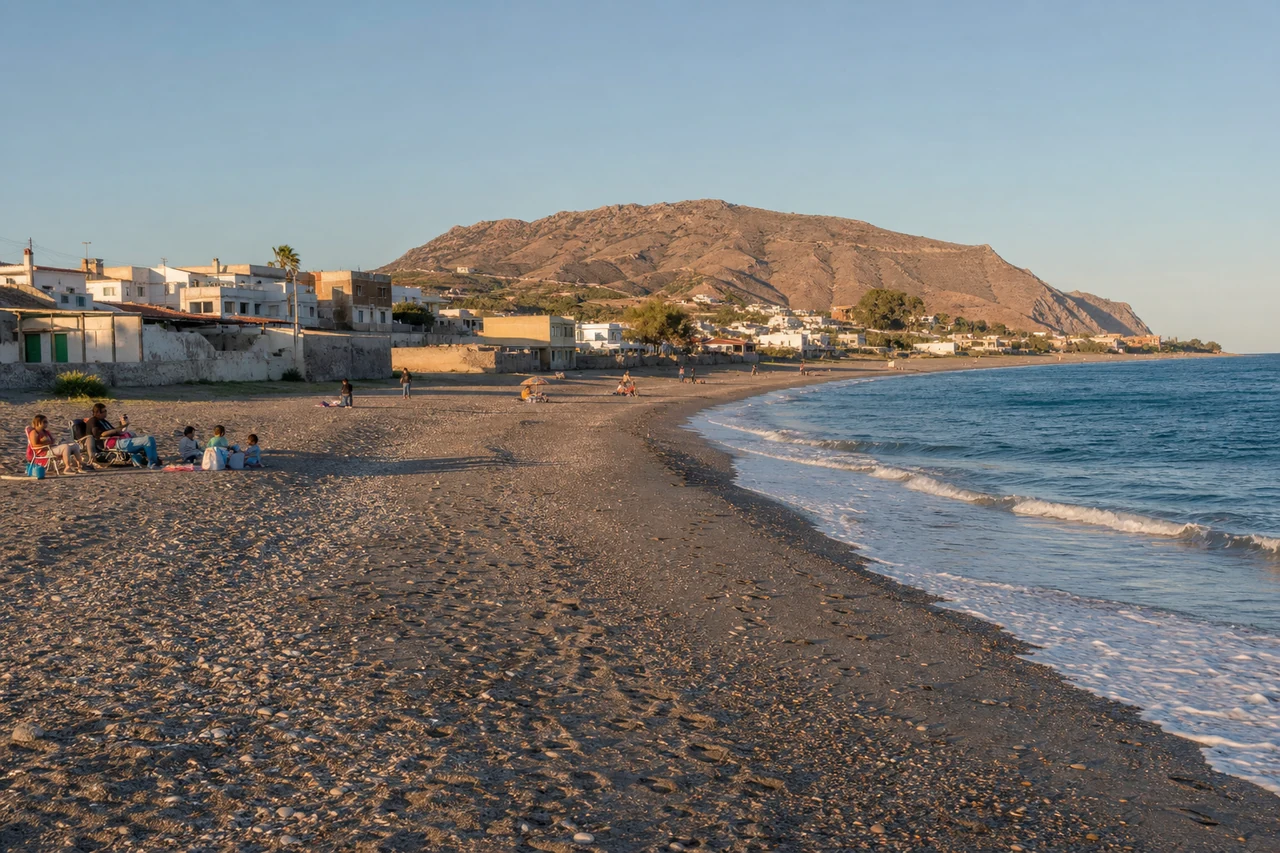
La Chucha Beach
A quiet sand-and-gravel beach facing small developments, with Cape Sacratif on the horizon.
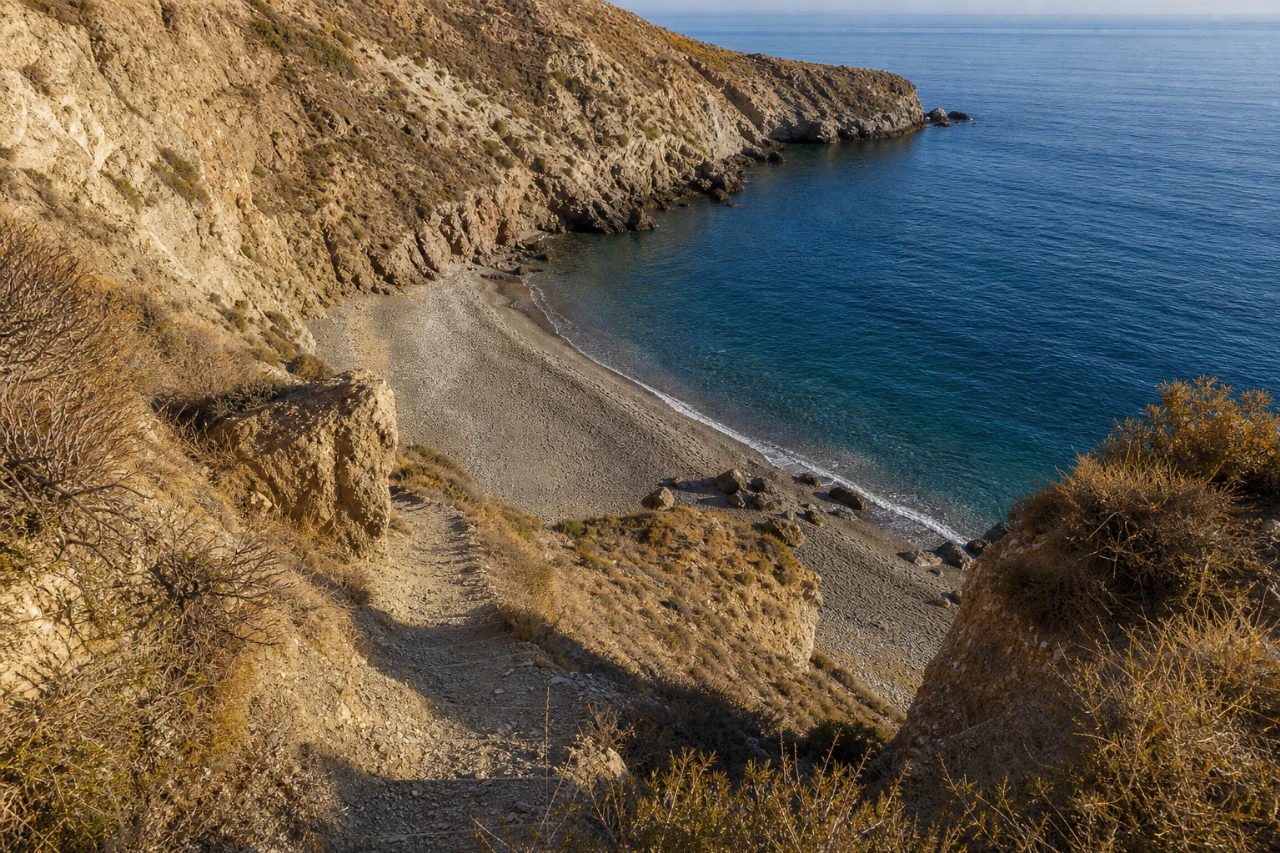
La Joya Beach
An isolated naturist cove of dark sand and gravel below the cliffs of Torrenueva Costa.
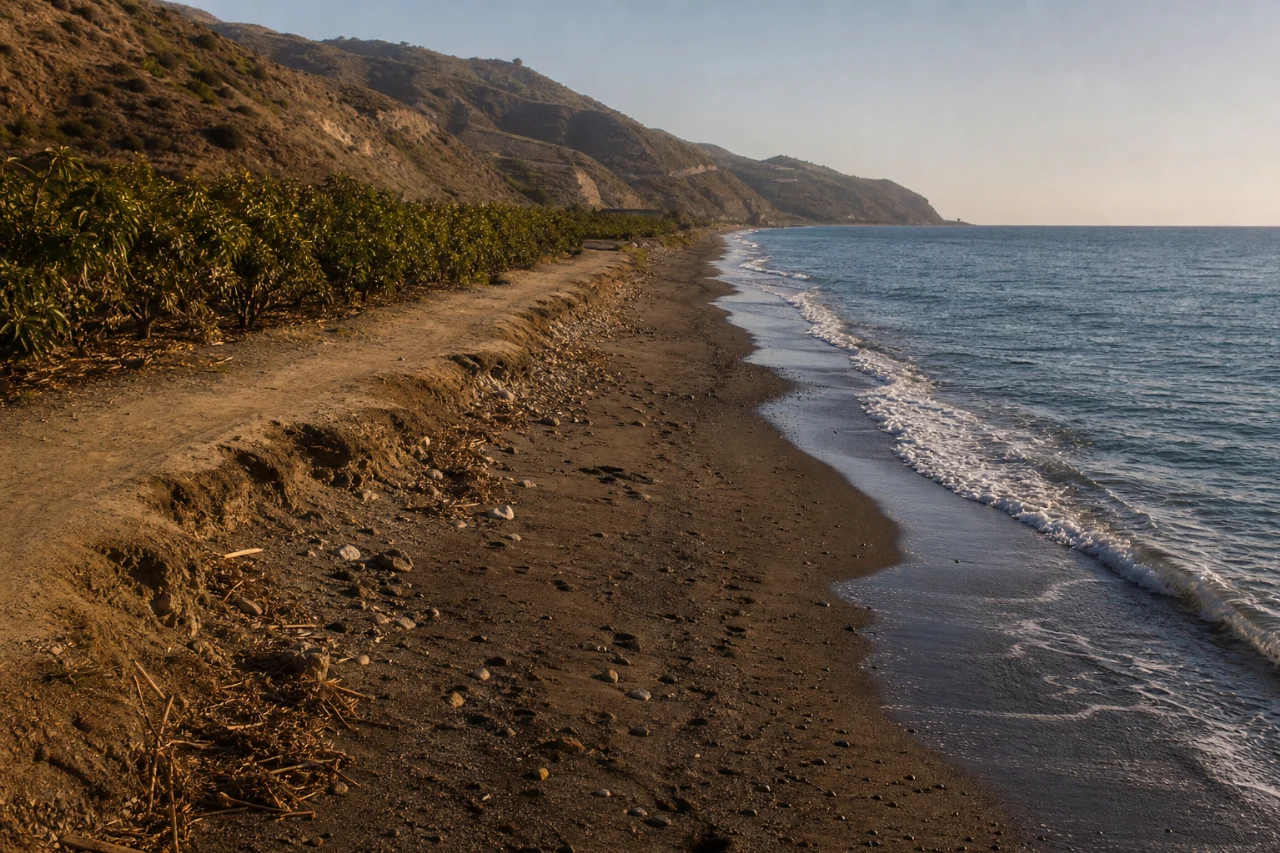
Maruja García Beach
A small, almost deserted beach of fine dark sand, with subtropical cultivation behind the coast.
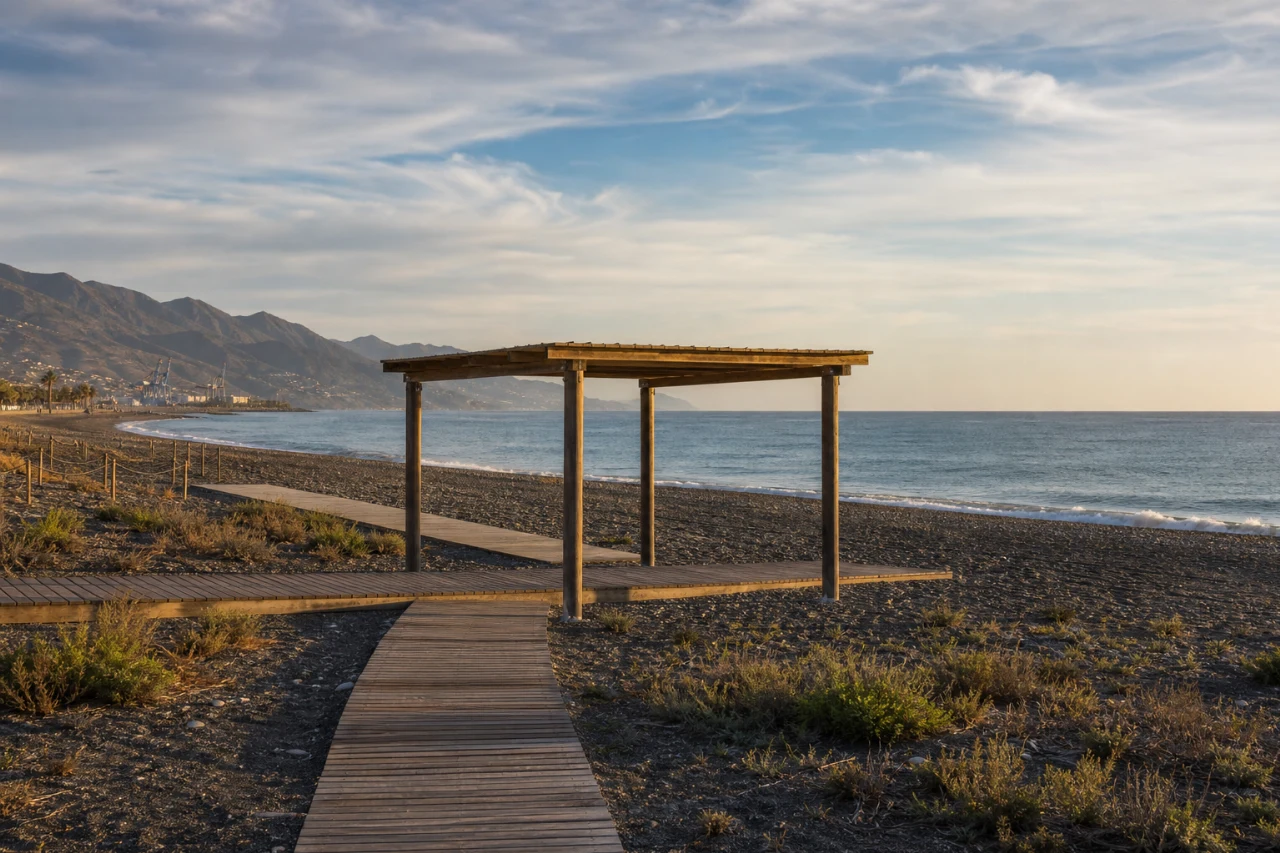
Las Azucenas Beach
A long natural and semi-urban dark sand-and-gravel beach near the port, undergoing ecological restoration.
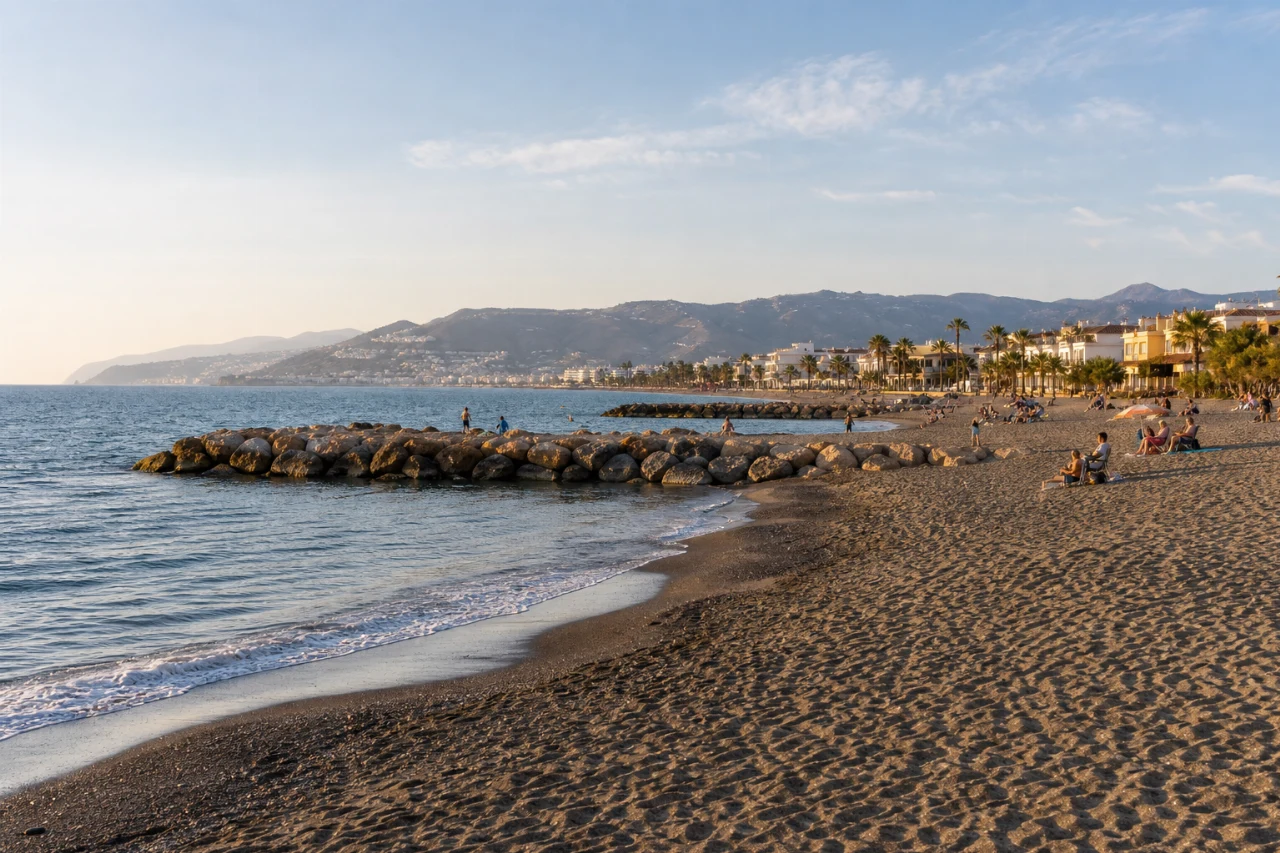
Torrenueva Costa Beach
A broad family urban beach of dark sand and fine shingle, with a promenade, groynes and local life by the sea.
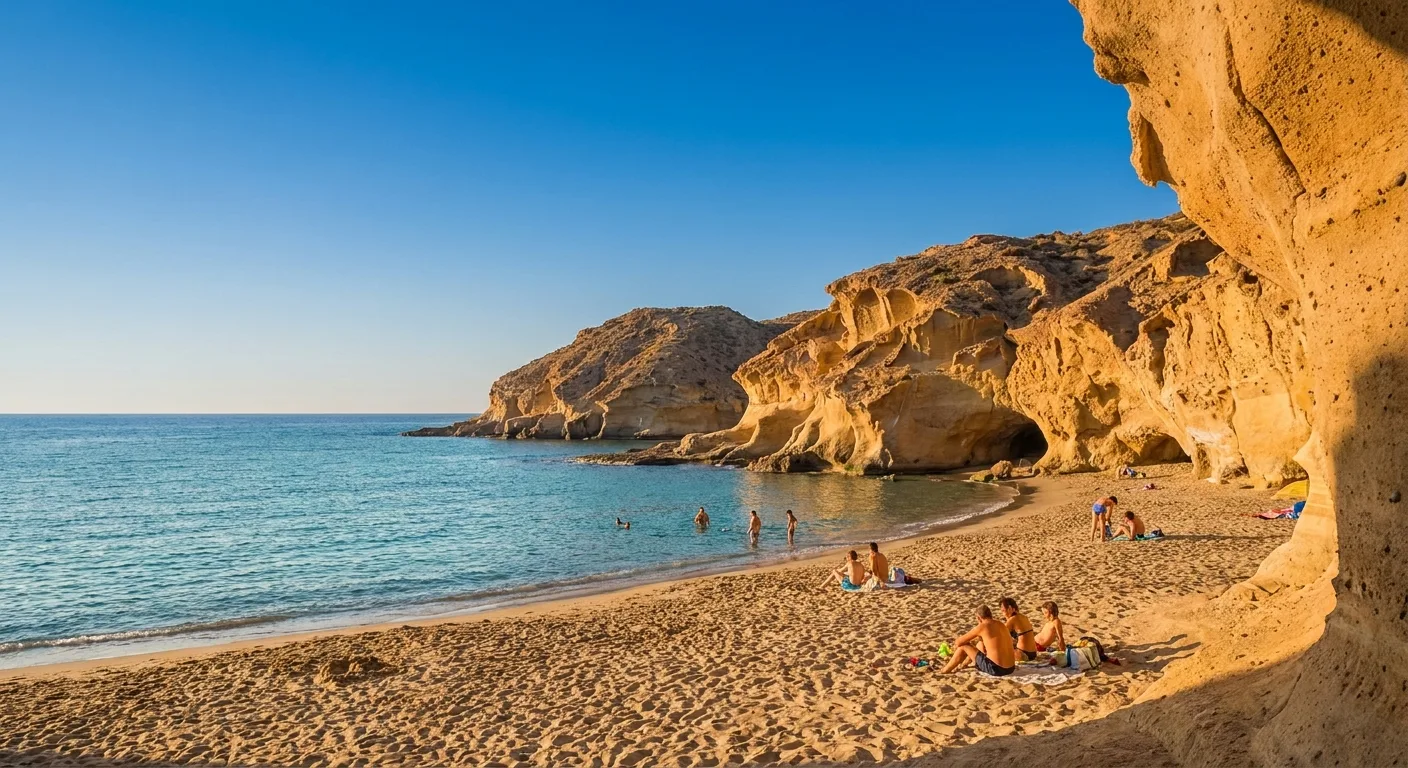
Los Cocedores Beach
Fine-sand cove on the Almería-Murcia border, set among sandstone cliffs pierced by historic esparto-grass caves.
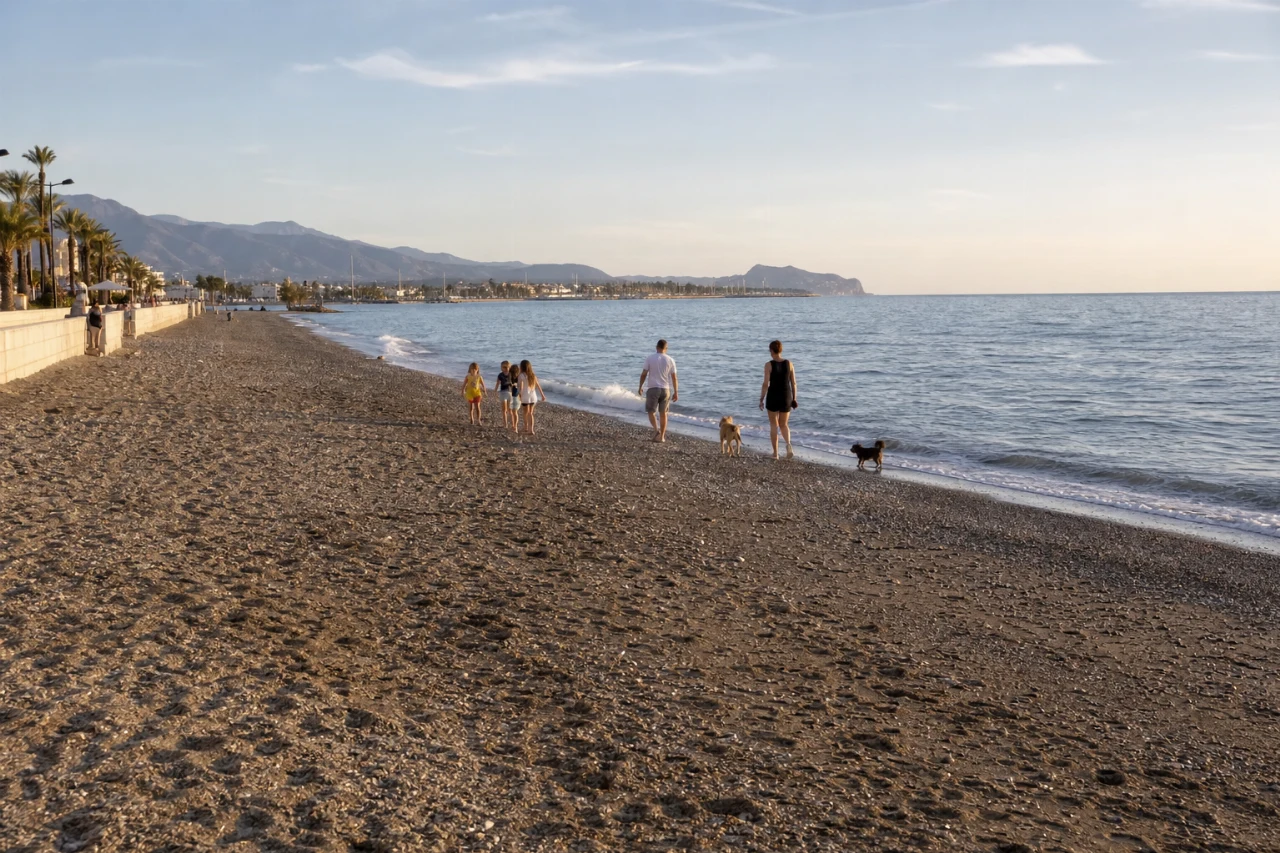
El Cable–Motril Beach
A large dog-friendly beach of coarse dark sand and gravel in Motril, with a promenade and very easy access.
The coastline
Three coasts
in one
At its heart, the gem: the Cabo de Gata-Níjar Natural Park, Andalusia's first protected marine-terrestrial area (1987), a UNESCO Biosphere Reserve, a European Geopark and a Ramsar wetland for its salt flats. A landscape born from the volcanoes of the Miocene, with lava flows, dunes and posidonia meadows along some 63 km — and not a single hotel at the water's edge.
To the north, the Almería Levante: the seafaring villages of Carboneras and Agua Amarga, with Blue Flag town beaches and fishing boats resting on the sand, and further on the sandstone coves of Pulpí, on the Murcian border, carved with the old esparto-workers' caves.
And at the gates of the capital, the Gulf of Almería: El Toyo-Retamar, the full-service beach closest to Alhama, opens the protected coastline half an hour from the village. No need to choose between nature and comfort: there is a beach for every plan.
Marine biodiversity
A sanctuary
beneath the surface
The seabeds along the Almería coast are among the richest in the Mediterranean: posidonia meadows, volcanic reefs and salt flats where flamingos rest. Divers are greeted by exceptional biodiversity.
Practical information