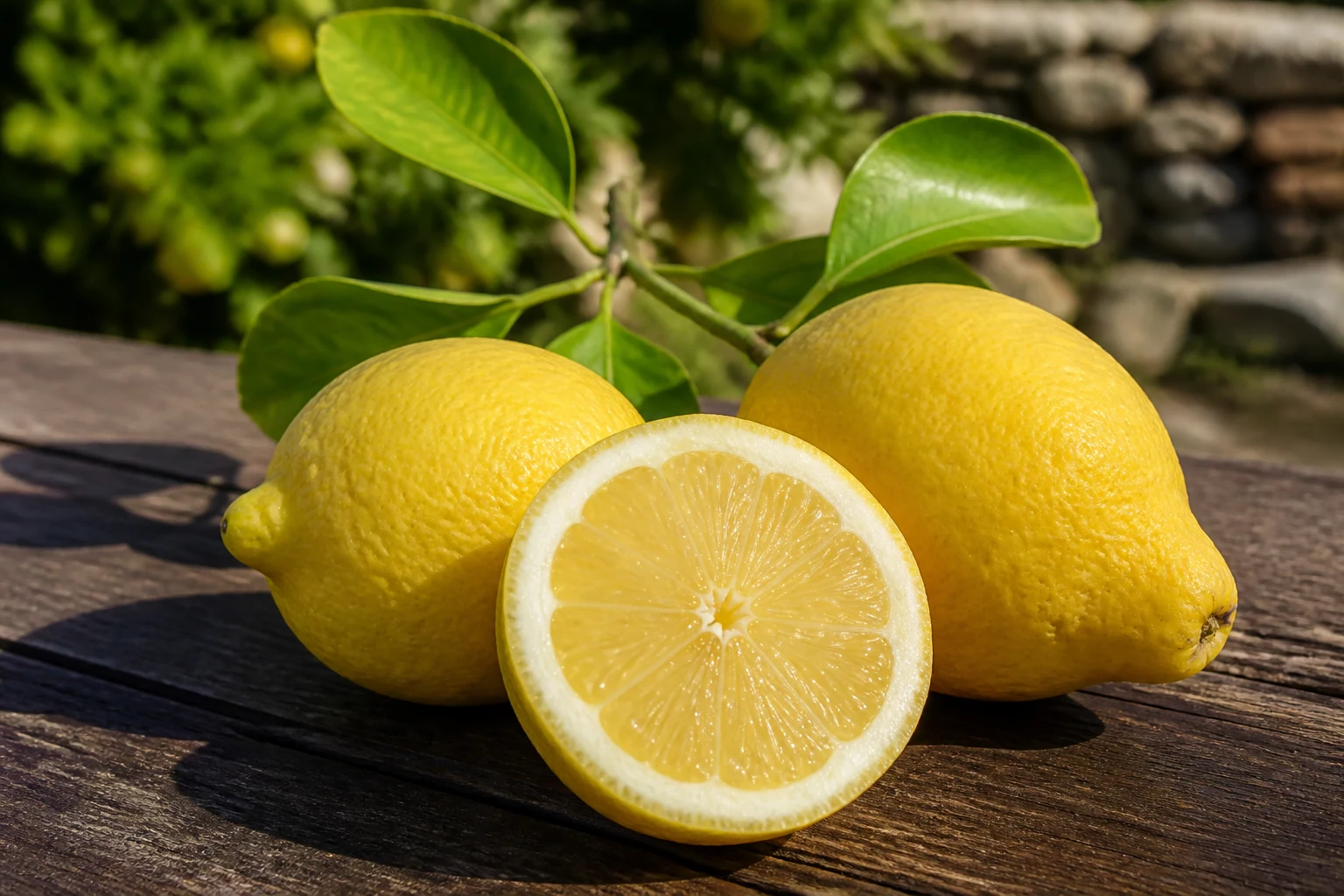
Lemon
Two harvests hand over almost all year round: Fino opens the season in autumn and Verna stretches it into summer. The Andarax grows lemons, but the provincial bulk sits in the Almanzora valley.
Thirty-two crops, several landscapes and the same Mediterranean light.
Along the coast, greenhouses draw a white mosaic across the Campo de Dalías, the Bajo Andarax and the Campo de Níjar. The most recent official figure puts their physical footprint at around 33,000 hectares in the province; the 62,743 cultivated hectares reported for the 2024/25 season also count plots that host two successive crop cycles — the two figures describe different realities.
Spectacular as it is, that landscape does not sum up Almería's farmland. Citrus and the historic uva del barco follow the Andarax valley; olive, almond and fig trees and open-field crops climb the slopes and reach inland; new tropical fruits are being trialled under cover along the coastal strip. Read the catalogue as a map, from the sea to the sierras, as much as a harvest calendar.
Two harvests hand over almost all year round: Fino opens the season in autumn and Verna stretches it into summer. The Andarax grows lemons, but the provincial bulk sits in the Almanzora valley.
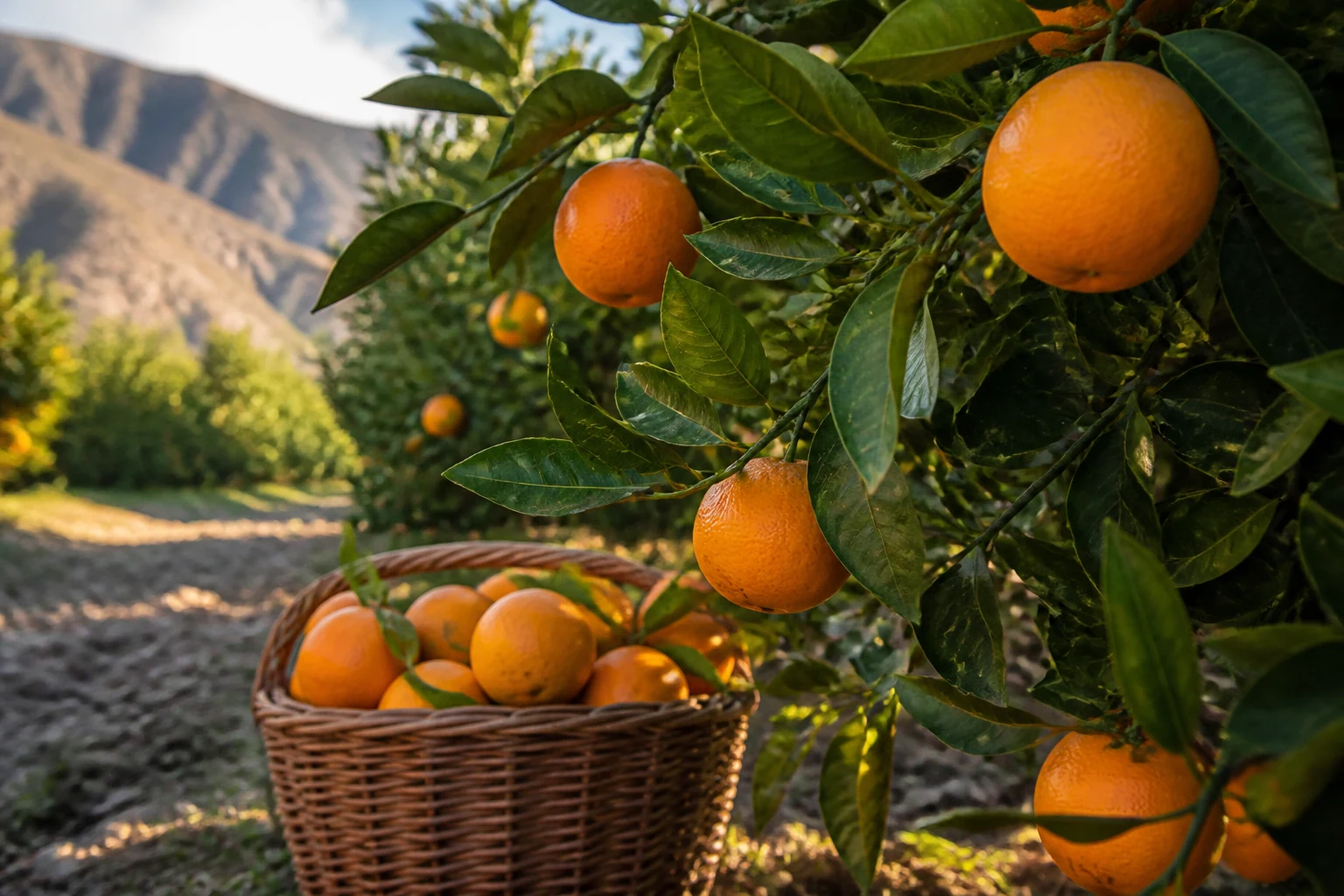
In the Bajo Andarax, orange trees form a green ribbon at the foot of the dry hills. Gádor has grown that identity for some 150 years; Alhama shares the valley's citrus history.
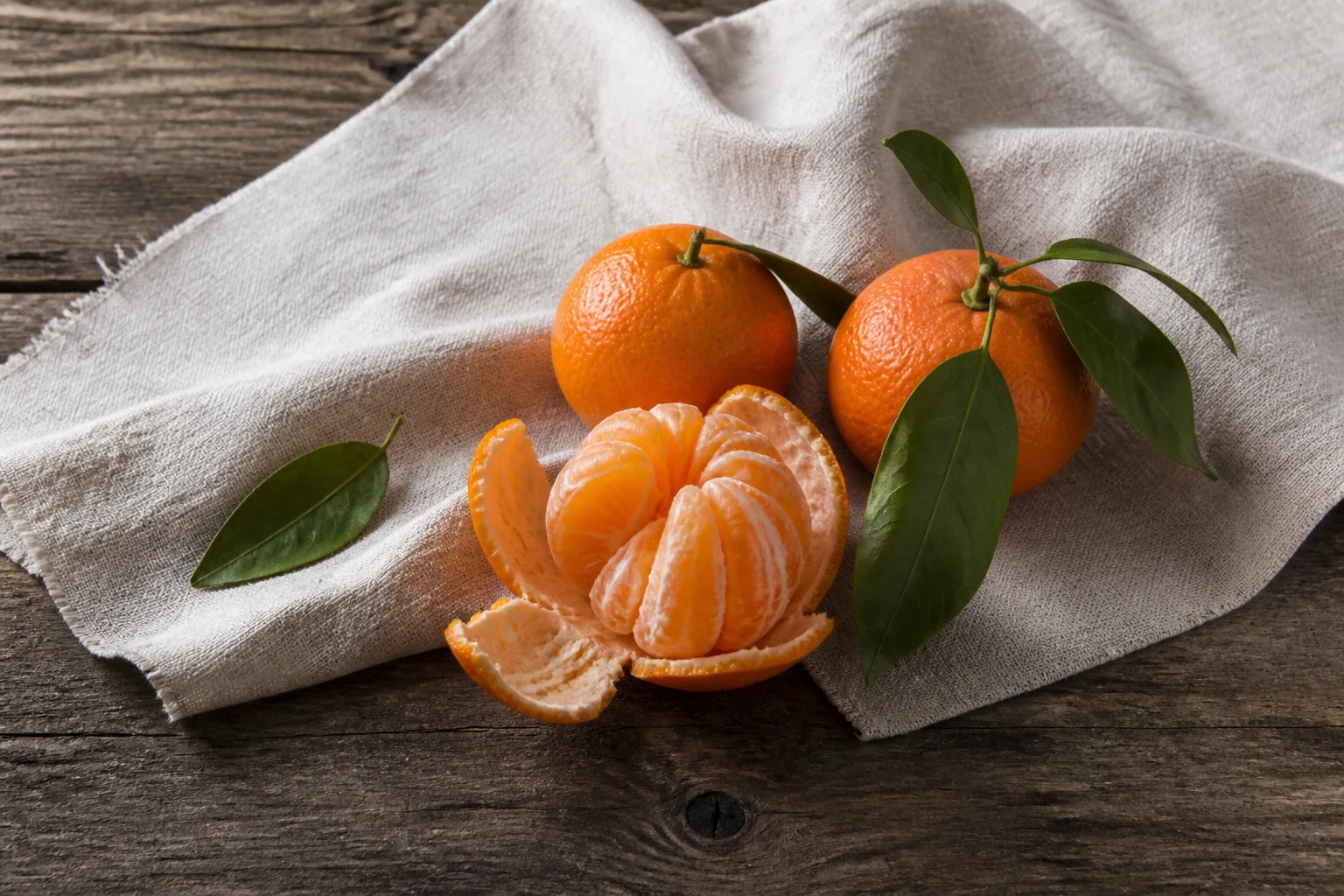
Small, easy to peel and nearly seedless, the clementine keeps the Almerian winter company. The province counts in Andalusian mandarins, and IFAPA has trialled the Clementina de Nules on its coast.