Almería Alpujarra · memory of the valley

A history between two worlds

The Alpujarra is inseparable from its Muslim past, and the comarca's 22 municipalities are deeply bound to that heritage. Laujar de Andarax, the historic capital, concentrates a rare density of history — which is why these pages give it generous space.

  • 1492a kingdom comes to an end
  • 1570war in the valley
  • 5fountains in Laujar

01 · History

Alpujarra history

  1. Laujar de Andarax, "the threshing floor of life"

    Inhabited since prehistory, Laujar reached its peak under Arab rule. Its name dates from that era and means "the threshing floor of life" in Arabic. That is not a guidebook label: it is the trace of a time when this high valley was a centre of power.

  2. Boabdil, the last court

    For a time the village was a royal court: Boabdil lived in its alcazaba before his exile in Africa. The final chapter of the Nasrid kingdom was written, in part, in this valley.

  3. Aben Humeya and the War of the Alpujarras

    Laujar was also the residence of Aben Humeya, leader of the War of the Alpujarras in 1570. Two names — Boabdil and Aben Humeya — are enough to grasp why this comarca weighs so heavily in the history of al-Andalus.

  4. The expulsion of the Moriscos and the repopulation

    The war was followed by the expulsion of the Moriscos and the repopulation of the comarca. The winding white streets, the geranium-filled balconies: the architecture of these villages keeps the memory of that world.

  5. The heritage of water

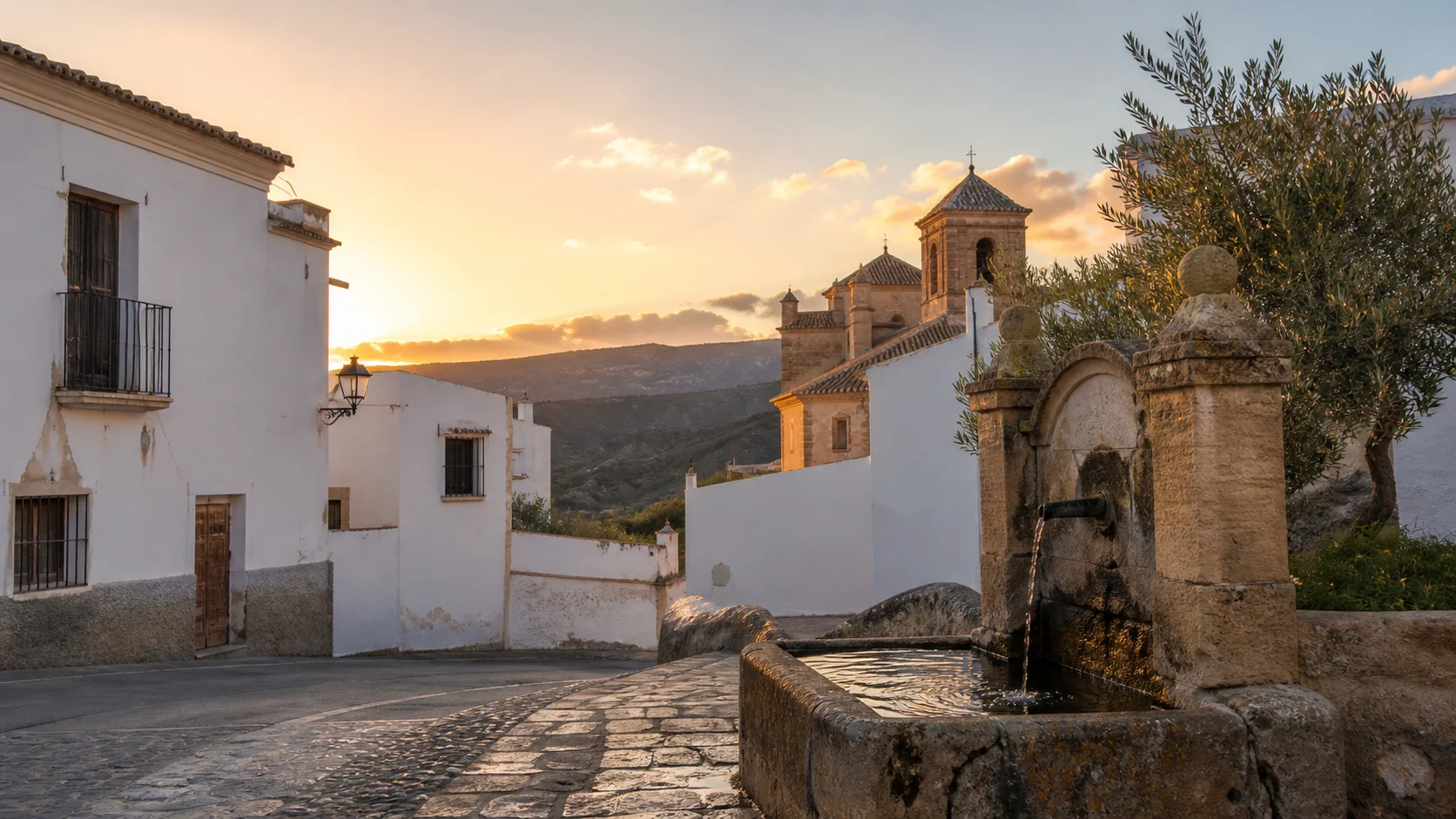
    In Laujar, water is heritage with names of its own. Five fountains mark the village:

    • Pilar de la Plaza
    • Pilar de la Cañada
    • Pilar de la Barandilla
    • Pilar del Calvache
    • Fuente de San Antonio
  6. The Mudéjar church of La Encarnación

    In Laujar, the Mudéjar church of La Encarnación keeps a Baroque altarpiece. A building where the two eras — Mudéjar and Christian — look each other in the eye.