The americano
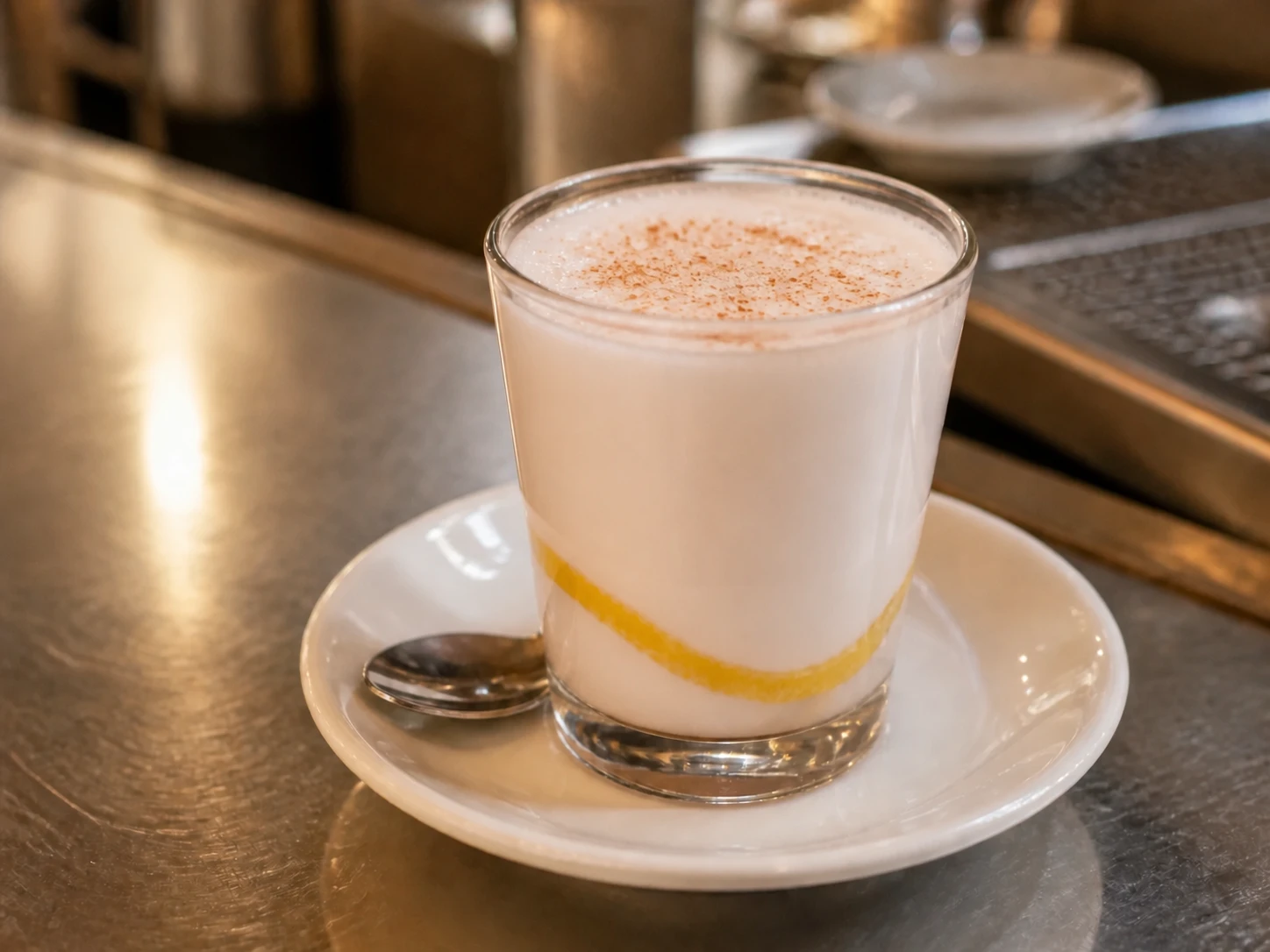
Pale pink, hot, dusted with cinnamon. And not a drop of coffee.
In Almería, “un americano” is something else entirely: hot milk, kola-nut liqueur, sugar, a strip of lemon peel and cinnamon, in a small clear glass. It was born at a kiosk by the Puerta de Purchena, in the years when American cinema slept in the hotels next door, and it has barely left the province since.
The name came down from a hotel
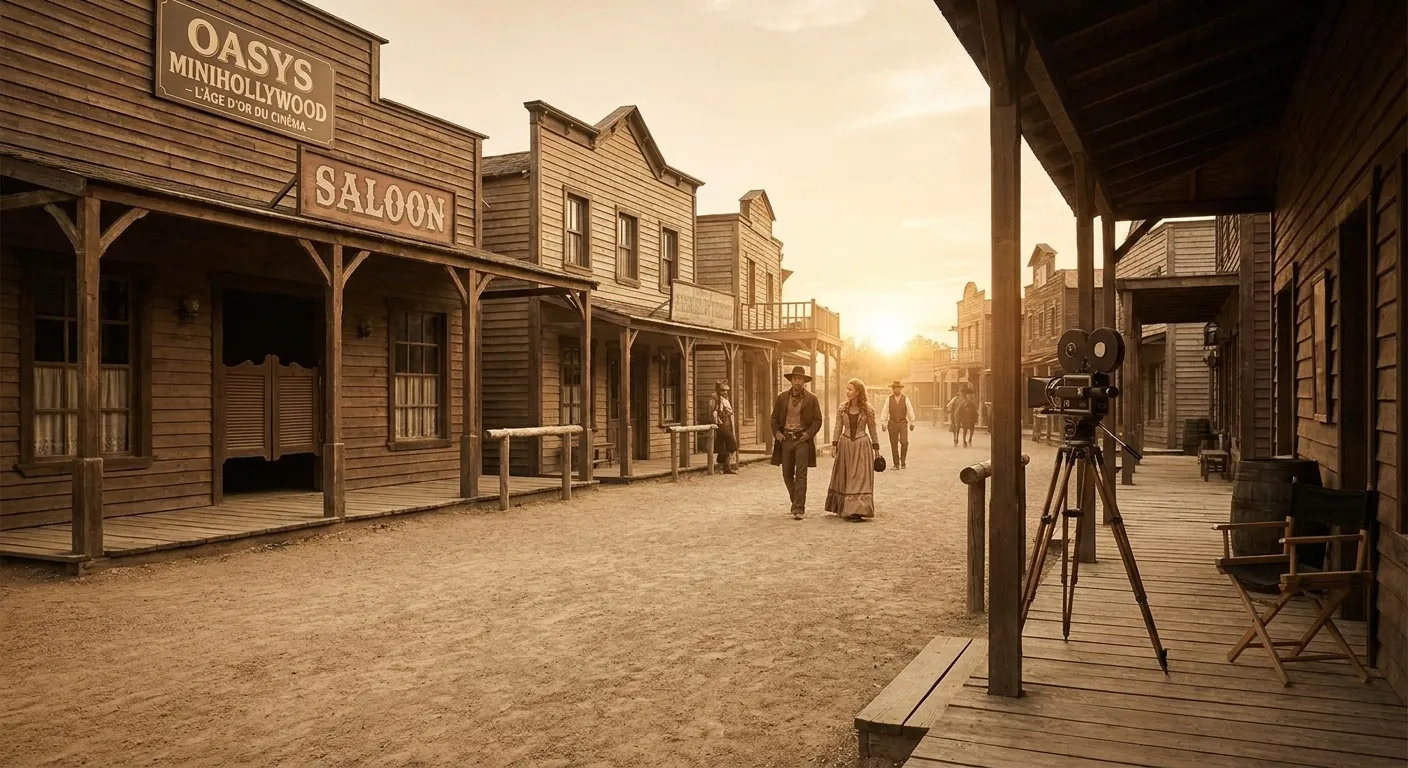
To understand this drink you have to look at the cinema. Through the sixties and seventies, Almería was the world’s film set: Lawrence of Arabia, the westerns shot in the Tabernas desert, hundreds of crews. The stars slept in the hotels of the centre — La Perla, right on the Puerta de Purchena, and later the Gran Hotel — and came down to breakfast where the city did.
Two versions of the same story survive from those years. The one the kiosk’s family tells has a name attached: Anthony Quinn. During the filming of Lawrence of Arabia he took his glass of milk with cola liqueur at the counter on the square every day, and the regulars started asking for “what the American drinks”.
The other version, the one most repeated around town, needs no name: an actor staying at the hotel across the way ordered something at the counter, and between his accent and the kiosk keeper’s ear nobody quite understood anybody. What came out — hot milk, cola liqueur, cinnamon — kept the customer’s nationality forever.
Both versions fit in the same glass. Before it was called americano, the house served it as “leche con cola”: the cinema only gave it its name. Everything else — the recipe, the glass, the cinnamon — was already there.
What it is, exactly
A small glass, more milk than anything else, and a liqueur that hardly travels. Four bearings before the first sip.
-
The colour
Pale pink. It comes from the crema de cola, a reddish kola-nut liqueur; no other counter drink looks anything like it.
-
The taste
Sweet and spiced: the hot milk rounds it off, the lemon lifts it, the cinnamon closes it. It brings a gentle punch to mind.
-
The strength
There is alcohol, but little: the liqueur runs close to thirty per cent, yet it fills only a third of the glass, diluted in milk.
-
The temperature
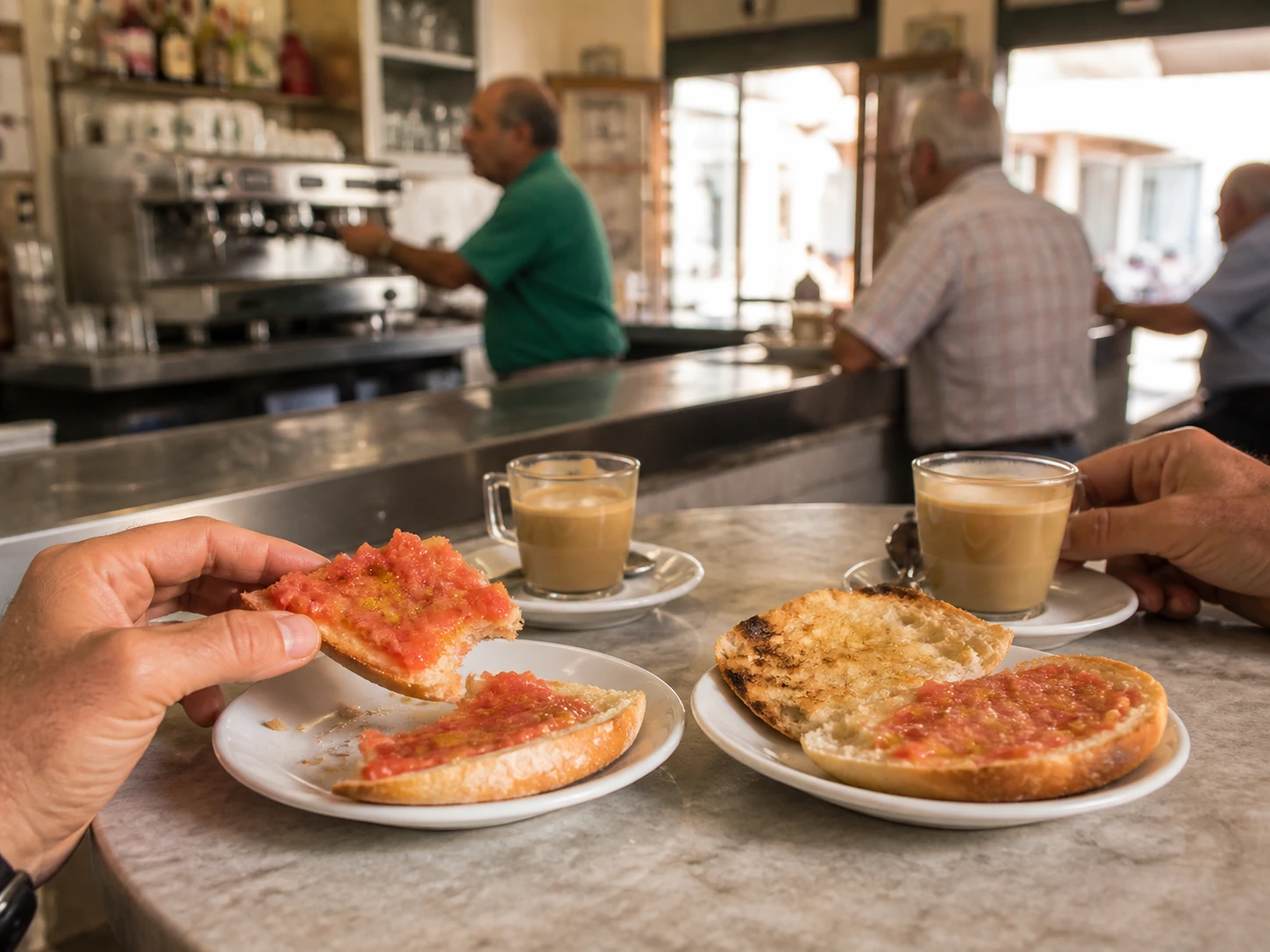
Hot by default, from autumn to Epiphany. In summer some order it cold, over ice; the house makes it both ways.
The recipe, step by step
There is no industrial secret: there are proportions and one gesture — warming the liqueur on the steam wand of the coffee machine. This is how an americano is built the way the house by the Puerta de Purchena serves it.
-
The base
A sugar cube and a strip of lemon peel at the bottom of a small clear glass.
-
The milk
Whole milk, properly hot, two-thirds of the way up.
-
The liqueur
Kola-nut cream warmed on the machine, to fill. The glass turns pink.
-
The cinnamon
Ground cinnamon on top, without shyness. Stir before drinking.
-
The moment
Very hot, unhurried. In summer, the same formula over ice.
The house that keeps it
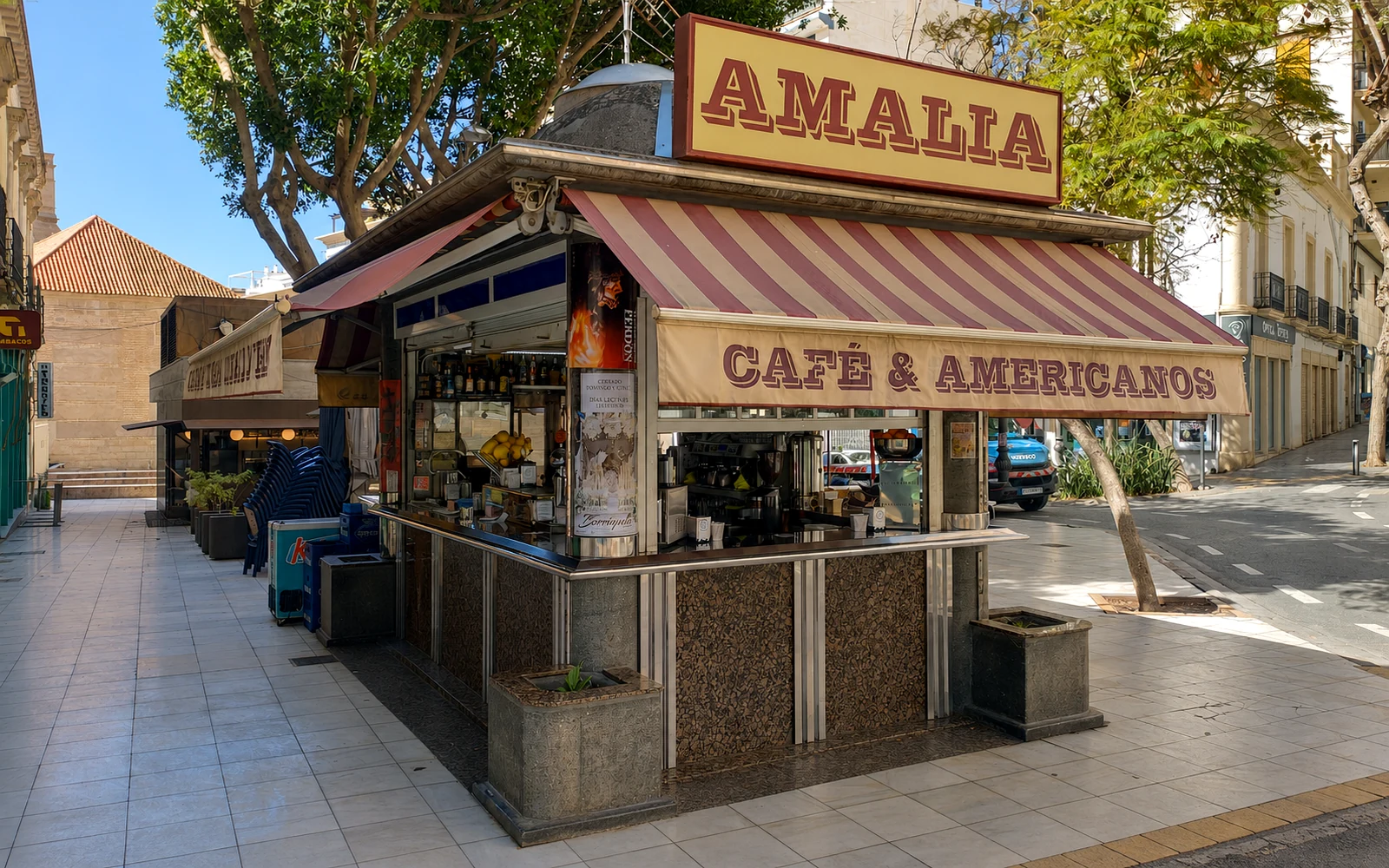
The americano survives because one house never stopped making it: the Kiosco Amalia, on plaza Manuel Pérez García, against the Puerta de Purchena. Five generations of the same family behind the same tiny counter.
Amalia Fenoy Plaza opened it in 1889 with her husband, Juan Carreño: a demountable stall of dried fruit and handmade turrones, packed away every night. In 1917 it settled for good where it still stands. Coffee arrived later, with the cinema years, and as the americano slowly vanished from the city’s other counters, here they kept serving it as they always had.
Today Amalia’s descendants run it — the fifth generation is already behind the counter — and the kiosk remains a fixed appointment on the big dates: Christmas Eve afternoon, New Year’s morning, the eve of Epiphany. A few bars in the city make their own versions, but the reference is still this corner of the square.
¿Me pone un americano?
-
1889
Amalia Fenoy Plaza and Juan Carreño set up the stall by the Puerta de Purchena.
-
1917
The kiosk settles for good on plaza Manuel Pérez García.
-
1962
Lawrence of Arabia films in the province; the hotels of the centre fill up with cinema.
-
1960s–70s
The house’s “leche con cola” becomes “el americano”.
-
Today
The fifth generation still serves it, hot or cold depending on the day.
What else gets ordered there
-
La jabea
Lemon granita with mint liqueur: the formula fishermen used to outwit the heat.
-
El quemaillo
Flamed brandy with coffee beans, lemon peel and sugar. For the cool days.
-
La palomita
Anise and lemon, short and fresh.