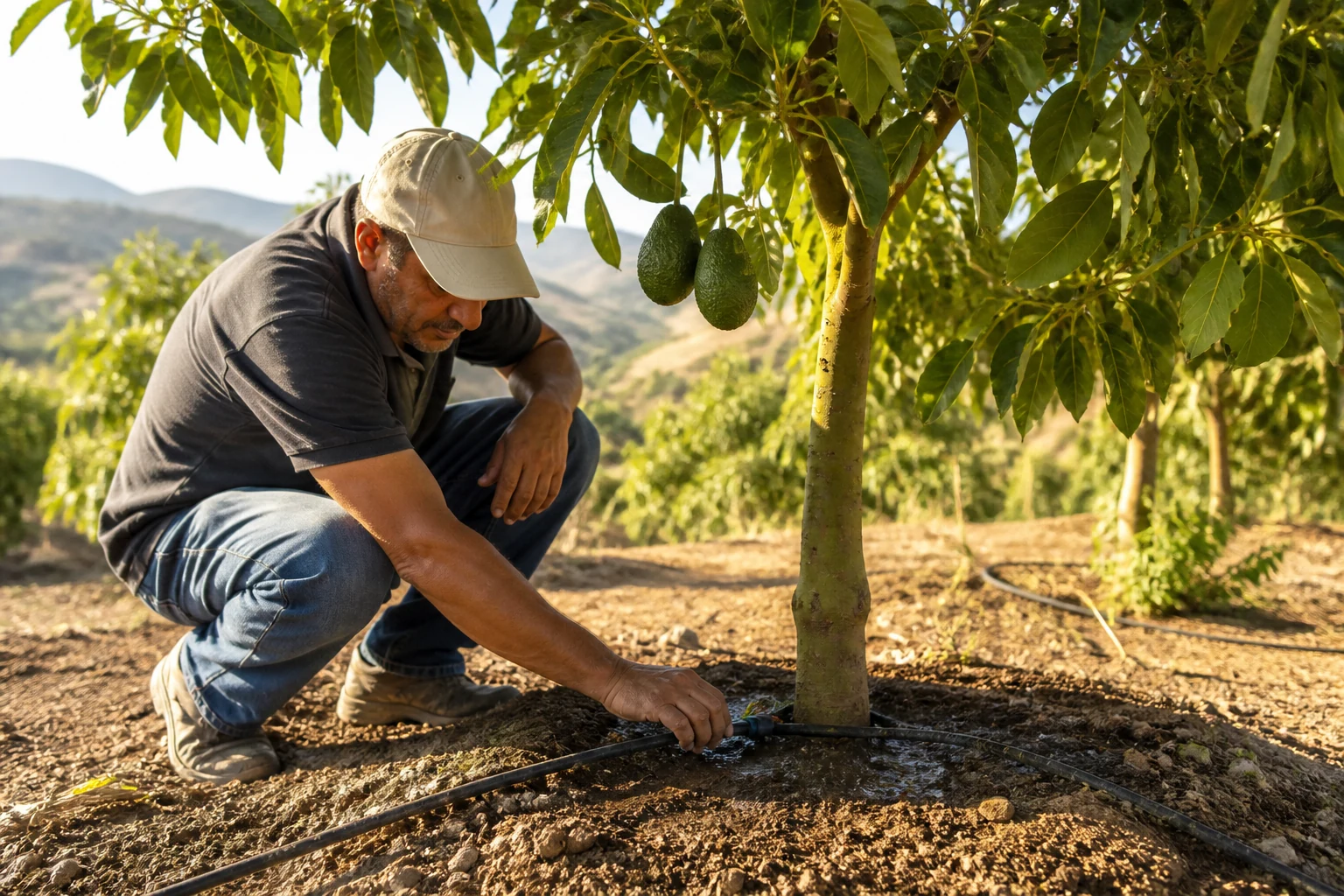
Avocado
The most incipient of Almería's subtropicals: 68 hectares on record in 2022, in very specific microclimates. An emerging presence told at its real scale, far from the great orchards.
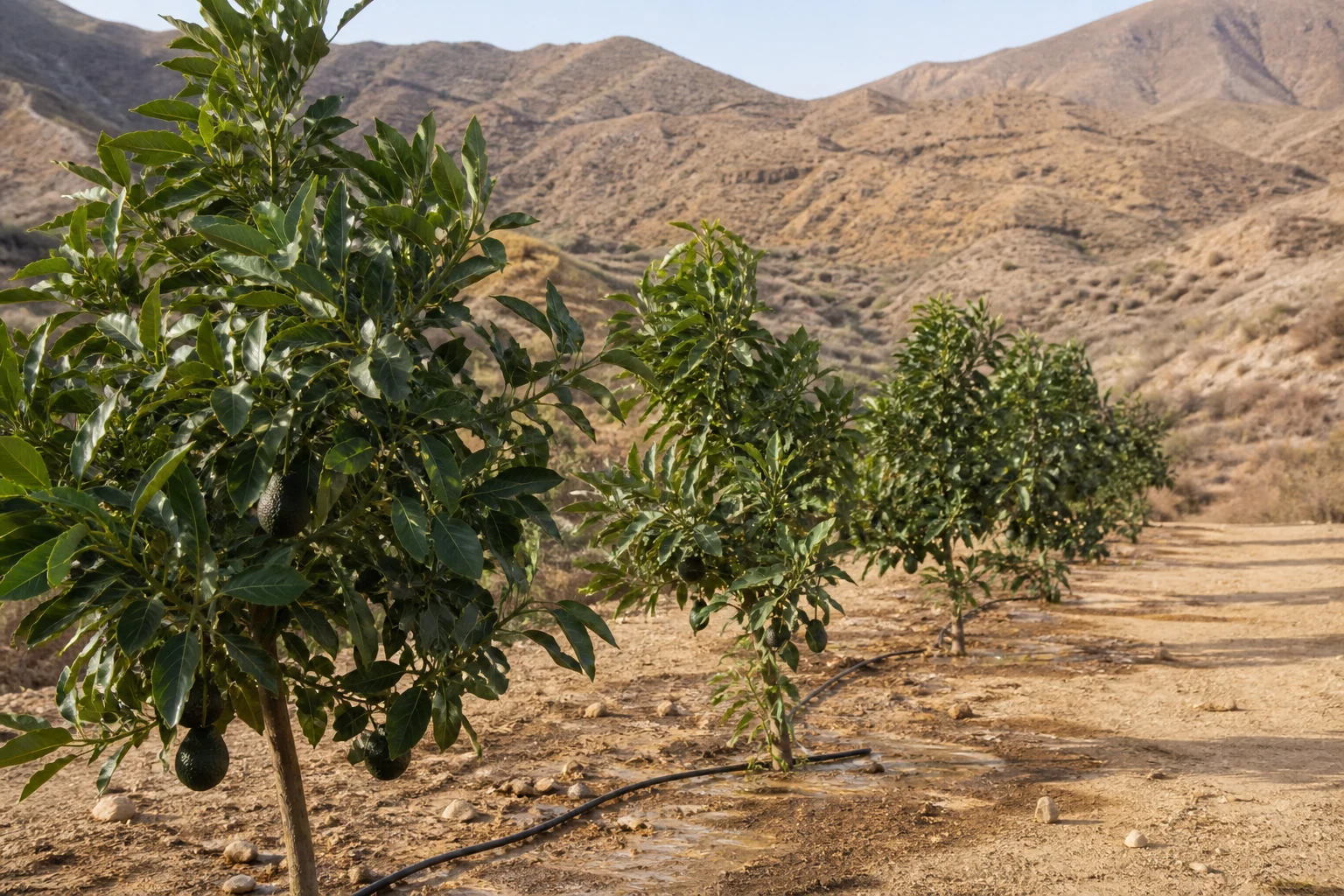
The avocado holds a minuscule place in Almerian agriculture: the official 2023 characterisation counts 68 hectares in the province for 2022 — less than 1% of the Andalusian area, overwhelmingly concentrated in Málaga and Granada, which gather more than twelve thousand hectares. The figure sets the tone: this is a minority crop of scarce plots and trials, not a new pillar of the territory.
The tree asks for mild temperatures, shelter from the wind and rigorously managed irrigation; in a semi-arid province, every planting raises the question of microclimate, water quality and water efficiency. The Andalusian season runs, depending on variety, from autumn to spring: Hass rules the markets and Fuerte rounds out calendars, though their exact presence on Almería's small plots is still to be confirmed on the ground.
There lies the bet, and it belongs to the laboratory before the market: the Las Palmerillas experimental station (Cajamar) has argued for years that the avocado can be trialled under Almería's greenhouses, with the made-to-measure climate that plastic provides. Adaptation and experimentation — not industrial plenty.
Season
Green in small doses across dry country
The unbroken avocado hillsides belong to Málaga and Granada, which together exceed twelve thousand hectares. Almería works at a different scale: 68 hectares on record in 2022, scattered across isolated plots where the tree's dense evergreen canopy stands out against the dry land around it.
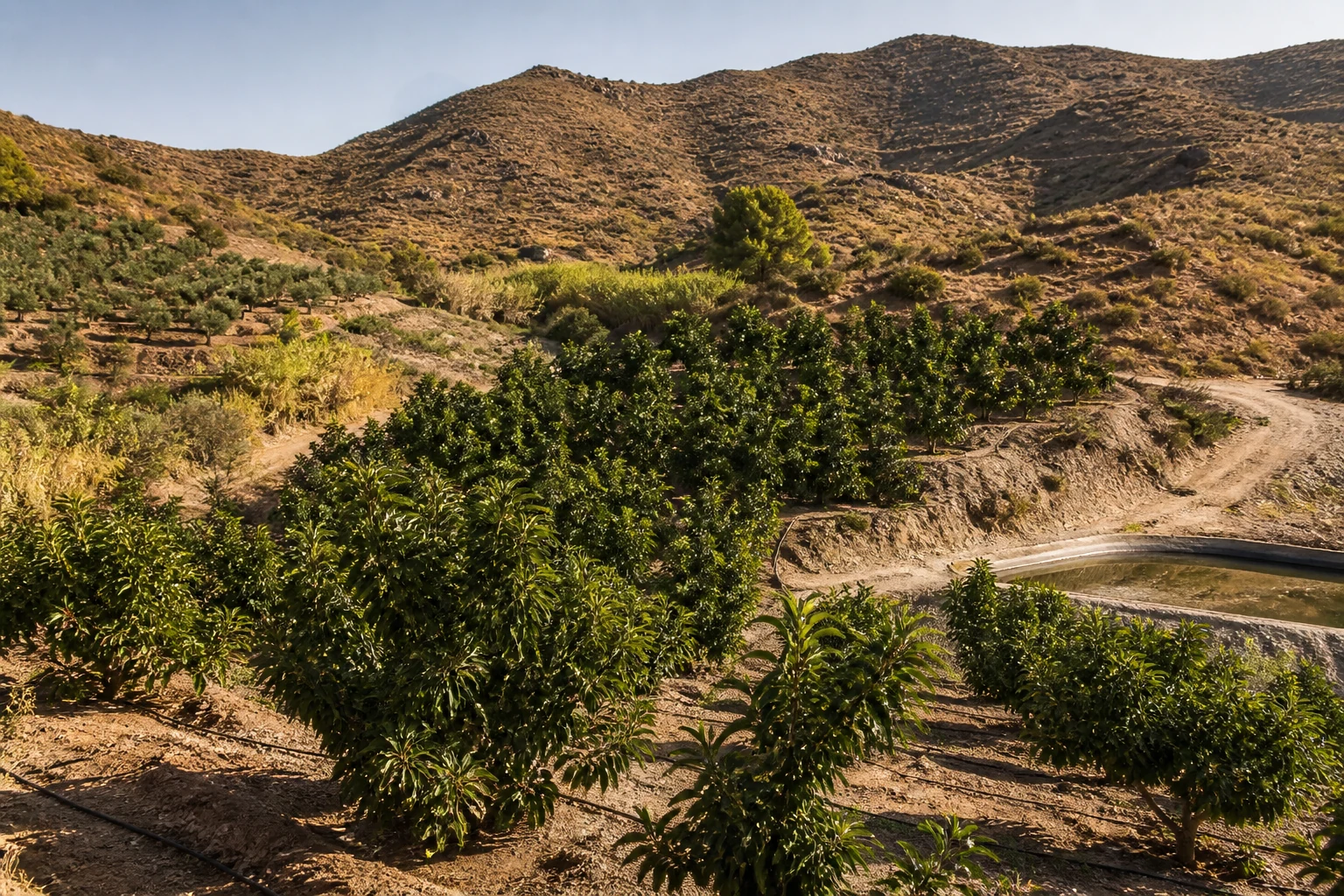
Choosing the spot, counting the water
Every planting starts with the search for a mild, wind-sheltered corner with reliable water. From then on it is all about restraint: irrigation steered precisely in a semi-arid province, and a harvest that runs, variety by variety, from autumn into spring.