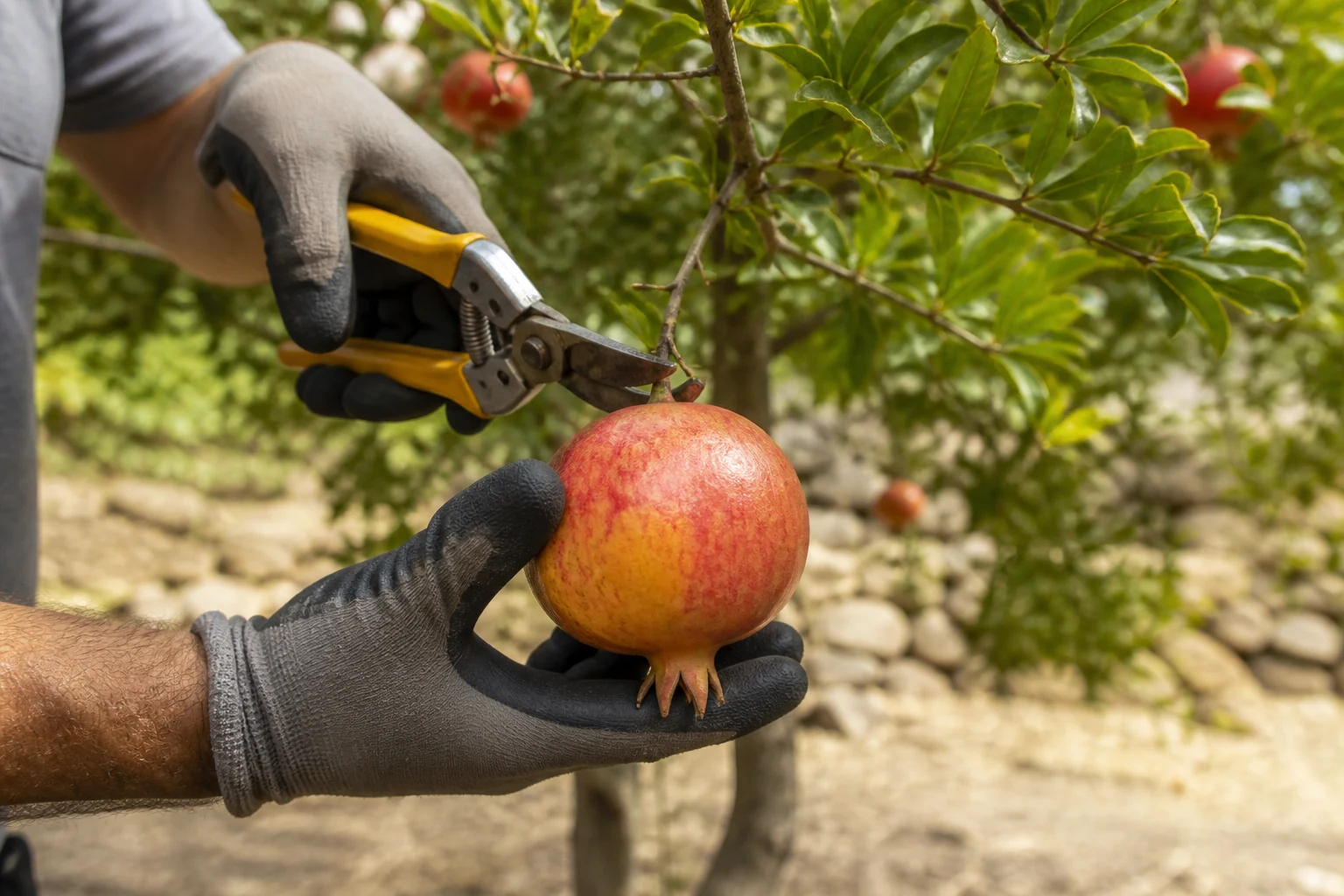
Pomegranate
A tree made for this land: the pomegranate withstands drought better than cold and thrives in semi-desert climates. In Almería it is a fruit of family gardens and scattered plantings that opens the autumn.
Few trees are as made for the south-east as the pomegranate: it prefers heat and arid soil, withstands drought better than frost, and offers one of the reddest blossoms in the orchard besides. In Almería it appears in family gardens and scattered plantings that make the most of its good understanding with the dry climate — the available sources describe no major commercial hub of the Andarax or of Alhama, and this page tells it with that caution.
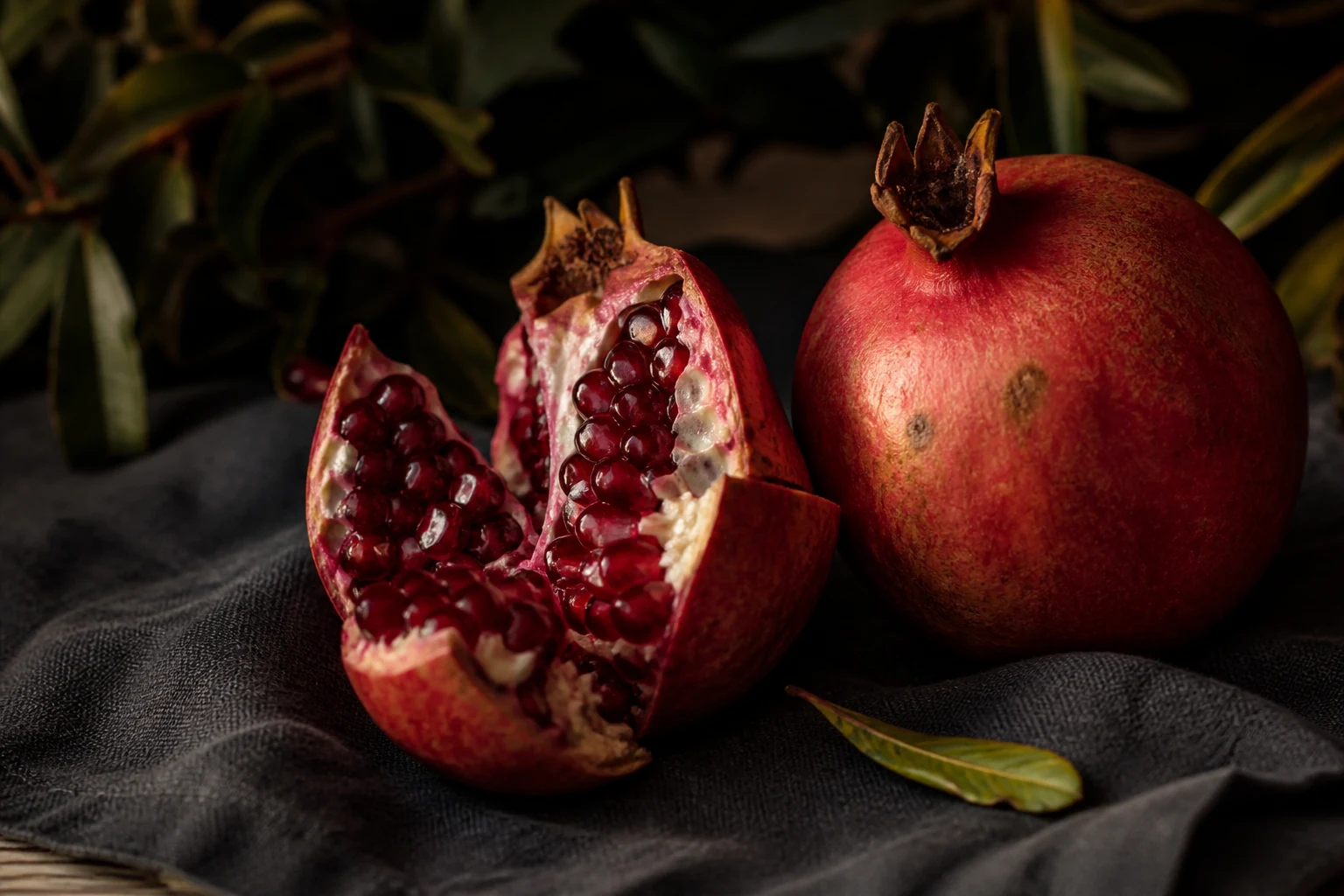
The Junta's botanical record describes Punica granatum and its fruit, recognisable by the persistent crown-shaped calyx. Under the firm skin, the seeds are wrapped in juicy arils, from pale pink to deep red; a ripe pomegranate may show small marks, colour variations and even a natural split — the signs of real fruit.
Harvest starts in mid-September and the fruit keeps company all autumn, well into winter. On the Spanish market the mollar pomegranate rules, sweet and soft-seeded — its famous denomination of origin, the Mollar de Elche, belongs to the province of Alicante, not to Almería. Here it is eaten as it always has been: scattered over a salad, pressed into juice or by the spoonful, seed by seed.
Season
Scattered trees that light up the orchards
There are no sweeping pomegranate orchards here: the tree grows on its own, in family plots and along field edges, and makes itself noticed twice a year. First with its red bloom, one of the brightest in the huerta; then in autumn, when the crowned fruits hang from branches slowly shedding their leaves.
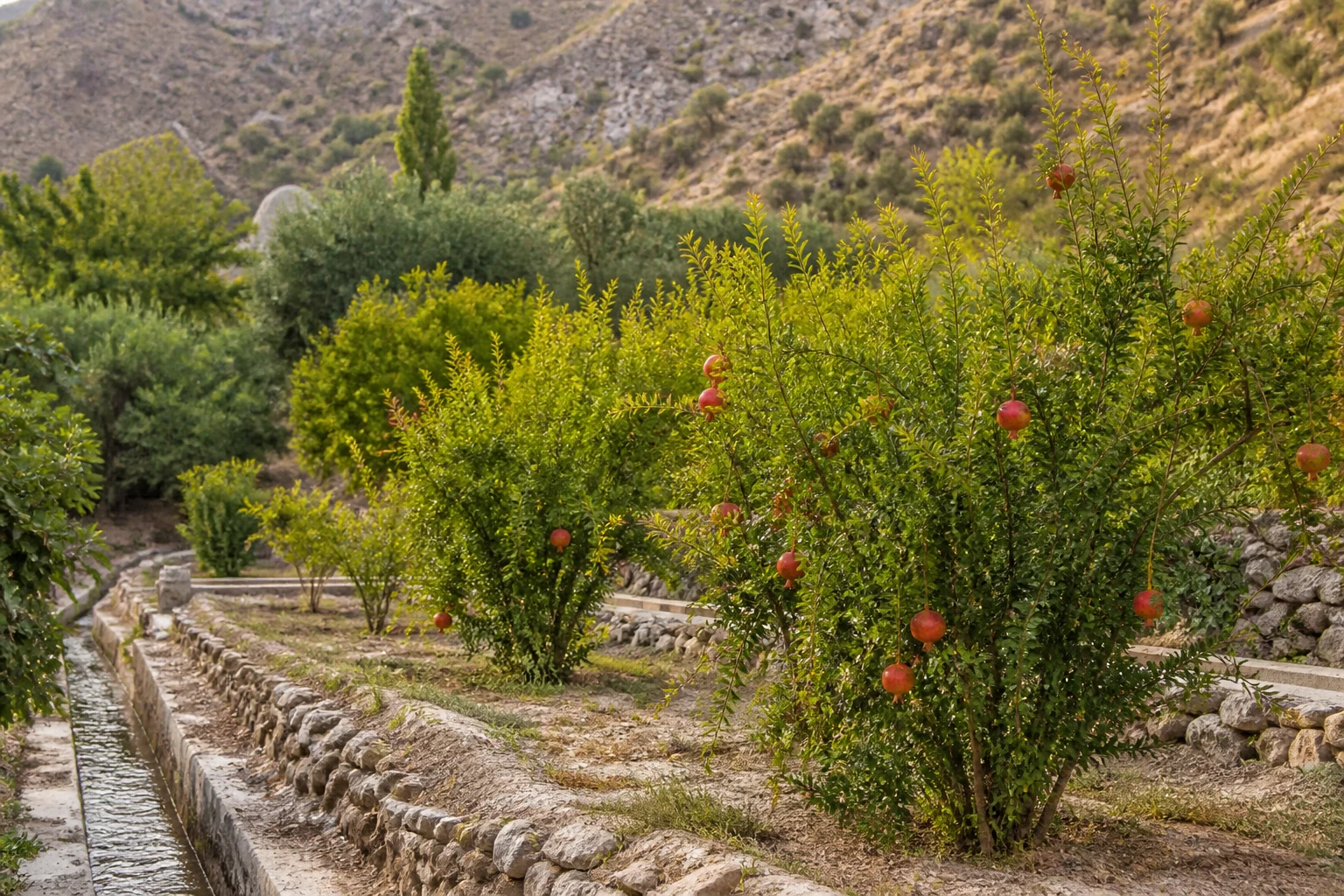
A hardy tree set to an autumn clock
The pomegranate asks for little: heat, dry ground, just enough water. Frost worries it more than drought, which is why in Almería it is grown at the scale of family orchards and scattered plantings rather than large specialised estates. Picking starts in mid-September and stretches on through autumn; the market benchmark is the Mollar — whose PDO, Mollar de Elche, belongs to Alicante, not Almería.