Pumpkin
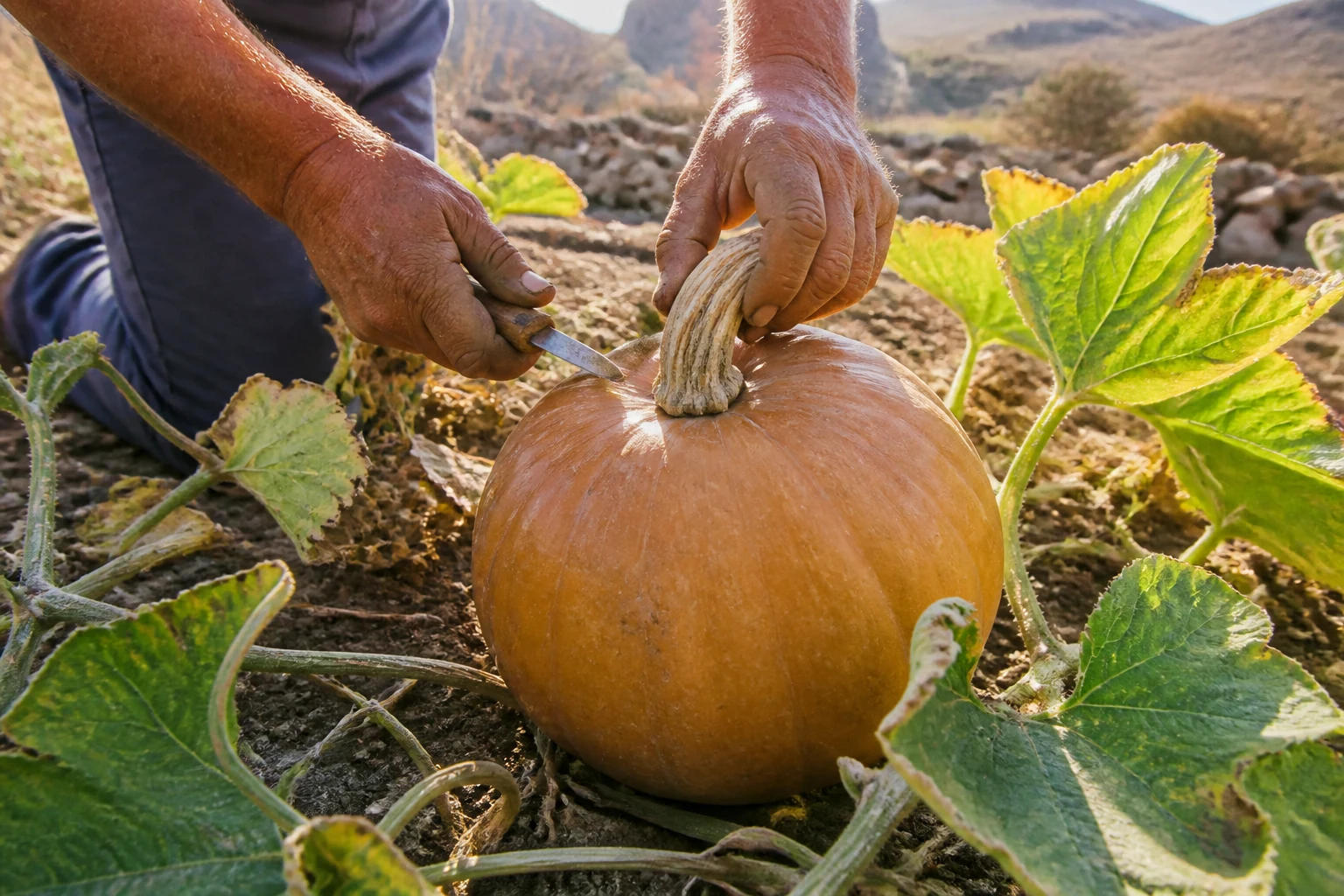
Planted in spring, harvested from summer into autumn, it keeps all winter in the pantry. From table pumpkins to the cidra behind cabello de ángel, each type plays its part — down to the stews of Alhama.
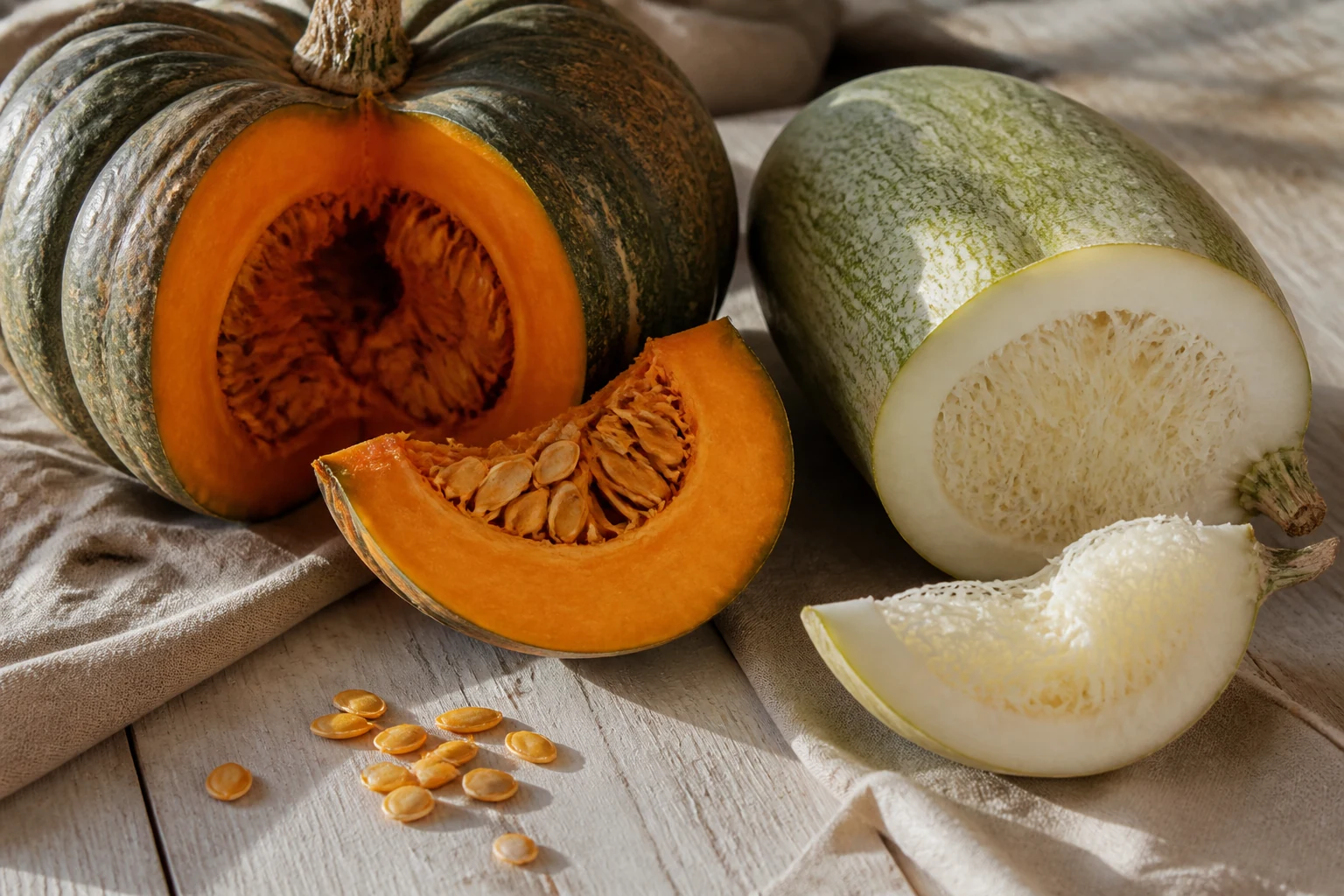
"Calabaza" actually gathers several species and a great diversity of shapes: the orange-fleshed table squashes of Cucurbita pepo, moschata and maxima are not the same thing as the cidra — Cucurbita ficifolia — with its pale, stringy flesh. In the province it is a present but modest production, more a matter of the household pantry than of statistics: the huerta's best planner, planted once the cold has gone, it fattens through the summer, is picked into autumn and then, whole and in the shade, keeps for months.
In the south-east it also has a sweet destiny: the cidra or cabello de ángel is candied into golden threads to fill puff pastries and sweet turnovers. The table kinds — butternut, violin, round orange-fleshed — end up in soups, roasts and slow-cooked stews.
The local anchor is culinary, not statistical: in the Bajo Andarax the squash appears in popular dishes, and Alhama's municipal repertoire lists squash stews among its long-standing recipes. A documented use at the table — without turning this discreet crop into a farming emblem.
Varieties
- Table squashes (Cucurbita pepo and C. moschata)
- Cidra or cabello de ángel (C. ficifolia)
Season
Sprawling plants in the kitchen gardens
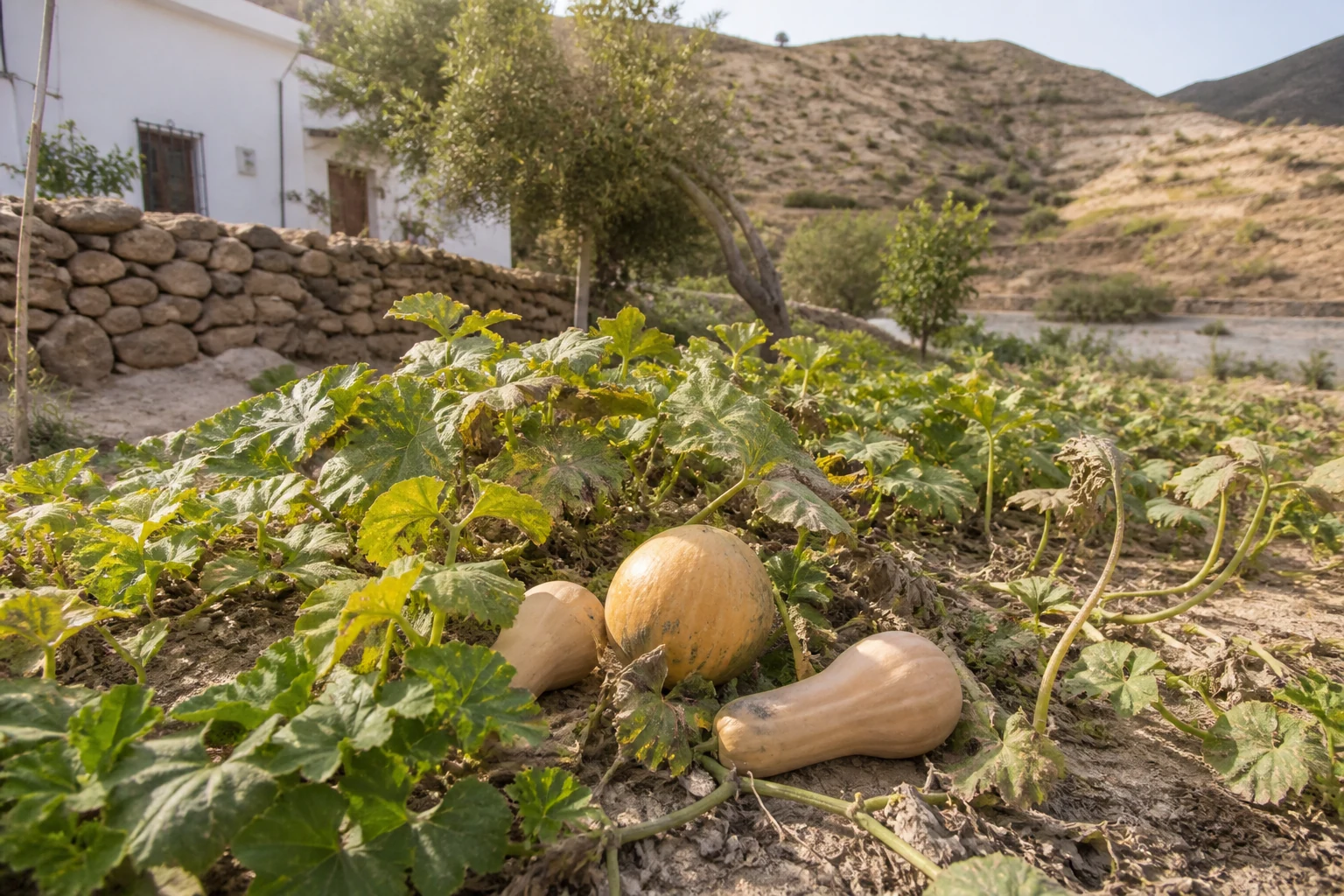
Squash is the landscape of small kitchen gardens rather than big farms: sprawling plants that carpet the ground with broad leaves in summer, by the house or along the edge of a terrace. At season's end the fruit sits in plain sight — round or elongated, green, ochre or orange — waiting for the hand that will carry it to the pantry.
Ripening slowly to last for months
It is an unhurried, undemanding crop: give it room — the plant takes up far more ground than it seems to — and keep it from the cold, the one thing it won't forgive. Summer does the rest; the fruit is left to ripen fully on the plant, since that complete ripeness is what lets it keep in the pantry with no cold store and no tricks.