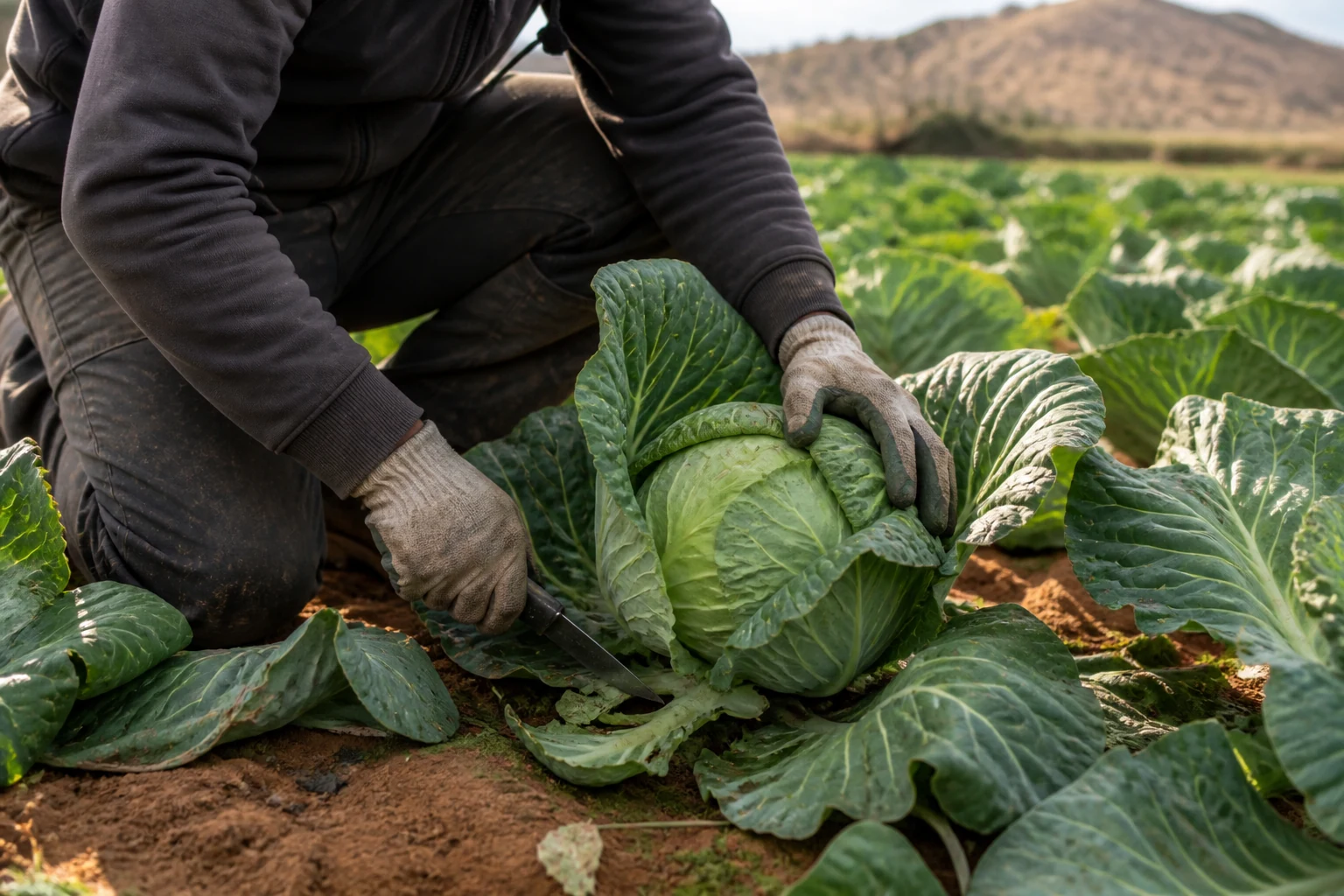
Cabbage
White and red cabbages alongside Chinese cabbage, in the open-field rotations of the Levante's cool season — and in interior villages such as Abla and Abrucena, where it is grown organically.
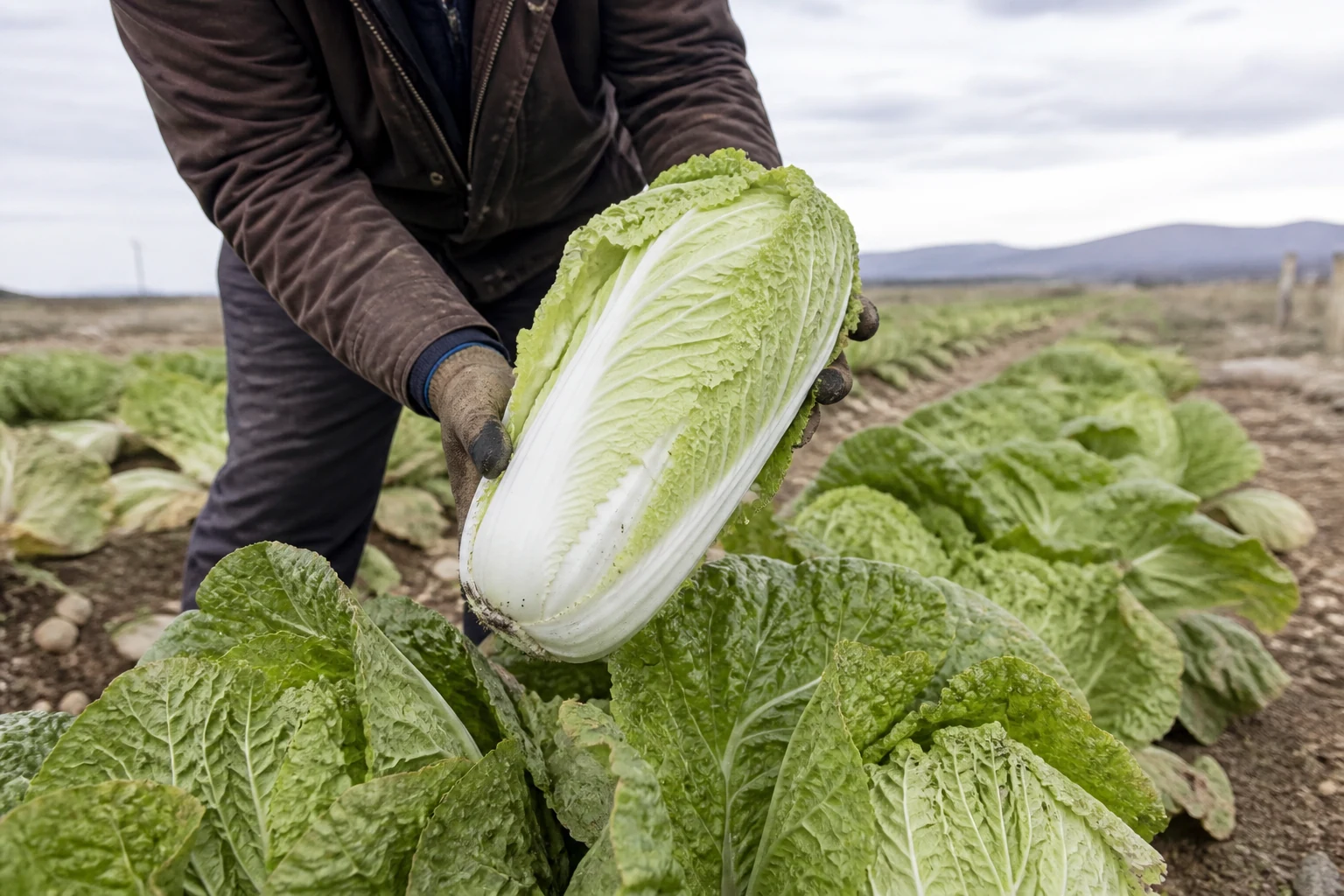
The word "col" covers several related vegetables: white and red cabbages generally belong to Brassica oleracea, while Chinese cabbage is Brassica rapa. In Almería's Levante, recent plant-health monitoring cites the brassicas — and, separately, Chinese cabbage — among the leaf crops under watch, and provincial statistics confirm a real production, with no need for grandiose storylines.
It is a cold-weather crop in a province famous for heat: it uses the mild temperatures of autumn and winter to slowly form a dense head, cut when it reaches the expected weight and firmness. The "cool season" describes its cycle better than rigid dates — altitude, closeness to the coast and planting calendar bring the cut forward or push it back. In interior villages such as Abla and Abrucena, at the foot of the Sierra Nevada, Chinese cabbage is also grown organically.
The family is wide and shares the winter table: in warm salads, stir-fries, or the stews where a cabbage leaf rounds everything off.
Varieties
- White cabbage
- Red cabbage
- Chinese cabbage
Season
Cabbages in the winter air
Cabbage brings winter order to two landscapes: the open fields of the Levante, where tight rows of white and red cabbages sit out the chill, and the terraced plots of inland villages such as Abla and Abrucena, with Sierra Nevada as the backdrop. Dense heads, waxy leaves running from green to violet — a vegetable garden with no fear of the cold.
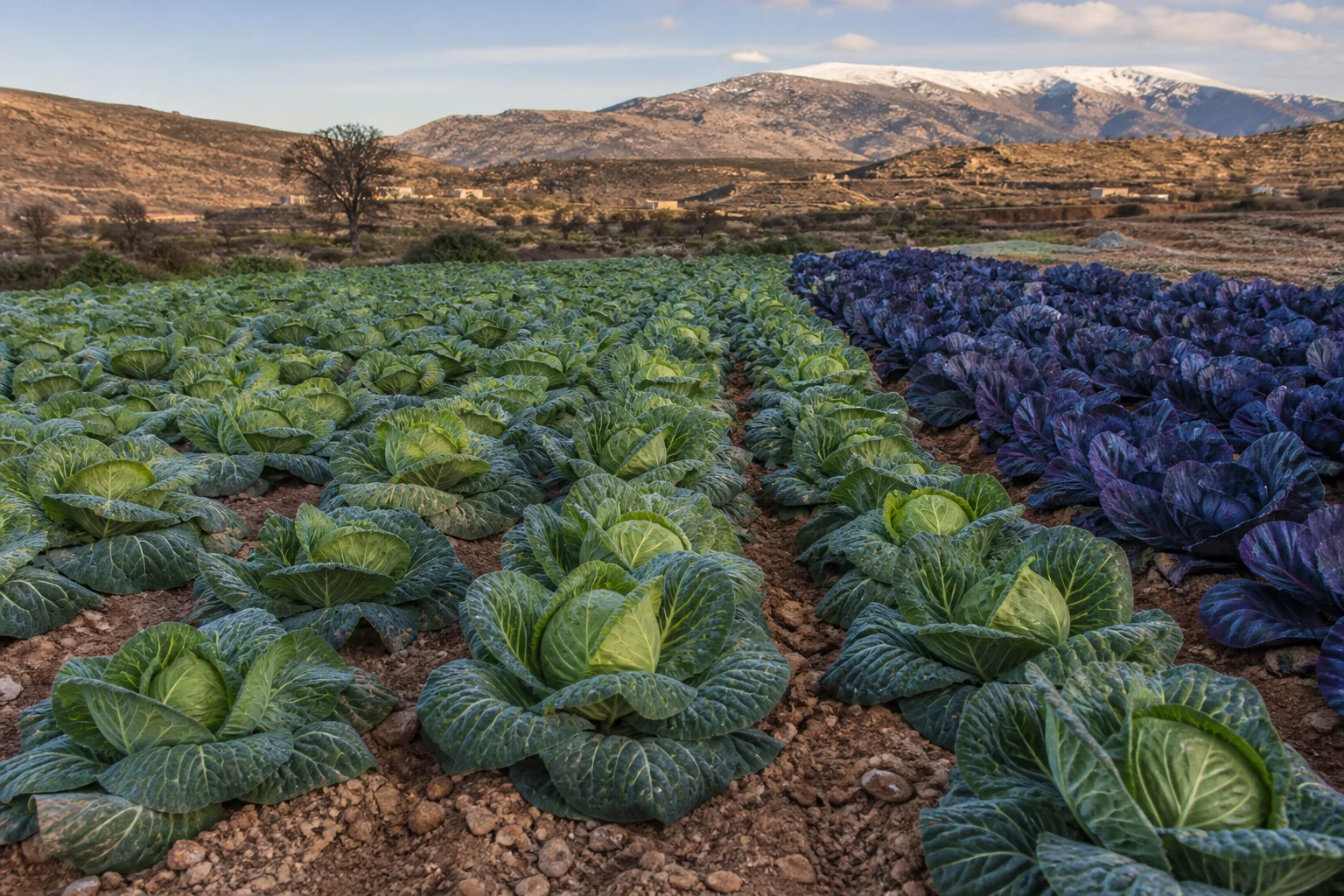
Short cycles for the cool season
Cabbage is a transplanted, short-cycle crop: two to three months from planting to cutting, with its sweet spot between 15 and 20 degrees. It is a winter or winter-to-spring crop, run batch after batch in the open air, with no protection other than well-chosen dates.