Asparagus
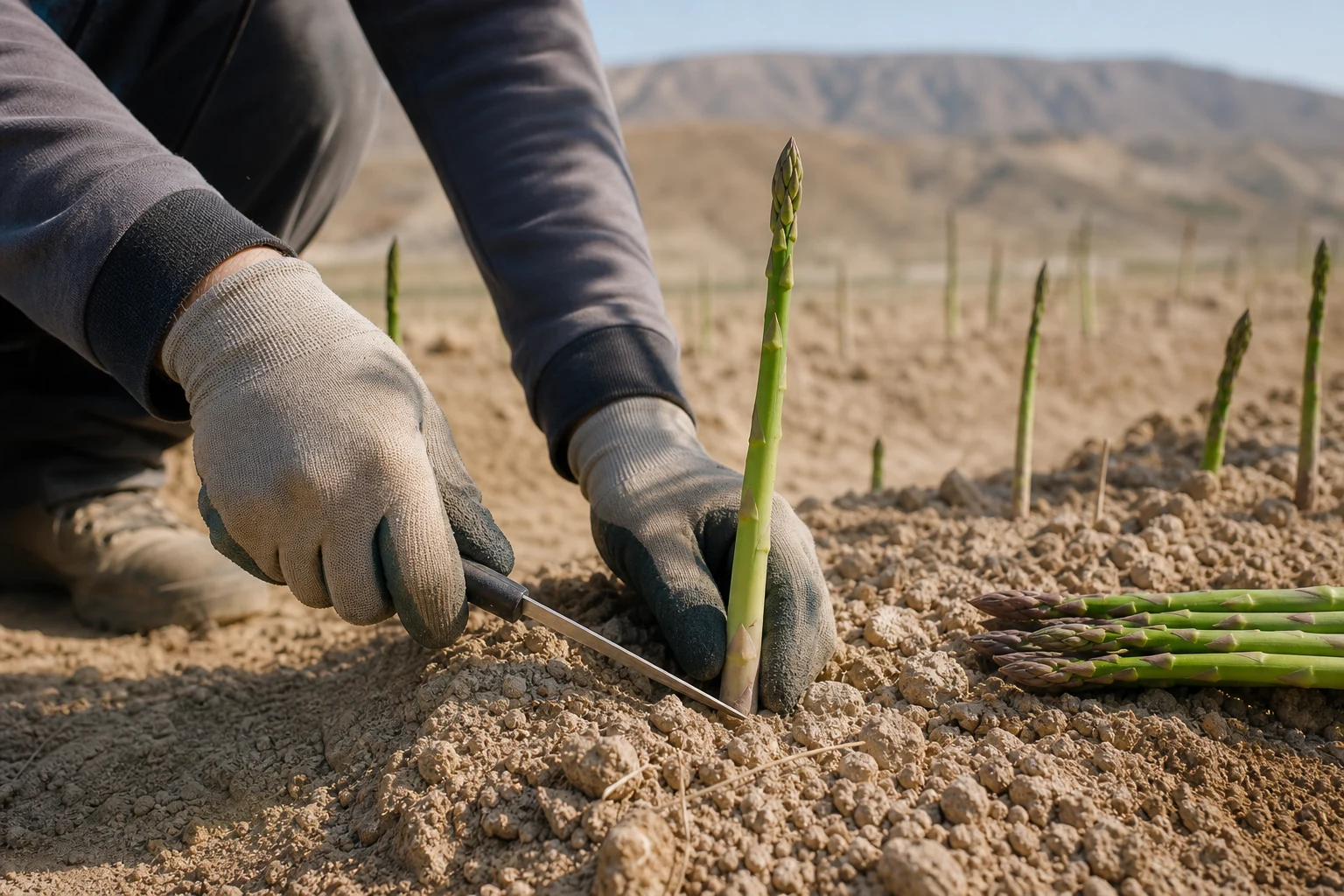
In spring, green asparagus spears are cut one by one as they break the soil. In Almería it is a small open-field crop, secondary to Granada's great asparagus heartland.
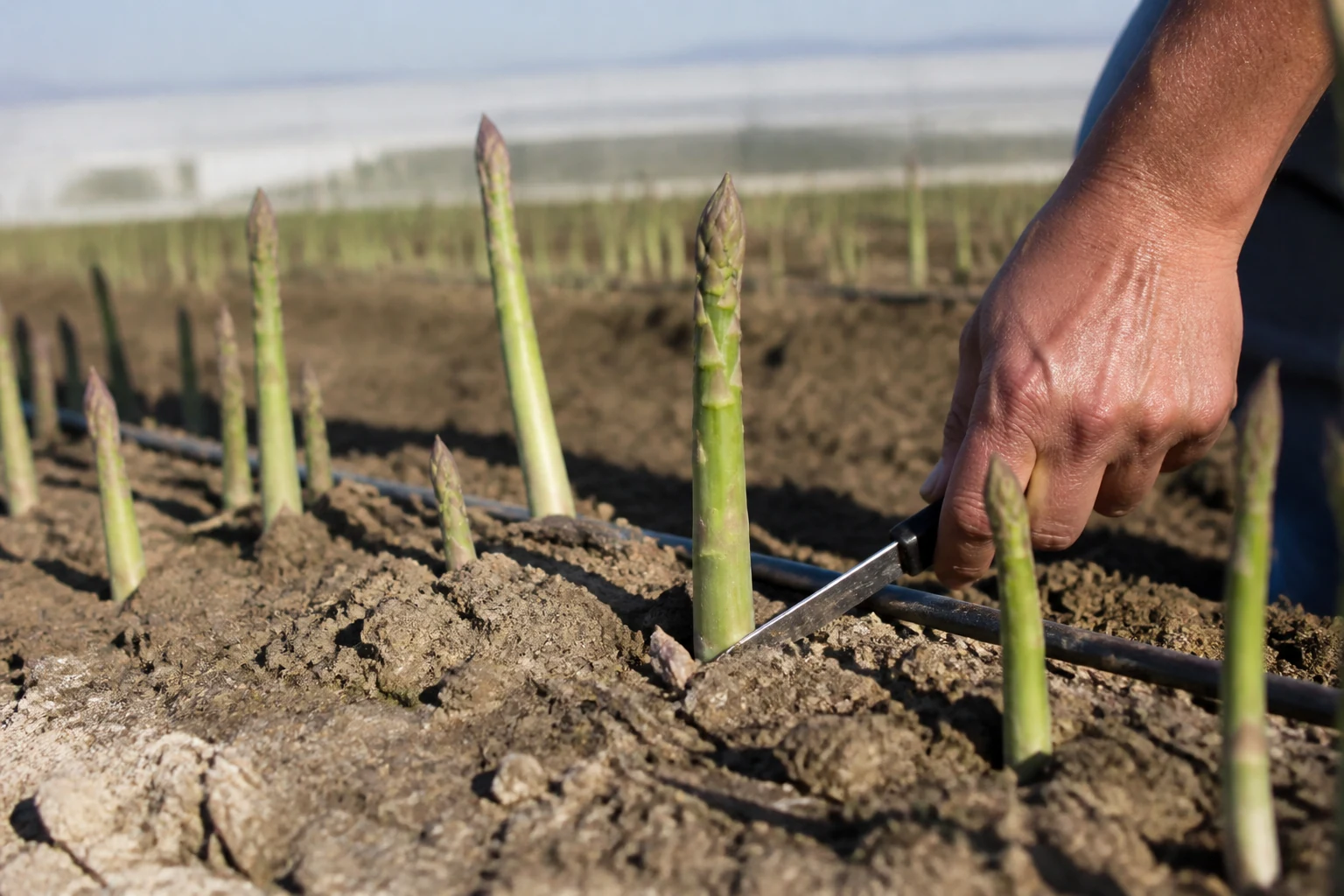
Green asparagus does exist in the province, but its place must be told in fair proportion: official figures record an Almerian production, while Granada concentrates the essential of the Andalusian sector. Even so, this secondary crop enriches the open-air panorama of the interior and the Levante — bringing a very particular harvest gesture and a clearly recognisable spring.
Beneath the surface lives a perennial crown that sends up new spears each year; they are cut when they reach the desired size, before the tip opens, and in high season the pass can be daily, because they grow fast. After the harvest a few stems are left to grow into ferns: they rebuild the reserves for the next cycle. The March-to-May window is an editorial reference — climate, the age of the asparagus bed and its management shift it.
At the table it asks for simplicity: a hot griddle, a thread of oil and coarse salt — or scrambled eggs of the plate-wiping kind.
Season
From bare furrow to fern
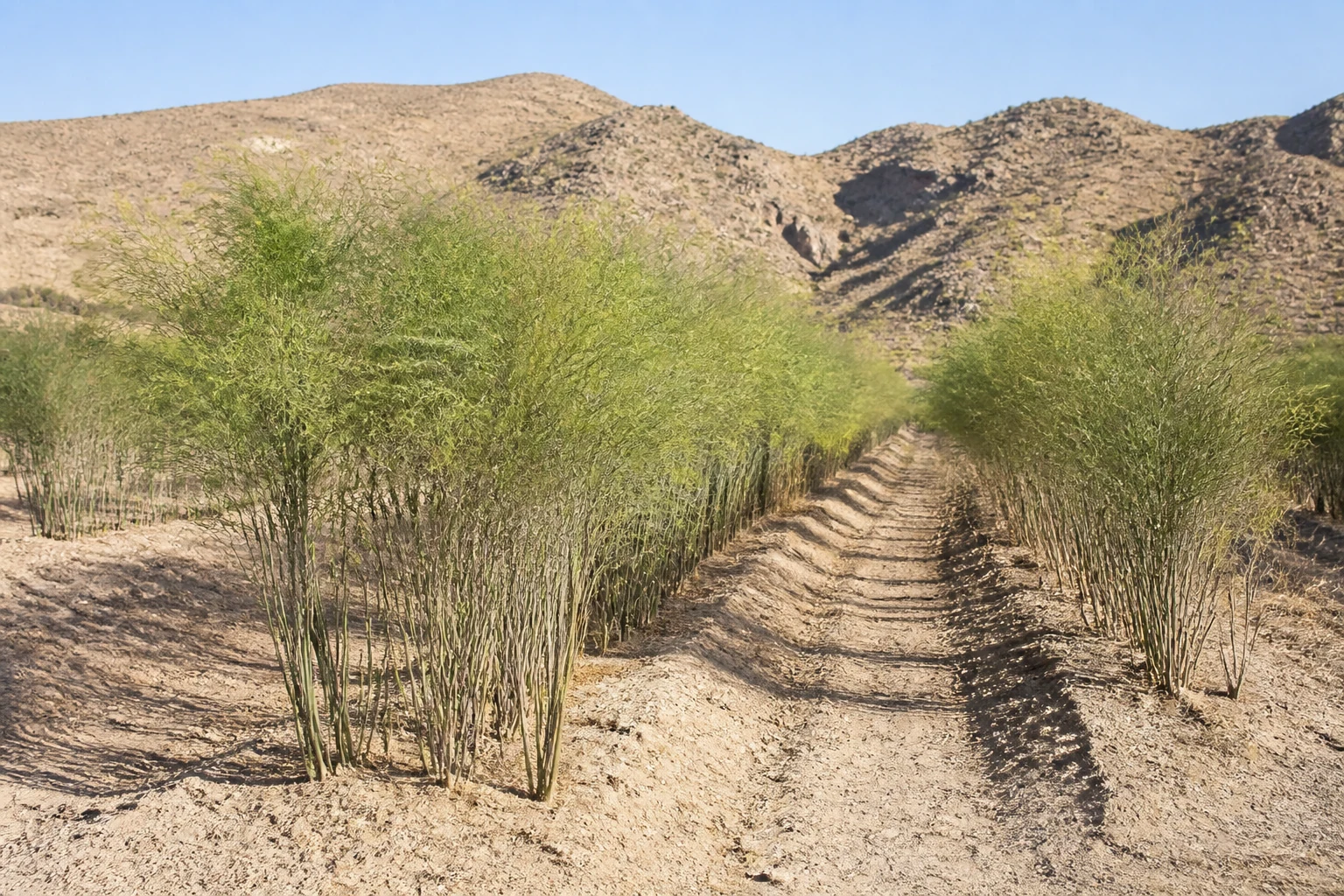
An asparagus field changes face with the seasons. In spring it is a near-bare furrow with just the spear tips showing; after cutting, the fern is left to rise, and for months the bed becomes a green, feathery strip swaying in the wind — open-sky farming, without a sheet of plastic in sight.
A crop planted for the long haul
Where market-garden crops are replanted every year, an asparagus bed is a long-term commitment: the crown holds the plot for several seasons and gives back only a few weeks of cutting each spring. It is an open-field crop of the inland districts and the Levante, picked by hand, spear by spear, at ground level.