Cut flowers
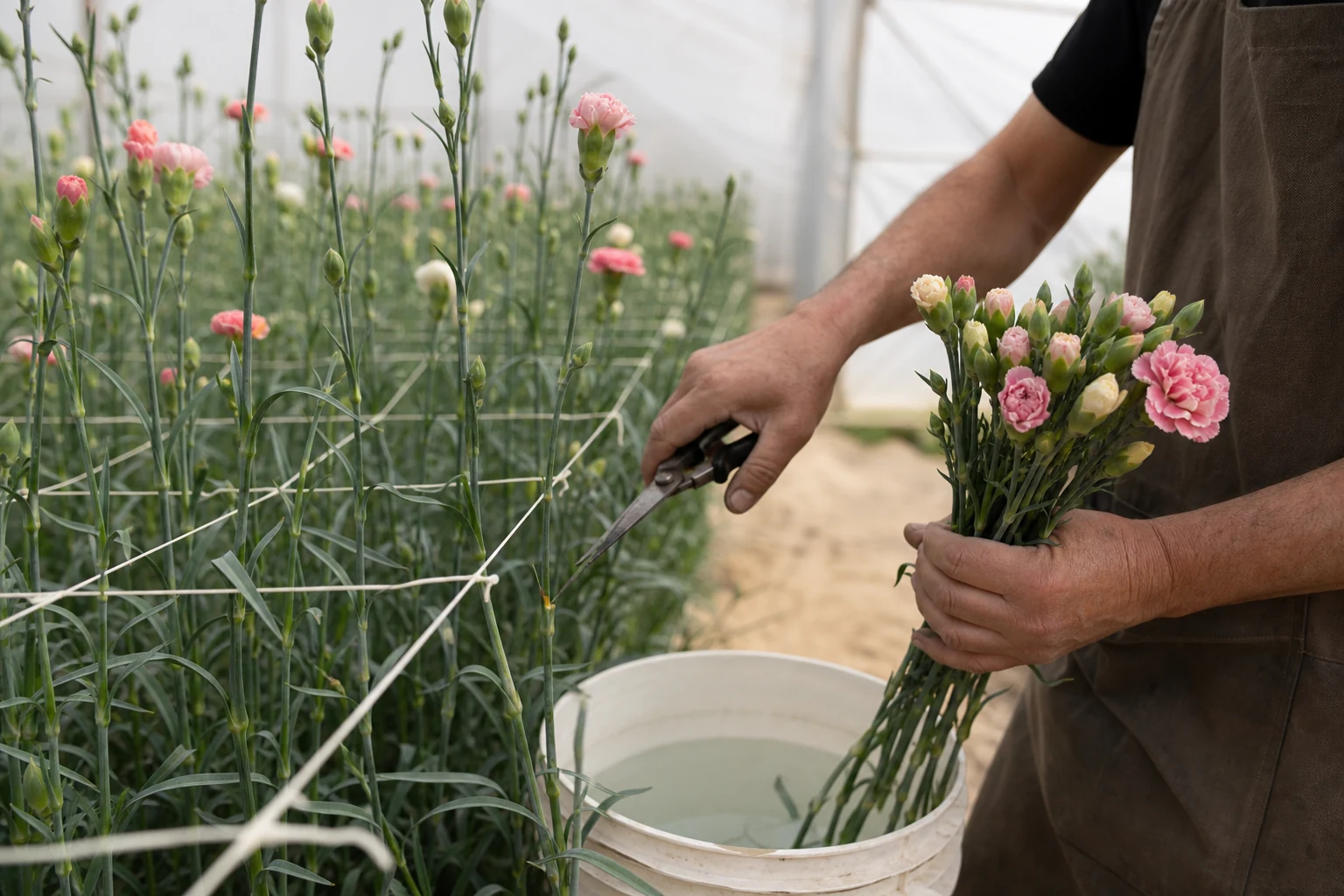
The huerta you don't eat: carnations and roses also grow under the plastic. Almería leads Andalusia's ornamental plants by area, but cut flowers here are a real yet modest business.
Not everything growing under Almería's plastic is for eating — and two neighbouring trades should not be confused. For the 2024/25 season, the Junta credits Almería with 56% of the Andalusian area of ornamental plants; cut flowers, by contrast, are concentrated mostly in Cádiz, with close to 60% of the regional areas, and in carnations the province stood for less than 2% of Andalusia in the 2020/21 reference. Almería's cut flowers are therefore a real but bounded activity, next door to the Poniente's vegetable greenhouses.
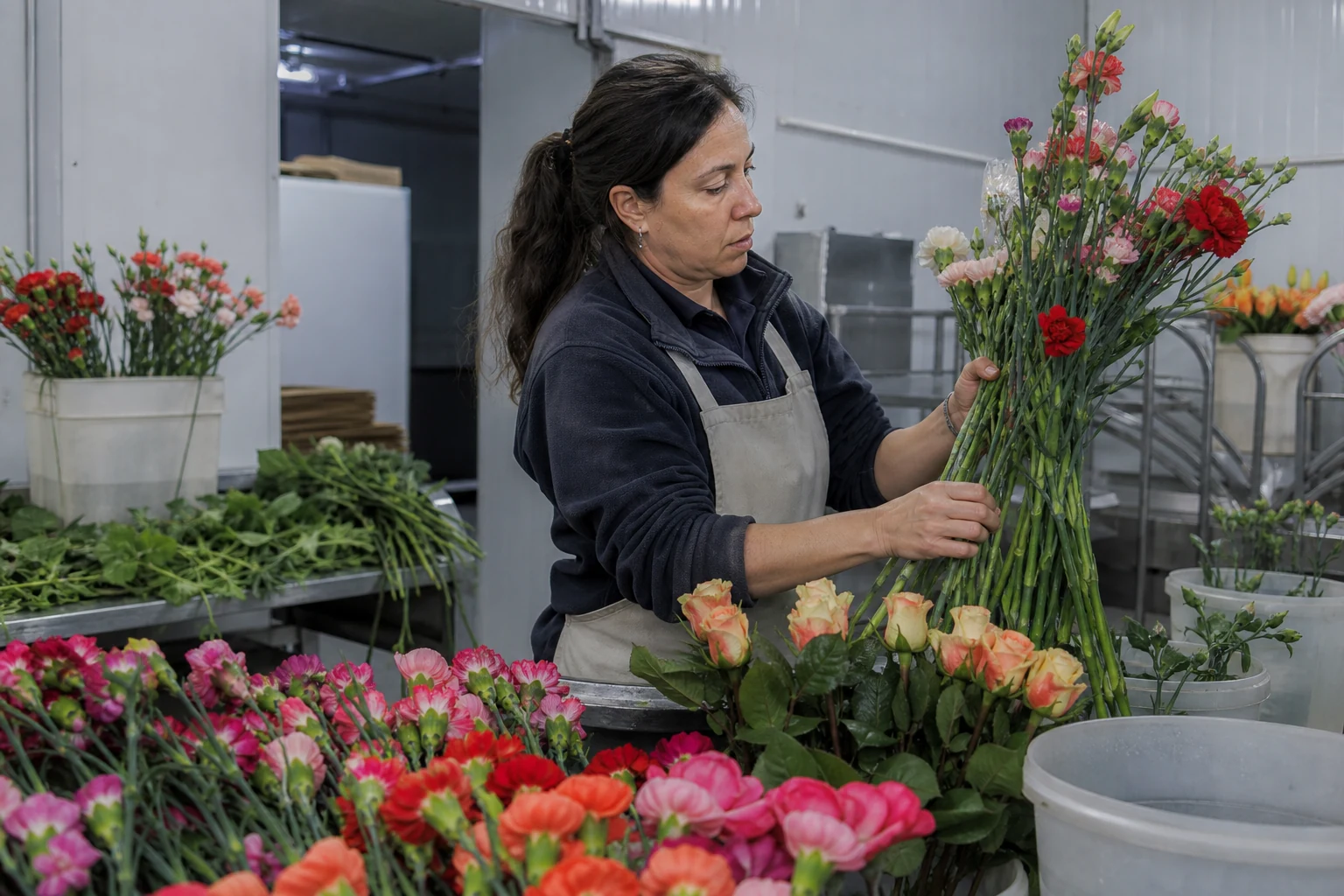
Carnations and roses have historically structured the Spanish sector, joined by other species depending on farms and markets. Under cover, the cutting calendar can stretch across the year, though volumes and species vary widely; then comes the decisive work — sorting by length and quality, hydrating in clean buckets, protecting the stems and keeping the cold chain to the sale.
The logic recalls the huerta's: a controlled climate that allows blooms to be scheduled and fresh flowers to reach the market in any season. The white sea knows how to make bouquets too.
Varieties
- Rose
- Carnation
- Gerbera
Season
Rows of colour under identical roofs
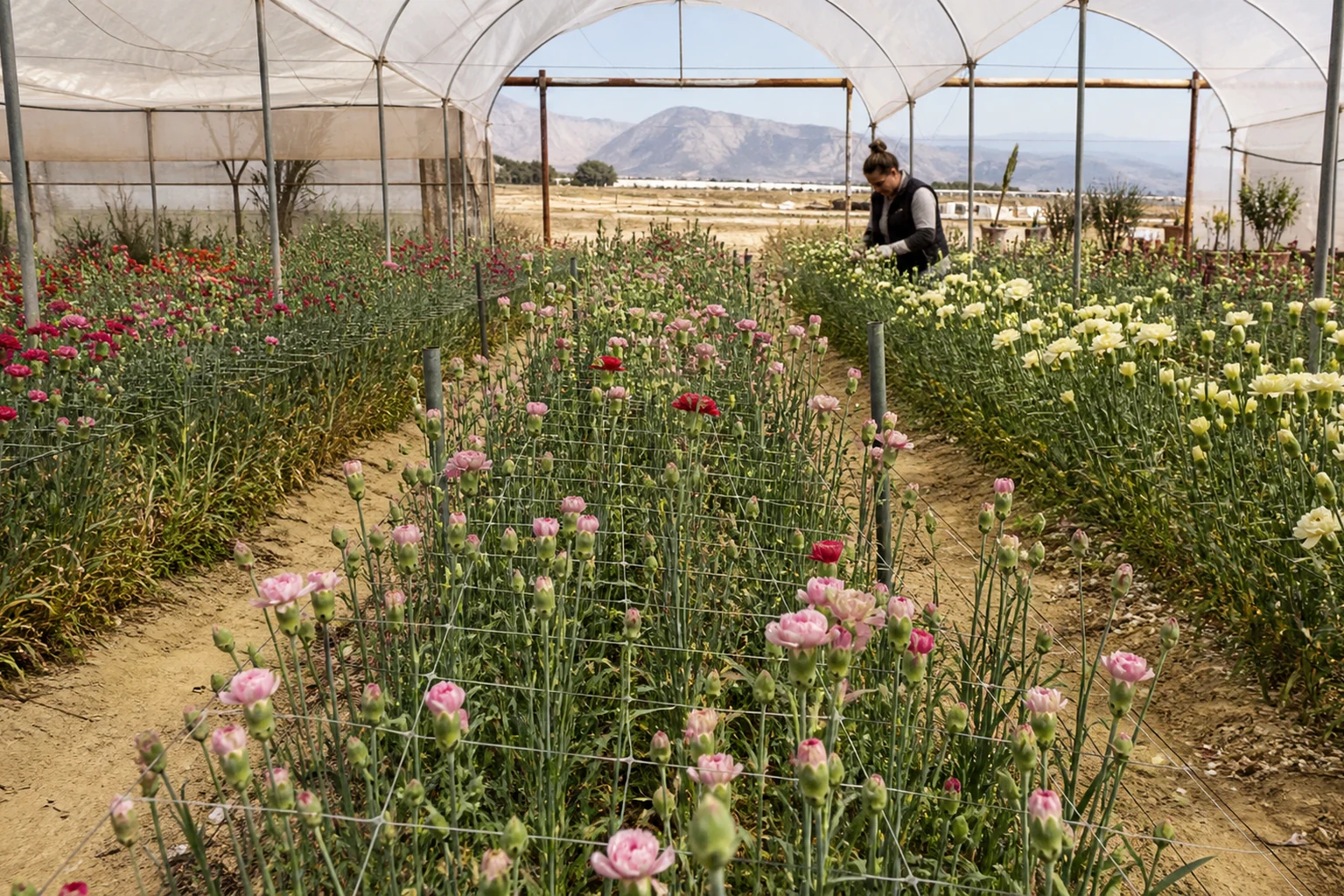
In the Poniente, the flower greenhouse is a quiet neighbour of the vegetable one: from outside, the same white cover. Inside, the scene changes — rows of roses, carnations and gerberas lined up like any other crop, growing in the shade of the same plastic as the peppers next door.
Harvesting stems, not kilos
The flowers are grown with the market gardener's tools — cover, managed climate, fine-tuned irrigation — but harvested differently: by the stem, not by the kilo. Under plastic, flowering can be scheduled all year round, and each species sets its own calendar and handling, from roses to carnations and gerberas.