Fig
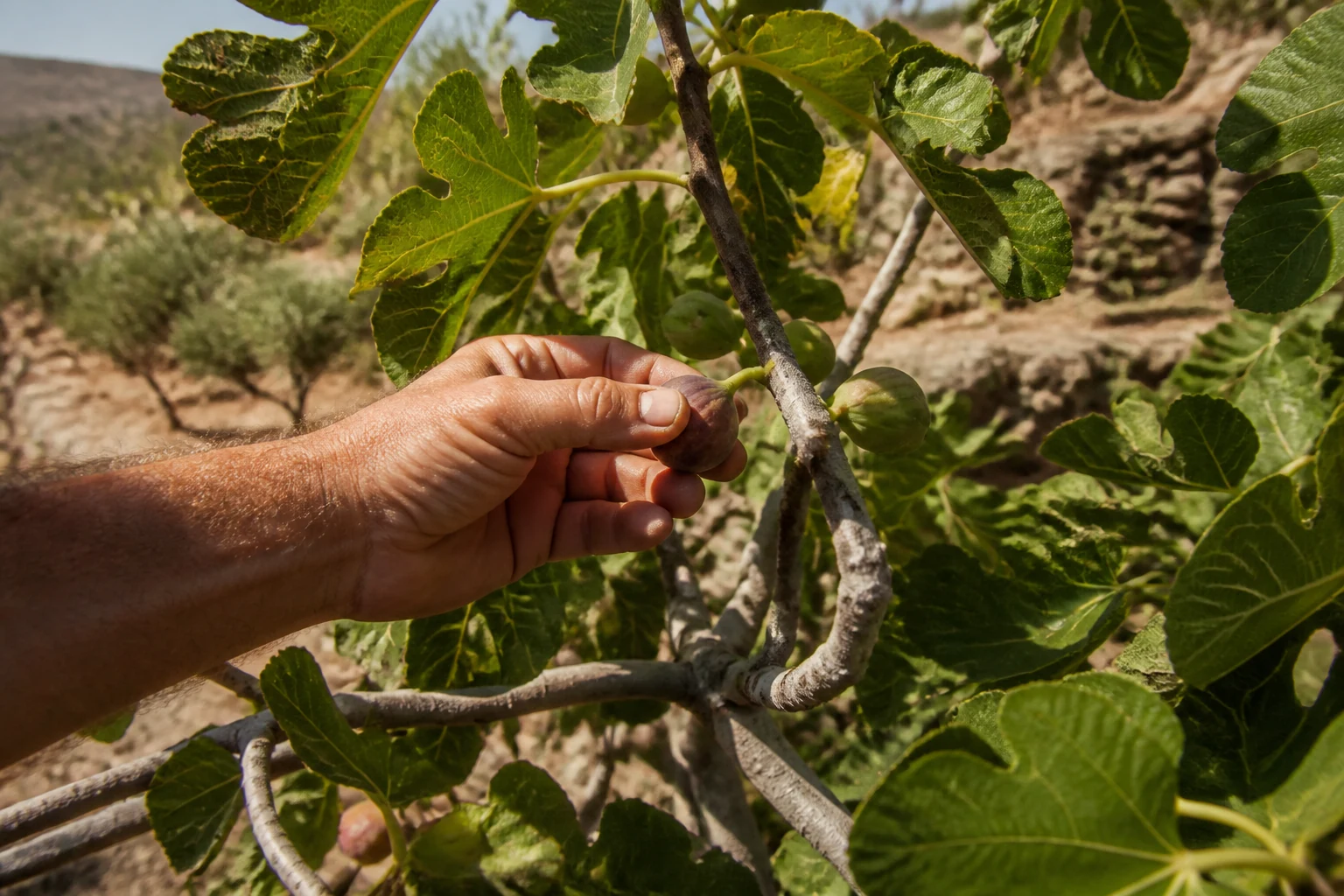
The fig tree is the Mediterranean dryland tree par excellence, planted by cortijos and stone walls. It gives brevas in early summer and figs at its end — a diffuse tradition of the Almerian Alpujarra.
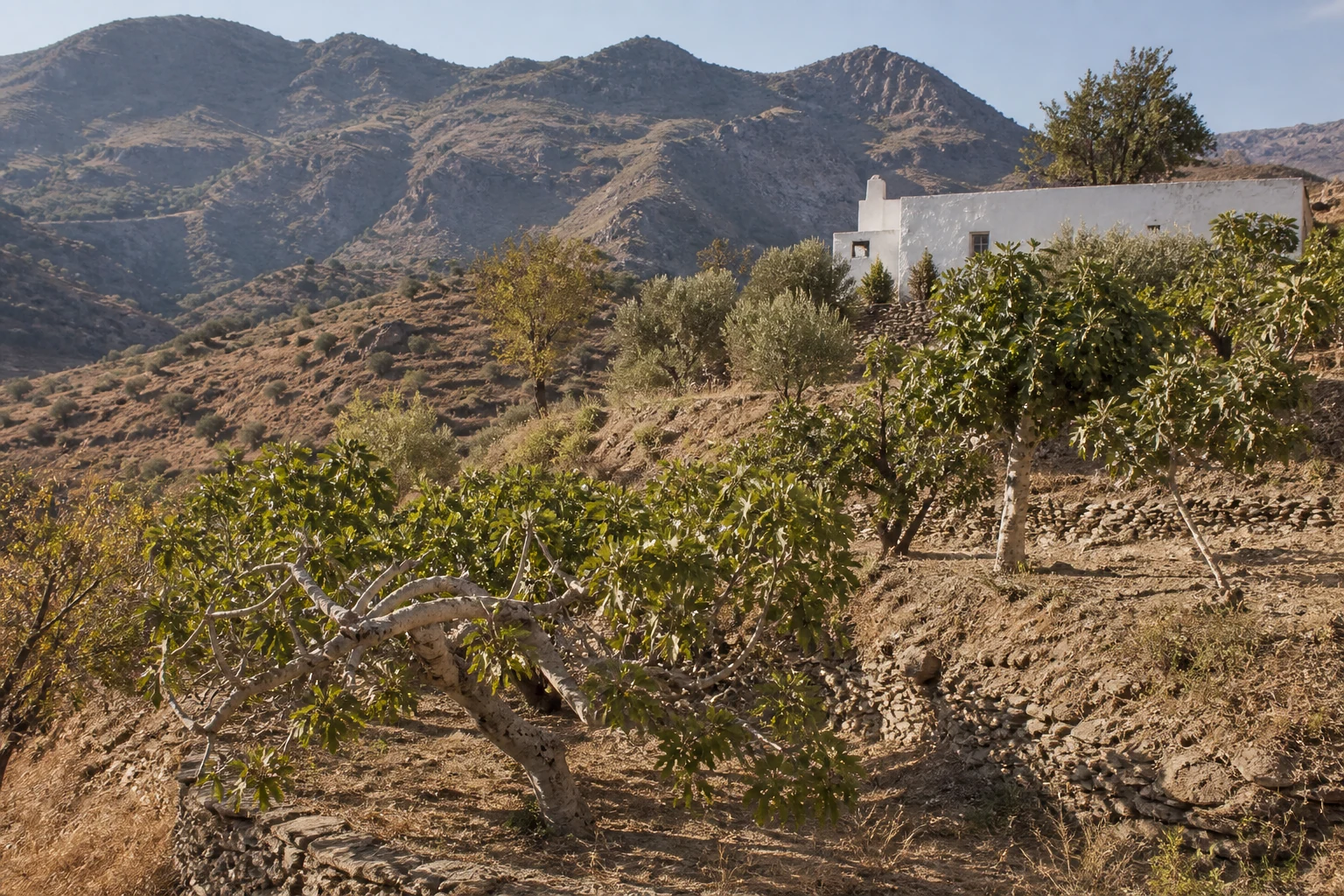
The fig tree needs no one to water it: it stands heat, poor soils and dry summers, and in Almería it grows by the cortijos, on the terrace walls and in the ramblas, wherever it finds a little hidden moisture. A provincial archive on organic farming places it among the traditional crops of the Almerian Alpujarra — a territory that includes Alhama — with no municipal figures and no commercial speciality: it belongs to the landscape before it belongs to agriculture.
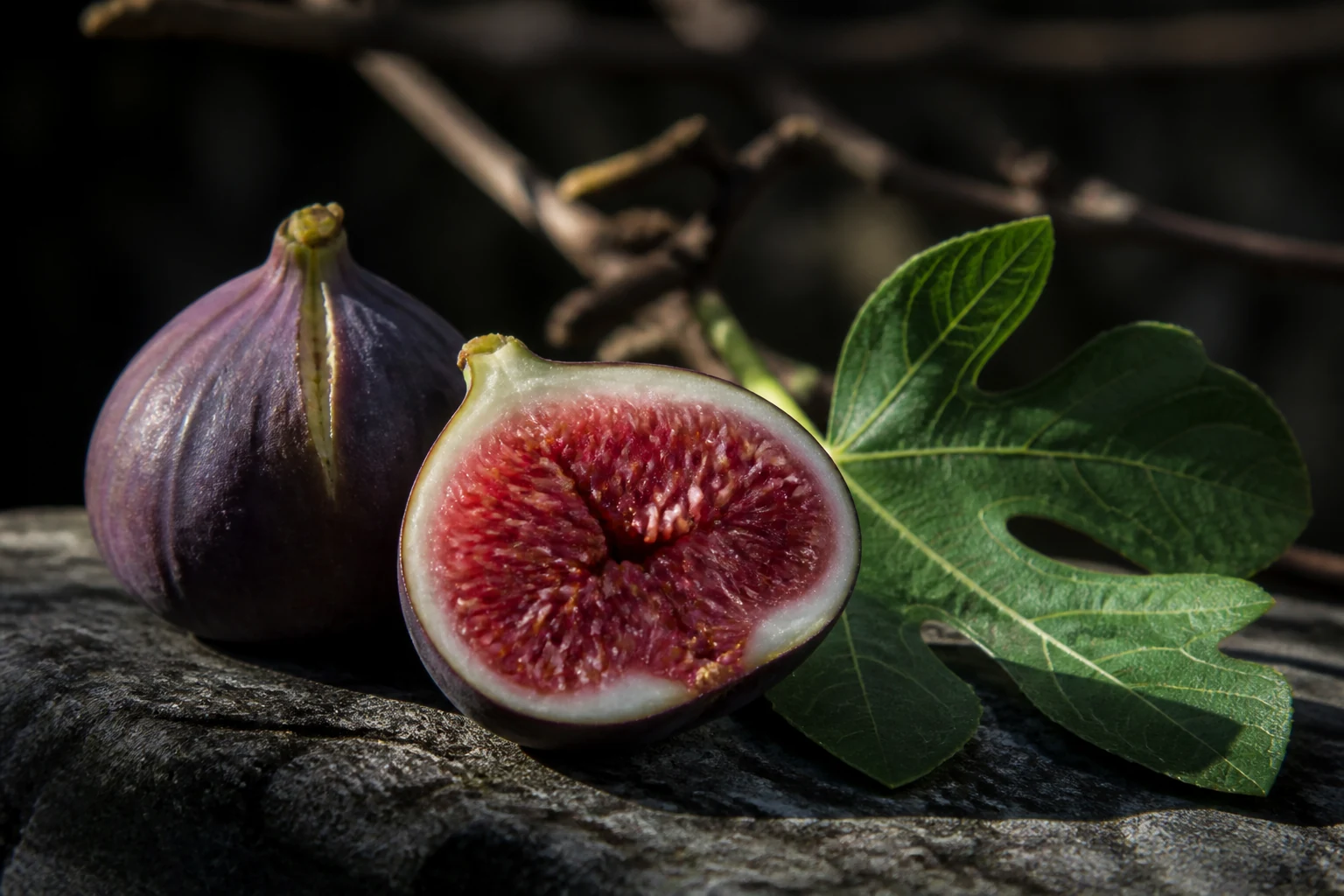
Agronomic literature distinguishes biferous fig trees — the brevales, which give two seasons: brevas, large and early, in June and July, and figs, smaller and sweeter, from August to September — from uniferous ones, with a single harvest. Colour alone does not identify a variety: depending on type and ripeness, the skin may stay green, turn purple or nearly black; the ripe fruit is delicate, sometimes lightly split, with dense, glossy flesh.
So the fig is told here as a fruit of season and family growing, not as an export production with figures. Brevas are the most sought-after at market for their size and their timing; figs are the favourites for a snack with bread or a cheese plate.
Varieties
- Biferous fig trees: brevas, then figs
- Uniferous fig trees: a single harvest
Season
Dark crowns that point to water
The fig tree doesn't come in plantations: it settles into the landscape alone, one by one. Its broad, low crown, the darkest green of the drylands, stands out against the ochres and marks from afar the corner where the earth holds a little water. In summer it casts the only deep shade for miles — shade made for snacks and siestas.
The tree that almost grows itself
More than a crop, the fig tree is a habit: dryland trees planted by the house or the stone wall, unirrigated and barely tended, bearing fruit year after year. The work is all in the picking — by hand, at just the right moment, because a ripe fig won't wait — and on biferous trees it happens twice: brevas at the start of summer, figs at the end.