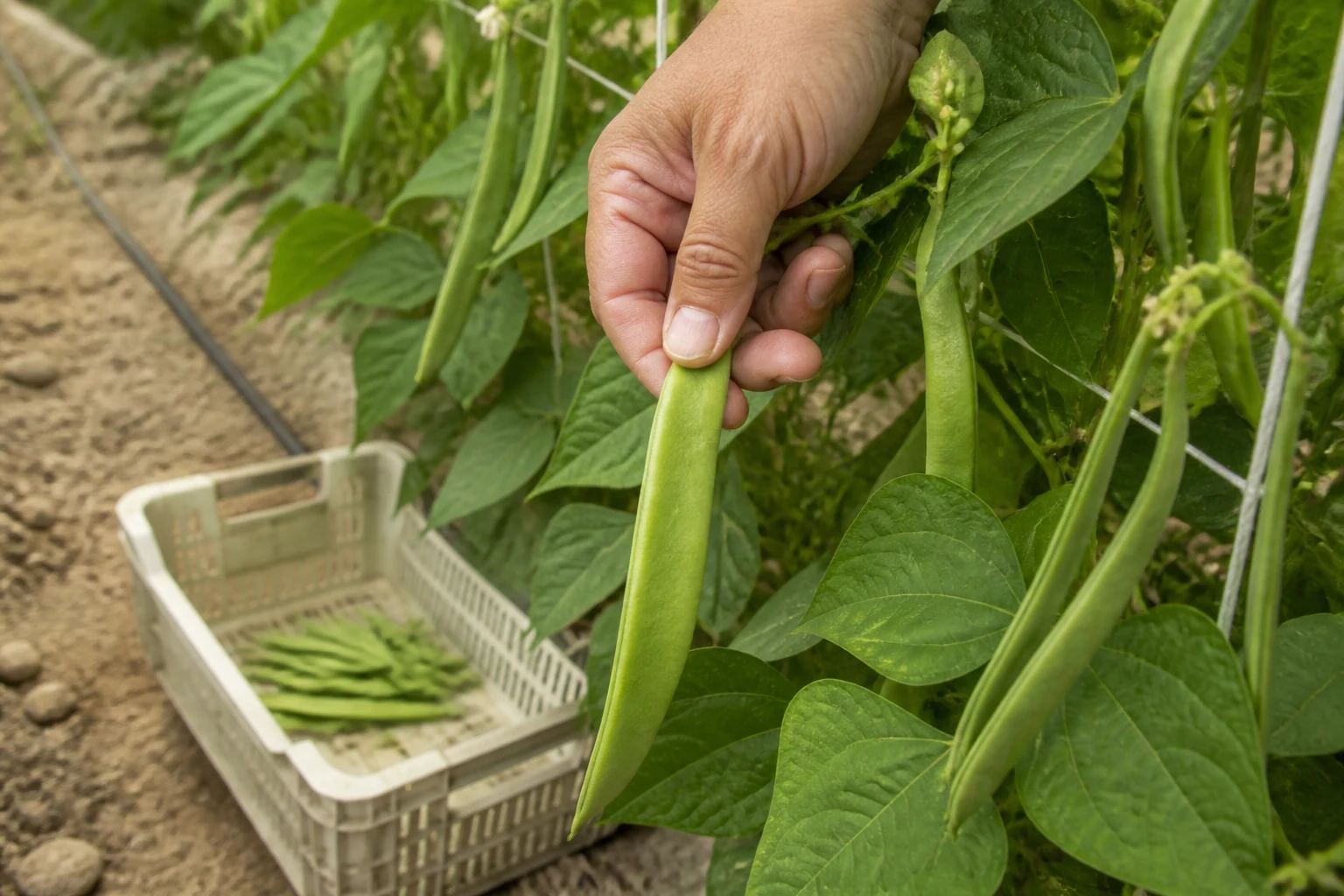
Green bean
It was one of the huerta's great crops and is now almost a rarity: 159 hectares in the 2024/2025 season. Flat or round, it is picked pod by pod, by hand — and the price tells the story.
The green bean tells the huerta's least-told story: that of the crops that fade away. Already important in the 1980s and still widespread at the turn of the century — some 4,100 hectares and 65,000 tonnes in 2002 — it was down to 159 hectares and about 2,957 tonnes in the 2024/2025 season: less than 1% of the area, volume and value of Almería's greenhouses.
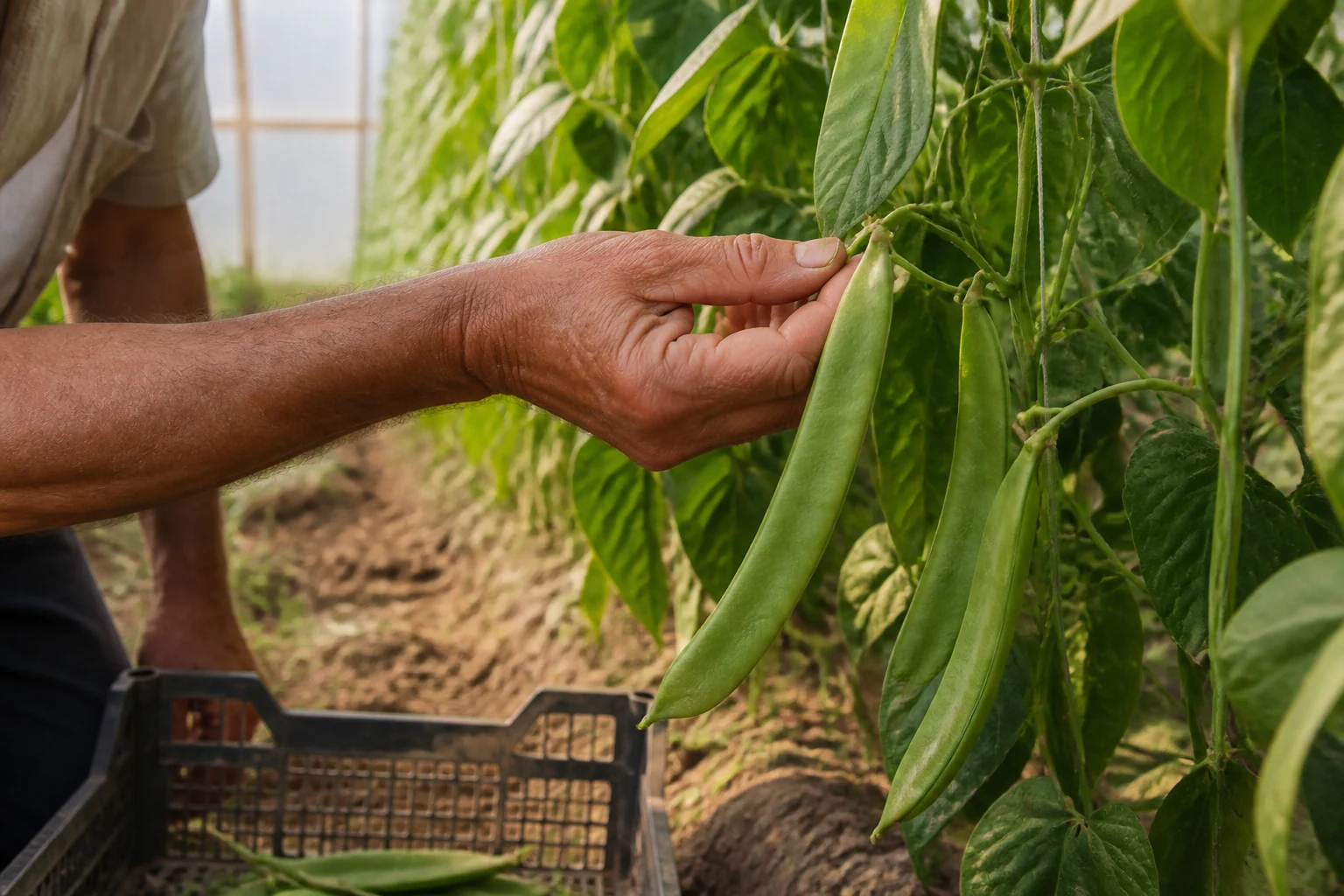
The Observatory distinguishes two commercial types, the flat bean and the round one. The pods grow on string-guided plants and are picked by hand, one by one, to protect their skin; that labour, added to the competition of imports on the European market, explains much of the decline. It is precisely what makes it a product apart: its average price — around 2.60 euros per kilo in 2024/2025 — is the highest among the major crops under plastic.
What remains is sold almost entirely in Spain, according to the 2024/2025 season record, with the Netherlands and Germany as the leading foreign customers for the little that travels.
Varieties
- Flat
- Round
Season
A green you have to look for
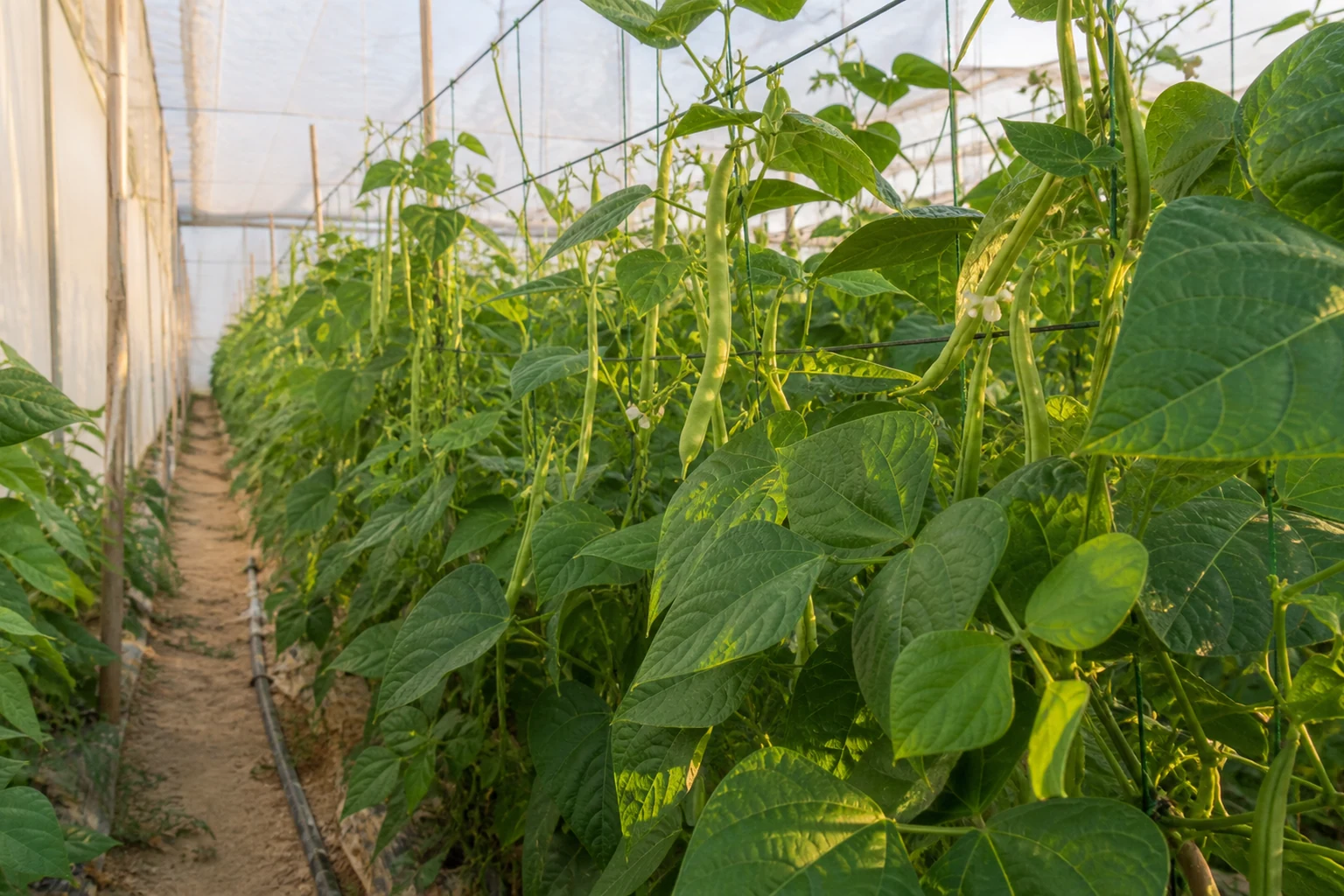
Among the province's thousands of hectares of greenhouses, green beans fill only a handful: finding them is part of the landscape. Inside, the plants climb their strings into curtains of foliage hung with pods as slender as fringe.
What machines can't do
This is the greenhouse's artisanal exception: no machine replaces the hand that finds each pod at its peak and cuts it without bruising. The gesture is repeated plant by plant through the whole season, autumn to early summer, and that painstaking work is what you pay for at the counter.