Mango
Greenhouse mango remains an experimental path in Almería: local research studies varieties, rootstocks, salinity and earliness, far from the great subtropical orchards of Málaga and Granada.
The Andalusian mango is first and foremost a crop of Málaga and the Granada coast: an official Junta record credited Málaga with 85% of the regional area and Granada with 14%, the remaining point shared between Huelva and Almería. That contrast rules out presenting Almería as established mango country — the local lead is experimentation, in very specific microclimates and structures.
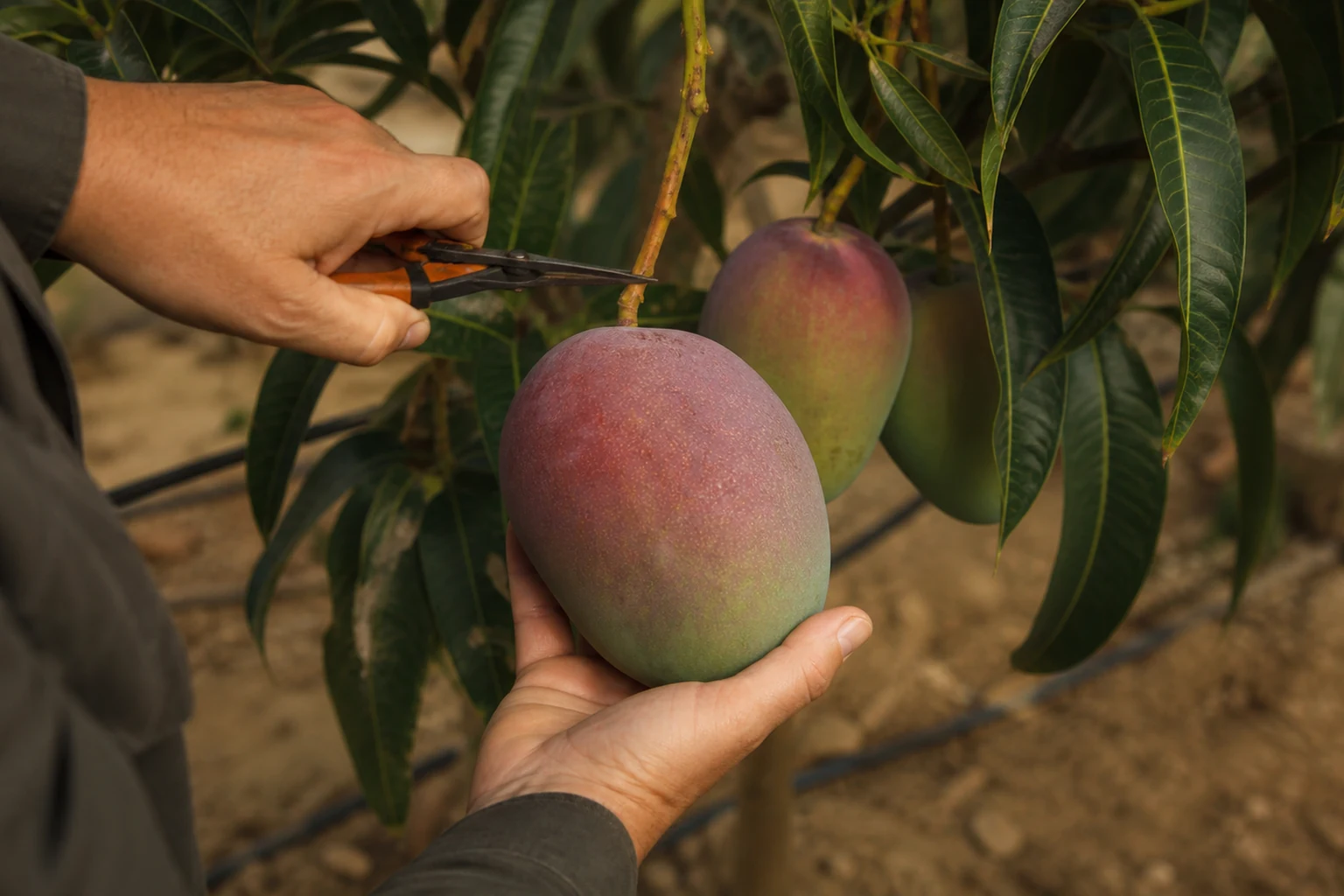
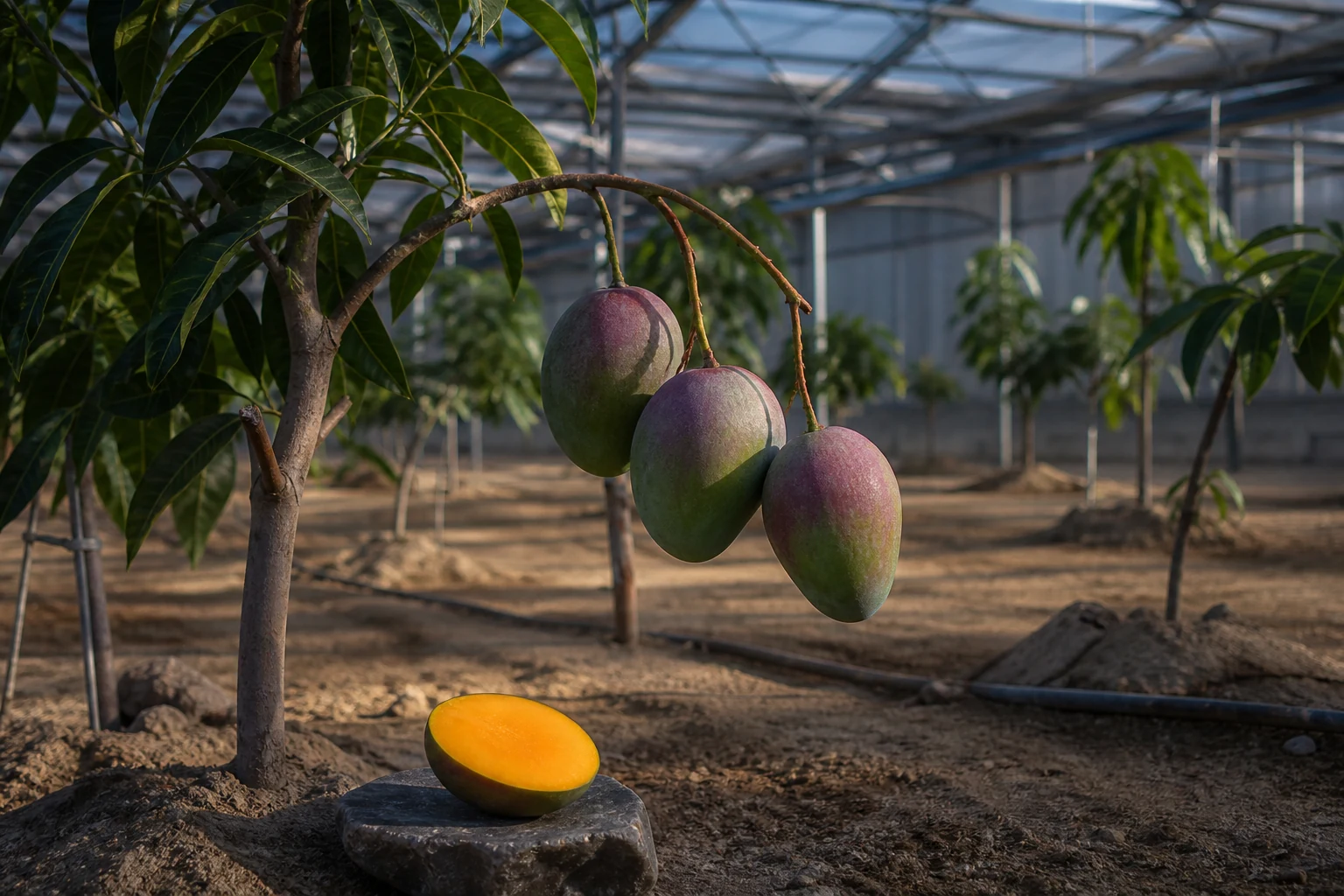
A University of Almería programme devoted to intensive greenhouse mango studies varietal selection, physiology, rootstocks tolerant of salinity and local soils, training techniques and market response — with earliness as the great asset under review: the first Andalusian greenhouse mangoes can arrive in early August, ahead of the heart of the open-air harvest in September.
At Andalusian scale, Osteen, Kent and Keitt rank among the reference varieties, though their exact spread across the Almerian trials is still to be documented. The bet does fit the local tradition of trying things first — and a tree-ripened mango, one truck-day from Europe's markets, is an argument that explains itself.
Season
The orchards are on another coast
The mango orchards that shape the Andalusian landscape are in Málaga and along the Granada coast, which hold almost all the regional acreage. In Almería the mango keeps out of sight: it grows under cover, in trial plots scattered among vegetable greenhouses, invisible until someone opens the door.
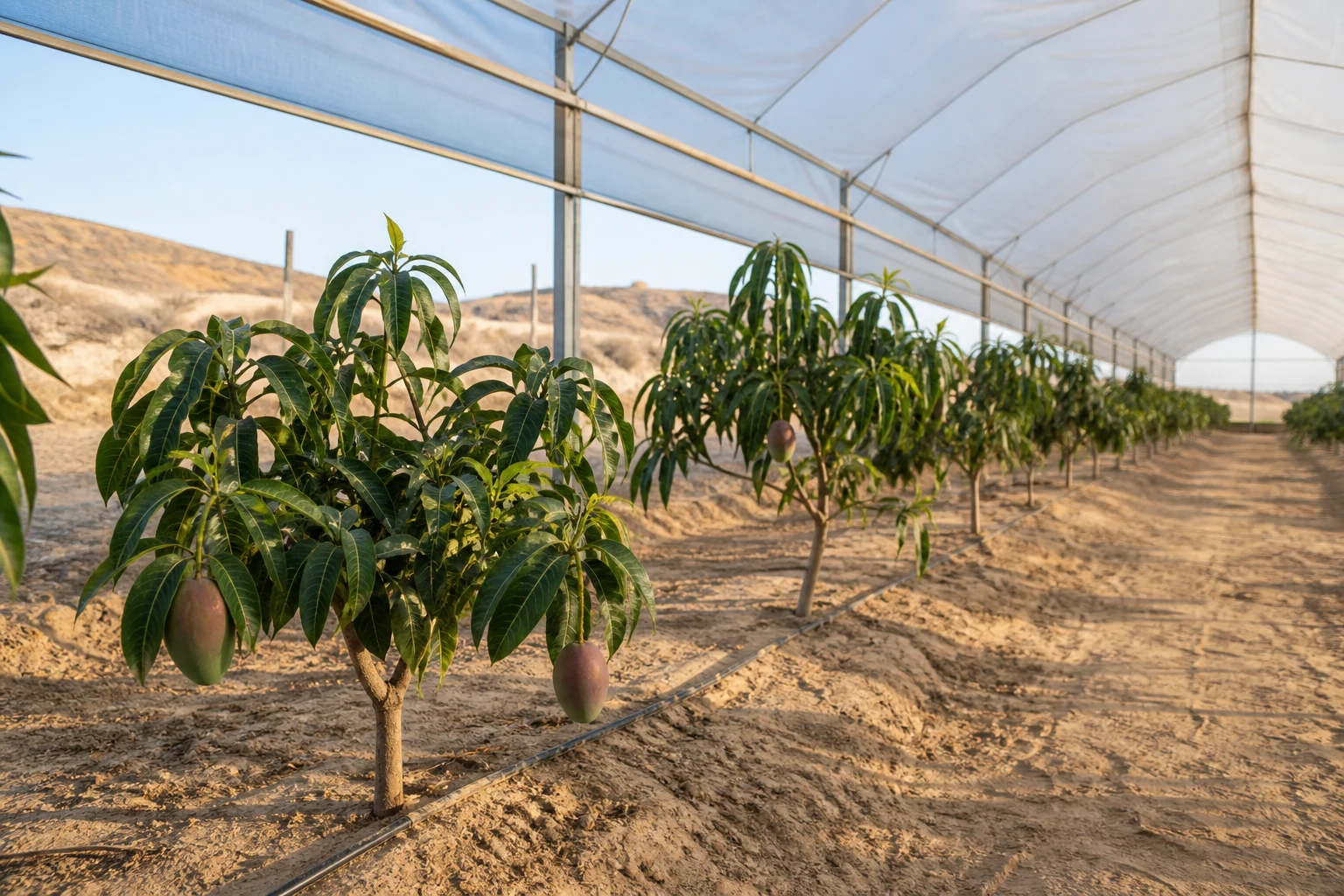
A fruit tree in vegetable growers' structures
The Almería route is to reuse greenhouses built for vegetables and plant a permanent tree inside them. It is orchard-growing under plastic: the tree's shape is fitted to the covered space, the know-how is built trial by trial, and the trump card is timing — ripening ahead of the open-air harvest of late summer.