Papaya
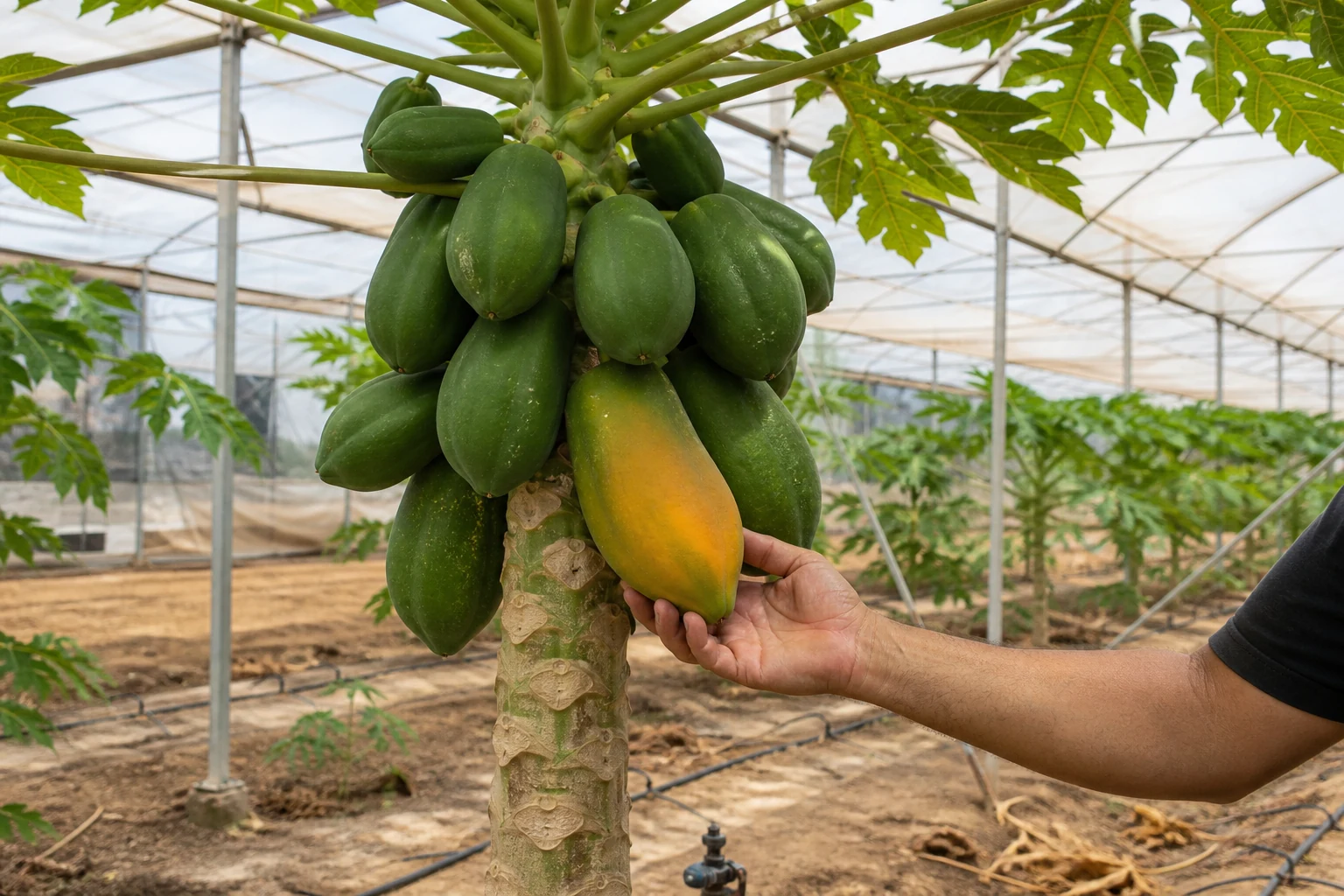
A strictly tropical fruit being trialled under Almería's plastic: tests at El Ejido and Retamar study varieties, structure height, yield and quality in a climate that is not its own.
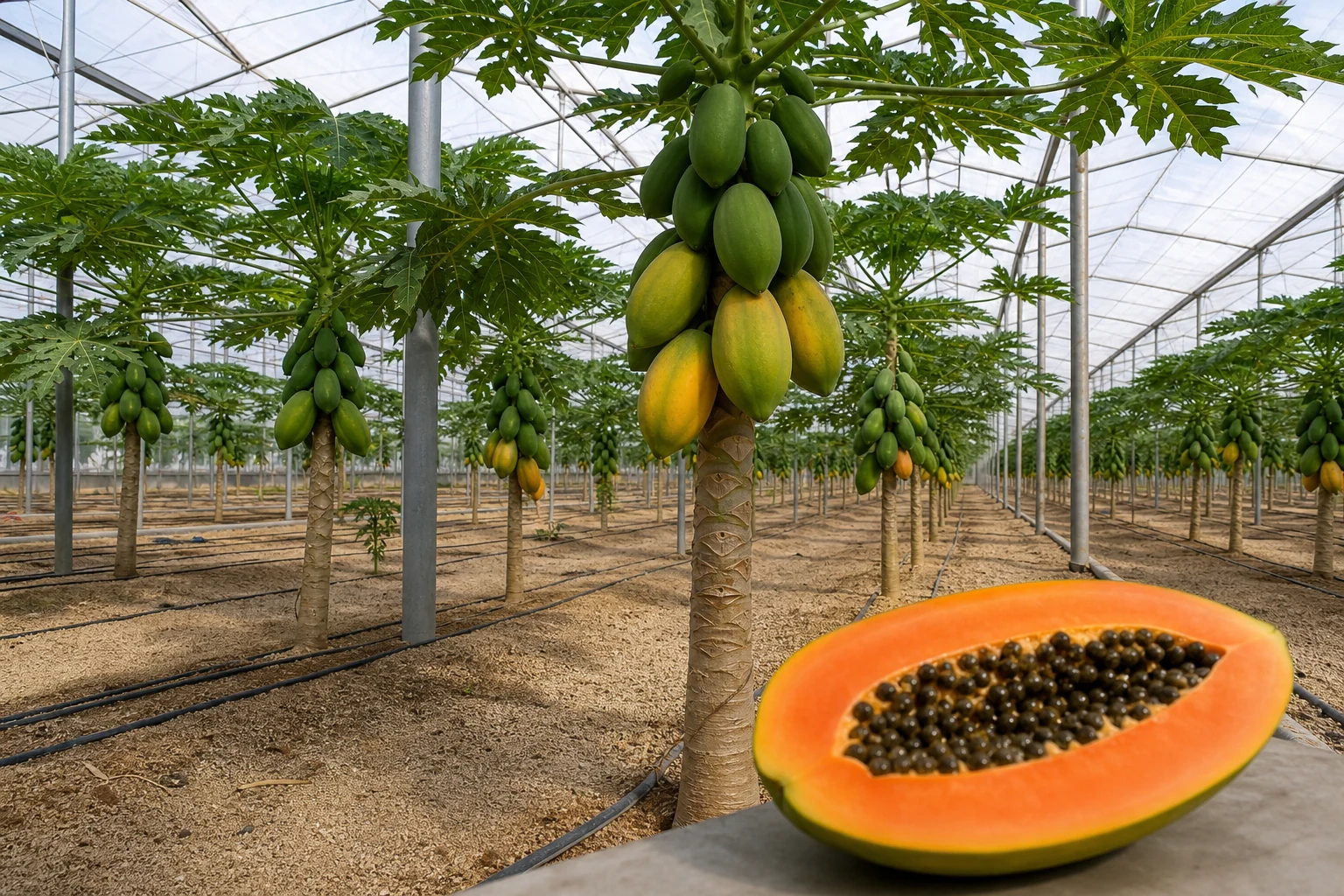
The papaya is neither a historic nor a dominant crop of Almería: it belongs to the diversifications the coastal greenhouses make possible, being a strictly tropical plant that only cover brings within reach of the peninsula. The CARISMED project has worked on two contrasting sites — El Ejido, in the Poniente, and Retamar, in the Levante — to observe how it behaves in a protected Mediterranean environment.
Four varieties have been followed closely: Intenzza, Caballero, Sweet Sense and Iuve, with differences in productivity, stability and quality by site and cultivar — results that do not justify announcing a massive sector. At the University of Almería, trials in a tall multi-span greenhouse, on sand-mulched soil with drip irrigation, have also explored how to train a plant that grows fast and clusters its fruit against the trunk.
The combined trials suggest the supply can cover much of the year, though that calendar is a potential of protected growing, not a commercial guarantee. It is the newest face of the huerta: the agriculture that invented the greenhouse in the sixties is now after fruit nobody expected from this shore.
Varieties
- Intenzza
- Caballero
- Sweet Sense
- Iuve
Season
A hidden pocket of the tropics
From outside, nothing gives the papaya away: the plastic roofs of El Ejido or Retamar are the same ones sheltering peppers and cucumbers. The difference lies within, under multi-tunnels where a tropical-looking plant shoots up fast, broad-leaved, its fruit clustered along the trunk.
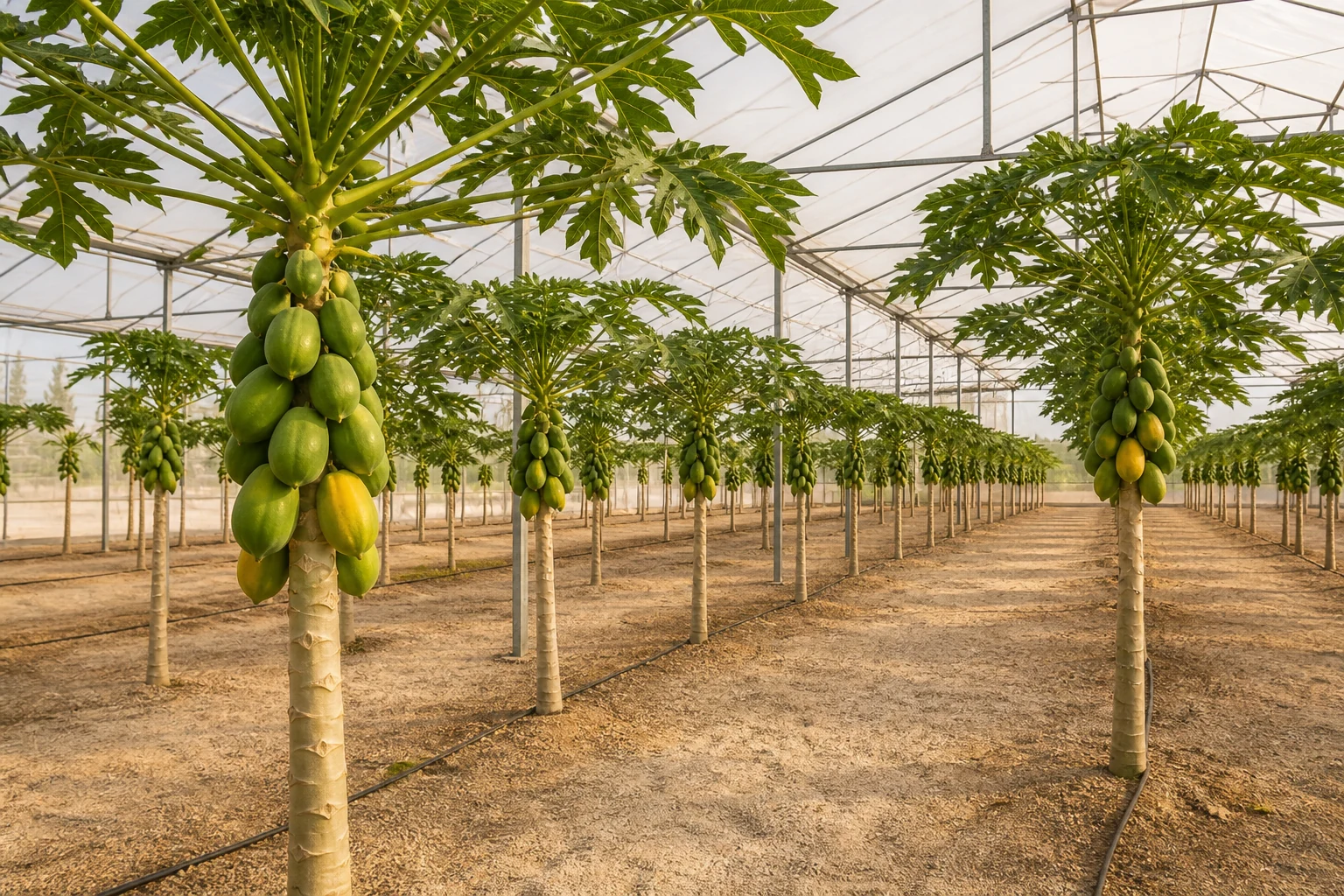
Long cycles under mandatory cover
Papaya does not compromise with cold: on the Spanish mainland it only thrives under cover. The south-east — Almería, Granada, Málaga, Murcia — has passed the hundred-hectare mark in protected plantings, and the crop is planned for the long run: cycles of 20 to 24 months per planting, with yields the technical references put between 100 and 200 tonnes per hectare.