Lettuce
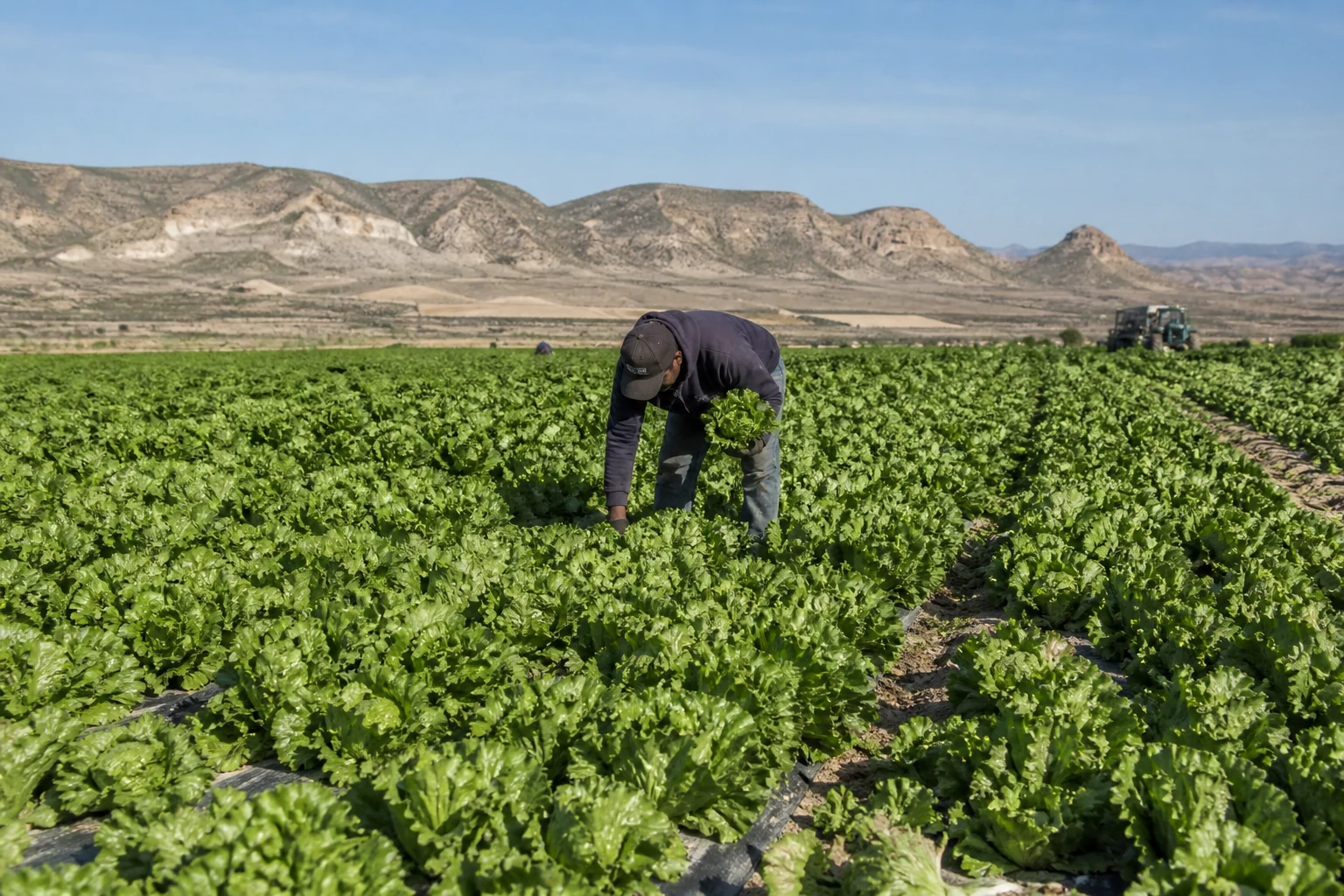
In Almería's Levante, around Pulpí and the Bajo Almanzora, open-field lettuce makes the most of the cool months: regular rows delivering crisp leaves in the depths of winter.
Thirty-two crops, several landscapes and the same Mediterranean light.
Along the coast, greenhouses draw a white mosaic across the Campo de Dalías, the Bajo Andarax and the Campo de Níjar. The most recent official figure puts their physical footprint at around 33,000 hectares in the province; the 62,743 cultivated hectares reported for the 2024/25 season also count plots that host two successive crop cycles — the two figures describe different realities.
Spectacular as it is, that landscape does not sum up Almería's farmland. Citrus and the historic uva del barco follow the Andarax valley; olive, almond and fig trees and open-field crops climb the slopes and reach inland; new tropical fruits are being trialled under cover along the coastal strip. Read the catalogue as a map, from the sea to the sierras, as much as a harvest calendar.
In Almería's Levante, around Pulpí and the Bajo Almanzora, open-field lettuce makes the most of the cool months: regular rows delivering crisp leaves in the depths of winter.
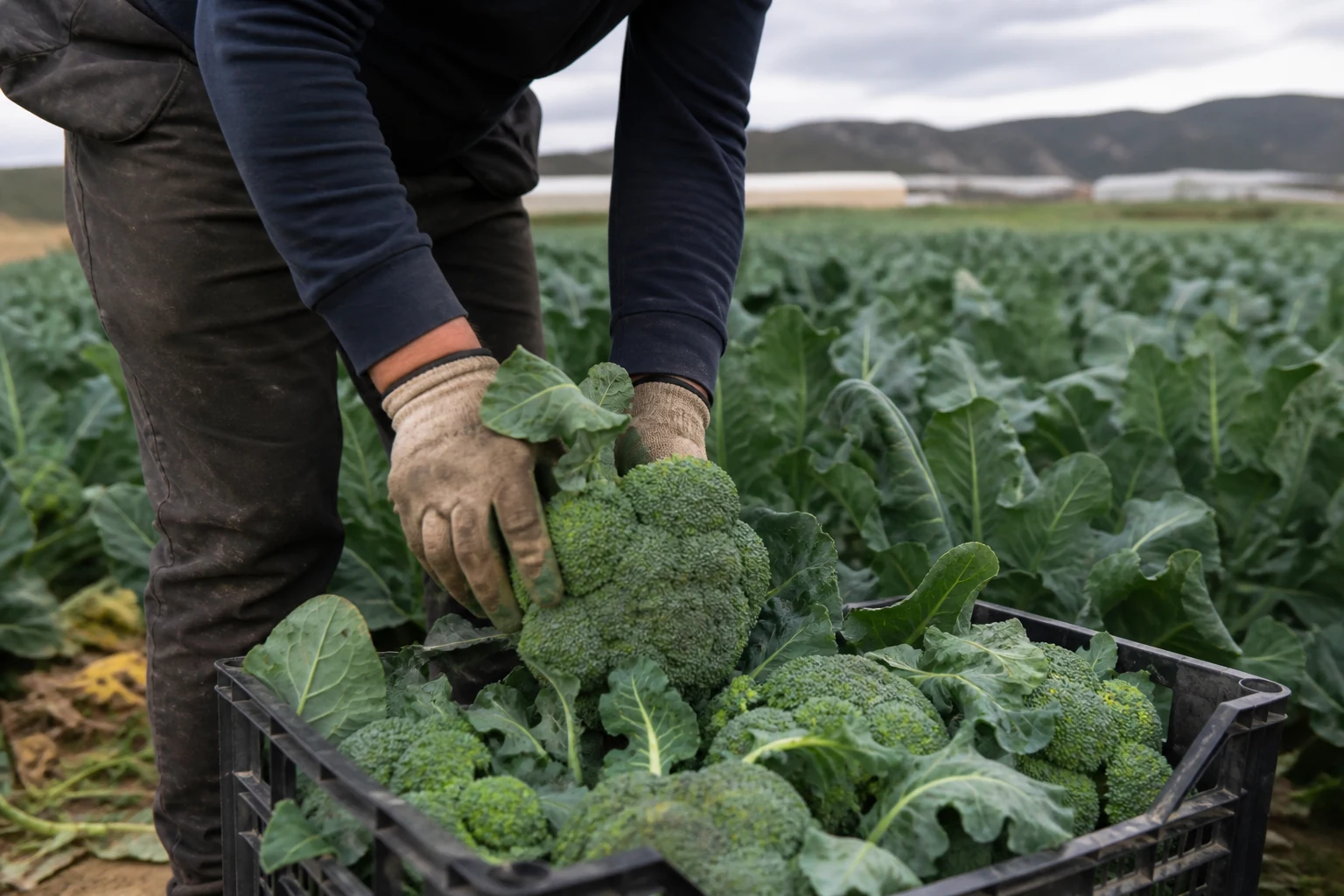
An open-field crop of Almería's Levante, sharing the cool season with lettuce and cauliflower. Sown in the heat, cut in the cold — before the head opens its buds.
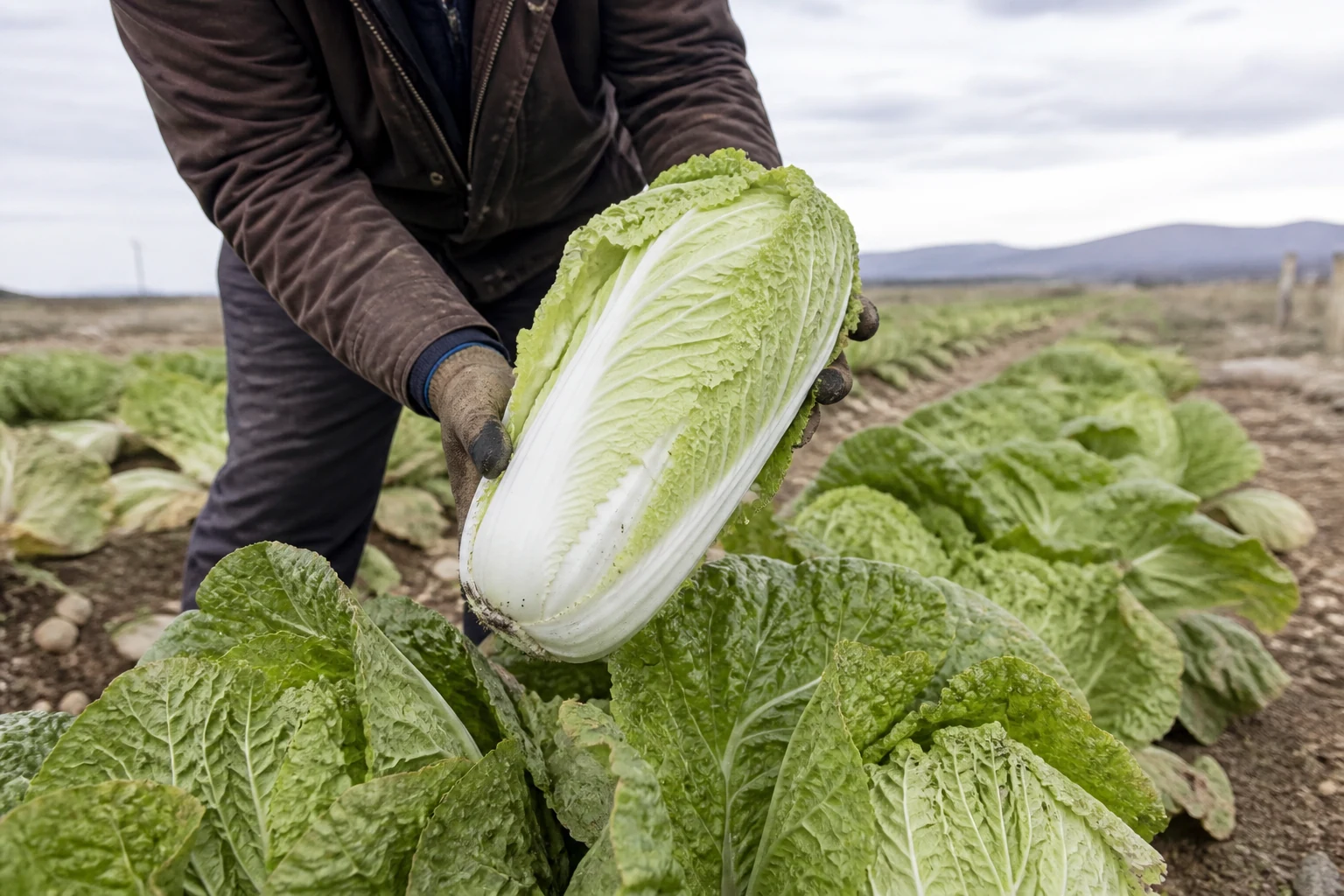
White and red cabbages alongside Chinese cabbage, in the open-field rotations of the Levante's cool season — and in interior villages such as Abla and Abrucena, where it is grown organically.
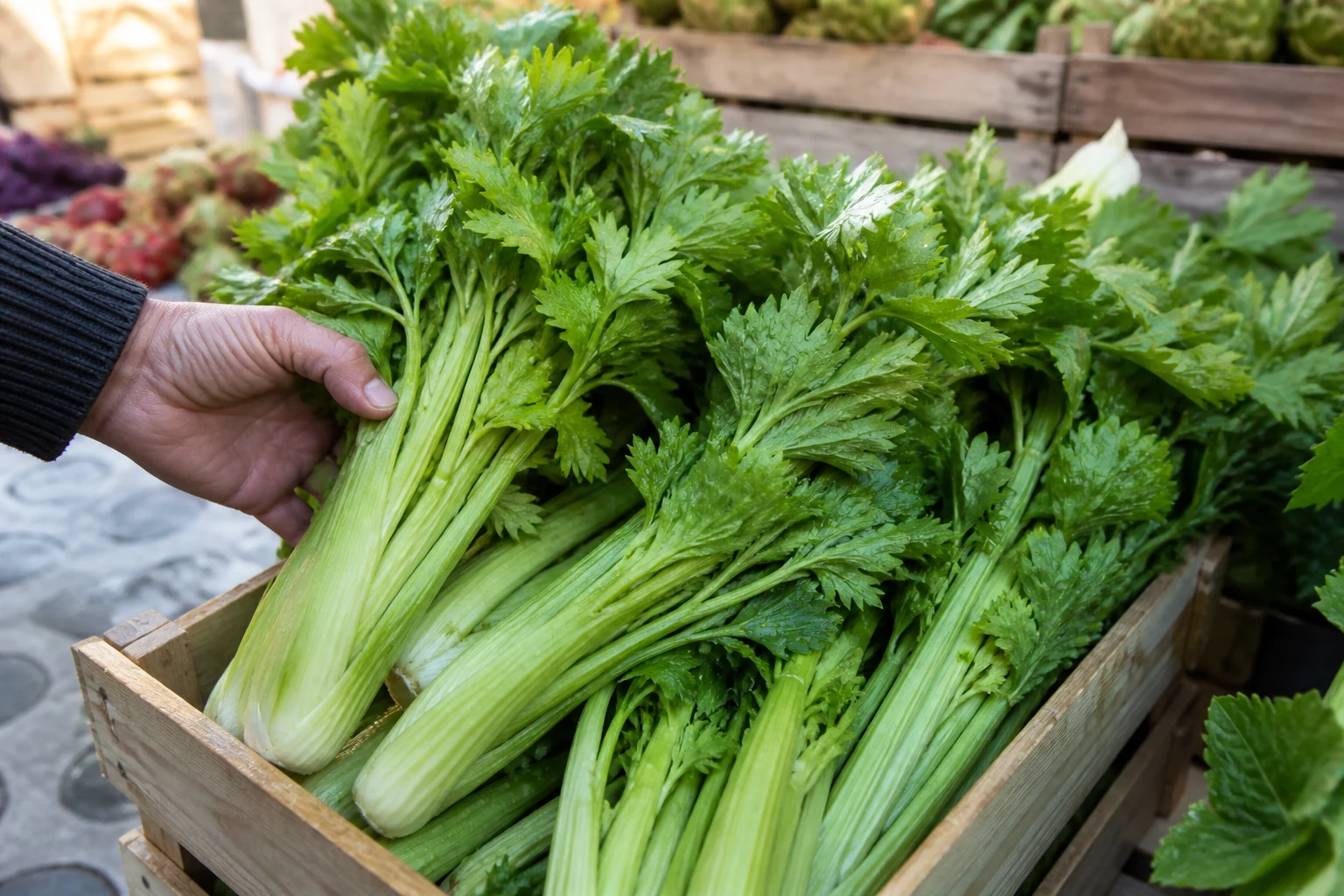
A cool-season crop of Almería's Levante, keeping company with lettuce and cabbages. It arrives in crunchy, leafy bunches — vegetable freshness for stocks, stews and salads.
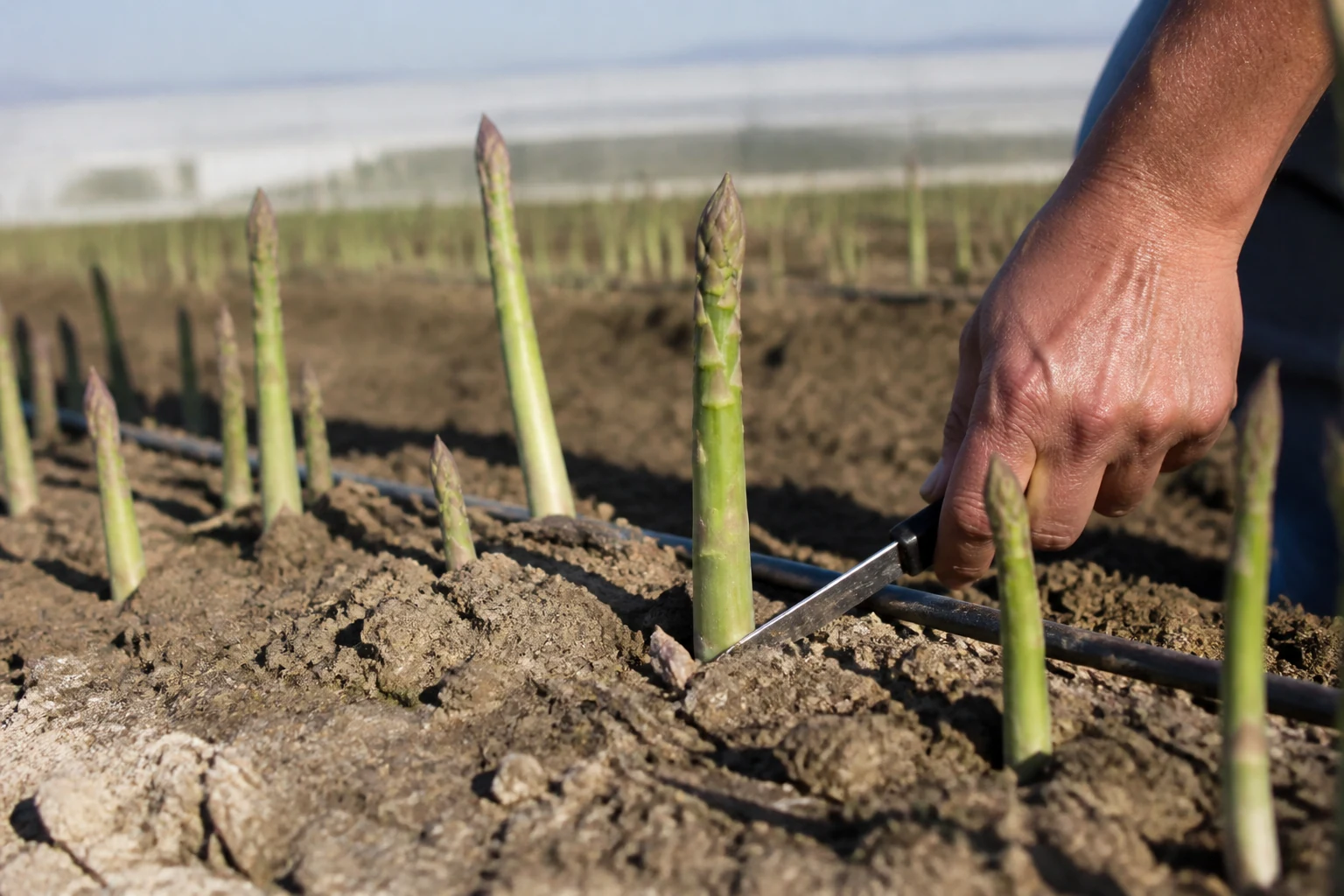
In spring, green asparagus spears are cut one by one as they break the soil. In Almería it is a small open-field crop, secondary to Granada's great asparagus heartland.