History and origin
Squid rings, a light flour coat and Andalusian frying to order
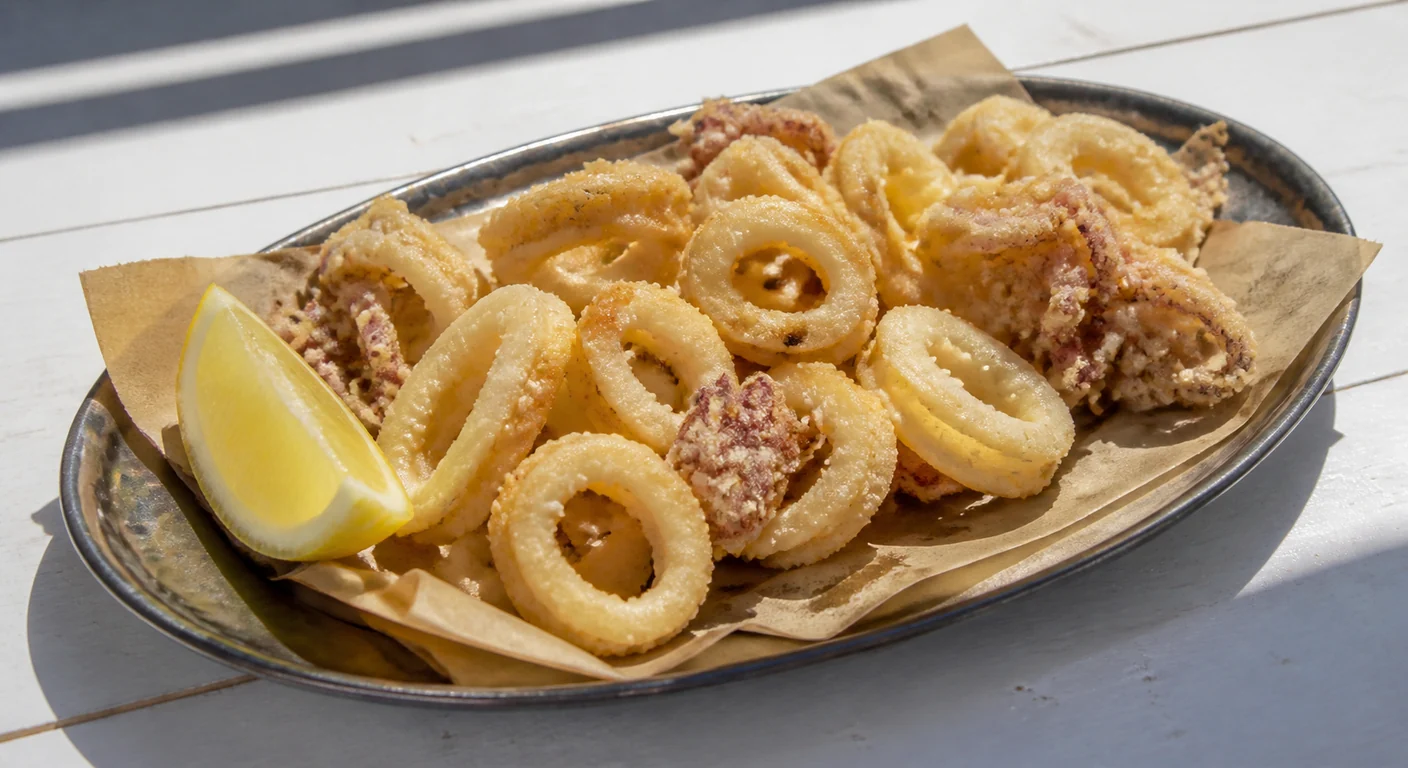
Andalusian-style calamares fritos are known by their discreet coating. The squid, cut into rings with a few tentacles, is carefully dried, salted and passed through flour. It gets neither thick breading nor puffy batter. A brief, hot fry forms a blond, crisp film while the inside stays white, moist and tender.
That difference sets them apart from calamares a la romana, whose coating is usually thicker, and draws them close to the great family of Andalusian fry-ups: small fish, cephalopods and floured pieces served the moment they leave the oil. Almería's official tourism page lists calamares fritos among the city's traditional tapas.
The result hangs on simple but precise gestures: a still-wet surface turns flour into paste; an overloaded pan cools the oil and greases the fry. The pieces cook in small batches, drain without delay and arrive hot, with a lemon wedge or a touch of alioli at most. The dish is fully at home in an Almería selection, even if its territory is wider: it belongs to Andalusia and to Spain's bar counters.