History and origin
The gently spicy pisto spilling over Almería's bread
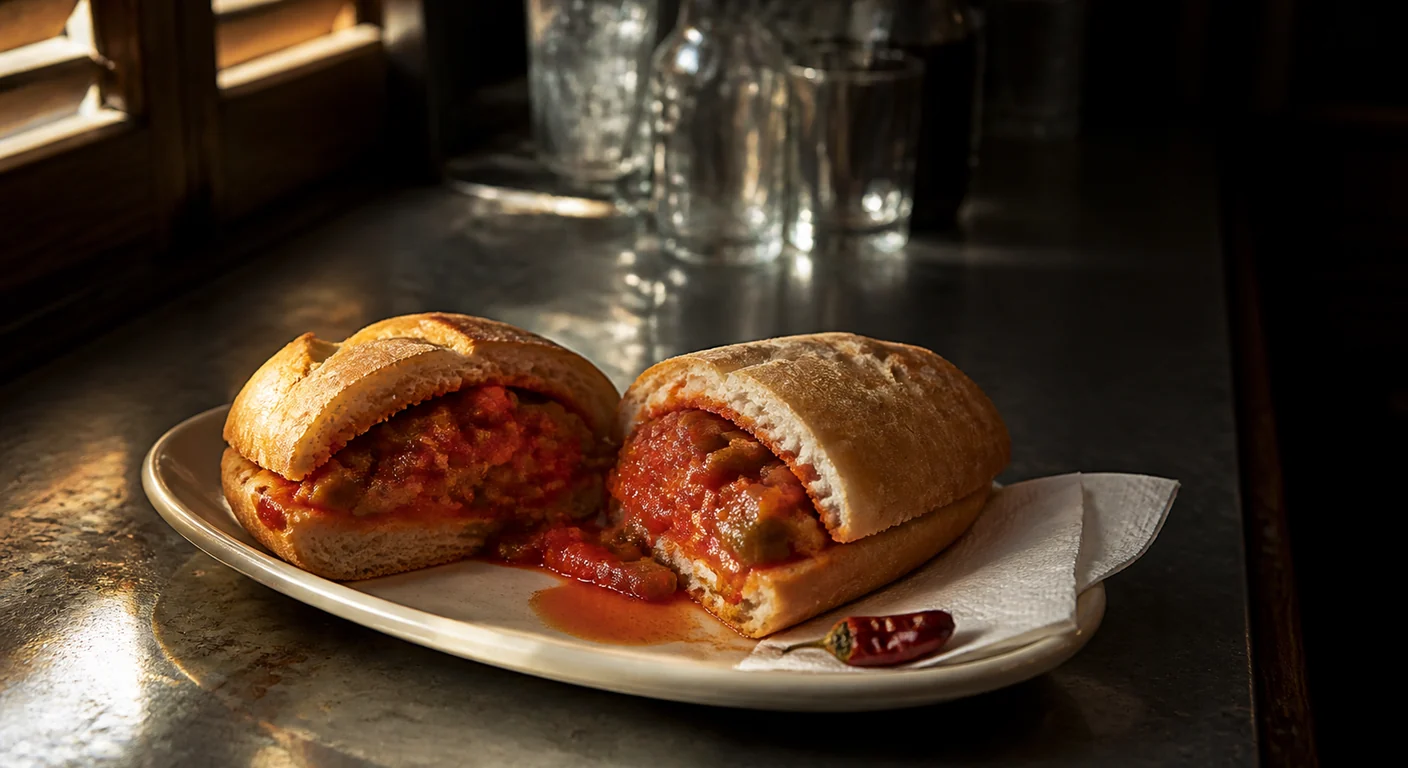
The tabernero is not a cold-built tuna toast. It is stove cooking, a close relative of pisto: ripe tomato, green pepper and onion simmer slowly in a generous amount of olive oil until melting and juicy without losing all their shape. A hint of chilli wakes the whole thing up, and it arrives on its own in a small dish, on toasted bread or inside a small white roll.
Antonio Zapata traces its earliest memories to the bar El Disloque, on Calle González Garbín in Almería, before the building disappeared in the 1960s. That formula combined strips of pepper, chopped onion and tomato, with no meat and a frank heat. From 1958 the Bodega Montenegro offered a finer, milder version. These markers come from local research built on testimony: they light up the history without amounting to a birth certificate.
Today every kitchen adjusts the size of the vegetables, the reduction and the strength of the chilli, but the core remains recognisable. Adding meat pushes the dish towards fritaílla; piling on courgette or mushrooms turns it into an ordinary pisto. What matters is the cooked matter itself: brick-red, glossy, supple and thick enough to hold on bread while letting a little juice run.