Onion
From early onions to storage types, this bulb structures sofritos, salads and stews. In Almería it is grown but remains secondary: its diversity is best told through seasons and the knife.
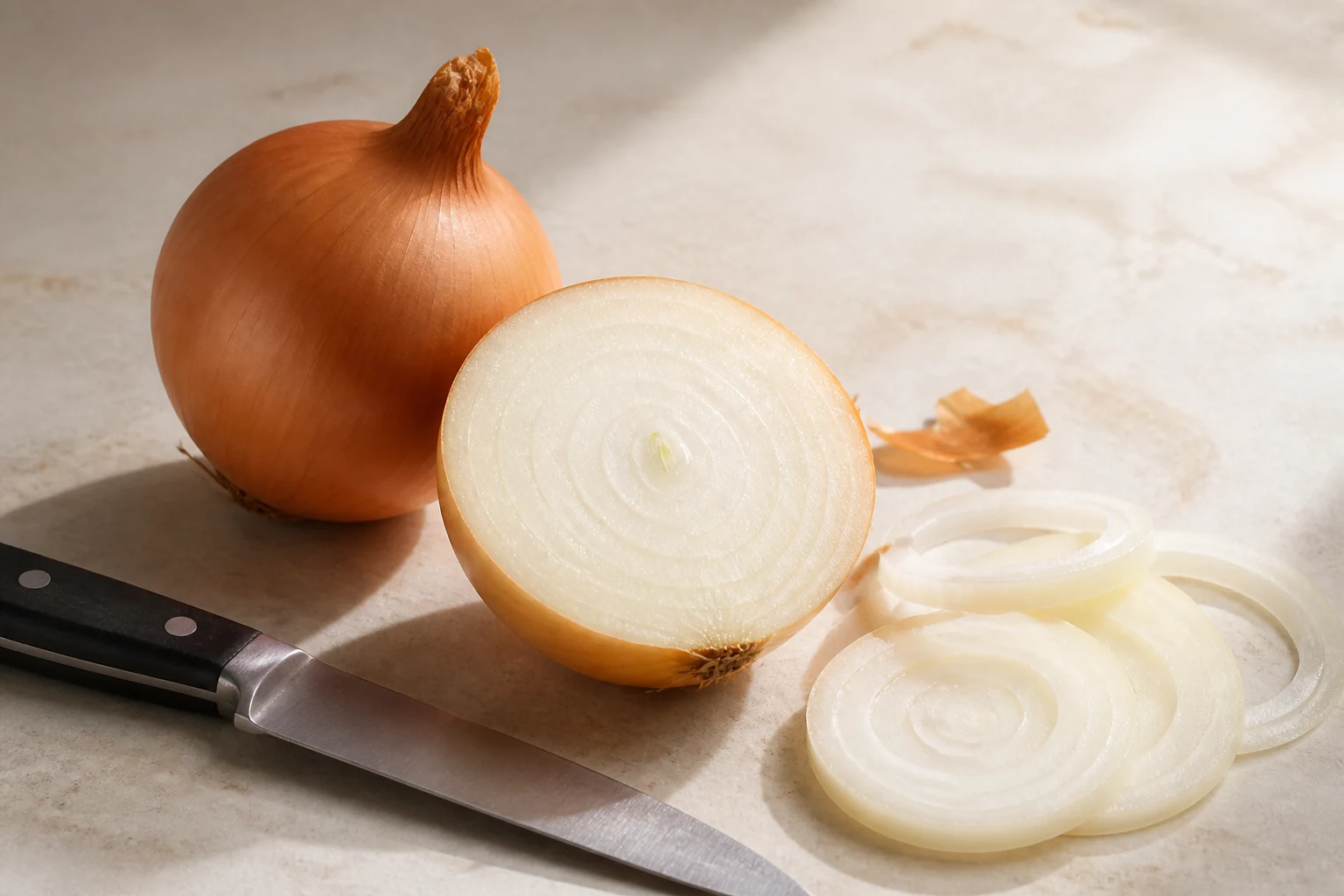
It is impossible to imagine much of Almería's cooking without the onion: it melts slowly into the sofrito, brings crunch to salads and softens slow-cooked dishes. Its cultivation is documented in the province — in the open-air huertas of the interior and the Levante that take over from the greenhouses in summer — but it remains secondary at Andalusian scale: a versatile open-field product, not an exclusive Almería signature.
The onion forms its bulb in response to day length: so-called short-day varieties start the process with about eleven to thirteen hours of light; intermediate and long-day types ask for more. That physiology explains the succession of commercial families in the farming calendars — early Babosa, Liria or medio grano, Valenciana or grano, plus fresh onions — and the staggering of sowings and harvests, yielding bulbs more or less sweet, juicy or fit for storage.
Its role at the table is that of a foundation: invisible yet indispensable. Raw and thinly sliced in pipirrana or ensaladilla, melted into the base of seafood stews, slow-cooked alongside papas a lo pobre — hardly any dish in the province gets going without it.
Varieties
- Babosa
- Liria or medio grano
- Valenciana or grano
- Fresh onion
Season
Tubular greens on pale ground
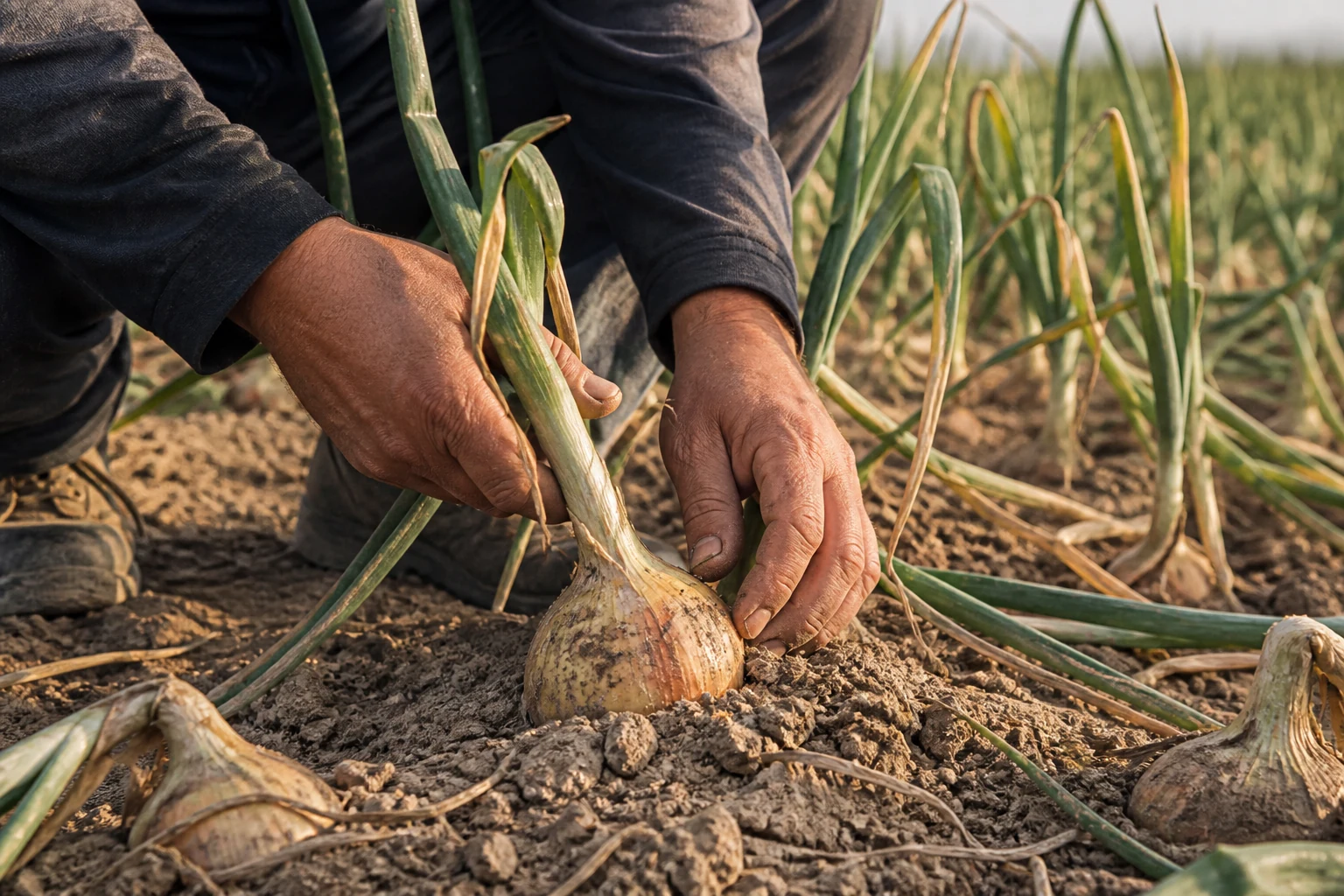
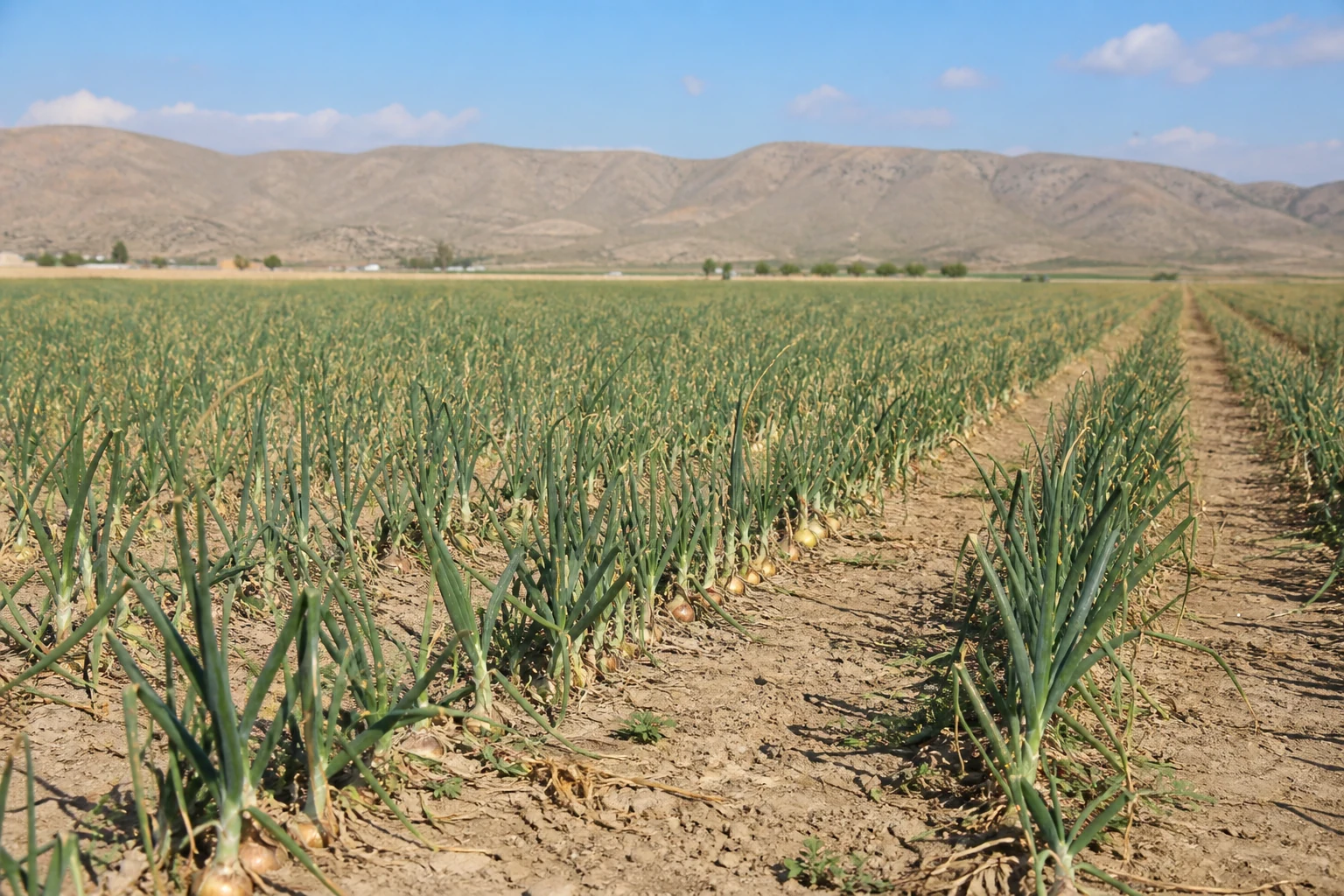
Onions barely rise a hand's span above the soil: rows of hollow, upright leaves, blue-green, across flat and open plots. As harvest nears, the bulbs push up at the soil line and the tops flop over — a quiet signal that the field is ready.
Staggered sowings, staggered harvests
In the open fields of the interior and the Levante, onions are sown in two waves: short-day varieties in autumn, long-day ones in late winter. That staggering sets the rhythm of the season — fresh onions and early types first, then the bulbs built for storage — with no protection beyond the calendar itself.