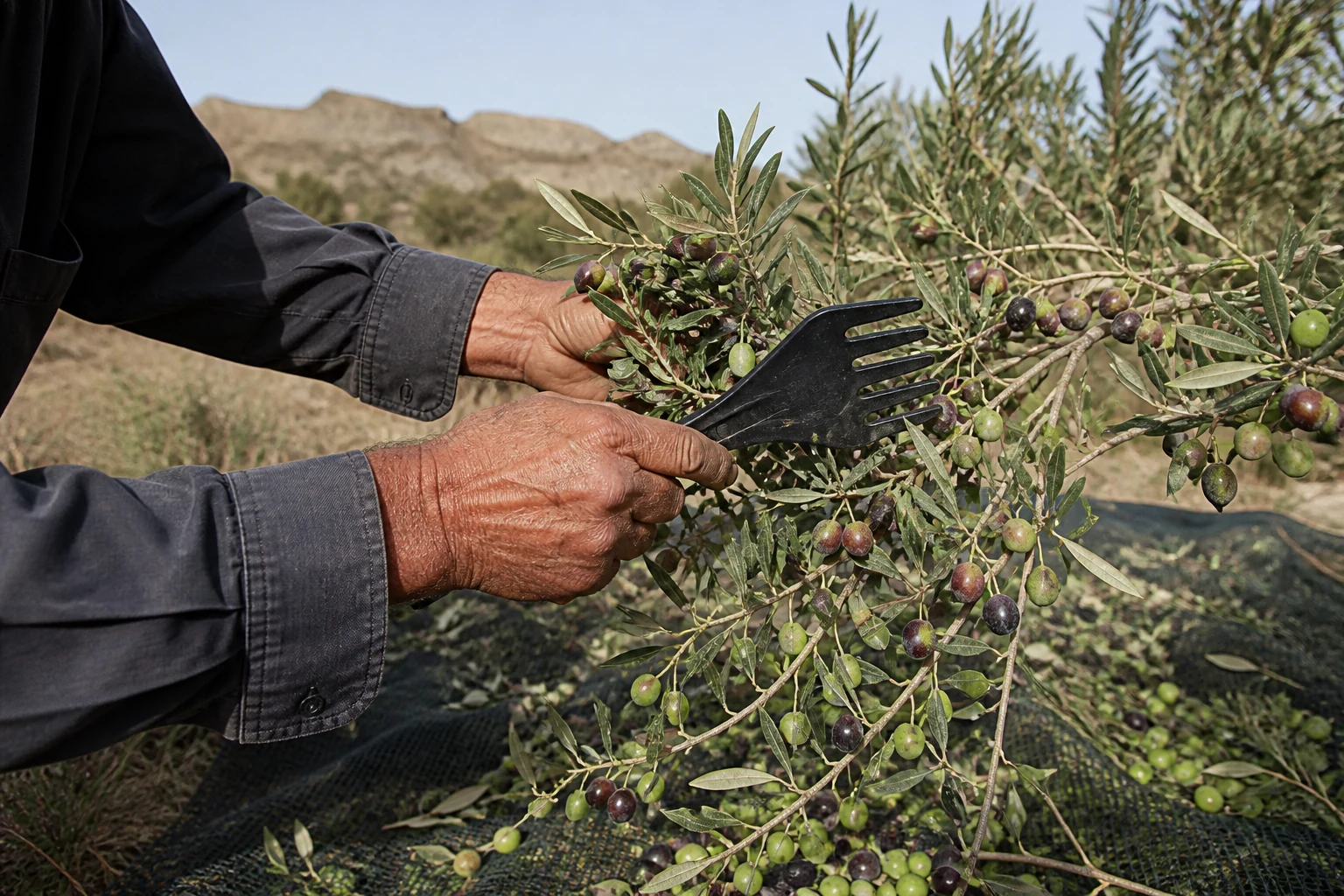
Olive
On the dry terraces of the Andarax and the Almerian Alpujarra, the olive feeds the mills of Canjáyar. Picual, arbequina and local varieties yield honest oils and table olives.
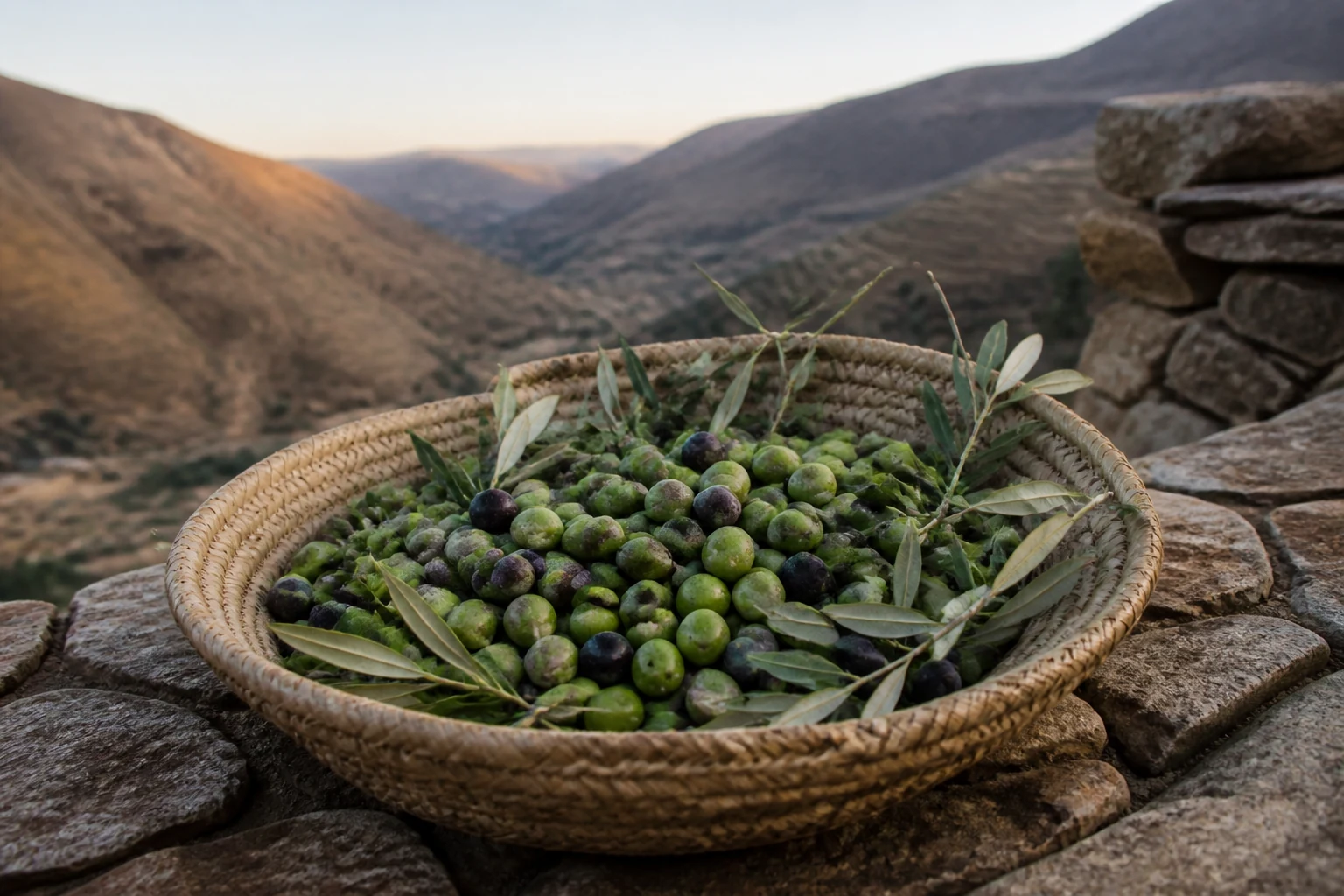
The olive tells the story of inland Almería, far from the great market-garden plains of the coast. In Canjáyar, between the Almerian Alpujarra and the Andarax valley, two mills and a festival dedicated to oil bear witness to a still-active olive-growing district. The trees occupy stony hillsides, terraces and small plots where water is carefully rationed — and Alhama belongs to the same corridor of landscape.
Provincial sources list the range of varieties received by the Canjáyar mills: picual — with its local selection, the Picual de Almería —, arbequina, manzanilla, lechín or cuquillo, hojiblanca and picudo. Harvest runs from autumn to the heart of winter: picked while still green, the olive gives grassier oils; riper fruit, gentler profiles. And table olives should not be confused with fruit bound for the mill: same tree, but not the same harvest moment nor the same use.
An archive devoted to the Los Frailes estate confirms the olive tree's old presence in Alhama, before some terraces were converted to grape parrales and later to orchards. That historical link justifies its emblematic place in the story of the terroir — always as a landscape shared with the Andarax and the Alpujarra. At the bar, marinated olives arrive unasked with your drink; in the kitchen, olive oil runs through everything, from alioli to ajo colorao.
Varieties
- Picual and Picual de Almería
- Arbequina
- Manzanilla
- Lechín / cuquillo
- Hojiblanca and picudo, taken in by the local mills
Season
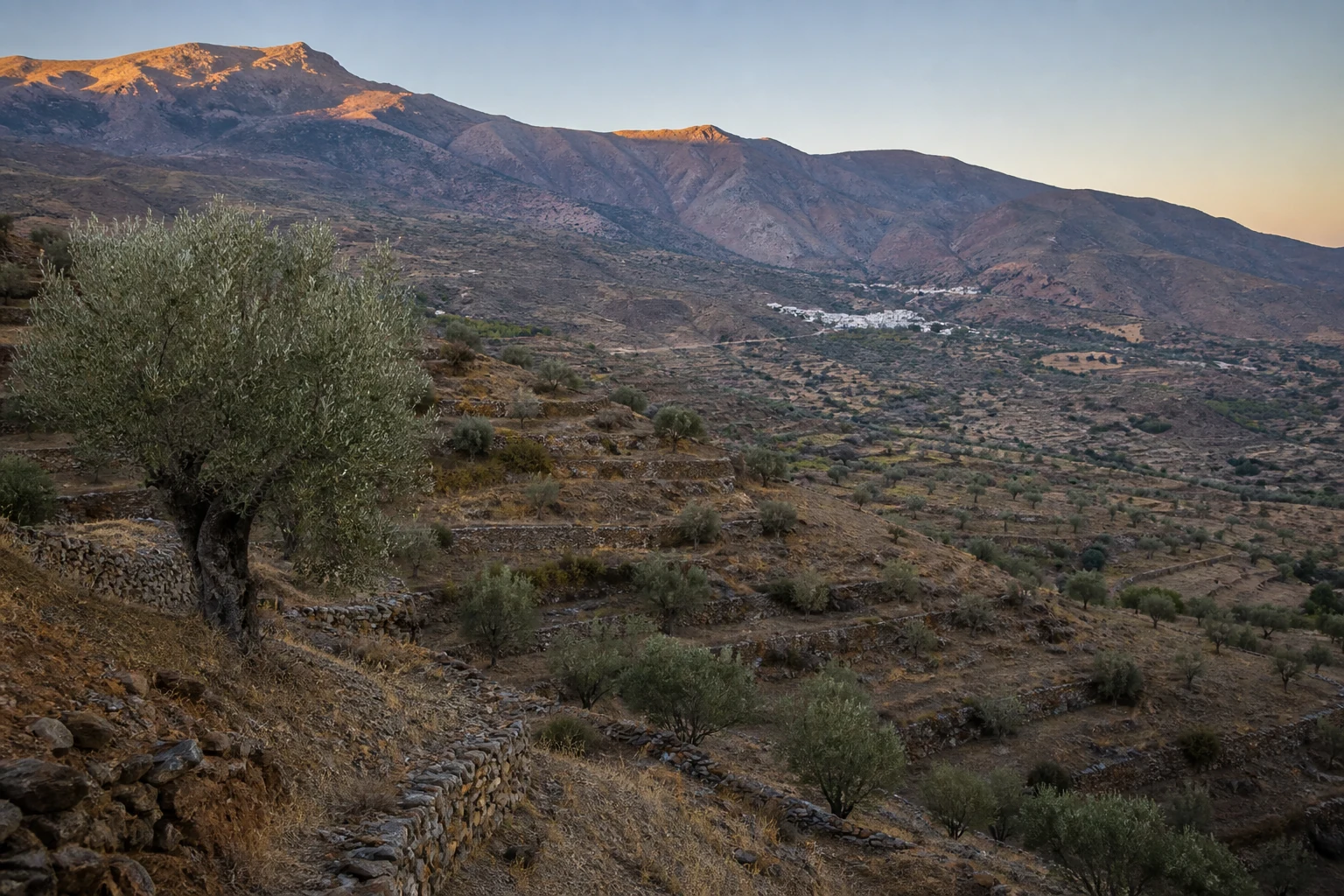
Olive terraces in the Andarax
In Canjáyar and the Almerian Alpujarra, the grey-green of the olive trees cuts stone terraces between the Sierra de Gádor and the foothills of the Sierra Nevada: spaced trees, dry dawns and a white village in the distance — nothing like a lush postcard olive grove.
Many hands, one mill
Almería's olive growing is small-scale work: hillside and terrace harvests that converge each winter on the mills of the Andarax valley. The Almazara de Canjáyar has been pressing since 1997, and its oils are led by the Arbequina and Picual varieties.