History and origin
Tiny hand-pinched pasta in a rabbit broth
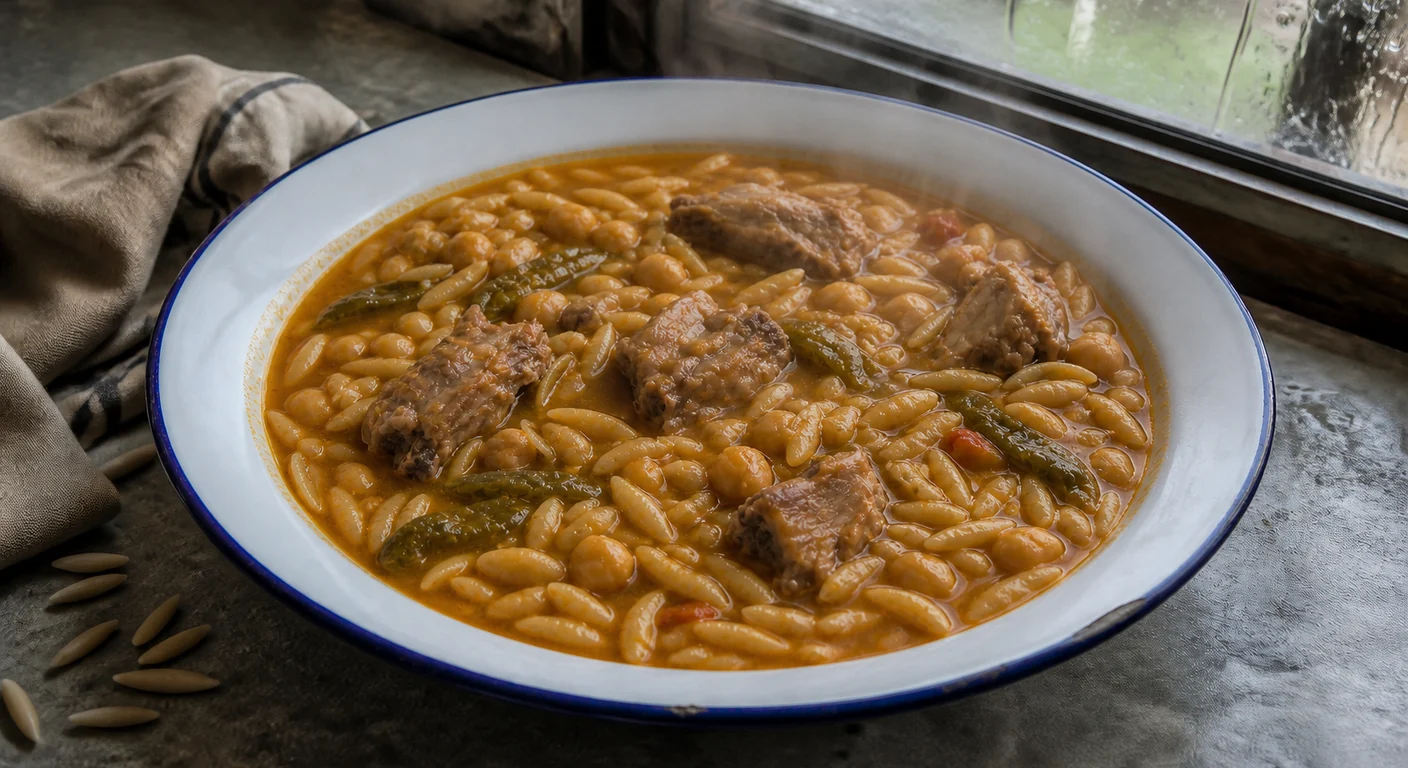
Gurullos are first of all a pasta. Durum wheat flour, water and salt form a dough that is rolled into thin cords; each fragment is then pinched and twirled between the fingers. The result looks like an elongated wheat grain, plump in the middle and finer at the tips. That handmade irregularity matters: mechanical grains, thick and identical, cook differently and lose part of the texture the dish is after.
With rabbit they join a seasonal stew built on a sofrito of onion and tomato, dried red pepper or pimentón, chickpeas and aromatics. The meat is browned before simmering; strips of roasted green pepper may finish the dish. The gurullos go into the pot late and drink up the broth quickly, so they must be served still caldosos —loose, supple and steaming— rather than dry like a rice dish.
The dish is shared across the province, with accents of its own in the Bajo Andarax, the Levante and the Almanzora. Earlier game versions used hare or partridge; farmed rabbit is now common, while snails, beans or potato appear elsewhere. On the coast, octopus and cuttlefish may even replace the meat. Its resemblance to pastas described in medieval Andalusi cooking adds a historical resonance, while today's dish is recognised by its comarca variations and brothy serving.