History and origin
The coastal octopus, tender, griddled or cooked without artifice
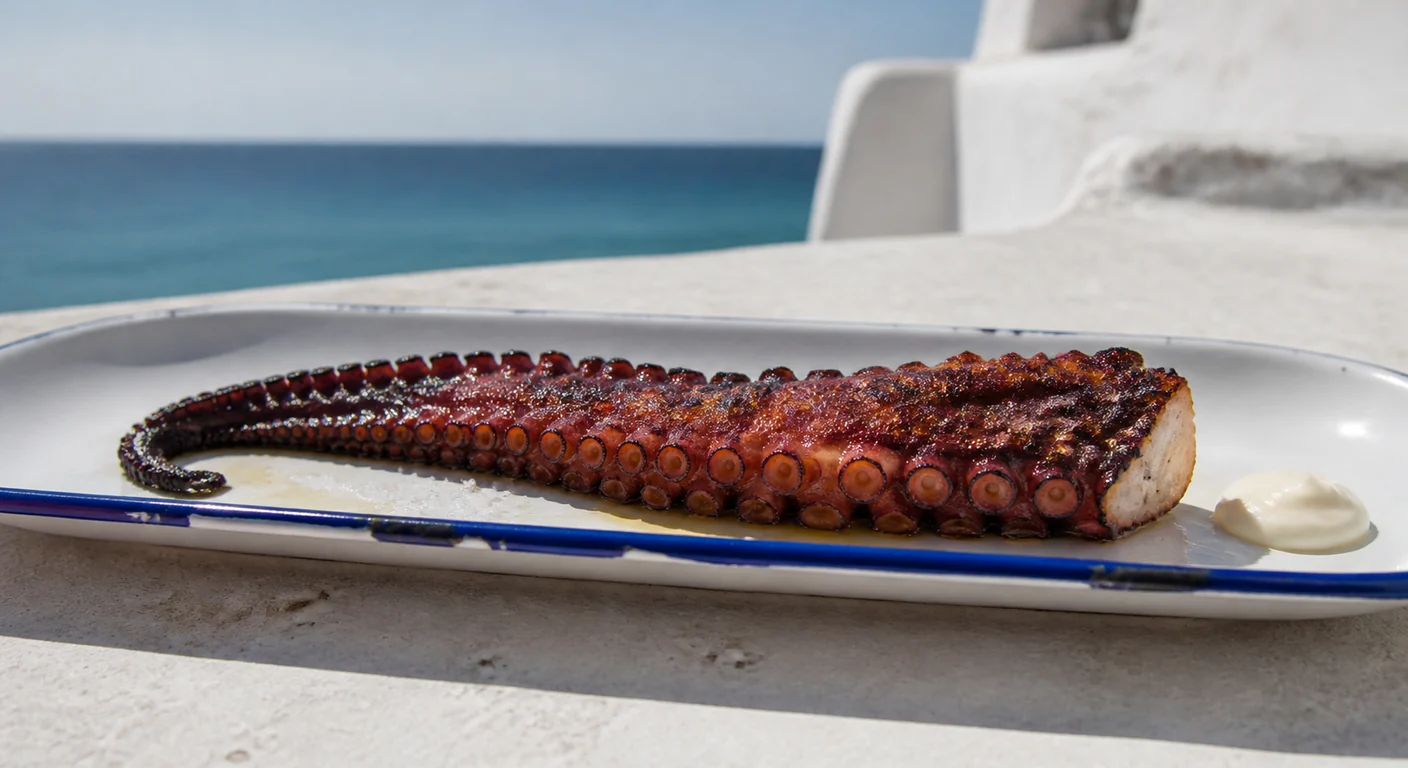
Pulpo holds a visible place in the kitchens of the Almería coast. Properly tenderised, it offers flesh that is dense yet supple, able to take a fierce sear, a slow cooking or a simple dressing of olive oil. On the griddle, the contrast sought sets lightly caramelised suckers against a still-juicy core; it should be neither dried out nor buried in garnish.
Its provincial roots are clearest in the Poniente. Sabores Almería presents fried octopus as a culinary identity of Adra: it starts raw, without batter, with little oil, garlic, bay and pepper. The same source documents the fideos con pulpo of Adra, Balanegra and Berja, a reminder that it also feeds family stews and tapas.
This page deliberately stays broad. On a menu, pulpo can mean a griddled tentacle, a dressed salad or a preparation in its juices; it should not automatically be handed the potatoes and pimentón of pulpo a feira, a recipe tied to another territory. For Alhama, set inland, the right register is that of a flagship product of the coastal province, within reach at the bars — not a seafaring tradition of the village itself.