Where it comes from
Tíjola (Upper Almanzora)
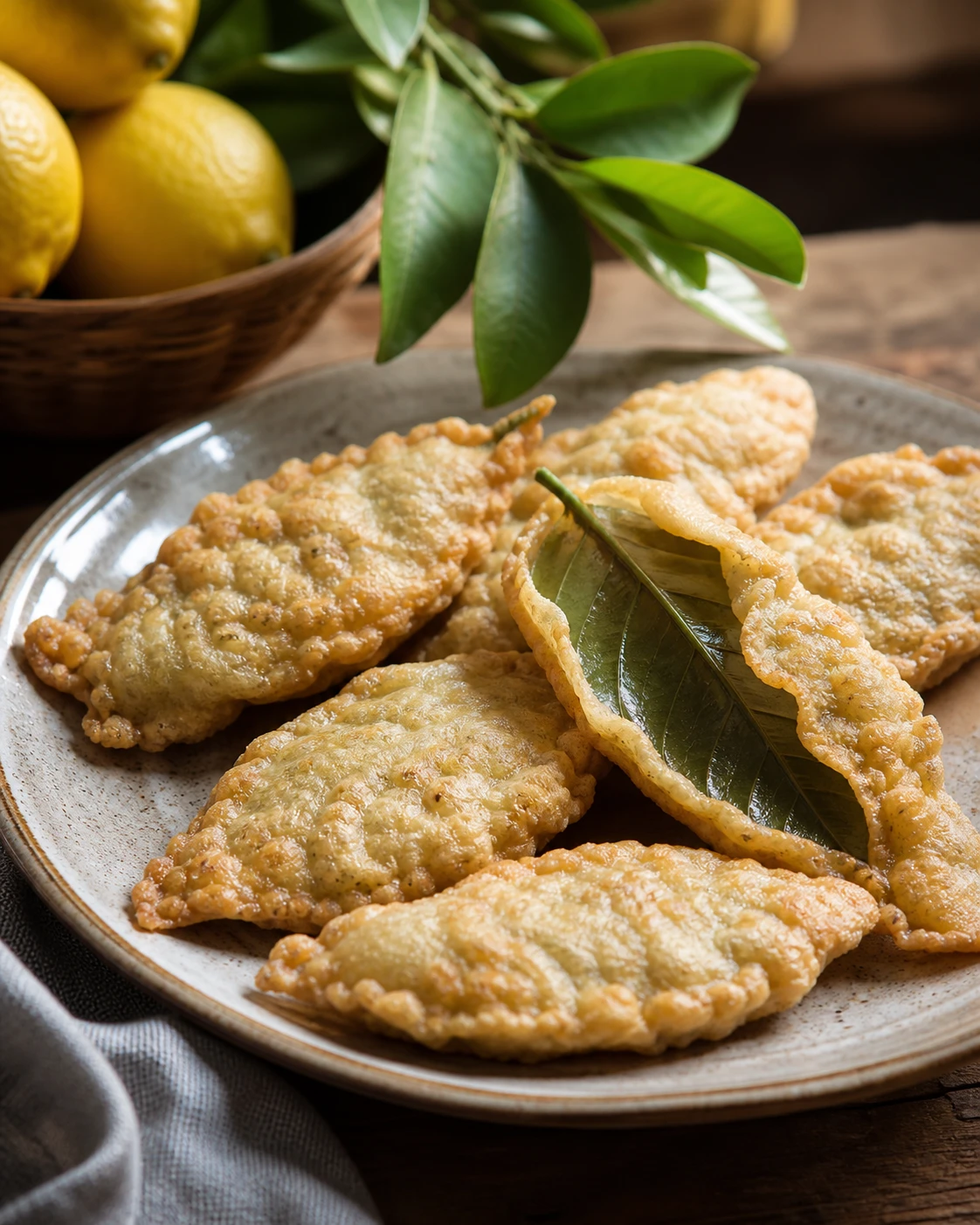
The paparajote of Tíjola comes with a trick, and fair warning: the leaf is not eaten. A lemon-tree leaf is dipped in a batter of egg, sugar, yeast, milk, flour, lemon and cinnamon, fried and eaten hot with cinnamon sugar on top; the leaf only lends its scent and is peeled away at the first bite. The lemon tree's perfume stays in the batter, and that is what you enjoy.
It is not a local invention, and that is said straight: the paparajote is a sweet of the Murcian huerta, and Tíjola, in the Alto Almanzora, shares that tradition with its Levantine neighbour. The town counts it among its sweets with the suspiros and the hornazos.
It is associated above all with Holy Week, though it can be made all year. And don't let the name mislead you: Almería's pumpkin papajote is a fritter with its own story; this one is a battered leaf, and therein lies its charm.
What it is made with
Underlined ingredients link to Local produce.