History and origin
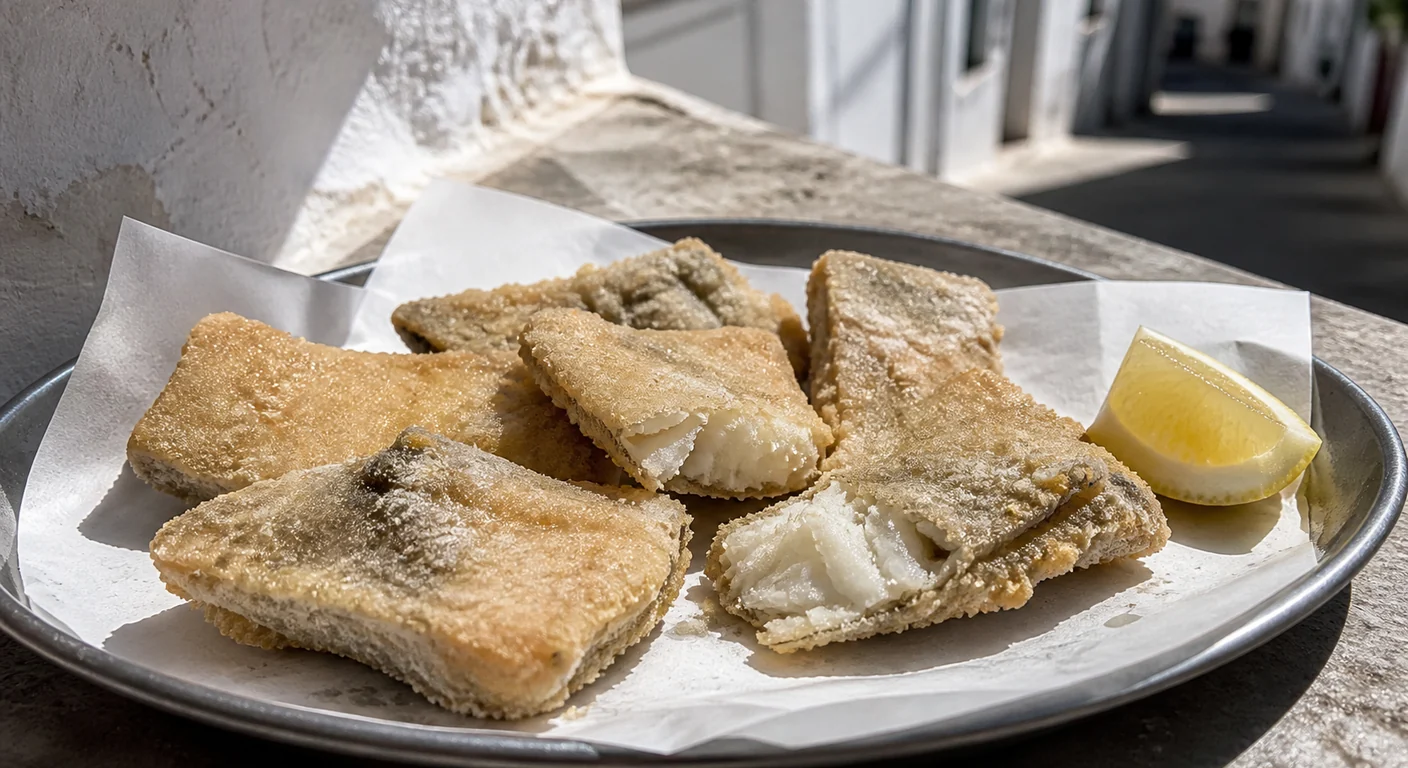
Cazón marinated in vinegar, spiced and lightly fried
Cazón en adobo begins long before the frying. The fish, cut into chunks, soaks up a blend of vinegar, garlic, pimentón, oregano, cumin and, often, bay. That bath perfumes the flesh and gives it a clean acidity. Once drained, the pieces are soberly floured and fried to a dry, blond shell.
The dish is especially tied to Cádiz and to the word bienmesabe, yet it travels across all Andalusia. The official fritura andaluza recipe published by Spain.info includes it in the assortment, and Almería's tourism guide lists it among the city's traditional tapas: its local presence is very real without requiring an Almería origin.
A point of naming matters in translation: cazón generally corresponds to the tope or a similar small shark depending on the trade — loose renderings such as "dogfish" are zoologically imprecise. Served scalding, it should keep the marinade's perfume without turning aggressively vinegary; lemon is optional, since the acidity already lives in the adobo. The best presentation stays simple: paper, a few picos and frying done to order.