History and origin
Octopus stewed in wine, in the memory of La Chanca
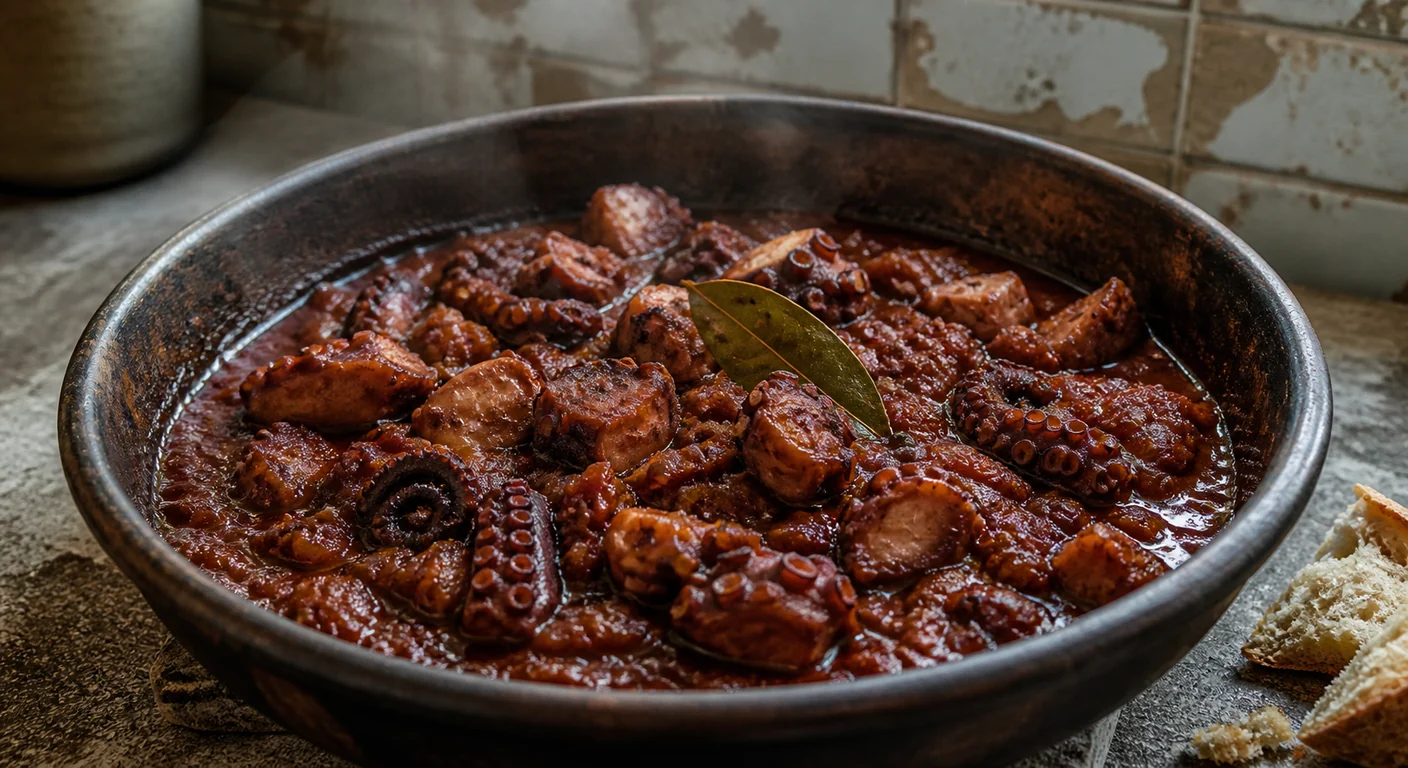
Marraná de pulpo is a stew of patience with a deliberately rustic name. A cut-up octopus joins onion, tomatoes, a head of garlic, bay leaf, oil, salt and wine in a single pot. Gentle cooking tenderises the flesh and reduces the juices into a dark, glossy, intensely marine sauce. The traditional formula is surprisingly short: pepper, brandy, beer, peppers or potatoes belong to more recent or family variants.
Its most precise anchor is Pescadería-La Chanca, the seafaring quarter of the capital. Antonio Zapata recounts discovering it in 1992 in "Recetas la mar de viejas", a collection gathered from former ship cooks and elderly women of the neighbourhood, then publishing it in 1997 and helping it spread beyond Pescadería. That chronology documents transmission and popularisation; it does not date the day the recipe was invented.
Since then, the marraná has won a place on the chalkboards of many Almería bars and even in municipal cooking contests. It is served as a tapa or a main, with bread indispensable for gathering the sauce and, depending on the house, fried or stewed potatoes. Its etymology remains a hypothesis: the name may joke about throwing all the ingredients in together, raw, without refinements. Nothing to do, in any case, with a Galician-style octopus dusted with paprika.