History and origin
Plumped wheat, chickpeas and fennel in a winter pot
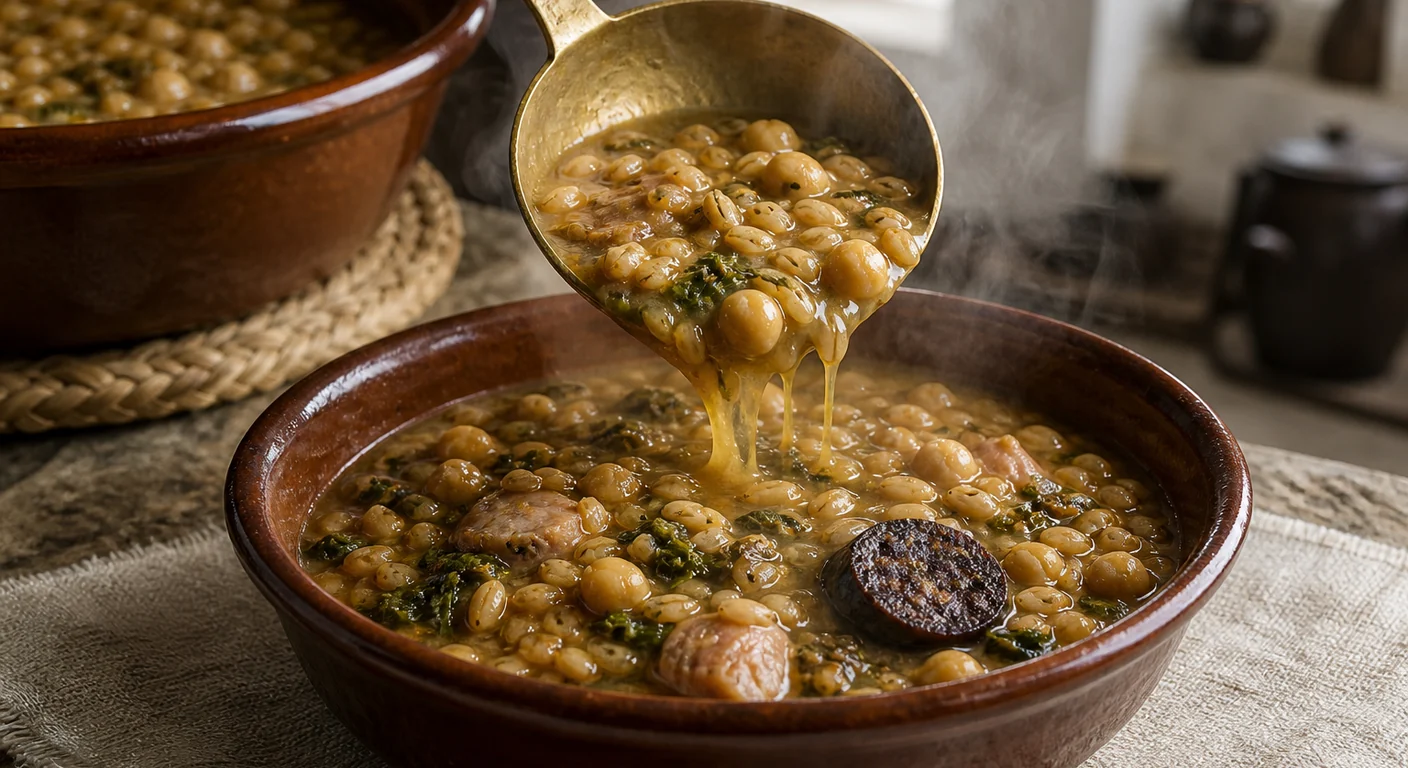
Olla de trigo puts an often discreet ingredient at the centre of the pot: the whole wheat grain. It is traditionally precooked the day before and wrapped while still warm so it swells slowly overnight. That "trigo dormido" then joins chickpeas or beans, broth and cuts from the matanza — backbone, tail, trotter, jowl or fresh bacon depending on the household. The cooking yields a nourishing whole, bound together but never reduced to a purée.
The scent that truly sets the dish apart comes from tender fennel: the young green stems and fronds, sometimes gathered nearby, not the white bulb of modern recipes. The morcilla usually goes in near the end so it does not burst. Some versions add potato or saffron; others swap the chickpeas for beans. That plasticity belongs to a rural cooking ruled by the pantry, the family matanza and the season.
The IAPH documents olla de trigo above all in the homes of Filabres-Tabernas, while Sabores Almería also places it in several villages of the middle Andarax. In Alhama, the local ethnographic study preserves a recipe of "trigo en cocina", with trigo caspao, pulses, vegetables and fennel shoots: the local presence is direct, without proving an exclusive cradle. The names "trigo", "trigo pelao" and sometimes "olla de San Antonio" circulate from place to place. Served steaming, it expresses an economy of slow time: prepare the day before, let it swell, gather the table.