Where it comes from
Almería's Levante: Vera, Antas, Garrucha, Turre, Mojácar, Pulpí, Cuevas del Almanzora, Los Gallardos · Huécija and the Almanzora valley (San Marcos)
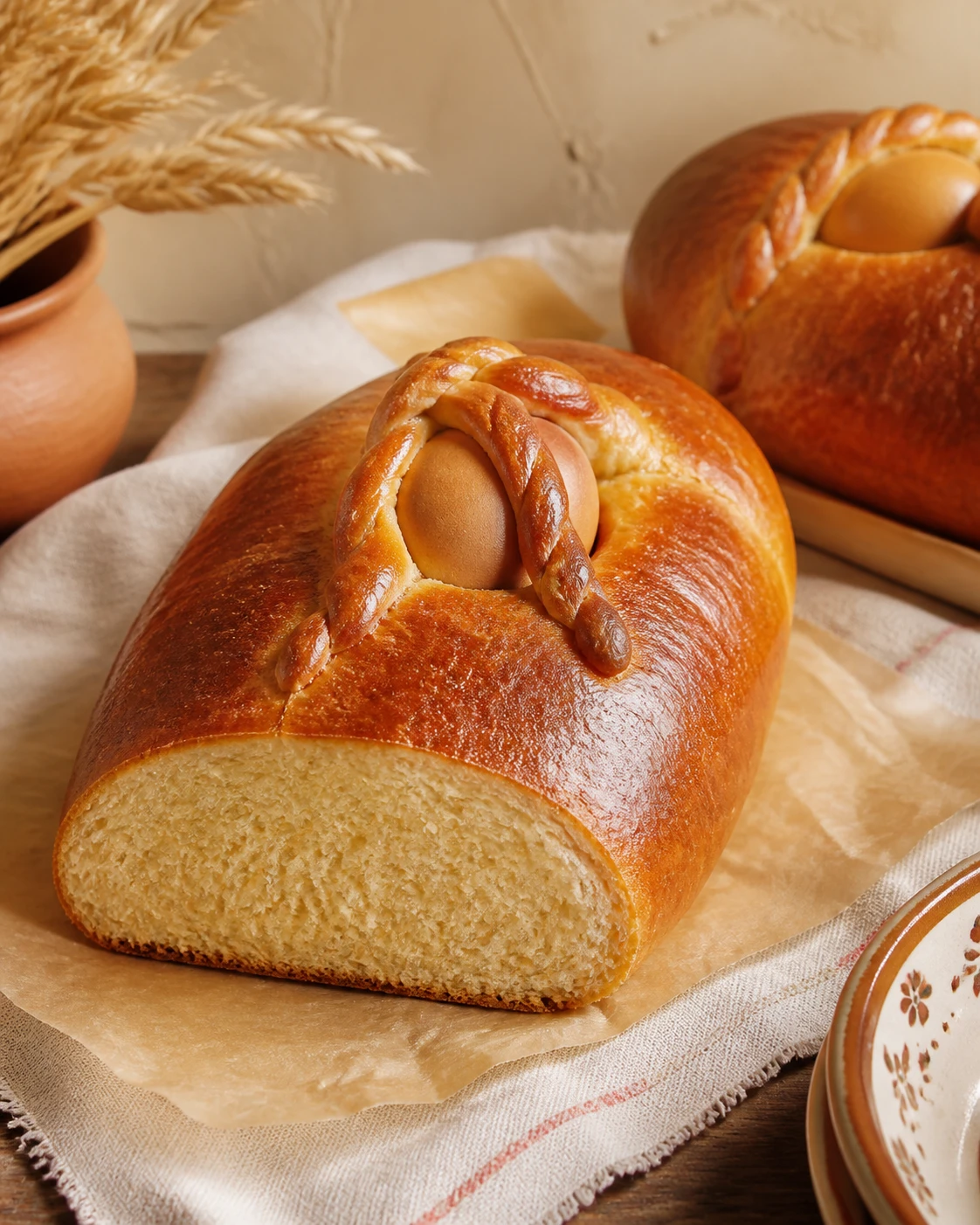
The hornazo is recognisable from afar: a long sweet bread — flour, honey or sugar, oil, aniseed — with a hard-boiled egg set in the middle and held by a cross or plait of dough. A "sweet of flour and honey with a boiled egg in the centre", the essential picnic of the Día de la Vieja.
That day is the Thursday of mid-Lent — 12 March in 2026 — and is celebrated in the Levante: Vera, Antas, Garrucha, Turre, Mojácar, Pulpí, Cuevas del Almanzora, Los Gallardos. Families head out to the fields, children "break the old woman", a paper figure filled with sweets, and the hornazo closes the day. Where the custom comes from is lost to memory; the settlers hypothesis has been suggested, and nothing more.
The same bread returns on another calendar inland: in Huécija, St Mark's hornazos — small oil-and-egg rolls for 25 April — are baked, and the custom repeats in the Almanzora valley. If you are in the Levante at mid-Lent, ask at the village bakery: it is a festive bread baked for that day, not a shop-window sweet.
What it is made with
- Flour
- Honey or sugar
- Oil
- Aniseed
- Hard-boiled egg
Underlined ingredients link to Local produce.