Melon
One fruit, five faces: white, yellow, galia, cantaloupe and piel de sapo. The under-plastic campaign opens the Spanish season in spring, with the bulk of sales in May.
The Almerian melon is a whole family rather than one fruit. The Andalusian Observatory credits it, for the 2024/2025 season, with 2,133 hectares and some 92,000 tonnes: the province's seventh protected crop by area, volume and value. The under-plastic campaign starts in April with galia and cantaloupe, and May concentrates the bulk of sales — close to two thirds of the volume.
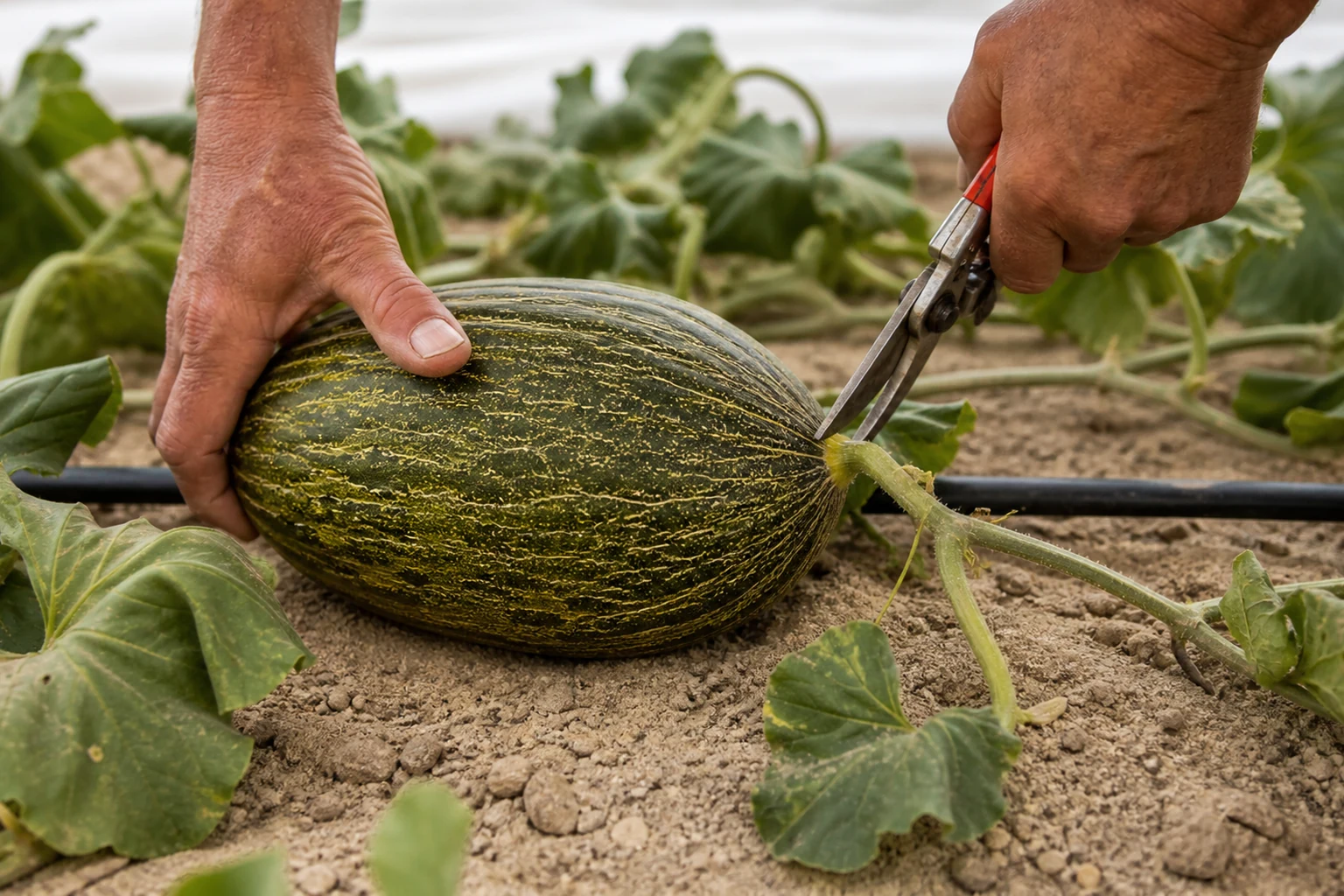
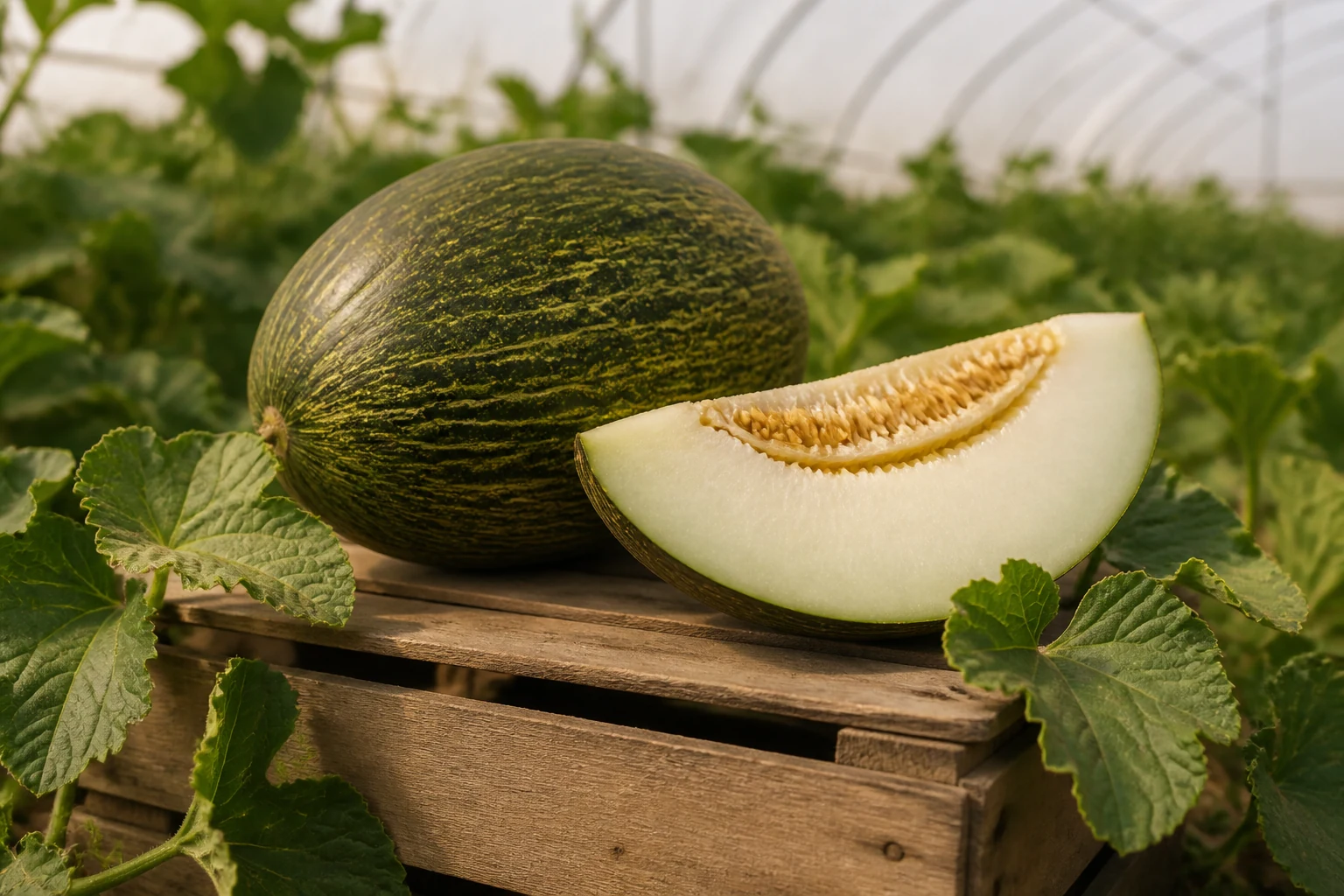
Each type has its own silhouette. The galia is round, its densely netted skin turning from green to orange-yellow as it ripens, with white to faintly greenish flesh; the amarillo is oval, smooth and unwritten; the piel de sapo, elongated and mottled green, hides crisp, sweet white flesh; the cantaloupe, round or elliptical and ribbed, is the orange-fleshed one; and the blanco, pale-fleshed, completes the fruit-stall quintet. Fashions pass through the greenhouse too: the galia, for years the most planted, is giving ground to the amarillo and the piel de sapo.
The destination remains European: in 2024/2025 exports equalled 58% of the volume produced at origin, 86% of it bound for the European Union — Germany alone took 33% of the exported volume.
Varieties
- White
- Yellow (amarillo)
- Galia
- Cantaloupe
- Piel de sapo
Season
Shapes and skins in filtered light
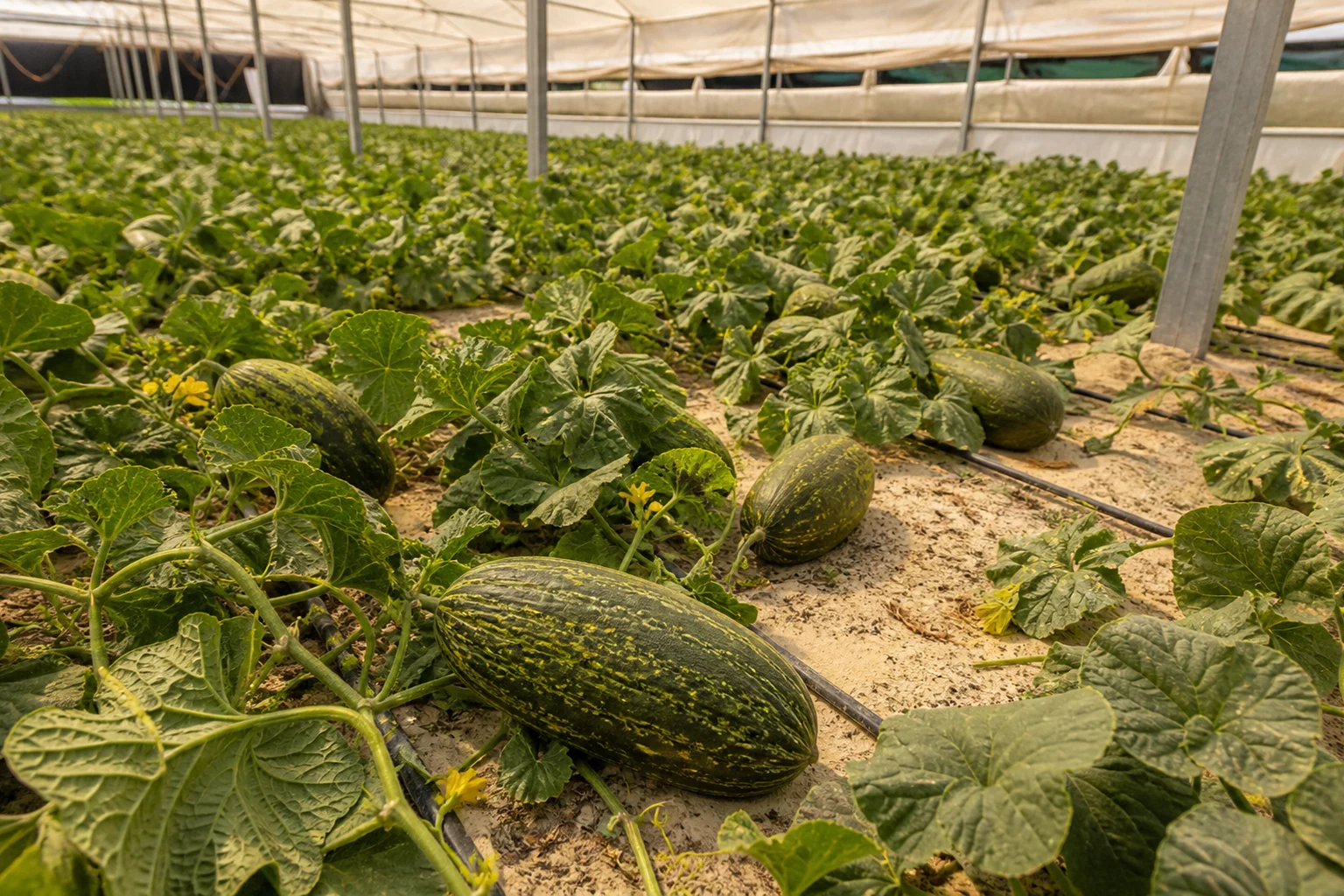
In the filtered light under the plastic, spring turns the melon houses into a shifting still life: round and oval fruit swelling among the foliage, each type with its own script — netted, smooth or green-mottled skin. It is a brief landscape; a few weeks of season and the greenhouse moves on to another crop.
Earliness as a trade
What the greenhouse gives the melon is time: the first cuts of the Spanish season leave Almería in spring, with Galia and Cantaloupe opening the campaign. Everything moves quickly after that — the bulk sells within a few weeks in May — and variety choices track the market, with the yellow melon and Piel de Sapo taking up the ground Galia gives away.