Cucumber
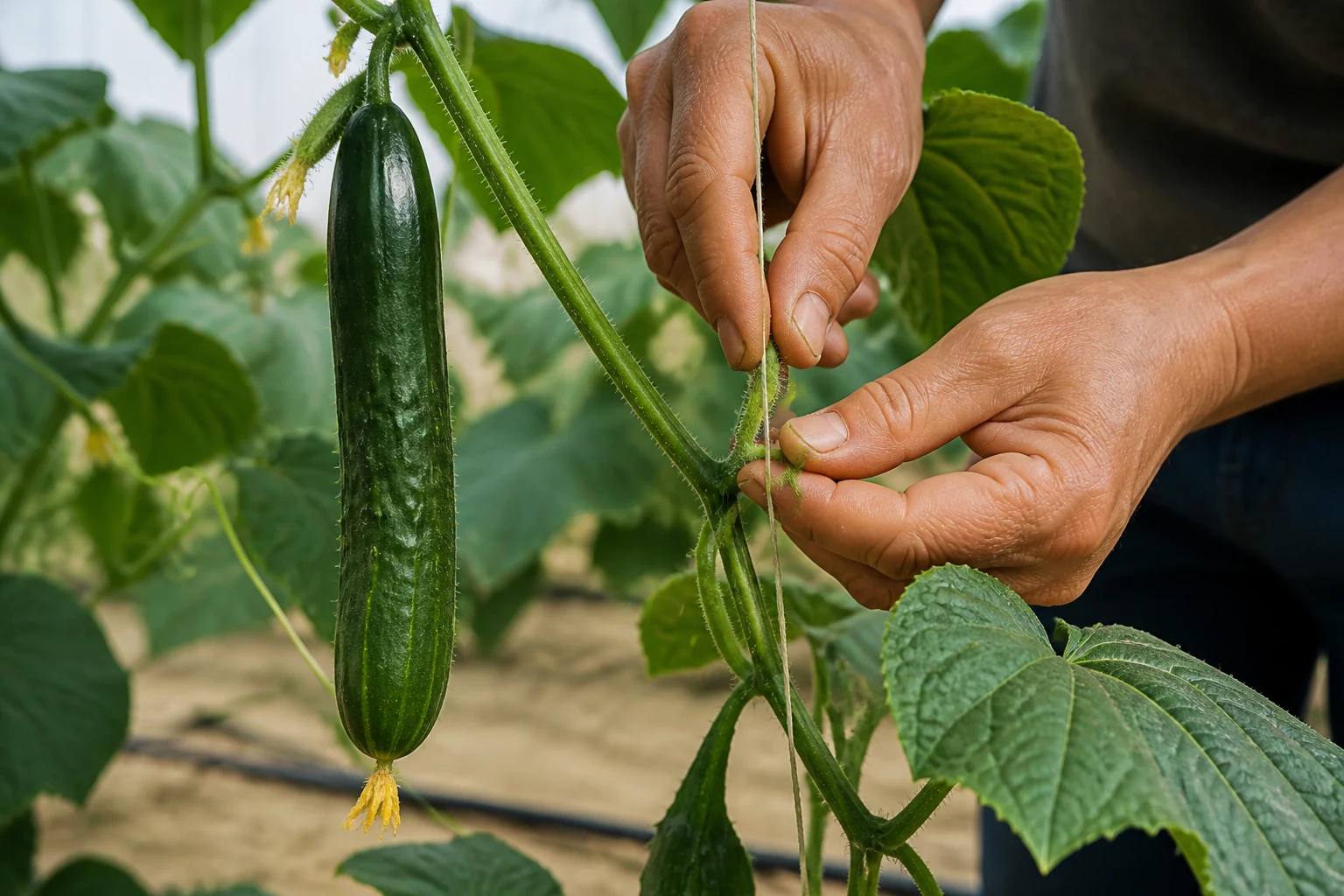
Long, straight and dark green, the Almería-type cucumber is made for trellised growing under plastic. When winter slows Europe's market gardens, here it is cut daily — crunchy and thin-skinned.
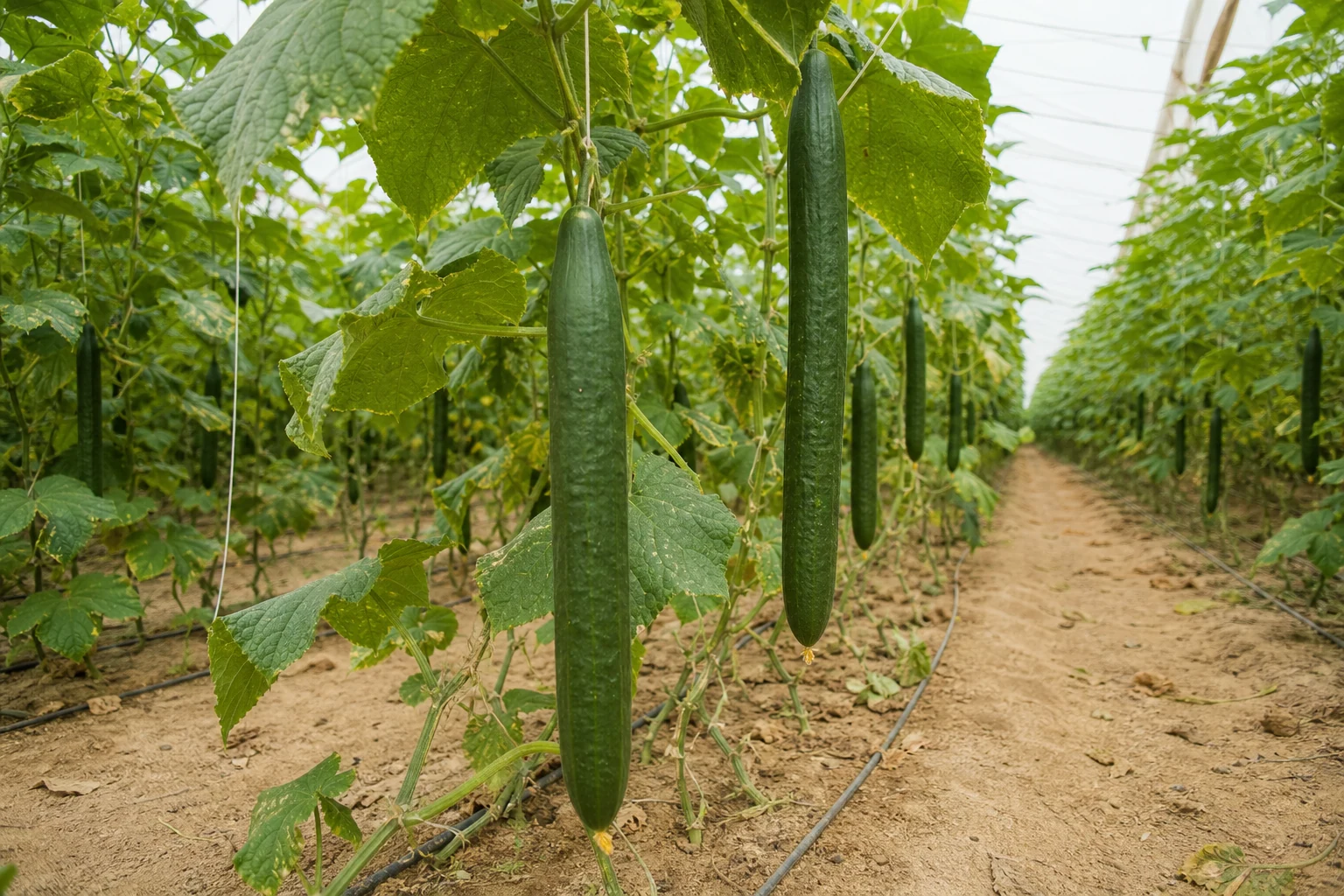
The cucumber is one of the winter trades of Almería's huerta: while Europe's fields rest, the province's greenhouses cut it daily. For the 2024/2025 season, the Andalusian Observatory credits it with 6,681 hectares and some 620,000 tonnes — the fourth protected crop by volume, behind pepper, tomato and watermelon — with sales concentrated from September to spring and about 750 greenhouse hectares already farmed organically.
The type that carries Almería's name usually exceeds 25 centimetres: straight, elongated, dark green, with smooth or lightly ribbed skin. It should not be confused with the shorter, often striped Spanish cucumber, nor with the French type of 20 to 25 centimetres; the midi, snack and white formats round out the commercial categories. Inside the greenhouse the fruit hangs vertically along the trellised plants — hence its regular silhouette.
Its calling is still to travel: much of the harvest heads to European markets in the cold months, although published export statistics sometimes aggregate Almería and Granada — so this page does not turn them into a provincial figure. In the kitchen it asks for little: sliced into salads, diced into pipirrana or blended into summer gazpacho.
Varieties
- Almería type, long and dark green
- Spanish, short and striped
- French
- Midi
- Snack
Season
Green aisles in midwinter
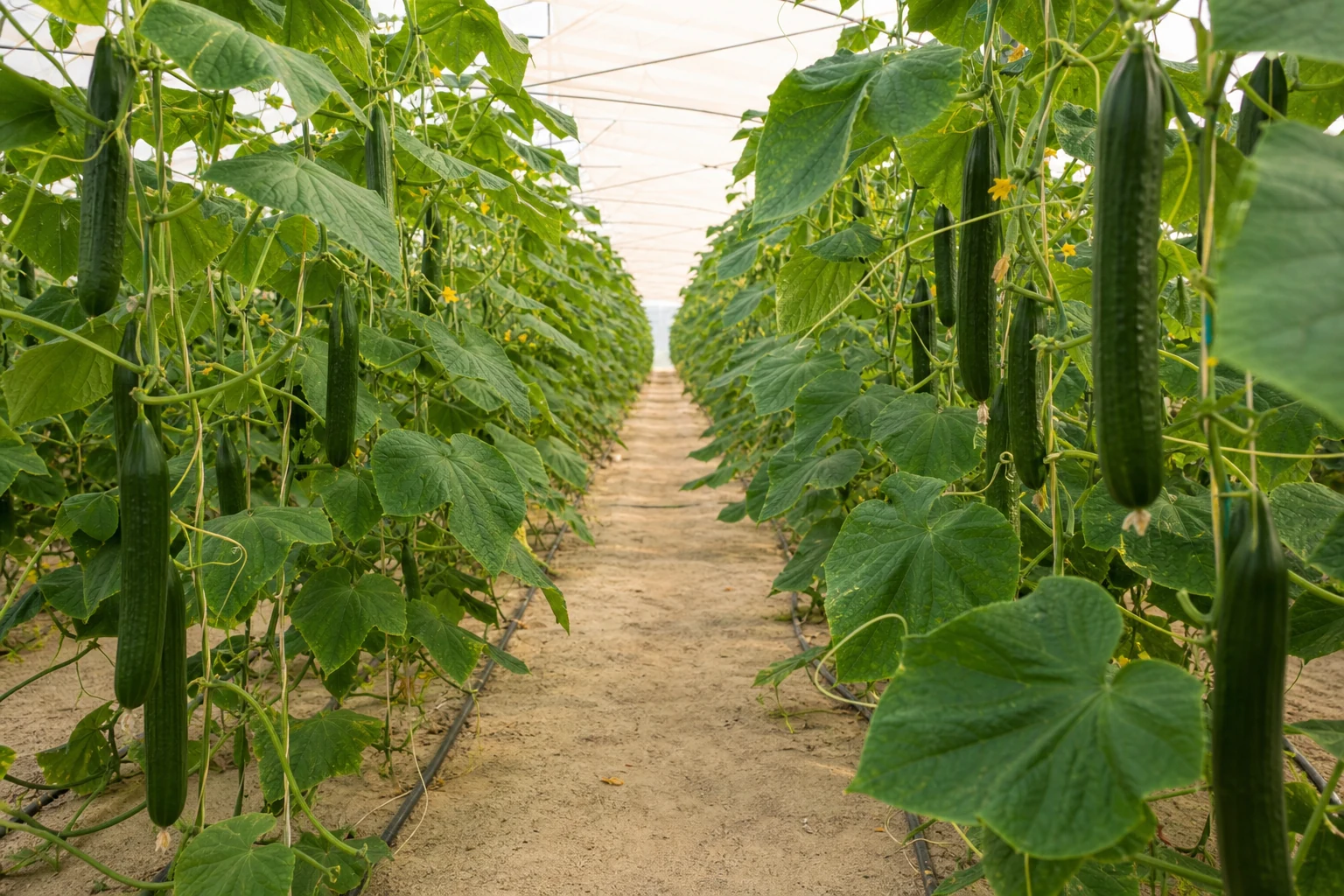
Under the plastic, cucumbers organise the space into aisles: plants trained upward on strings, leaf against leaf, until they form living walls hung with straight, dark fruit. The contrast lies outside — European fields halted by the cold — while in here the green runs at full tilt.
A crop that doesn't wait
From September to spring, cutting comes round almost daily in the trellised greenhouses. Strings hold the plants upright and the fruit hanging free — which is how it grows straight and even — and some 750 hectares of greenhouse are already run organically.