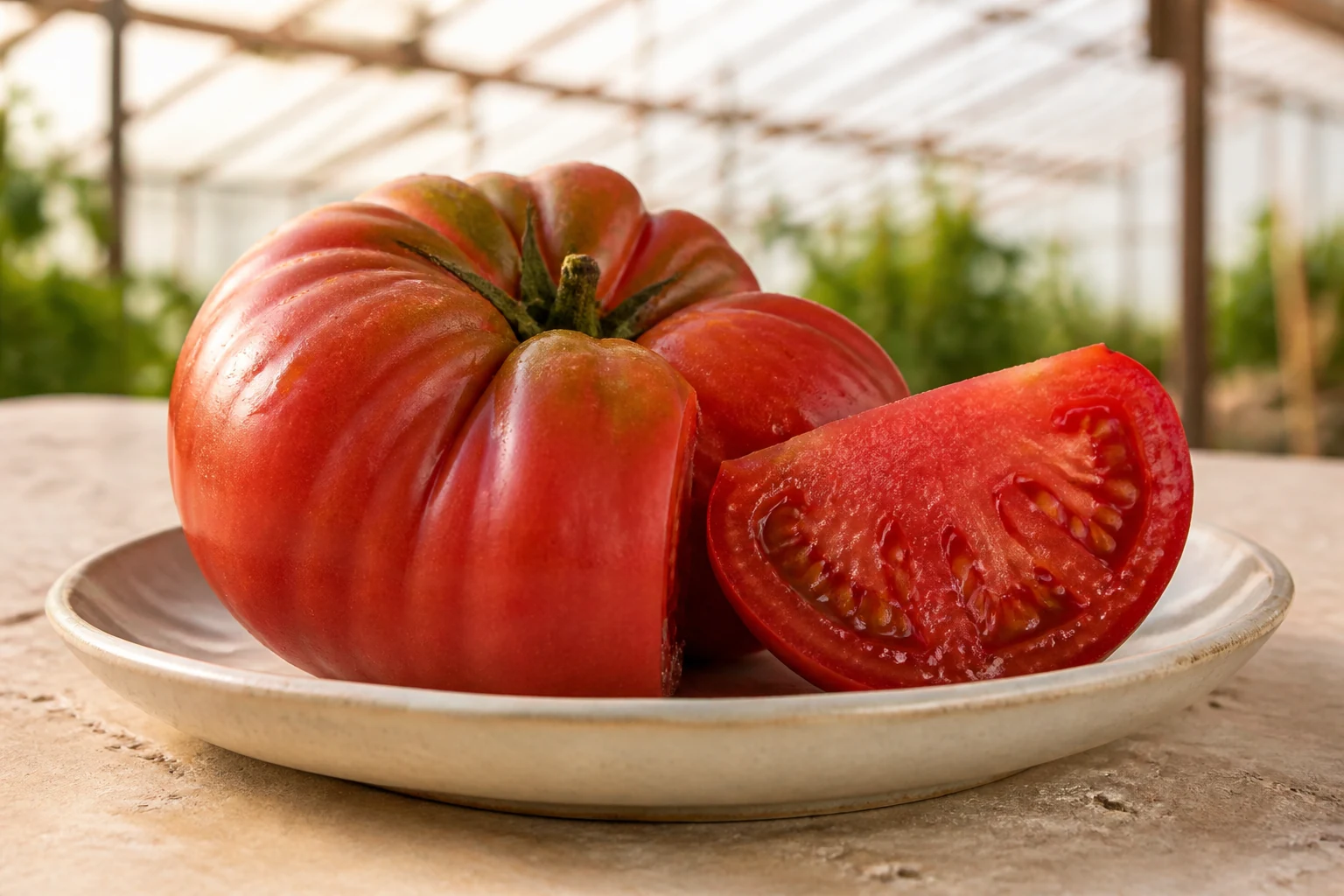
Tomato
From vine tomatoes to ribbed fruit, the tomato shapes Almería's huerta. Under the diffuse light of the greenhouses, sand-mulched soil, drip irrigation and sometimes salinity produce very different profiles — from cherry to Raf de Níjar.
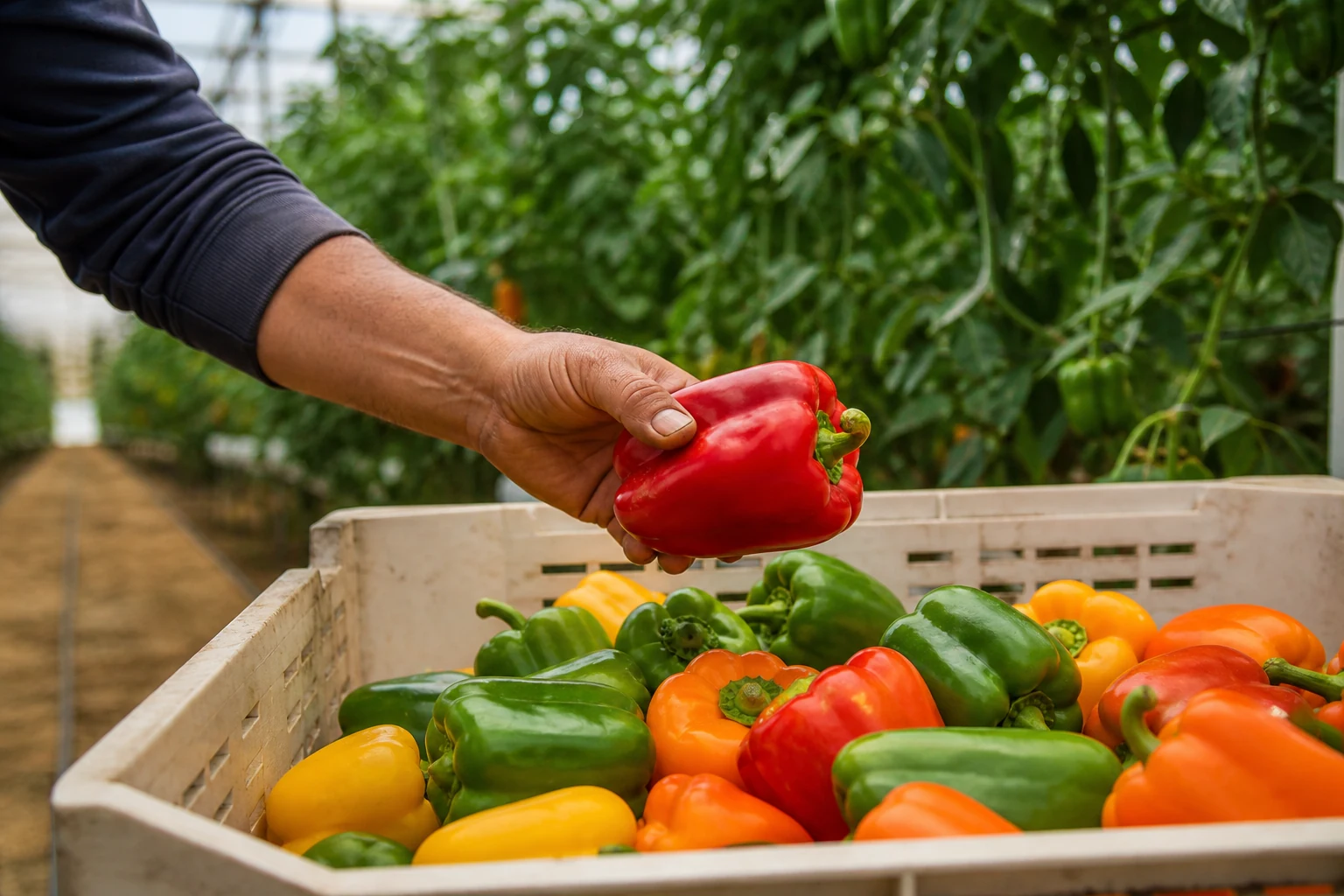
Thirty-two crops, several landscapes and the same Mediterranean light.
Along the coast, greenhouses draw a white mosaic across the Campo de Dalías, the Bajo Andarax and the Campo de Níjar. The most recent official figure puts their physical footprint at around 33,000 hectares in the province; the 62,743 cultivated hectares reported for the 2024/25 season also count plots that host two successive crop cycles — the two figures describe different realities.
Spectacular as it is, that landscape does not sum up Almería's farmland. Citrus and the historic uva del barco follow the Andarax valley; olive, almond and fig trees and open-field crops climb the slopes and reach inland; new tropical fruits are being trialled under cover along the coastal strip. Read the catalogue as a map, from the sea to the sierras, as much as a harvest calendar.
From vine tomatoes to ribbed fruit, the tomato shapes Almería's huerta. Under the diffuse light of the greenhouses, sand-mulched soil, drip irrigation and sometimes salinity produce very different profiles — from cherry to Raf de Níjar.
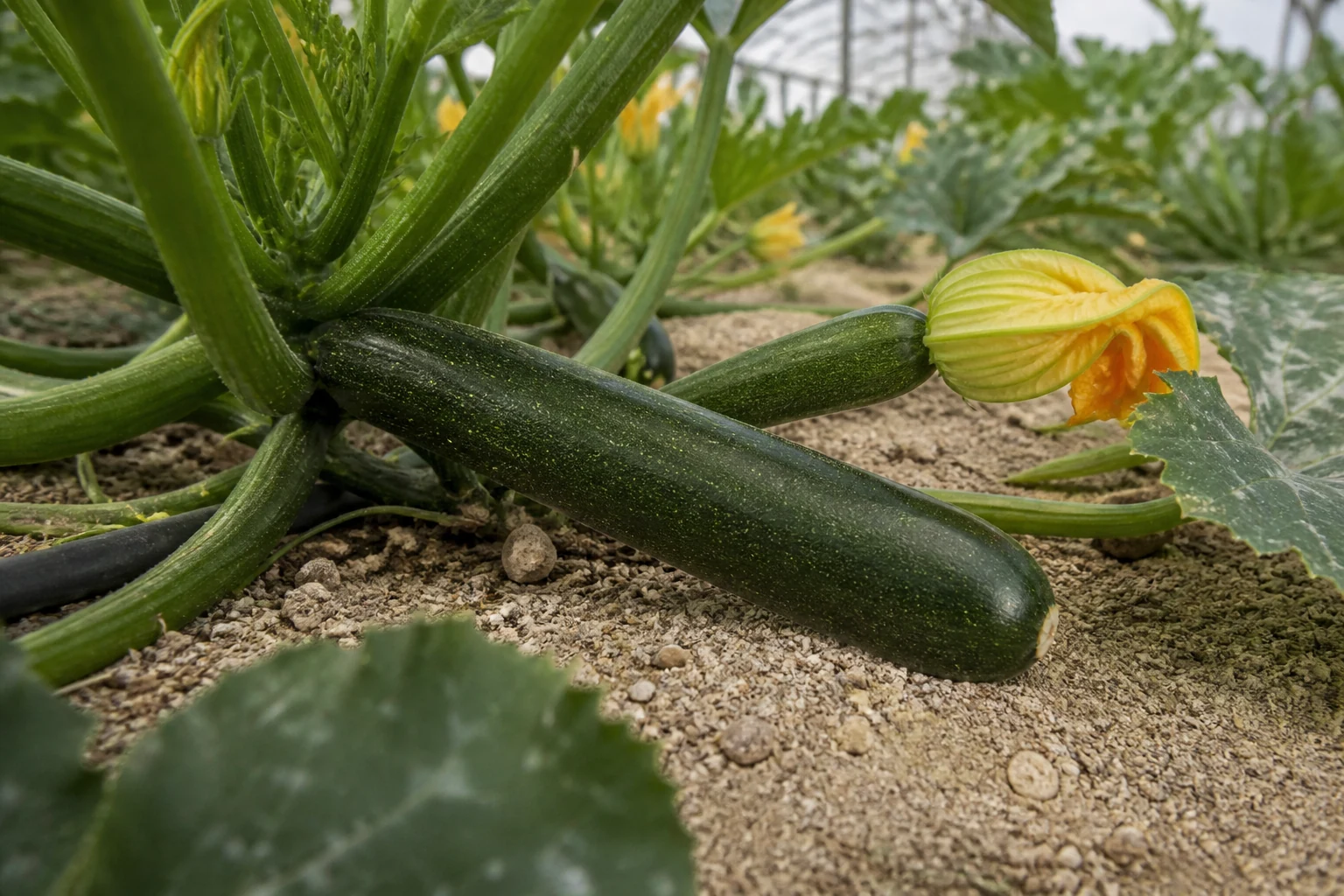
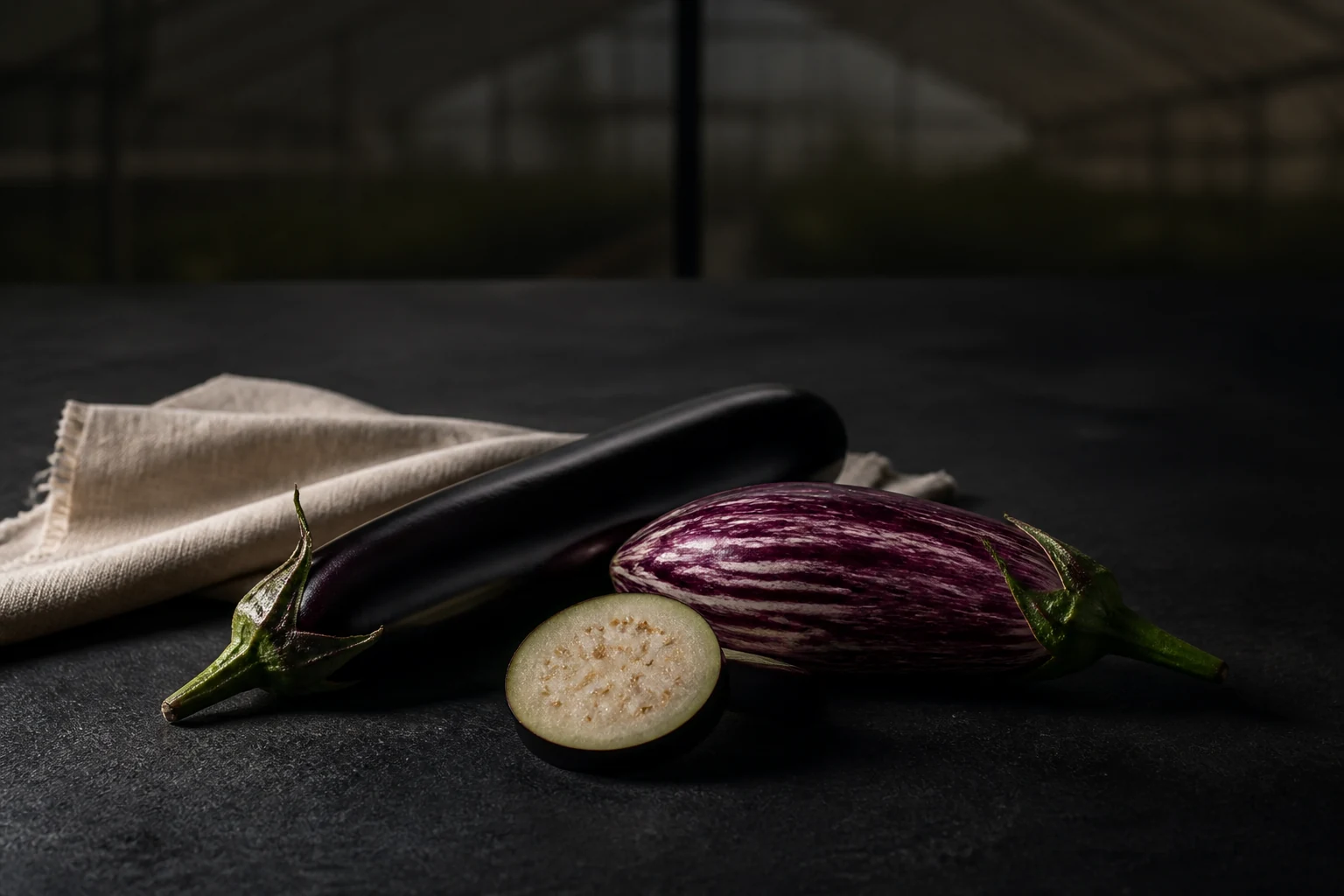
Black, elongated and almost glossy, or striped purple on white, the Almería aubergine is picked nearly all year round. Beneath the skin, its pale flesh keeps a dense, fresh texture.
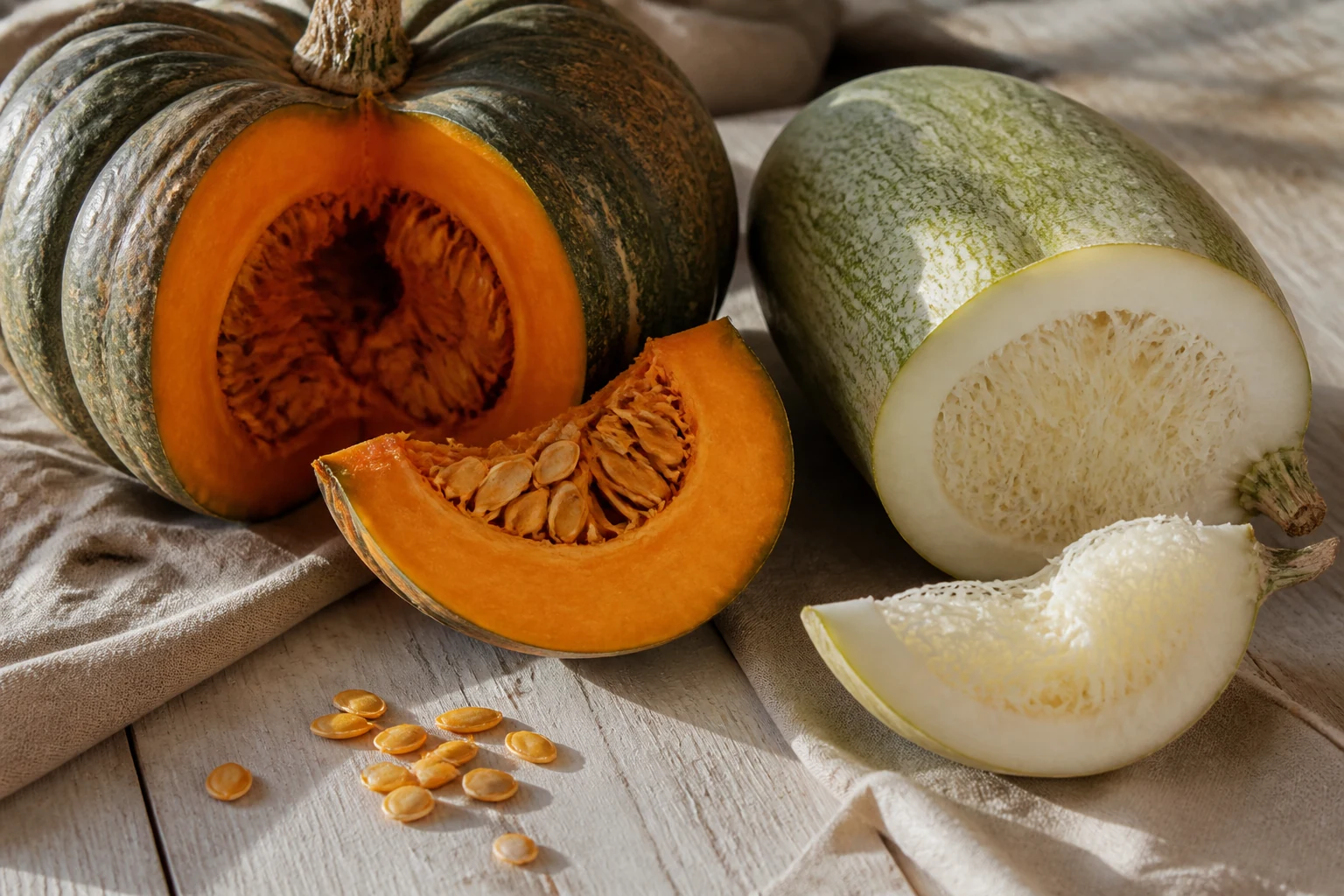
Planted in spring, harvested from summer into autumn, it keeps all winter in the pantry. From table pumpkins to the cidra behind cabello de ángel, each type plays its part — down to the stews of Alhama.