Aubergine
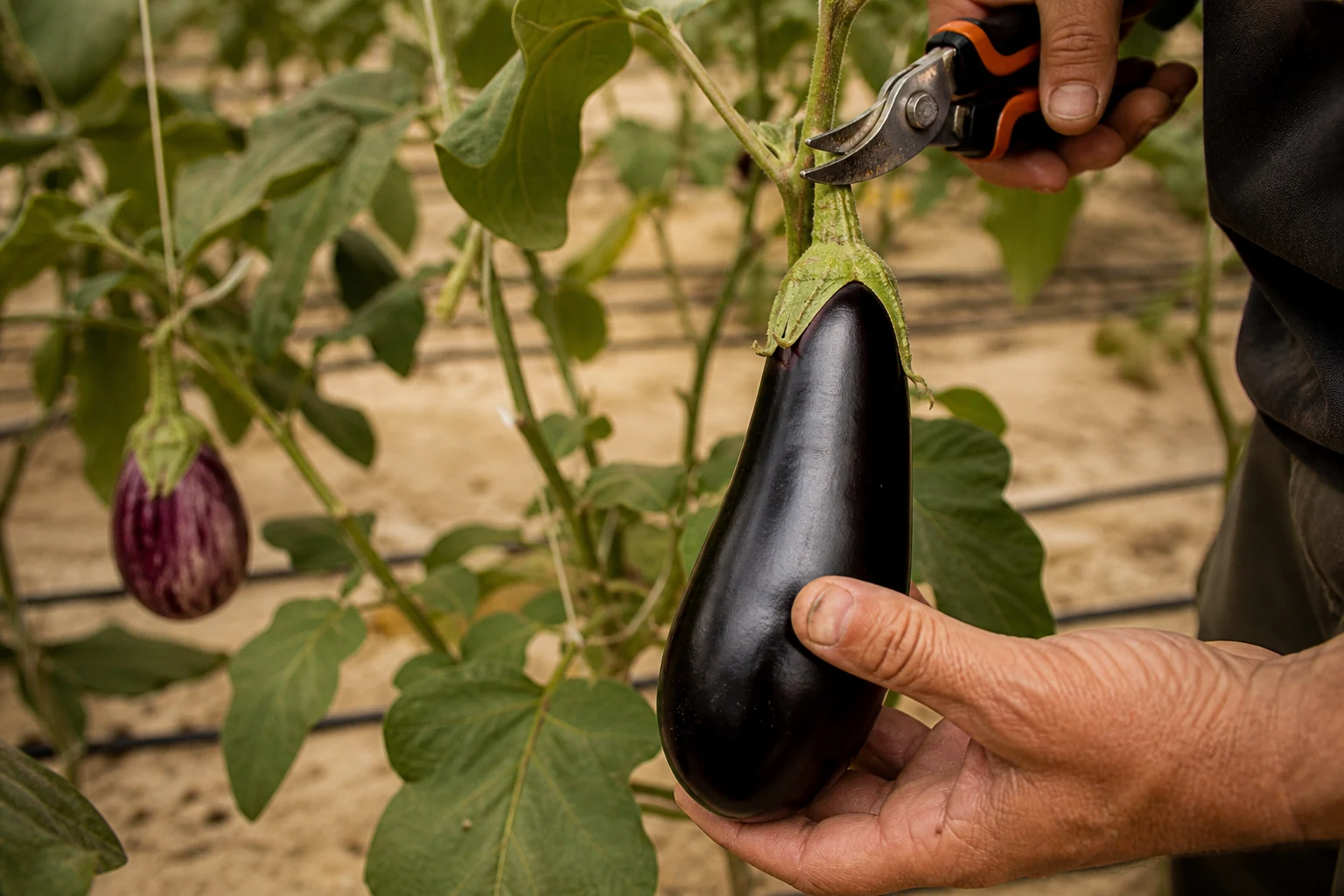
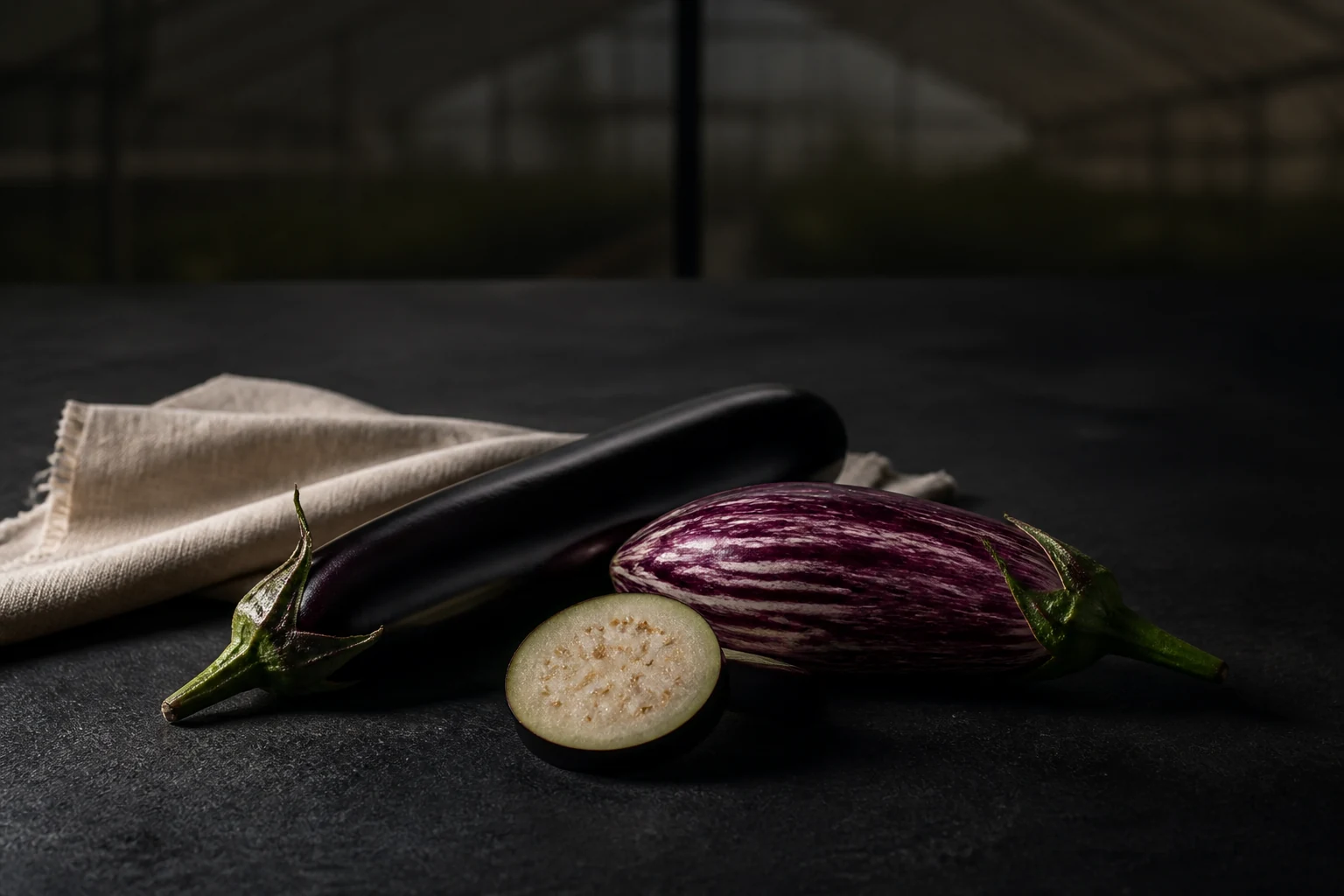
Black, elongated and almost glossy, or striped purple on white, the Almería aubergine is picked nearly all year round. Beneath the skin, its pale flesh keeps a dense, fresh texture.
The aubergine ranks sixth among Almería's protected vegetable crops by area, production and value: 2,545 hectares and some 241,200 tonnes in the 2024/2025 season. Growing under cover allows a very long commercial calendar, from September to August — with uneven volumes month to month — and around 70% of Spain's aubergines come out of the province's greenhouses.
Two silhouettes structure the supply: the black aubergine, elongated and relatively narrow, very dark-skinned and firm-fleshed, and the striped one, with its purple marbling on a white ground. Round or fully white aubergines exist, but add up to less than 1% of the tracked market.
The 2024/2025 season confirms a very European product: 90% of the province's exports went to the European Union, with Germany (28%) and France (27%) in the lead. In local bars its most glorious destiny remains unchanged: berenjenas fritas with cane honey.
Varieties
- Long black
- Striped, purple on white
- Round (minority)
- White (minority)
Season
Dark fruit under pale roofs
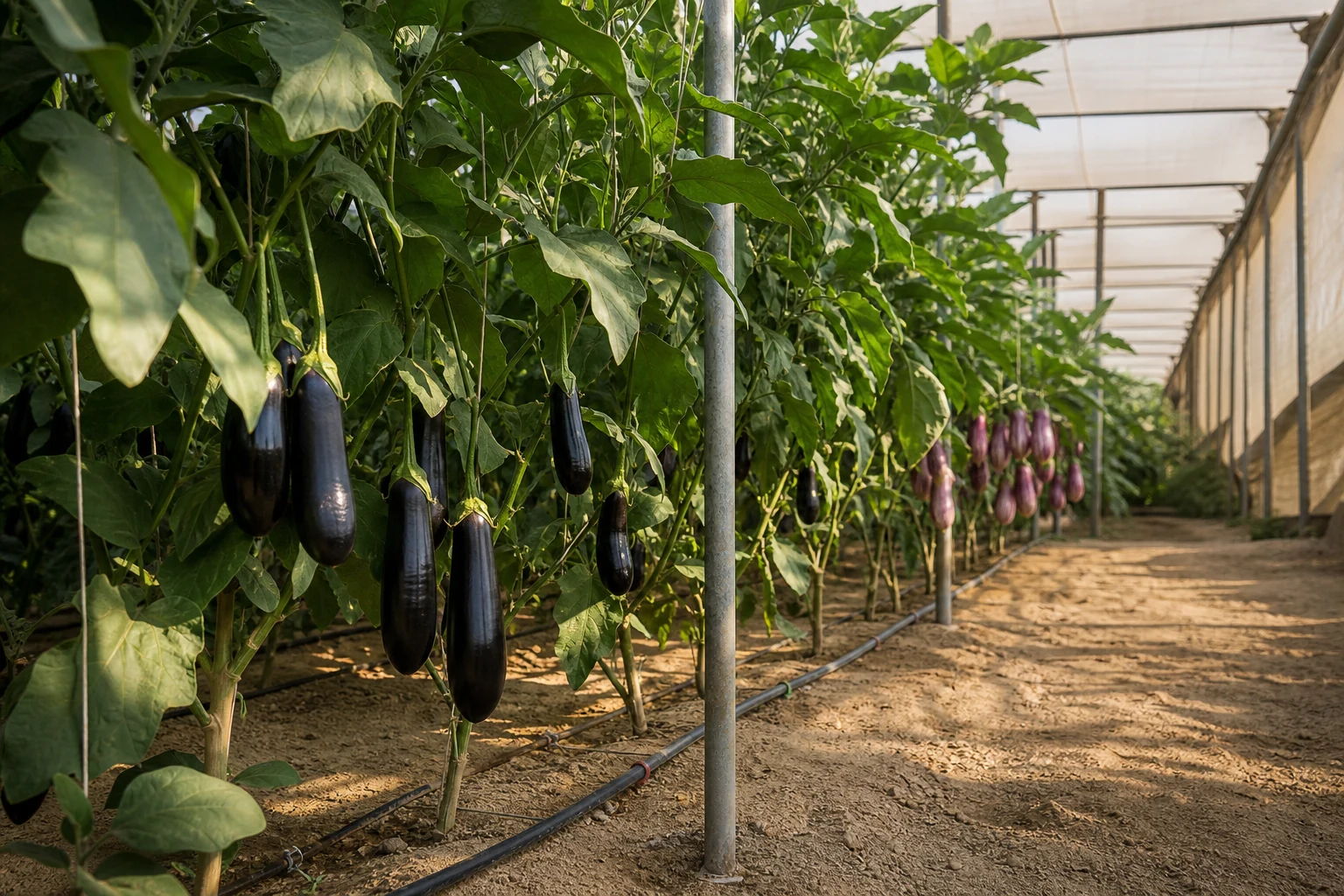
From the road, the greenhouses of the Poniente give nothing away: white roofs, row after row, out to the horizon. Inside, the contrast is complete — aisles of broad foliage and, hanging among the leaves, fruit so deeply purple it reads as black, with an almost lacquered shine. It is an indoor landscape, revealed only once you step through the door.
Shelter that stretches the calendar
In the open field, the aubergine would only crop from May to October; the shelter of the greenhouse stretches that calendar from September to August, with volumes rising and falling month by month. Inside, the plant gets the steady mildness it demands, and harvesting becomes a continuous round: each fruit is cut at its peak, skin still taut and glossy.