History and origin
Crisp aubergine and dark molasses, between salt and sweetness
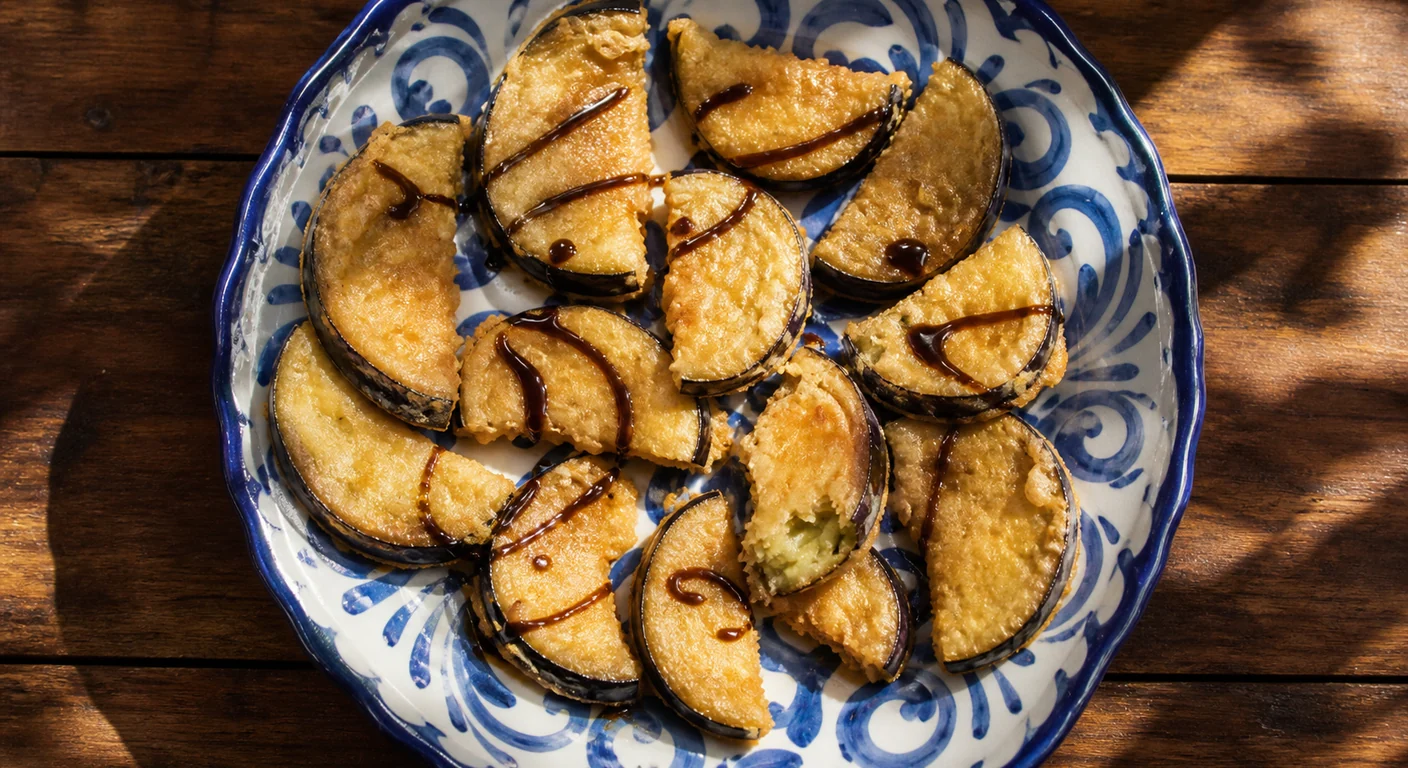
Berenjenas con miel de caña play on two textures and two flavours. The aubergine is cut into slices, half-moons or batons, sometimes purged, then floured or wrapped in a light batter before frying. A blond crust forms around a heart turned creamy; the finish brings salt and fine threads of an almost-black syrup.
That syrup is essential to understanding the dish. Miel de caña is not bee honey but a molasses drawn from sugar cane, with deeper, faintly liquorice notes. Frigiliana, in Málaga's Axarquía, keeps a strong identity around this product, woven into its local gastronomy.
The tapa belongs more broadly to Andalusia: RTVE ties it above all to Córdoba and Granada, and many Málaga menus have adopted it thanks to the molasses close by. Its link with the sweet-savoury tastes of al-Andalus is plausible: a cultural filiation rather than an invention with a date. In Almería it is enjoyed at many bars, even though it is no Alhama speciality — and on the plate the molasses stays an accent: too much of it softens the fry and erases the aubergine.