History and origin
Almonds, spices and meat slowly stewed the Almería way
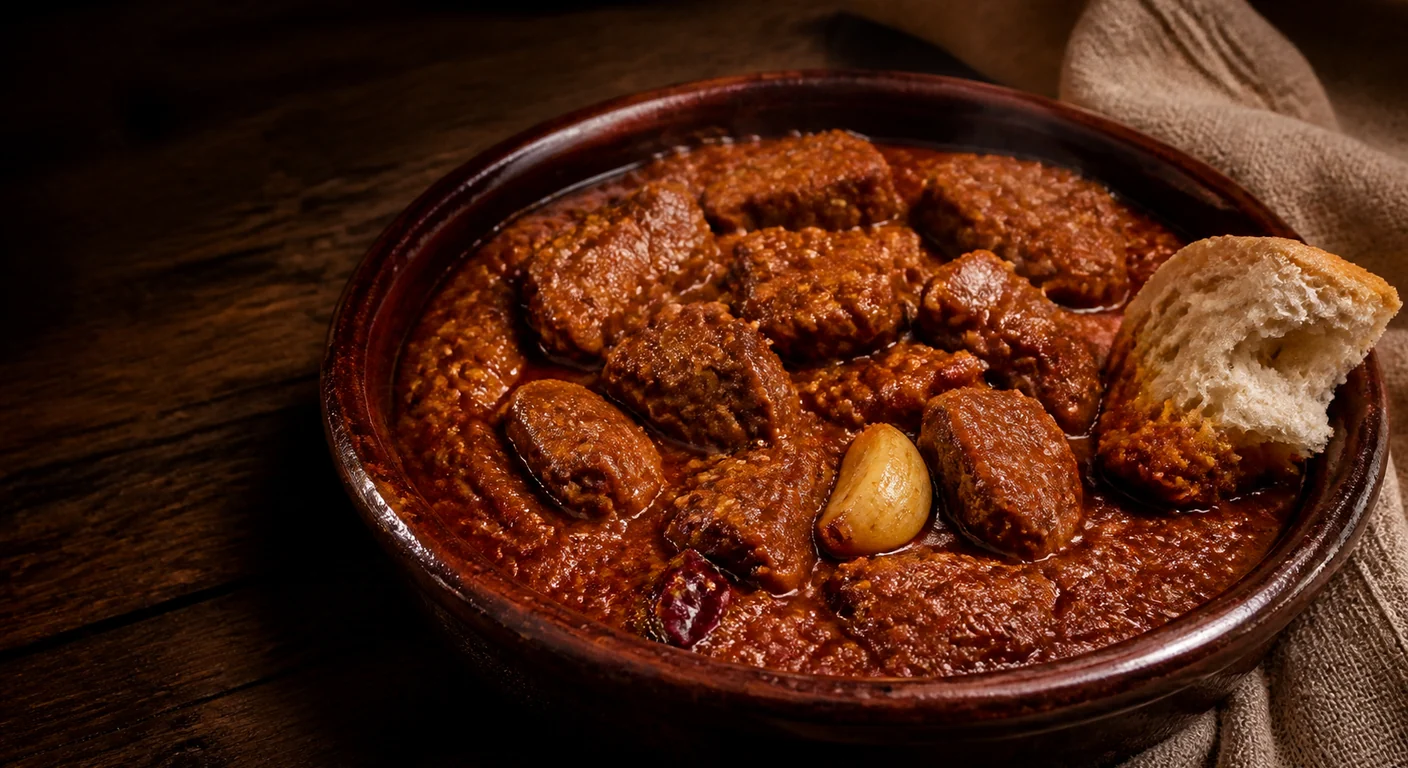
Almería's carne en ajillo bears little resemblance to the “meat with garlic” its name might suggest. While the “al ajillo” found across Spain usually rests on fried garlic and sometimes chilli, Almería's “en ajillo” begins with a majado: fried almonds and bread are pounded with garlic, cumin, clove, pepper, cinnamon and pimentón or dried pepper. Diluted and poured over the meat, the mixture becomes a dense, red-brown, highly aromatic sauce.
The preparation suits meats that improve with simmering: kid goat, lamb, rabbit, pork or offal. Slow cooking softens the pieces and concentrates the sauce until it coats them. Some families add tomato, wine or vinegar; others play with the chilli. These variations belong to a living tradition, not to a single recipe. The traditional name, carne en ajillo, distinguishes this stew from the term “ajillo moruno” and from the ajillo cabañil of Laujar, Fondón and Canjáyar, a neighbouring formula with its own identity.
In the Campo de Níjar, where the preparation passed from one voice to another, Juan Goytisolo left a literary trace in Campos de Níjar (1959), evoking a sauce of almonds and peppers. Ajillo also belongs to the repertoire of the Bajo Andarax and other Almería comarcas, with family nuances in the choice of meat and spices. At the table, bread becomes almost essential for finishing the almond-bound sauce.