History and origin
Tender kid goat, toasted almonds and Almería's deep spices
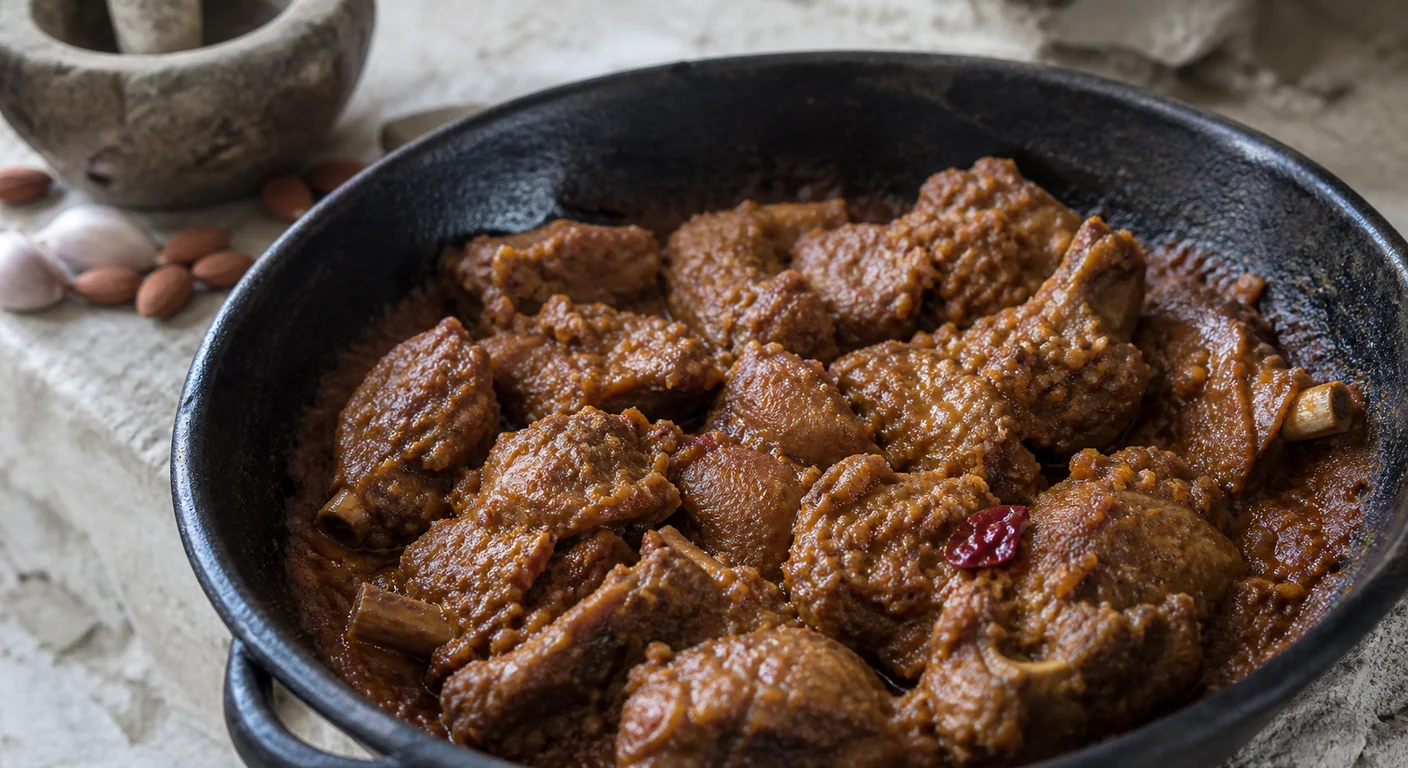
Choto al ajillo joins two markers of Almería's inland cooking: young kid goat and the local ajillo. The sauce is no mere garlic-scented oil: fried almonds and bread are pounded with garlic, pimentón or dried pepper, cumin and other spices, then added to the meat until they form a reddish-brown gravy, dense and warming.
Bone-in pieces stand up to slow cooking: they give body to the base while the flesh loosens and drinks in the aromas. That method explains the dish's rustic character, once suited to firm meats and long tables. Proportions, the choice of chilli, and the presence of tomato or wine change with each family and valley.
In the Baja Alpujarra, Berja keeps choto al ajillo among its traditional dishes, while other parts of the province prepare it with kid goat from the Filabres. Around Laujar, Fondón and Canjáyar, ajillo cabañil offers a close but distinct formula that broadens the map of Alpujarra ajillos.