History and origin
The golden semolina that turns every rainy day into a feast
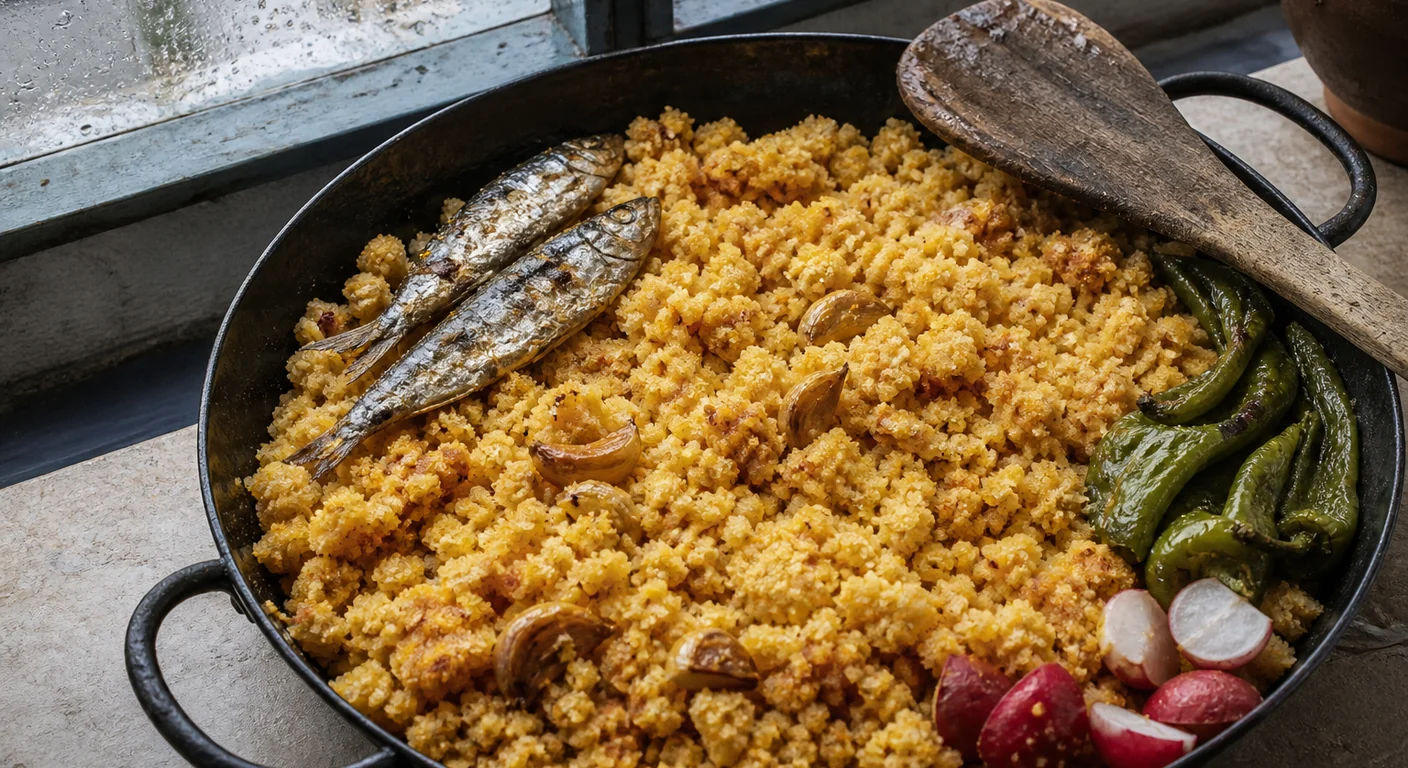
In Almería, migas look nothing like a plate of crumbled bread. Their present face is that of durum wheat semolina worked in a large pan with water, olive oil, salt and garlic cloves. The spatula cuts, turns and patiently separates the mass into small, irregular grains, tender inside and lightly golden. The technique takes muscle and time: migas are neither a couscous nor merely swollen semolina.
Around that sober base a generous meal takes shape. Grilled sardines, anchovies or other small fish, fried green peppers, radishes, olives, salt cod, longaniza and bacon may share the table. In some cortijos the matanza products gave a meatier version; by the sea, fish brings the saline contrast. The garnishes stay separate so everyone builds their own bite, balancing fat, freshness, cereal sweetness and heat.
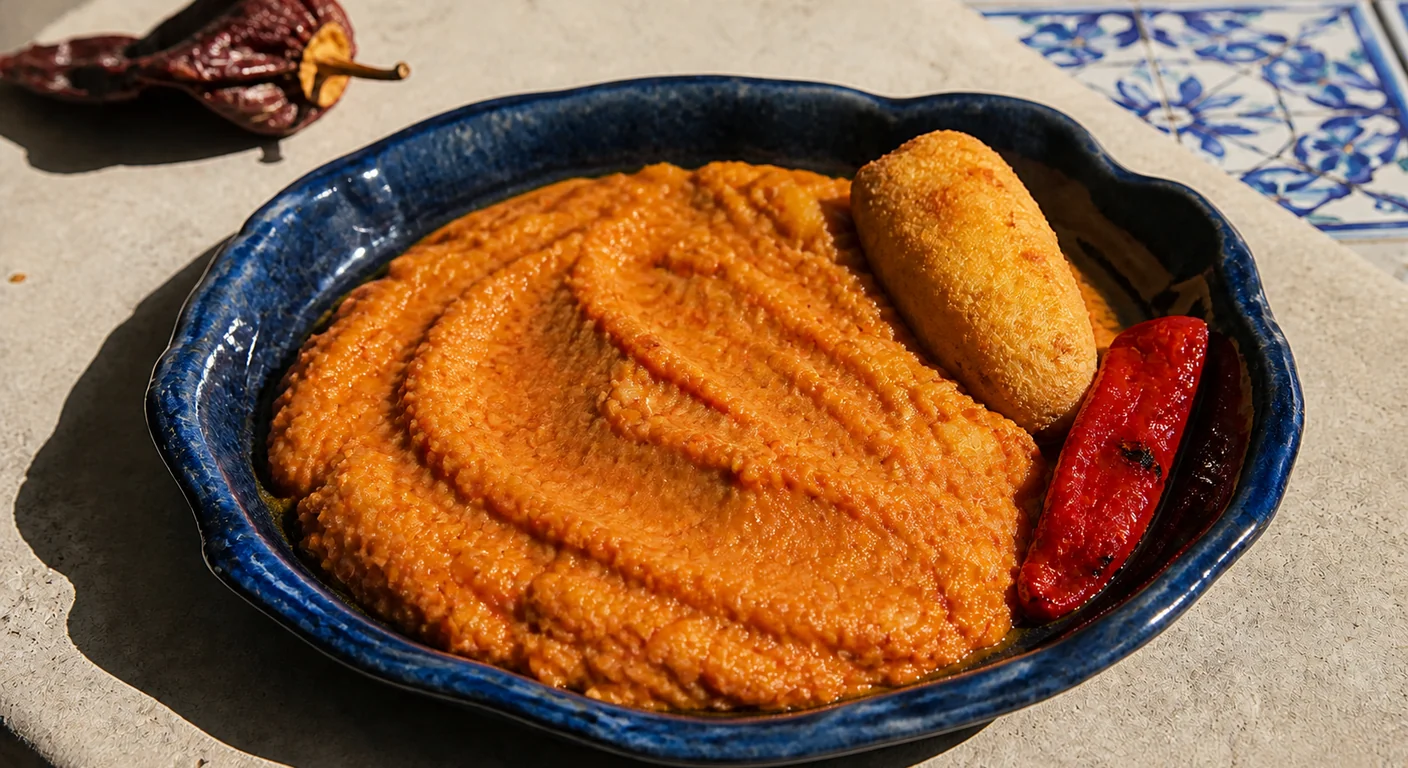
Their bond with rainy days is one of the province's best-loved culinary rituals: under a famously dry climate, a downpour becomes the excuse to bring out the pan, gather the family or hunt down a steaming tapa at the bar. In Alhama itself, migas are also made from flour or bread on cold or rainy days; durum wheat semolina remains today's most widespread version across the province. Caldo de pimentón and fried dried tomatoes are a particularly rooted accompaniment there: the broth brings warmth and depth, while the tomato adds a concentrated, crisp contrast. Served at once, migas tell as much about a way of cooking as a way of coming together.