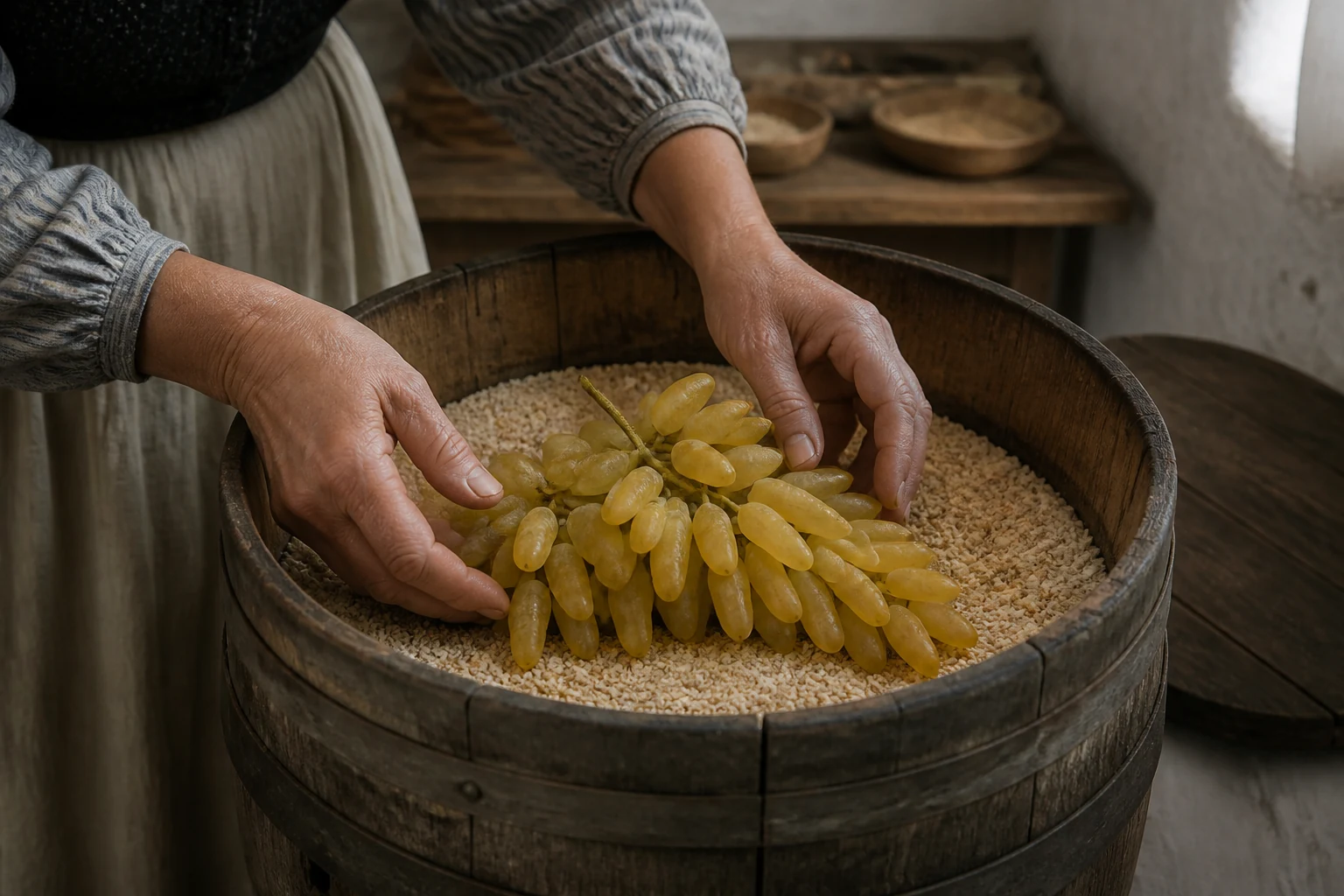
Fig
The fig tree is the Mediterranean dryland tree par excellence, planted by cortijos and stone walls. It gives brevas in early summer and figs at its end — a diffuse tradition of the Almerian Alpujarra.
Thirty-two crops, several landscapes and the same Mediterranean light.
Along the coast, greenhouses draw a white mosaic across the Campo de Dalías, the Bajo Andarax and the Campo de Níjar. The most recent official figure puts their physical footprint at around 33,000 hectares in the province; the 62,743 cultivated hectares reported for the 2024/25 season also count plots that host two successive crop cycles — the two figures describe different realities.
Spectacular as it is, that landscape does not sum up Almería's farmland. Citrus and the historic uva del barco follow the Andarax valley; olive, almond and fig trees and open-field crops climb the slopes and reach inland; new tropical fruits are being trialled under cover along the coastal strip. Read the catalogue as a map, from the sea to the sierras, as much as a harvest calendar.
The fig tree is the Mediterranean dryland tree par excellence, planted by cortijos and stone walls. It gives brevas in early summer and figs at its end — a diffuse tradition of the Almerian Alpujarra.
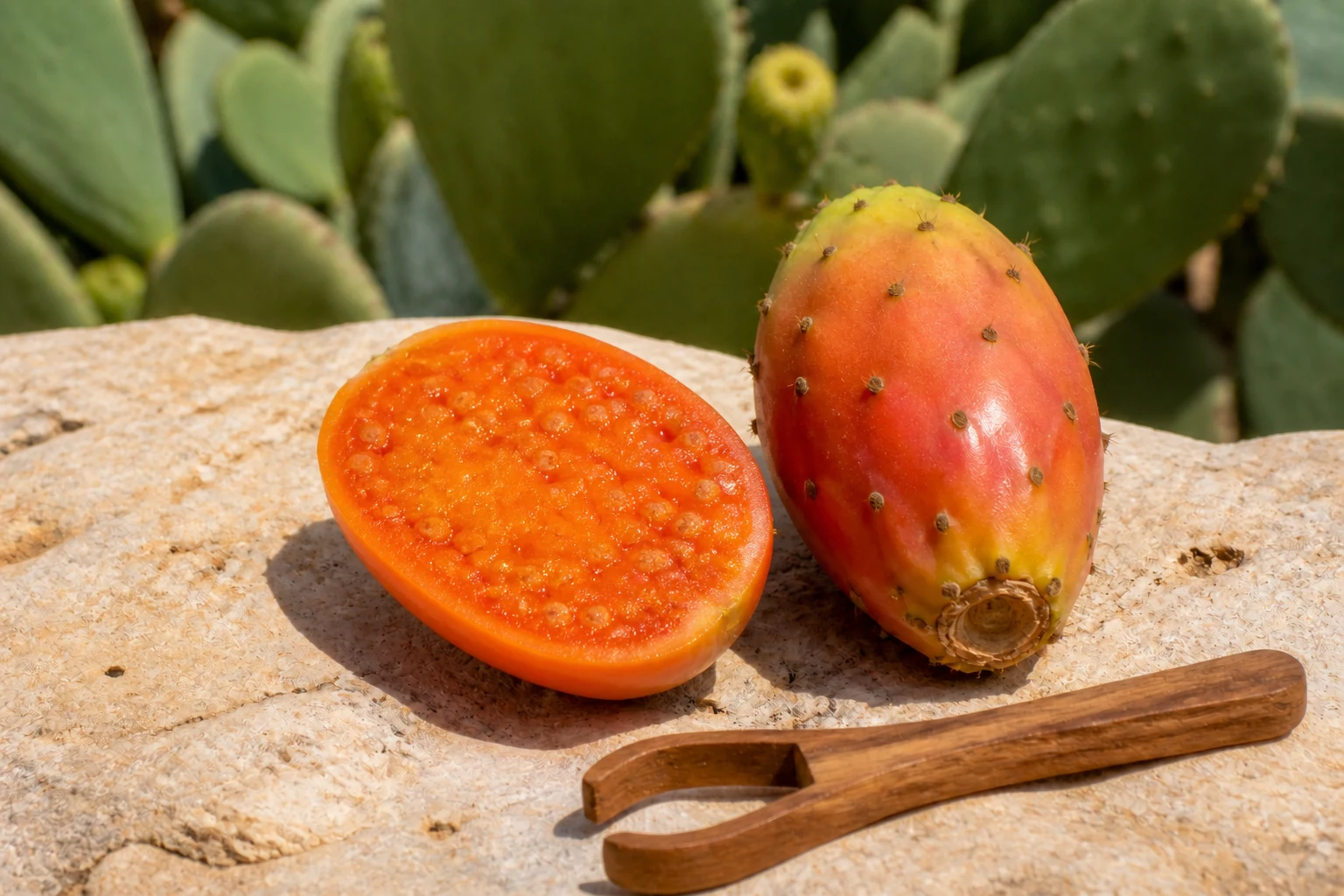
The fruit of the prickly pear, the cactus that came from the Americas and naturalised along Almería's paths and drylands. Eaten from July to October, well chilled and with due respect for its spines.
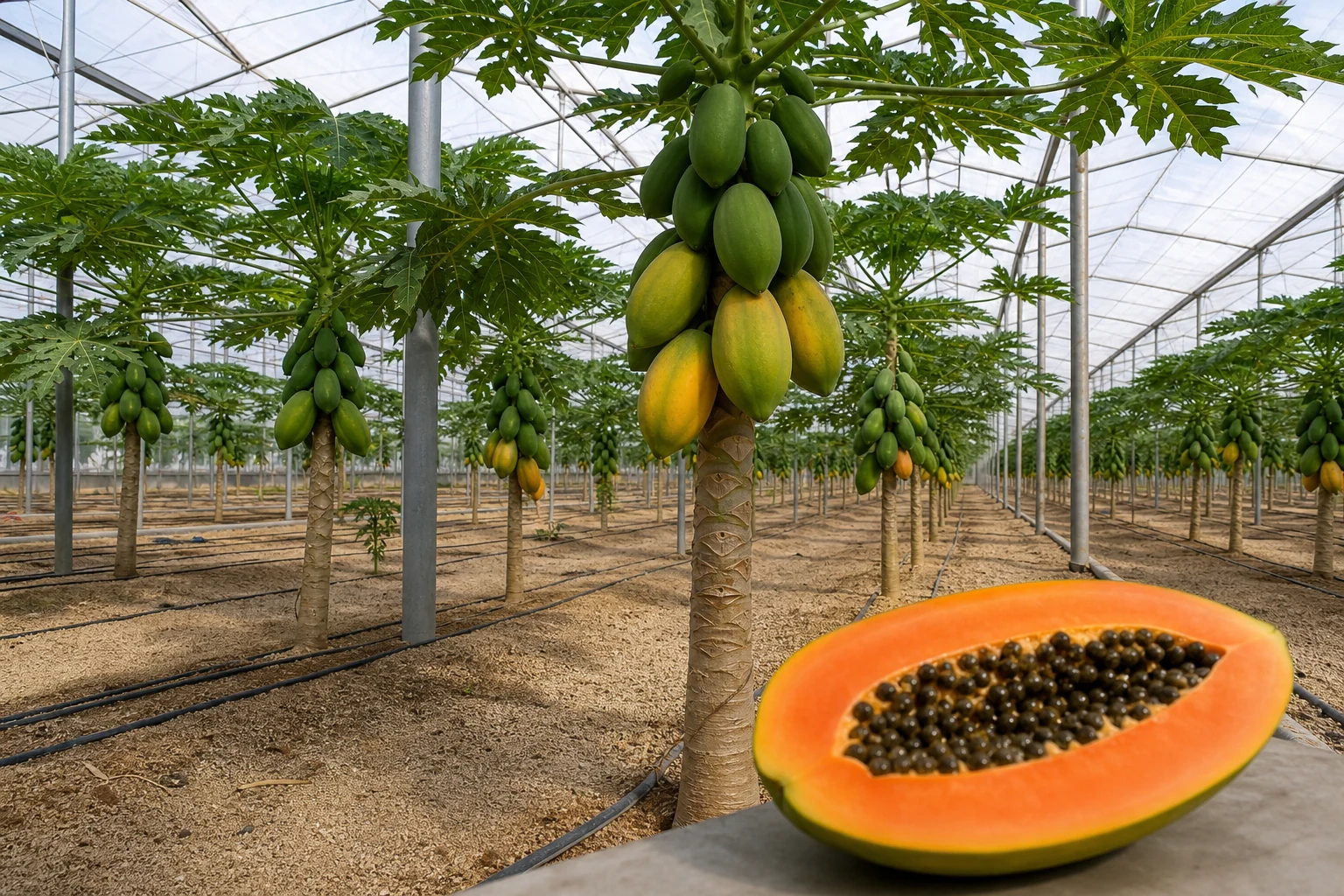
A strictly tropical fruit being trialled under Almería's plastic: tests at El Ejido and Retamar study varieties, structure height, yield and quality in a climate that is not its own.
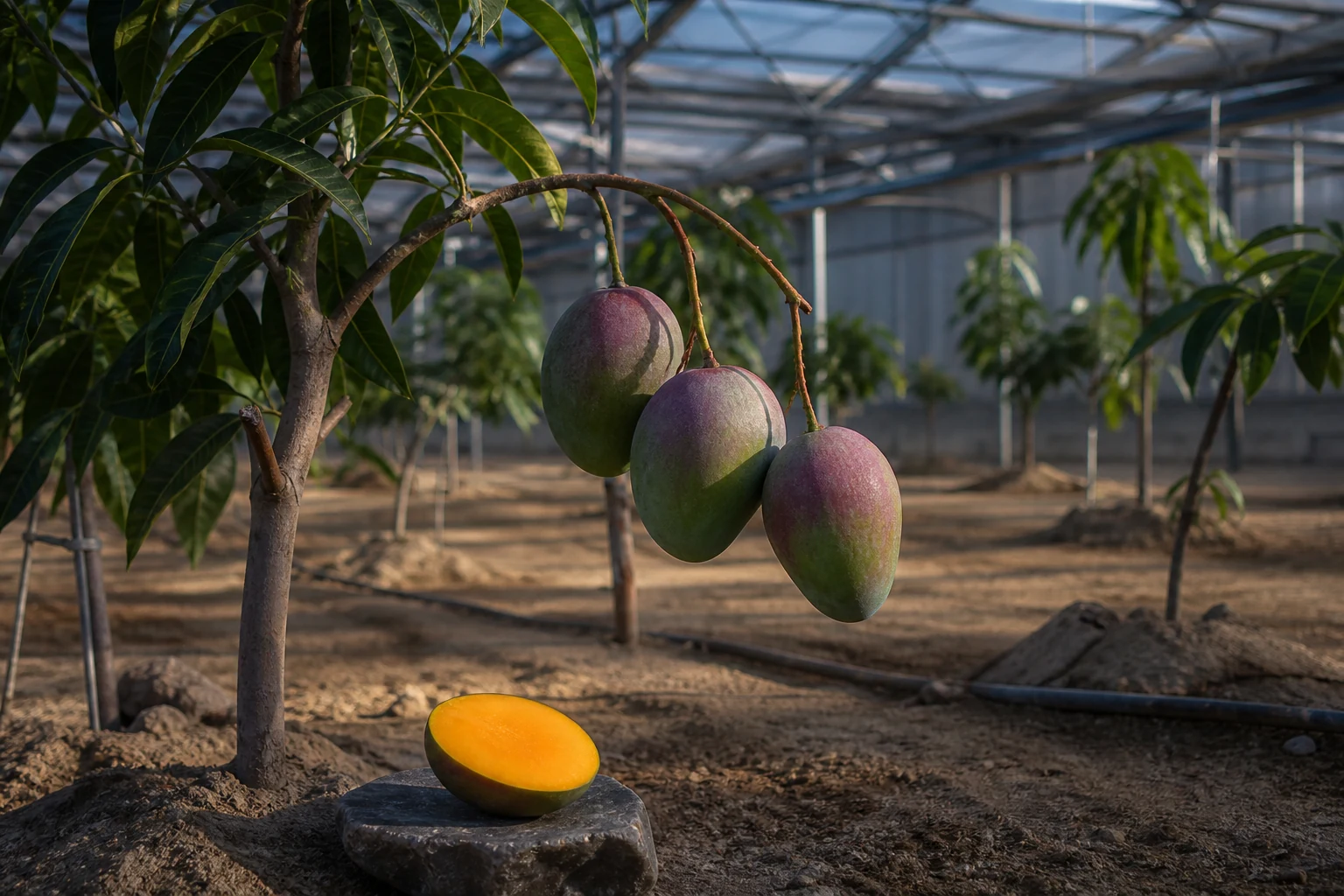
Greenhouse mango remains an experimental path in Almería: local research studies varieties, rootstocks, salinity and earliness, far from the great subtropical orchards of Málaga and Granada.