from the white sea to the Andarax orchards

Local produce

Thirty-two crops, several landscapes and the same Mediterranean light.

One province, three farming landscapes

Along the coast, greenhouses draw a white mosaic across the Campo de Dalías, the Bajo Andarax and the Campo de Níjar. The most recent official figure puts their physical footprint at around 33,000 hectares in the province; the 62,743 cultivated hectares reported for the 2024/25 season also count plots that host two successive crop cycles — the two figures describe different realities.

Spectacular as it is, that landscape does not sum up Almería's farmland. Citrus and the historic uva del barco follow the Andarax valley; olive, almond and fig trees and open-field crops climb the slopes and reach inland; new tropical fruits are being trialled under cover along the coastal strip. Read the catalogue as a map, from the sea to the sierras, as much as a harvest calendar.

Watermelon
Coastal greenhouses Fruit

Watermelon

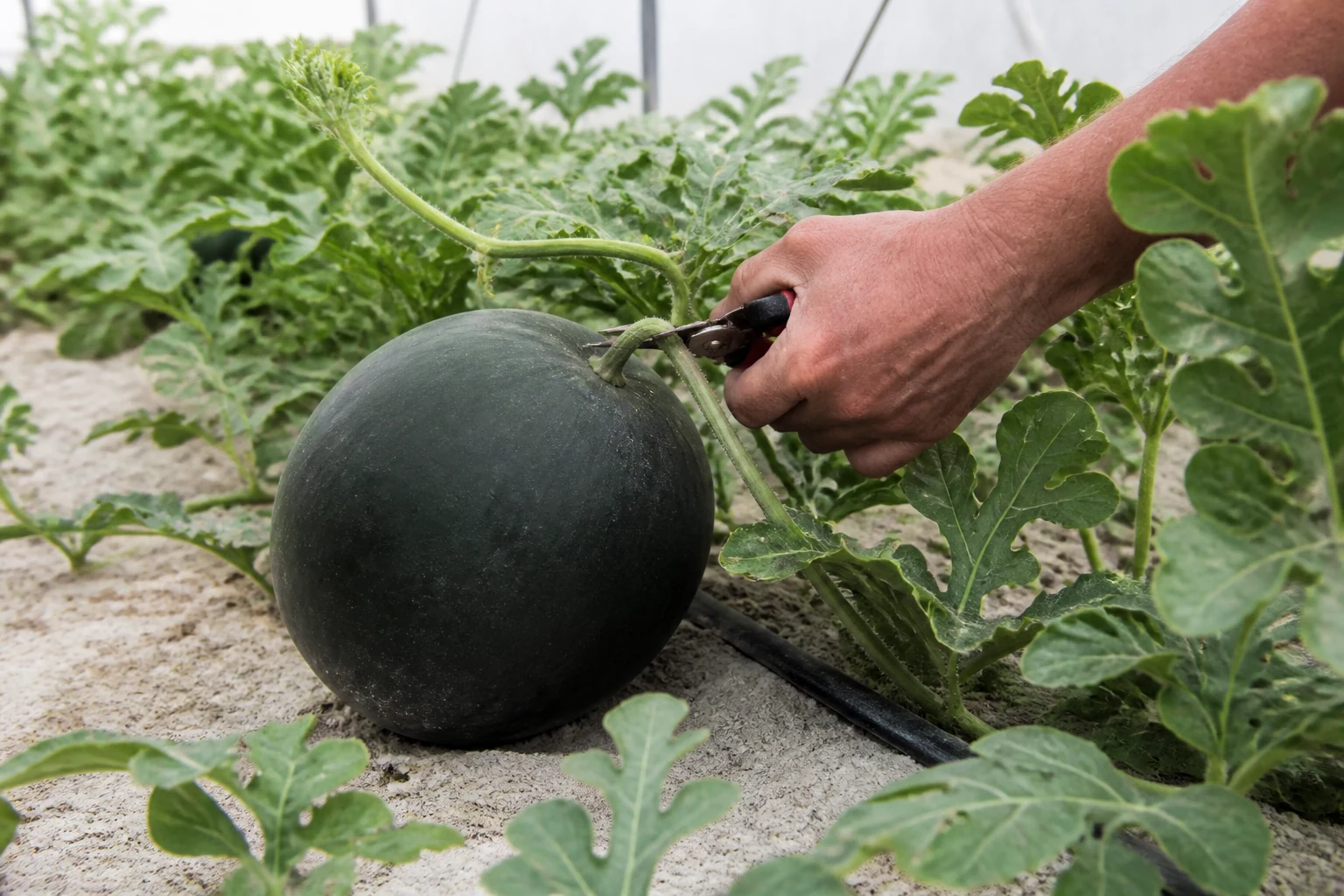
Harvested in spring under cover, Almería's watermelon gets ahead of the European midsummer. Black seedless, mini or striped, it ripens close to the sandy soil before a still largely manual harvest.
Olive
Andarax valley Fruit

Olive

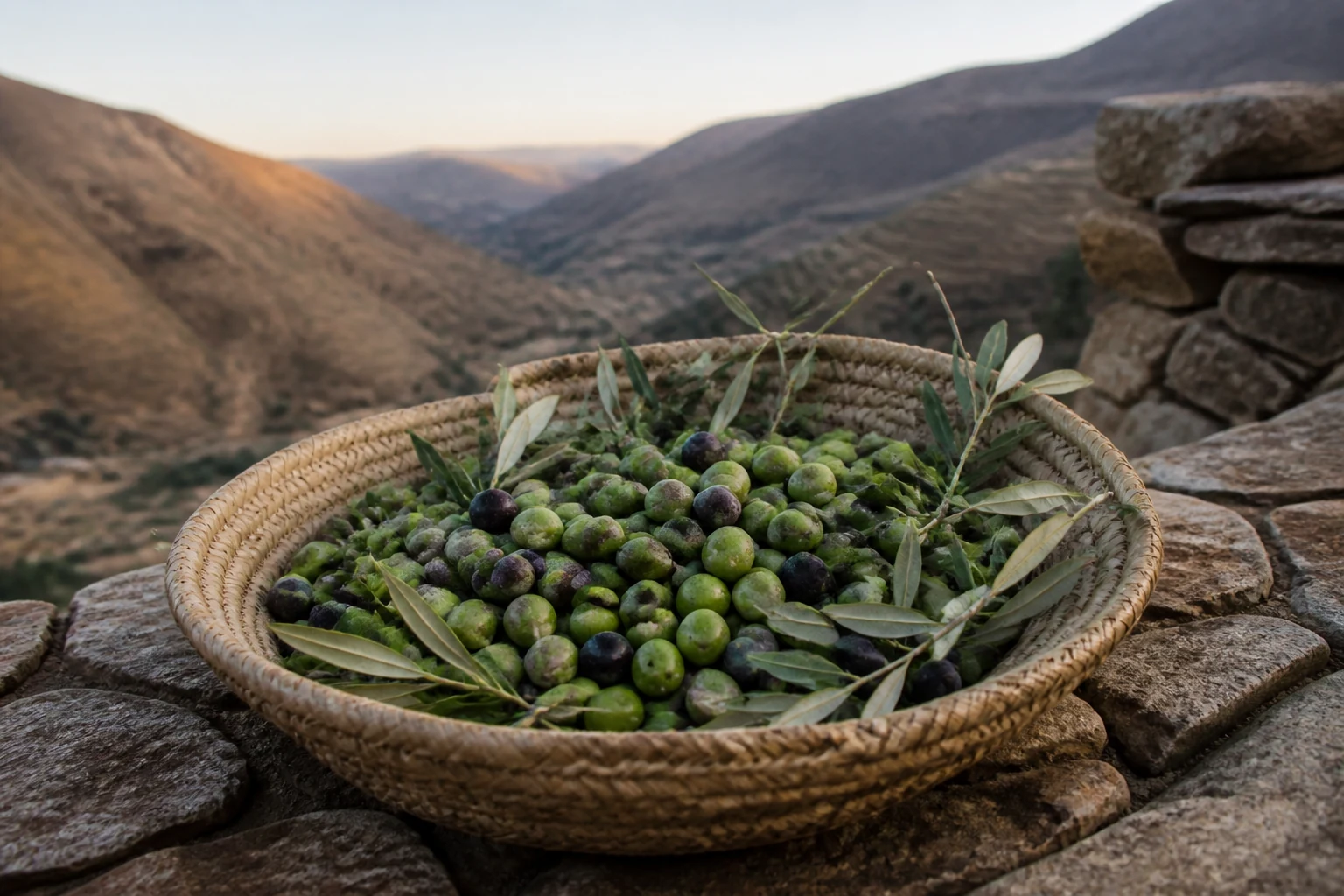
On the dry terraces of the Andarax and the Almerian Alpujarra, the olive feeds the mills of Canjáyar. Picual, arbequina and local varieties yield honest oils and table olives.

Melon
Coastal greenhouses Fruit

Melon

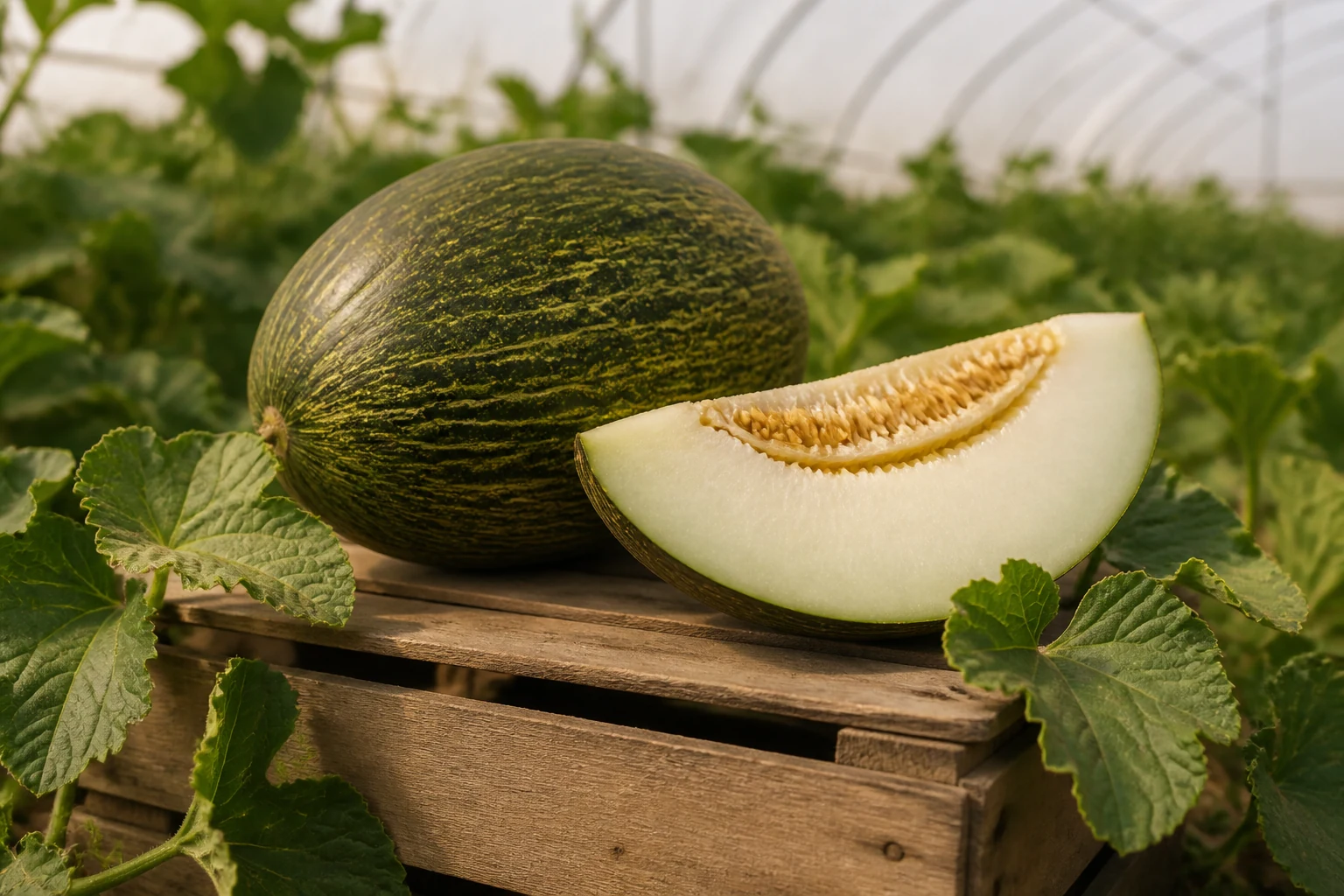
One fruit, five faces: white, yellow, galia, cantaloupe and piel de sapo. The under-plastic campaign opens the Spanish season in spring, with the bulk of sales in May.

Uva del barco (Ohanes grape)
Andarax valley Fruit

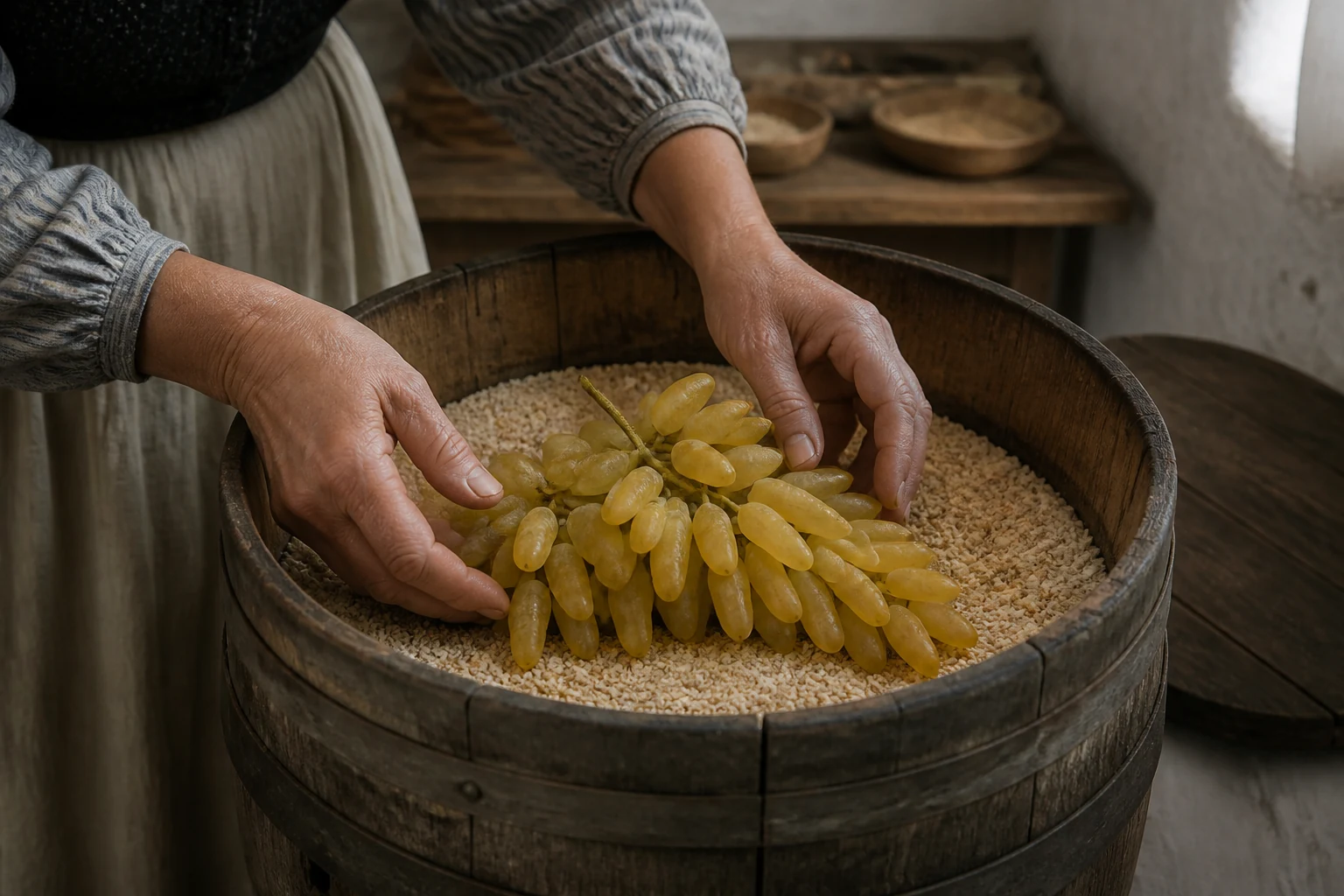
Uva del barco (Ohanes grape)

In Alhama, the Ohanes grape was grown under parrales, packed in barrels on fine sawdust and shipped across the seas for a century — hence its name. That heritage, now almost gone, is being safeguarded vine by vine.

Fig
Fruit in season

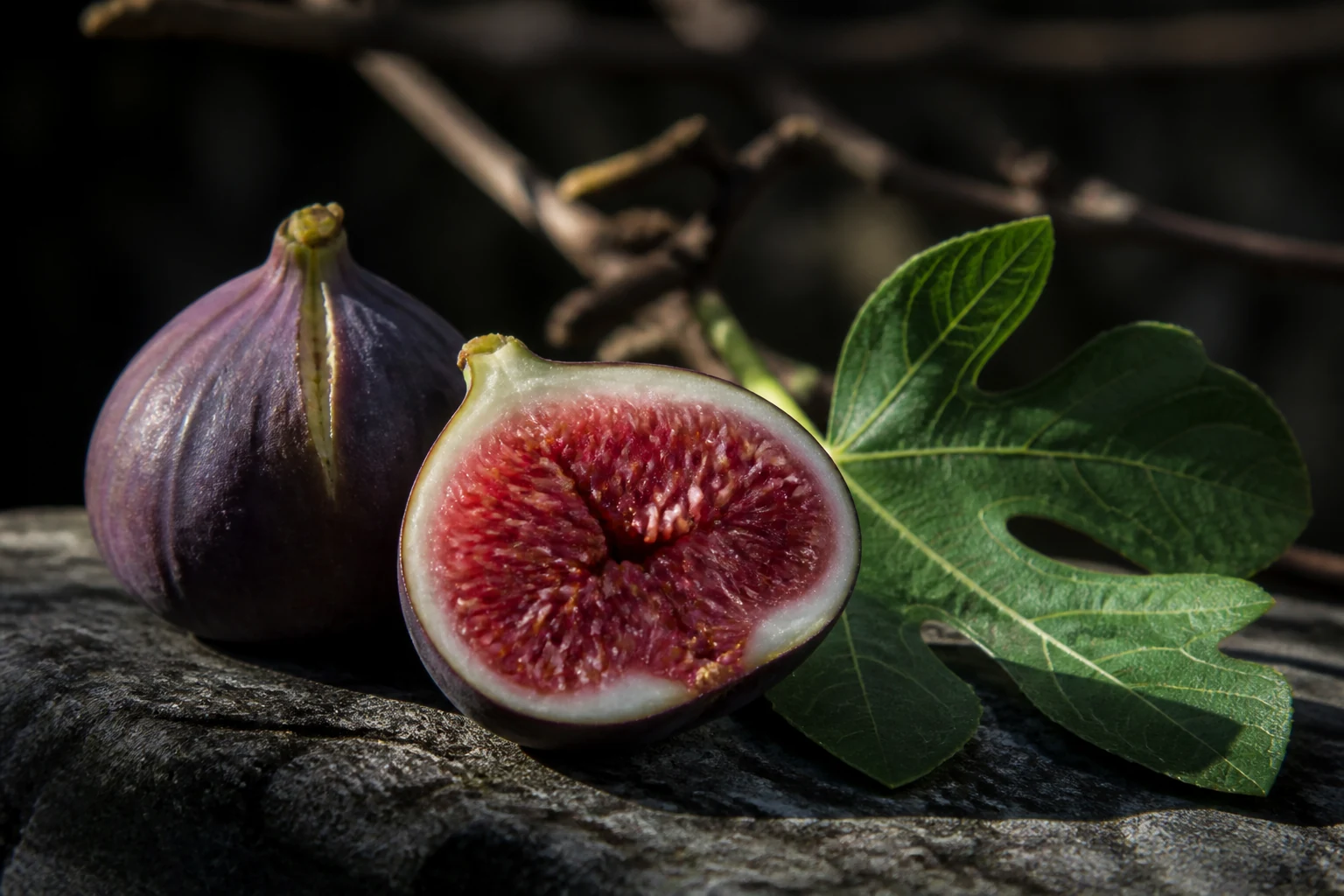
Fig

The fig tree is the Mediterranean dryland tree par excellence, planted by cortijos and stone walls. It gives brevas in early summer and figs at its end — a diffuse tradition of the Almerian Alpujarra.

Prickly pear
Fruit in season

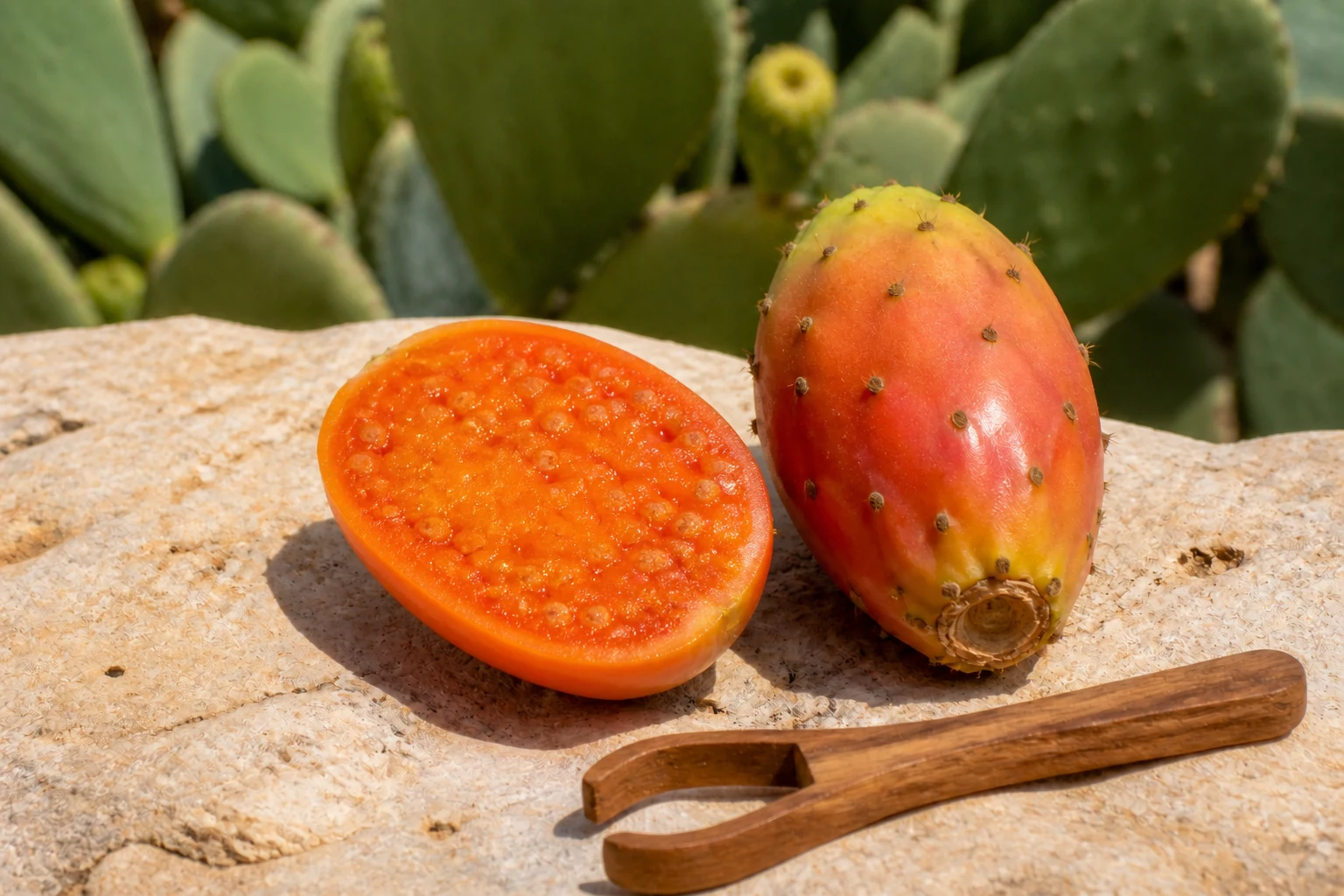
Prickly pear

The fruit of the prickly pear, the cactus that came from the Americas and naturalised along Almería's paths and drylands. Eaten from July to October, well chilled and with due respect for its spines.

Pomegranate
Fruit

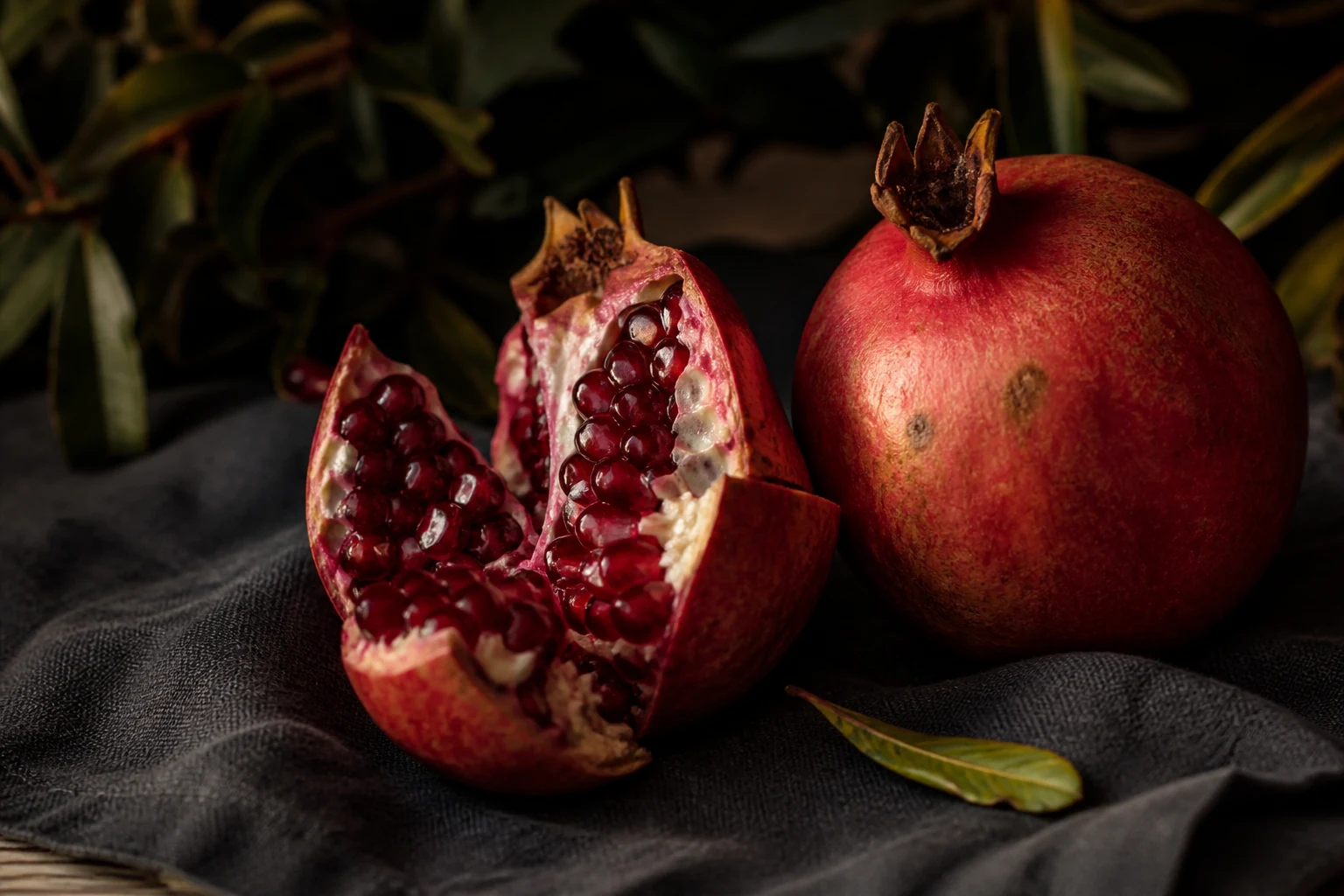
Pomegranate

A tree made for this land: the pomegranate withstands drought better than cold and thrives in semi-desert climates. In Almería it is a fruit of family gardens and scattered plantings that opens the autumn.

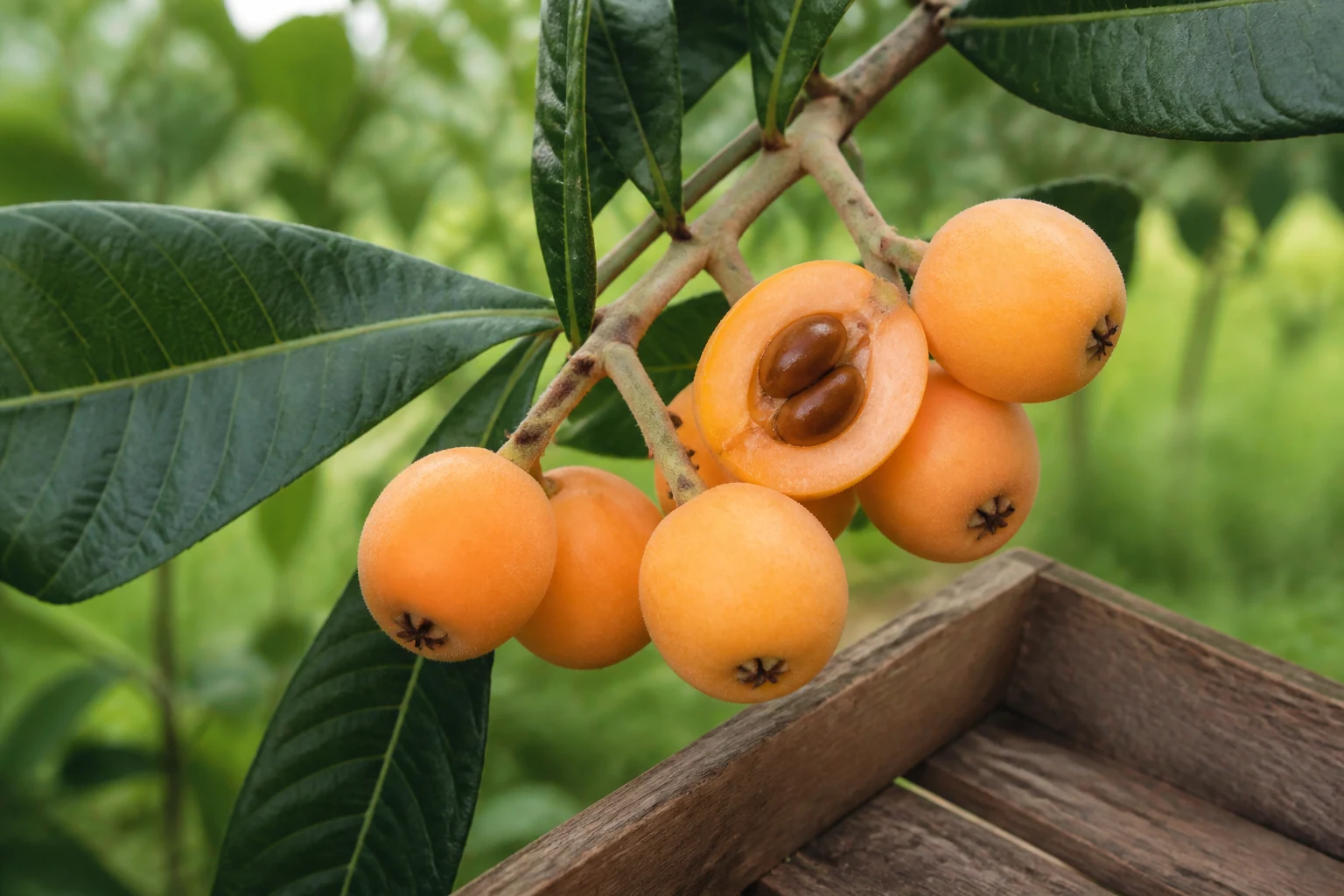
Loquat
Fruit

Loquat

The earliest riser of the fruit calendar, picked over a few short weeks of spring. In Almería it is a very minor crop beside the great Andalusian orchards of Granada and Málaga.

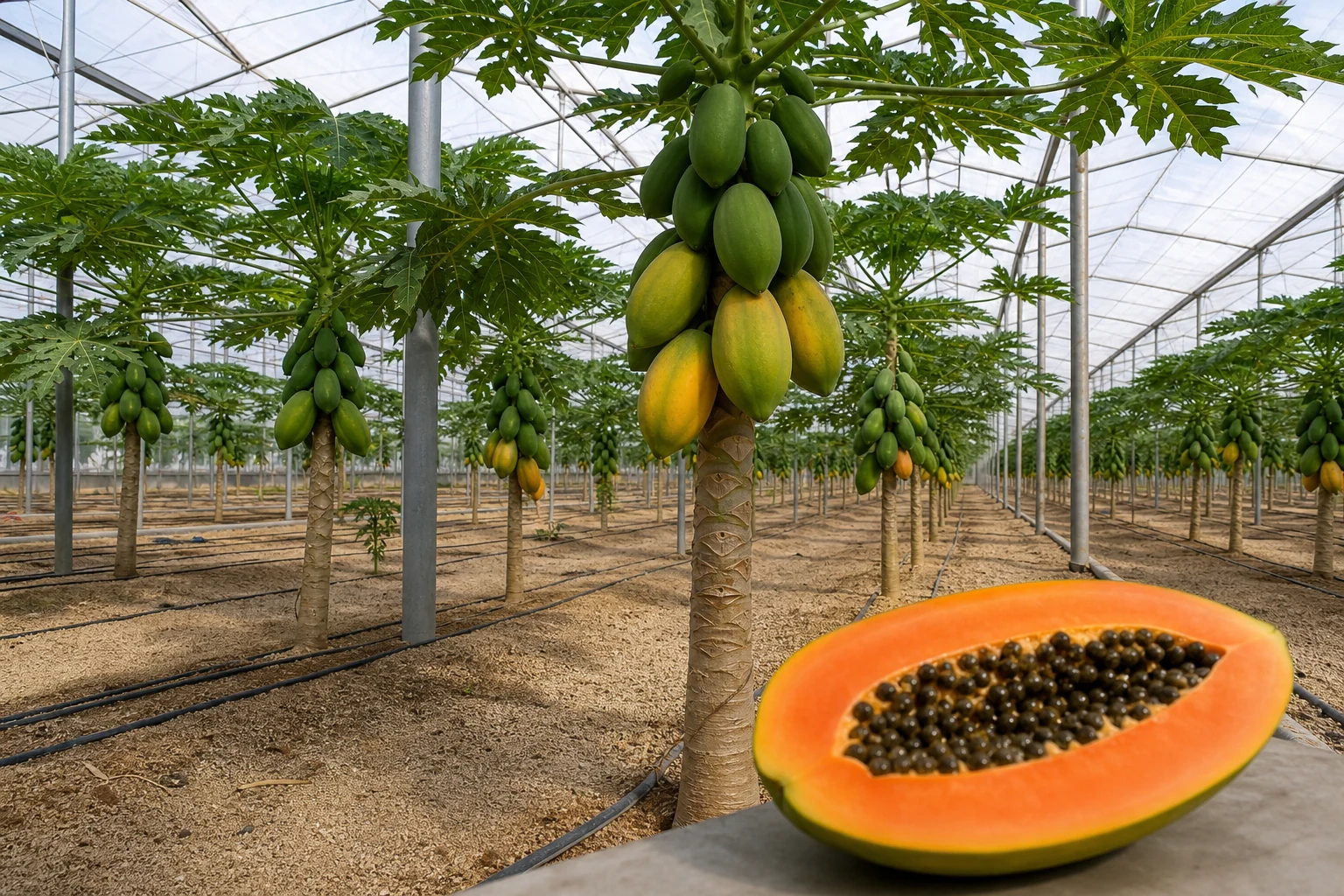
Papaya
Coastal greenhouses Fruit in season

Papaya

A strictly tropical fruit being trialled under Almería's plastic: tests at El Ejido and Retamar study varieties, structure height, yield and quality in a climate that is not its own.

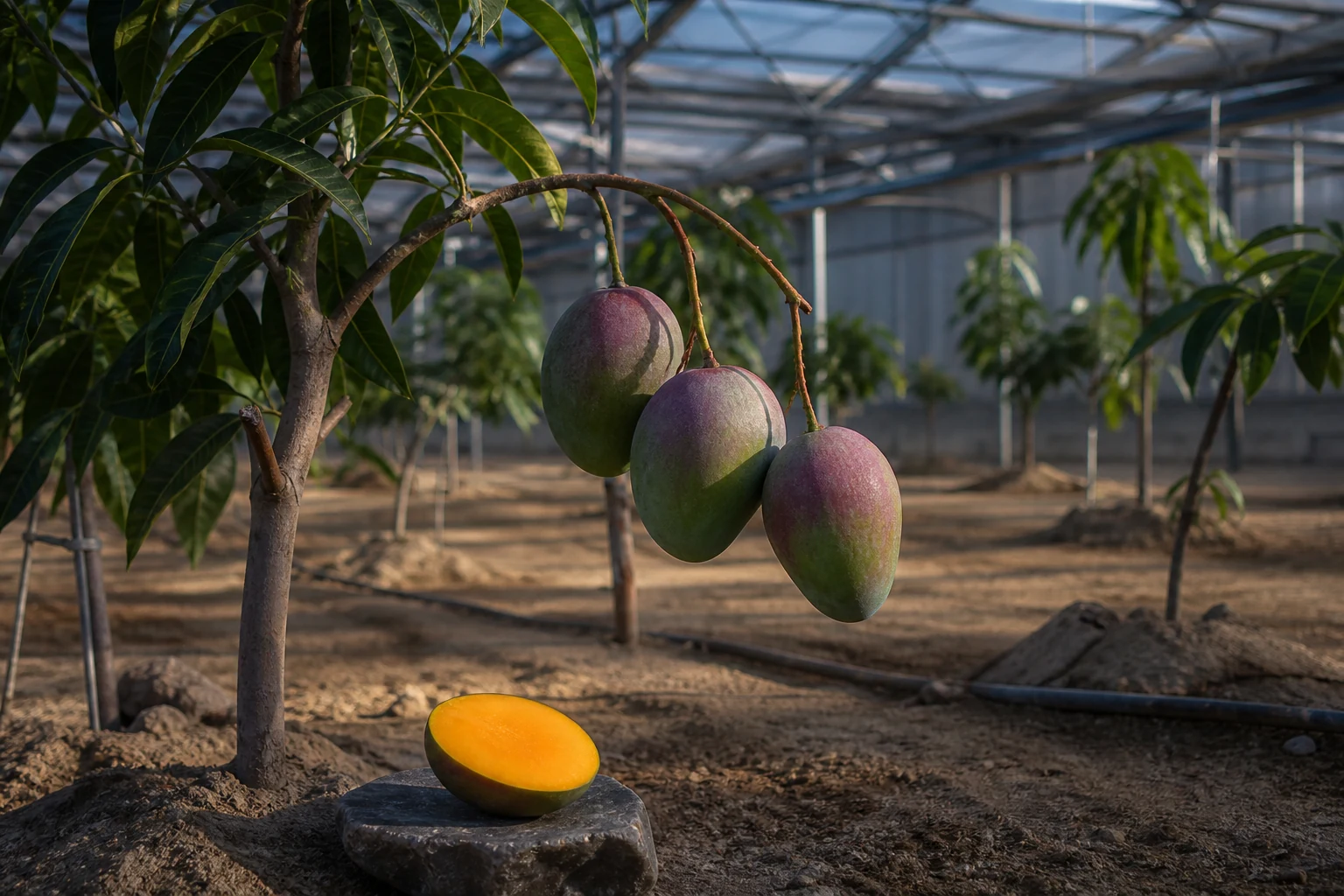
Mango
Coastal greenhouses Fruit in season

Mango

Greenhouse mango remains an experimental path in Almería: local research studies varieties, rootstocks, salinity and earliness, far from the great subtropical orchards of Málaga and Granada.

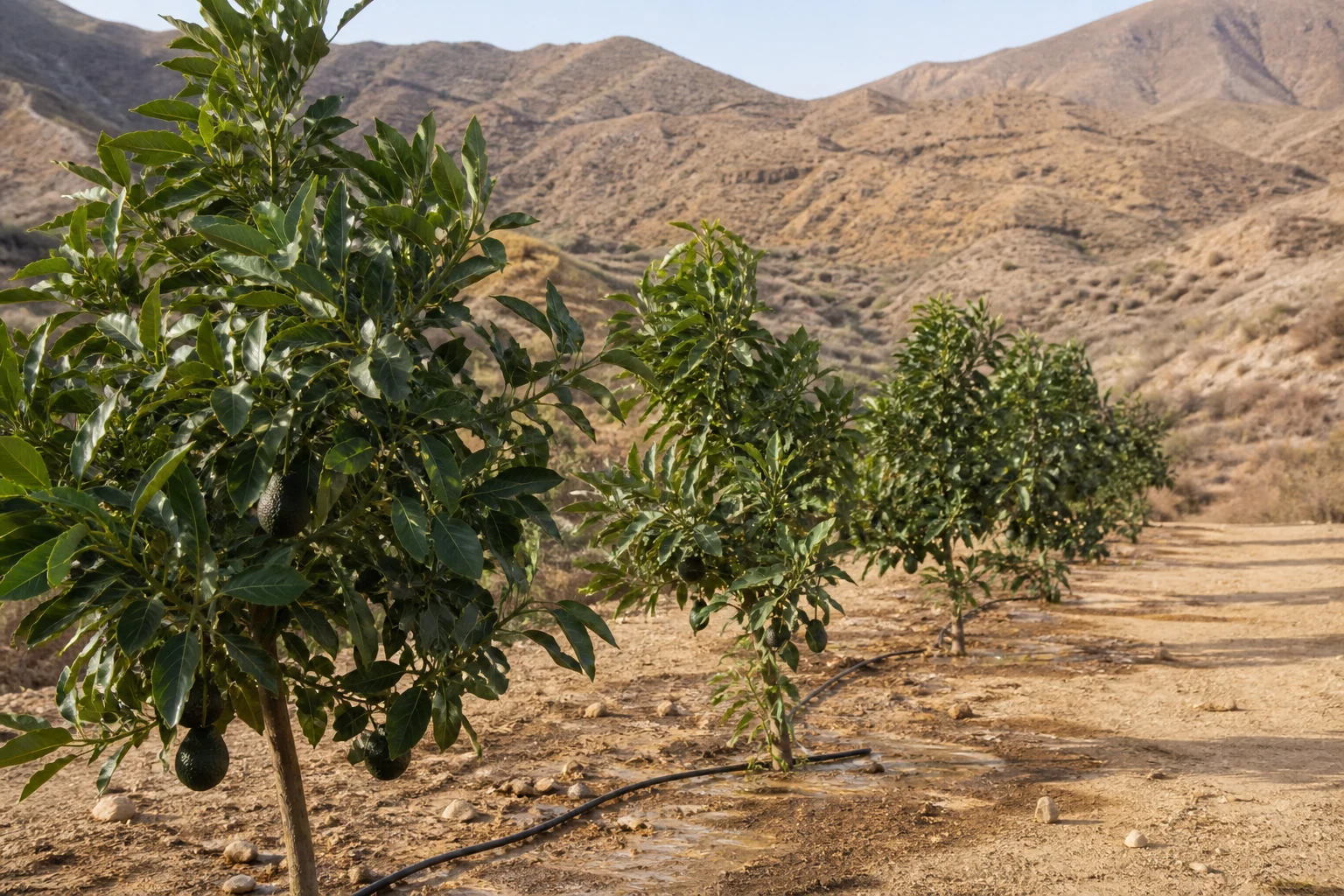
Avocado
Fruit

Avocado

The most incipient of Almería's subtropicals: 68 hectares on record in 2022, in very specific microclimates. An emerging presence told at its real scale, far from the great orchards.