Where it comes from
Province-wide · pastelillos de reyes in Berja
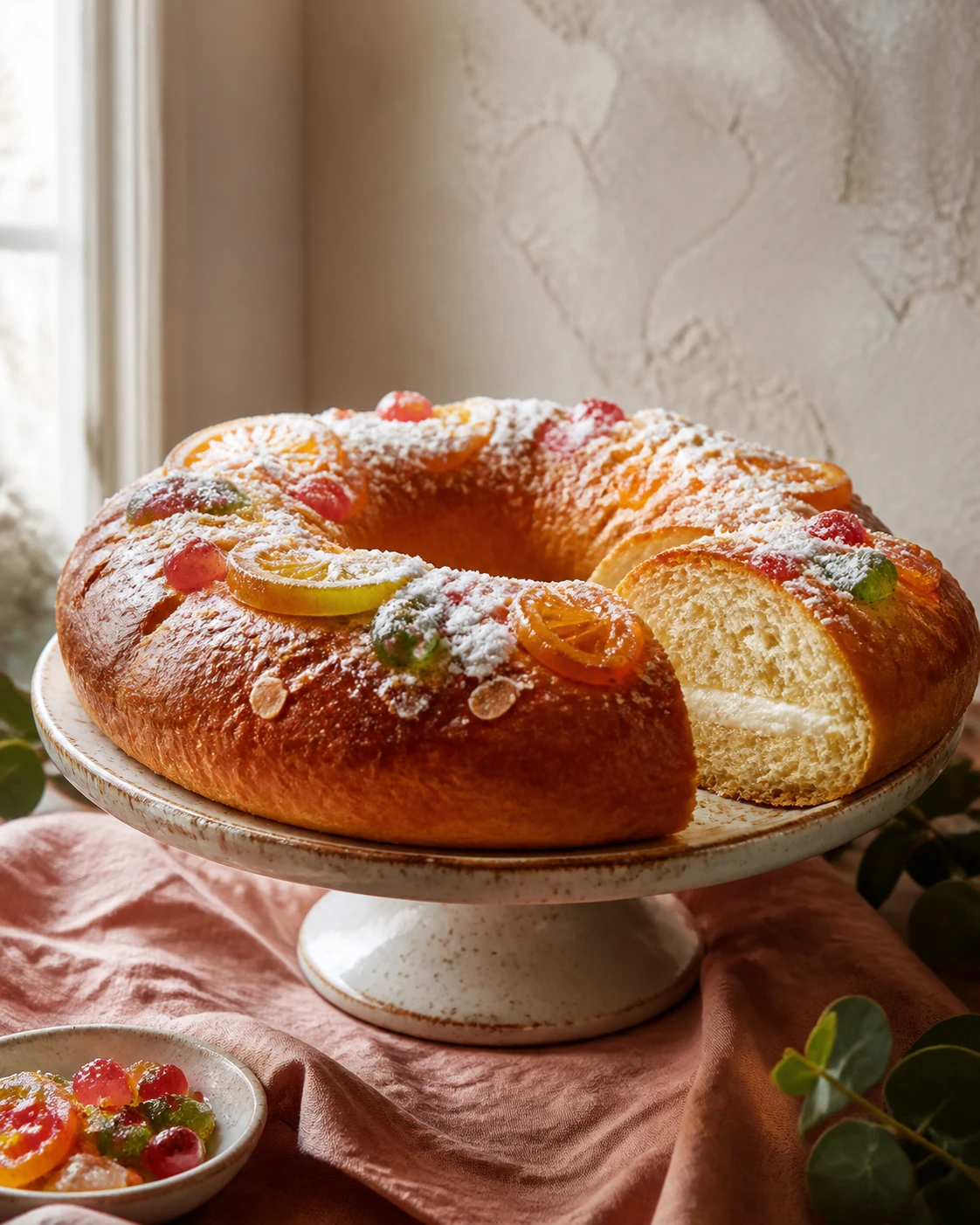
The roscón de Reyes smells of orange blossom and tastes of the holidays' last morning: a crown of sweet dough topped with candied fruit, often filled with cream, shared on 6 January with hot chocolate or coffee. In Berja people used to have the pastelillos de reyes, and buying the roscón at the pastry shop "has taken hold… imitating the Catalans": a tradition now general, and relatively recently adopted.
In the capital some ovens live that day in style: the El Bombón confitería, open since 1987, has topped 800 roscones in some seasons, and La Virgen del Carmen, in the Los Ángeles neighbourhood since 1972, is another of the houses that bakes them.
Outside the city, in Alhama de Almería the Panadería El Túnel makes roscones for Epiphany, and in Berja the Pastelería La Estrella is a local reference for Christmas sweets. The advice is plain common sense: order ahead, because on the morning of the 6th they fly.
What it is made with
- Flour
- Egg
- Butter
- Sugar
- Orange-blossom water
- Candied fruit
- Whipped cream (filling)
Underlined ingredients link to Local produce.
- Confitería El Bombón
- Confitería y Pastelería Virgen del Carmen
- Panadería El Túnel, S.C.
- Bako Pastry
- Confitería El Once de Septiembre
- Pastelería La Estrella
- El Bombón (Almería)
- La Virgen del Carmen (Los Ángeles, Almería)
- Panadería El Túnel (Alhama de Almería)
- Pastelería La Estrella (Berja)